





Gothic Stick Holder
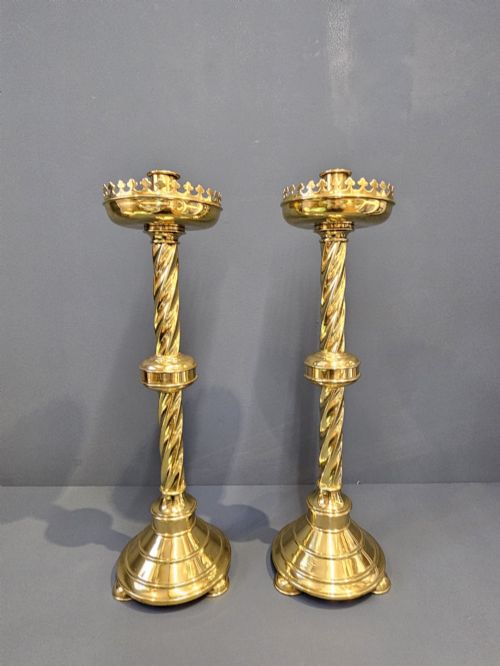
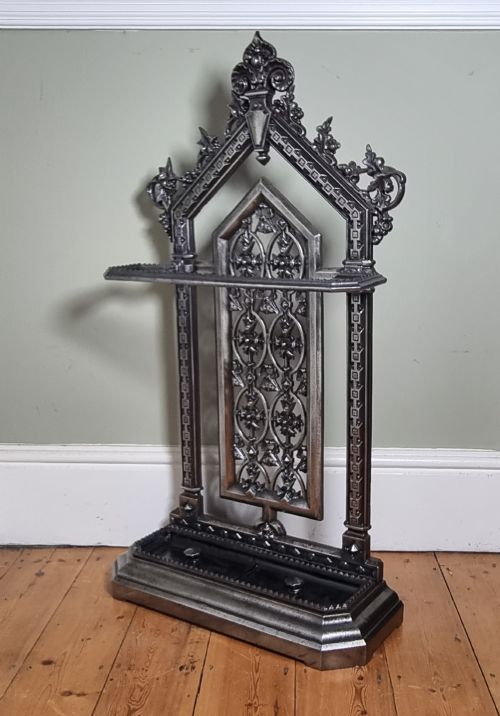
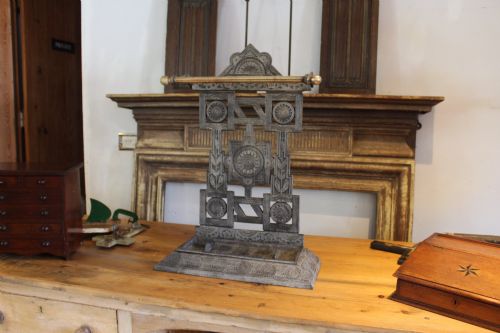
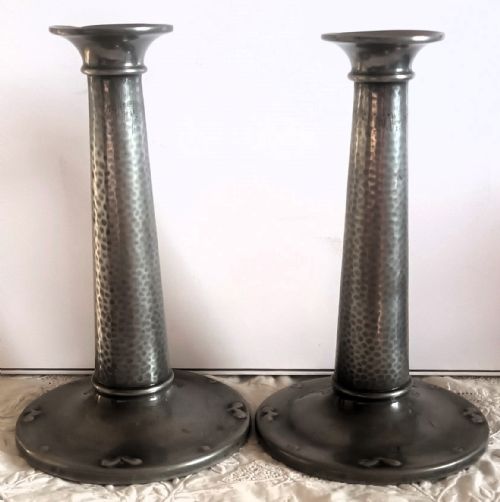
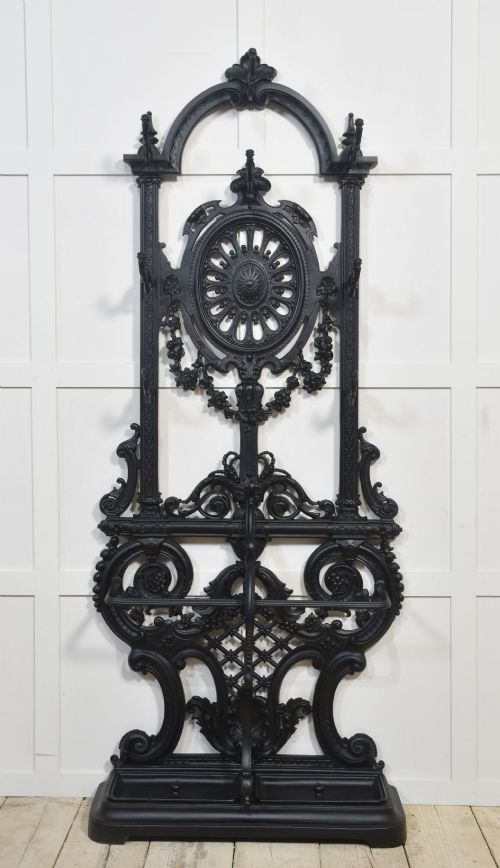
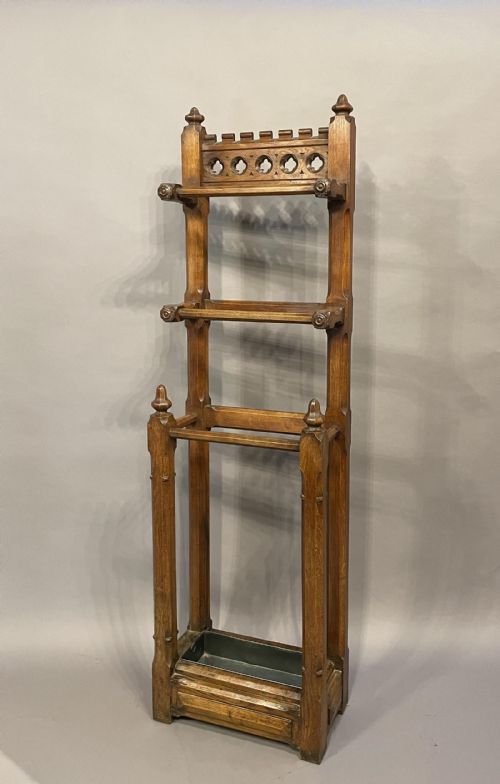
These gothic stick holder examples combine heavy utility with dramatic ecclesiastical and architectural forms.
Gothic Stick Holder
A gothic stick holder brings architectural drama to an entryway, serving as a heavy-duty vessel for umbrellas, walking sticks, and hall accessories. These pieces typically manifest as floor-standing iron or oak racks designed during the Victorian era and the Arts and Crafts movement.
Most examples found here date from the nineteenth century, spanning periods like the eighteen-eighties and the aesthetic movement. They range from massive cast iron umbrella stands with numerous storage rings to smaller hall stands incorporating hat and glove hooks.
How they were made
Makers utilised durable metals like cast iron, wrought iron, brass, and pewter, often combining them with oak or treen walnut. Cast iron components were poured into intricate moulds to achieve repeating gothic arches, heraldic motifs, and openwork scrolling.
Brass elements were cast and turned, while copper and iron were sometimes paired in Arts and Crafts designs for contrasting metalwork textures. Oak structures relied on traditional joinery to support heavy umbrella racks and wooden backplates.
One exceptional Victorian stick stand even depicts the Scottish knight William Wallace guarding your hallway walking sticks.
What varies in quality
Quality rests in the crispness of the casting and the ambition of the design, distinguishing standard commercial foundry output from specialised artistic work. Heavier, well-defined ironwork with deep relief ornamentation sits at the higher end of the scale.
The integration of specific foundry attribution or discernible stylistic movements, such as aesthetic movement or arts and crafts detailing, elevates certain pieces above plain utilitarian hall furniture.
Thomas Jeckyll·Coalbrookdale·Falkirk Foundry·T Thomason & Co
The Gothic Stick Holder Glossary
- Cast Iron
- An iron-carbon alloy poured into moulds to create rigid forms. This material defines the heavy structural frames of nineteenth-century umbrella racks.
- Gothic Revival
- An architectural and decorative style drawing on medieval forms. It is characterised by pointed arches, trefoils, and heavy structural verticality.
- Aesthetic Movement
- A late nineteenth-century design current emphasising visual beauty over narrative meaning. Pieces from this movement often feature stylised linear patterns and refined brass work.
- Arts and Crafts
- A design philosophy championing handcraftsmanship and simple materials. It appears here in copper, iron, and pewter stick stands and candlesticks.
- Hall Stand
- A multi-functional piece of hallway furniture combining stick storage with mirrors, hooks, and glove boxes.
Gothic Stick Holder: Frequently Asked Questions
What materials are these stands made from?
These hallway pieces are constructed primarily from durable cast iron, wrought iron, and brass, occasionally incorporating oak timber or pewter elements.
The use of heavy metals ensured the stands remained stable when loaded with wet umbrellas and heavy walking sticks.
How do I date a gothic stick stand?
Dating relies on stylistic clues like aesthetic movement linearity or gothic revival arches, alongside foundry stamps and registration marks.
Nineteenth-century examples frequently utilise heavy cast iron construction with distinct Victorian registration numbers or maker attributions.
Where should I place a hall stand?
These items suit entrance halls and corridors where their architectural silhouettes and practical umbrella rings can be fully appreciated.
Their robust metal and oak construction makes them ideal for daily use by front doors.
Are these stands suitable for modern umbrellas?
The ring dividers and base trays accommodate modern umbrellas, walking poles, and cane handles without difficulty.
Many nineteenth-century designs feature integrated drip pans at the base to catch rainwater from wet items.