





Gothic Revival Reading Stand
A gothic revival reading stand brings architectural presence and scholarly charm into a room, offering a sturdy perch for heavy folios and devotional books.
Gothic Revival Reading Stand
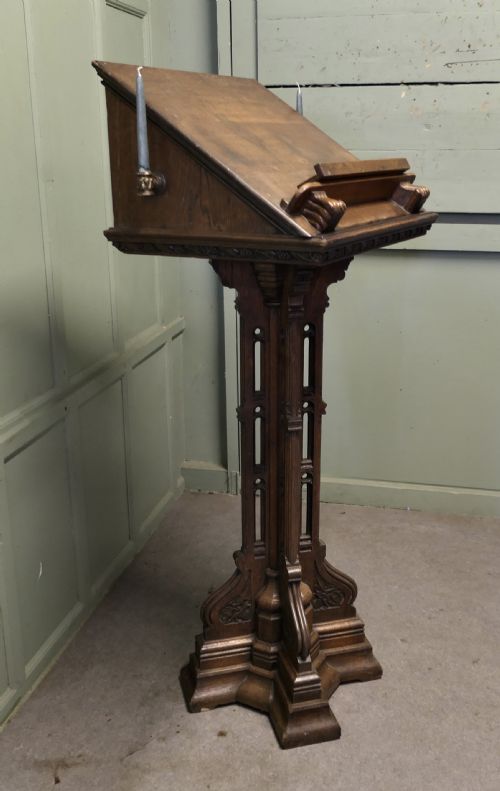
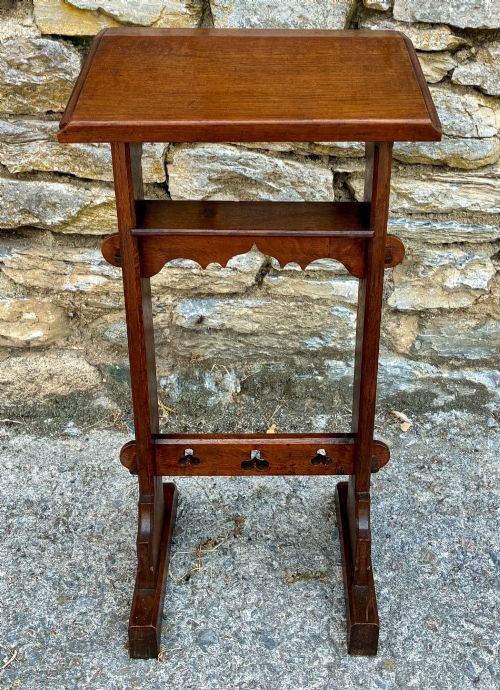
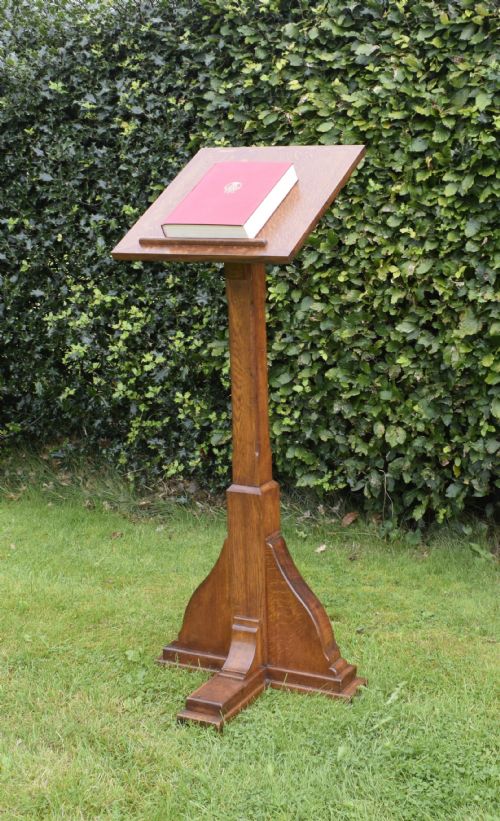
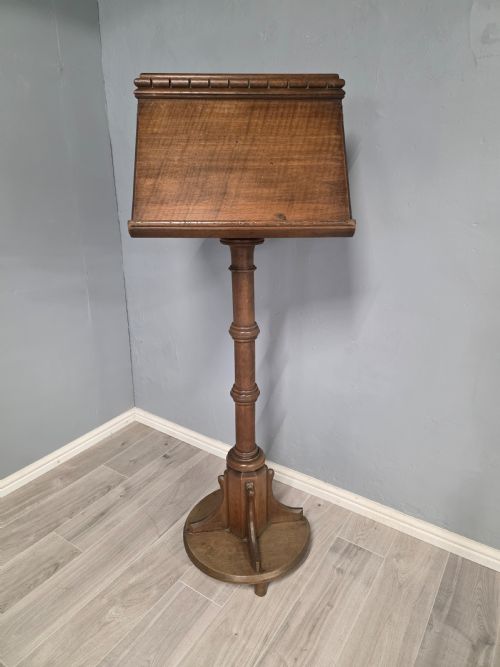
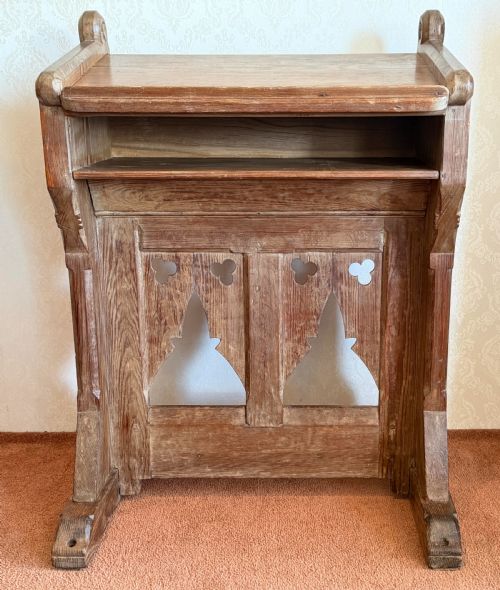
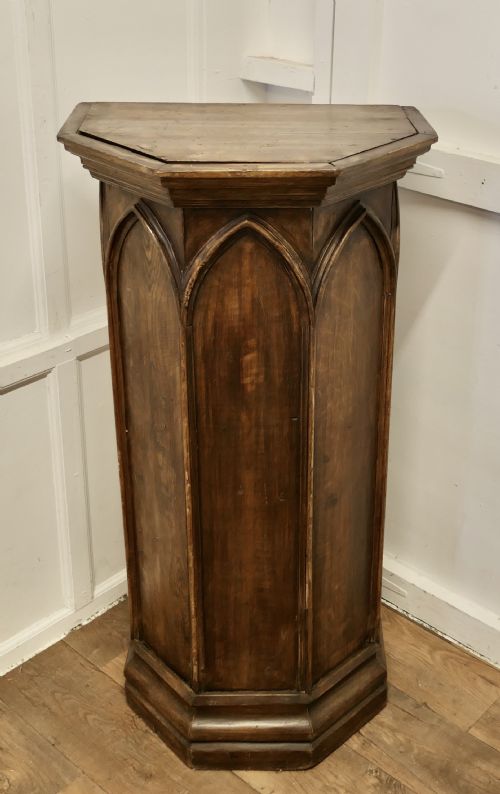
A gothic revival reading stand serves primarily as an ecclesiastical or domestic support for books, appearing frequently in forms such as lecterns, floor-standing podiums, and adjustable book desks. When looking for a gothic revival reading stand, buyers encounter pieces that draw heavily on medieval architectural motifs, pointed arches, and sturdy ecclesiastical proportions.
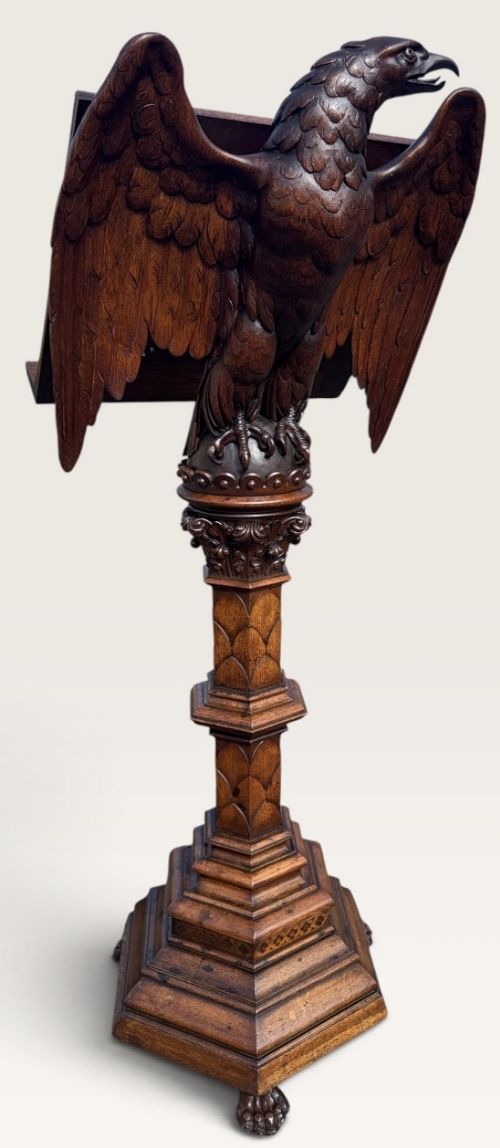
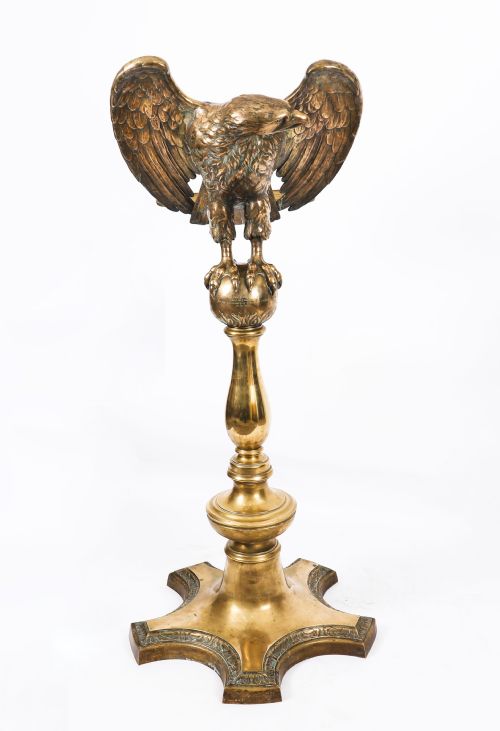
The selections span the nineteenth century through the Edwardian period, capturing both grand church furniture and smaller domestic reading desks. Oak is the dominant medium, often heavily carved with traditional tracery, whilst associated forms include brass eagle lecterns and wrought iron pieces.
Makers and craftsmen of the nineteenth century adapted these gothic forms for both parish churches and scholarly libraries, resulting in objects that vary from simple pine reading stations to elaborate carved oak pulpits.
Materials and Construction Methods
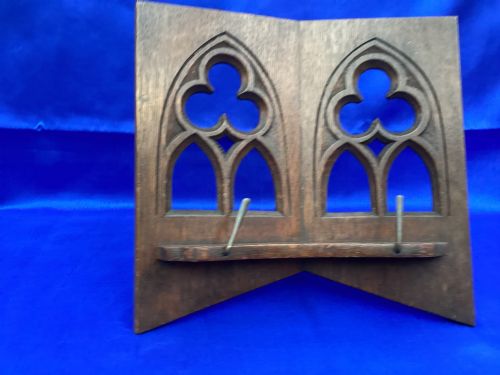
Solid oak and pine provide the structural carcass for the wooden lecterns and reading desks, shaped with traditional joinery and deep relief carving. Artisans utilised hand-carving techniques to render cusps, trefoils, and tracery panels directly into the timber.
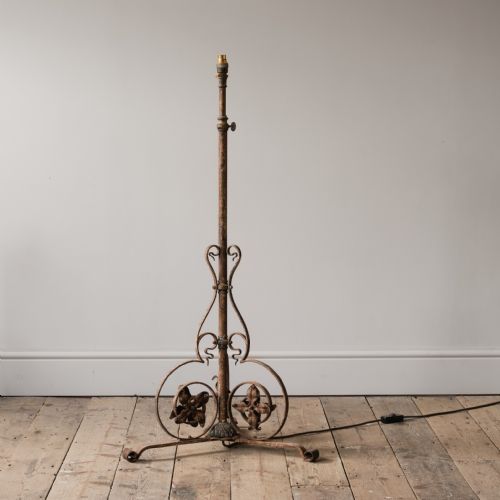
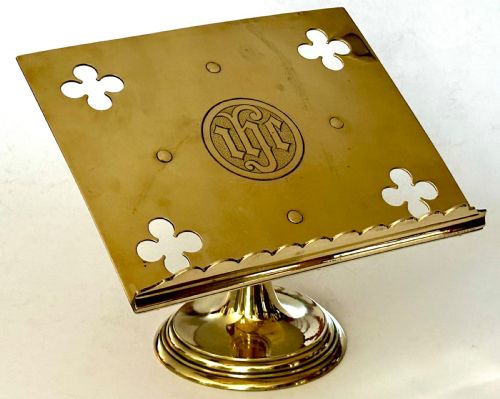
Brass and wrought iron feature prominently in the metalwork stands, incorporating adjustable mechanisms, telescopic shafts, and heavy cast bases. These metal elements balance the visual weight of the timber and provide functional articulation for reading at varying heights.
Several stands feature brass eagles with outstretched wings ready to support your heavy Sunday papers.
Distinguishing Quality and Execution
The standard of carving determines much of the visual merit in these pieces, separating workshop output with crisp, deep relief from simpler vernacular carpentry. Sharp undercutting in the oak foliage and precise geometric tracery indicate a higher grade of craftsmanship.
The integrity of mechanical adjustments in brass and iron stands marks the difference between basic utility and refined execution. Smooth telescoping actions and robust structural joints ensure the piece holds heavy folios securely without sagging.
Benjamin Taylor & Sons
The Gothic Revival Reading Stand Glossary
- Lectern
- A tall stand with a slanted top designed to hold a book for reading aloud. These often feature pivoting desks or integrated shelf space for folios.
- Tracery
- Architectural stone or woodwork ornamentation of intersecting ribs, commonly emulated in the carved panels of these stands. It defines the gothic aesthetic through geometric patterns.
- Folio Cabinet
- A specialised piece of furniture designed to store large, flat volumes and manuscripts. They share materials and stylistic traits with standard reading stands.
- Telescopic
- Descriptive of a standard or shaft that extends vertically via sliding sections and a locking screw. This allows the reading height to be adjusted.
Gothic Revival Reading Stand: Frequently Asked Questions
What is a gothic revival reading stand?
A gothic revival reading stand is a piece of furniture designed to hold books at a convenient angle for reading, styled with medieval architectural motifs typical of the nineteenth century.
They range from heavy oak church lecterns to smaller adjustable stands used in domestic studies and libraries.
How were these stands used originally?
Originally, these stands held large bibles, service books, or heavy folios in churches, cathedrals, and private chapels for communal or individual reading.
Domestic variants served scholars and readers who required a sturdy, elevated surface for heavy reference volumes.
Can I adjust the height of these stands?
Many metal examples and certain wooden pieces incorporate adjustable mechanisms, including telescopic brass shafts or ratcheted book rests.
Buyers should examine the specific construction, as some stationary wooden lecterns are fixed at a single ergonomic height.
What materials are most common?
Solid oak is the predominant material seen across the nineteenth century and Edwardian periods, frequently accompanied by pine in simpler pieces.
Brass and wrought iron appear frequently in floor-standing lamp variants and specialised ecclesiastical eagle lecterns.
How do I date a piece?
Dating relies on assessing the timber patination, construction joints, and stylistic markers such as the presence of Arts and Crafts influences or strict Victorian gothic revival design.
Makers' marks or specific hardware styles, particularly on brass and iron telescopic fittings, also provide chronological clues.