




Gothic Revival Oak Panel
These carved fragments and architectural elements bring architectural drama to an interior through heavy timber and medieval motifs.
Gothic Revival Oak Panel
When searching for a gothic revival oak panel, a buyer looks at timber fragments, overmantel inserts, and wall plaques that channel medieval and ecclesiastical architecture. Most pieces encountered on this page date from the nineteenth century, reflecting the Victorian enthusiasm for reviving earlier Gothic and Jacobean forms.
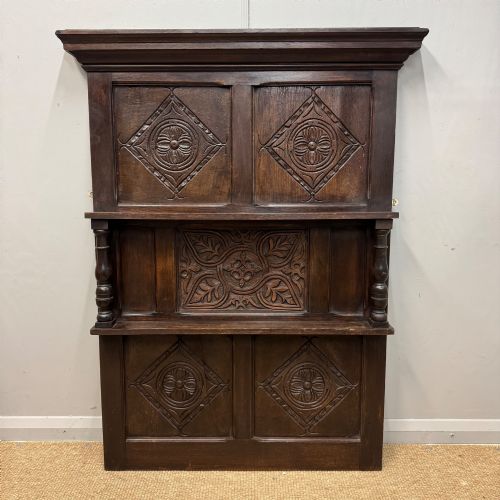
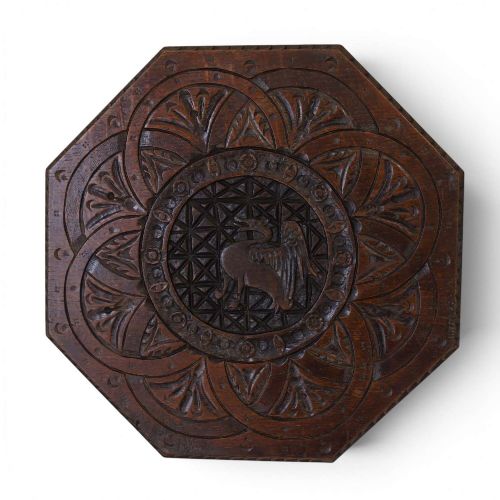
The objects take various structural shapes, ranging from flat wall plaques and inset friezes to larger cupboard doors, pew ends, and architectural salvage. These components often originate from dismantled furniture, church interiors, or domestic overmantels, retaining heavy relief carving such as linenfold, parchemin, or tracery.
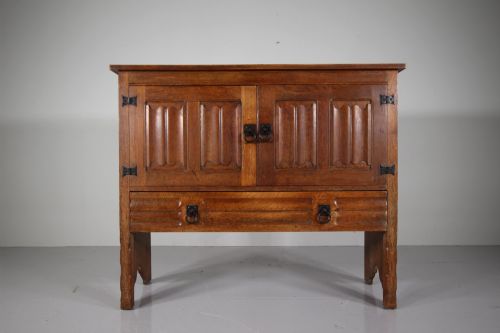
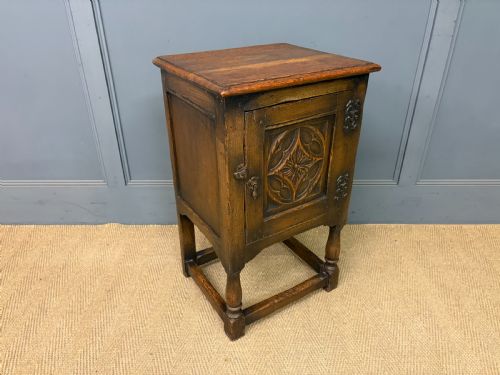
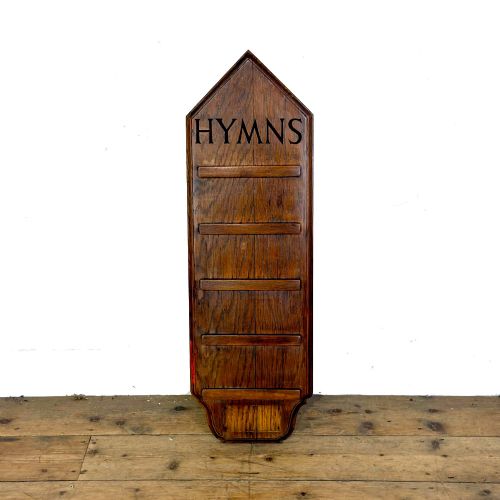
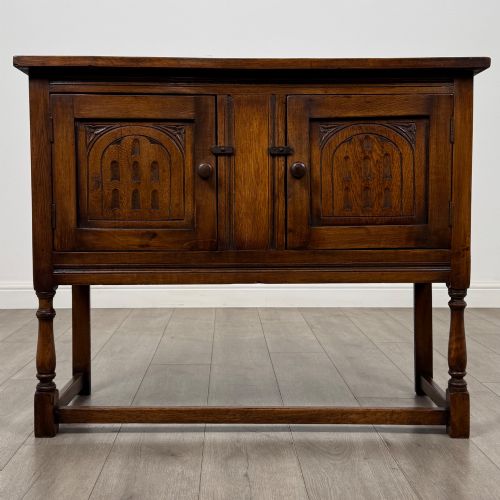
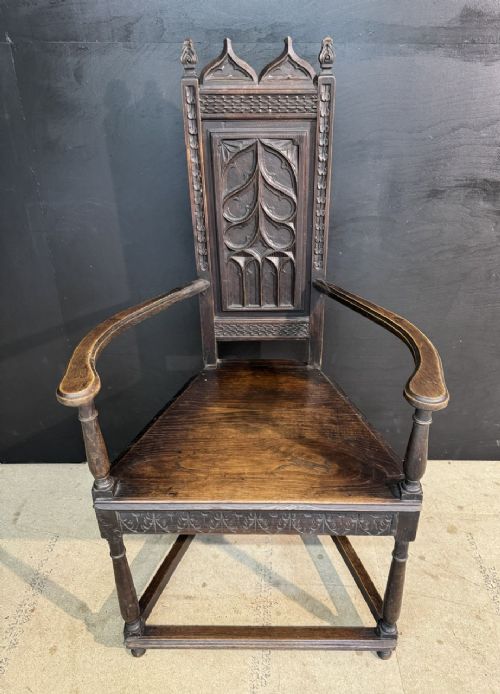
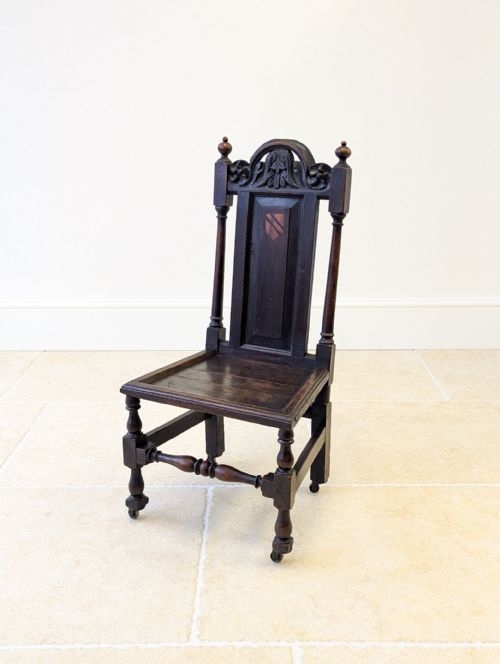
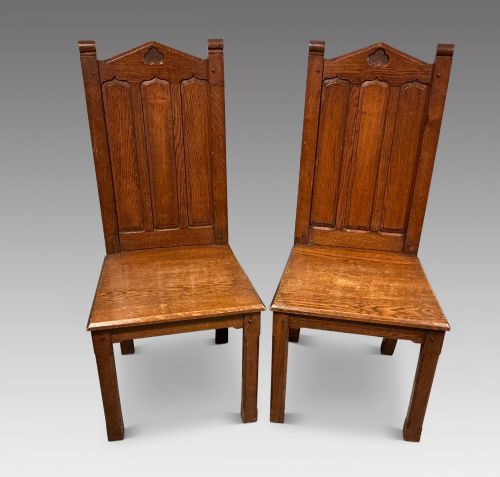
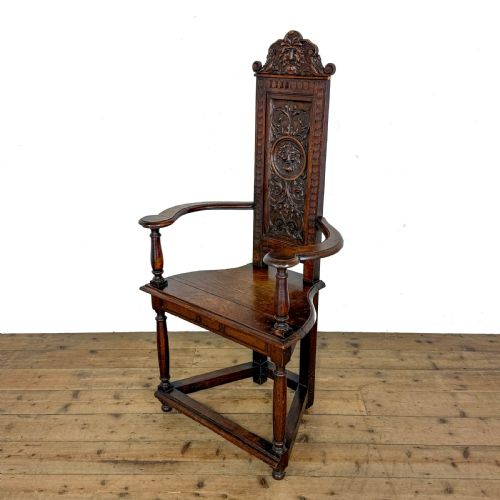
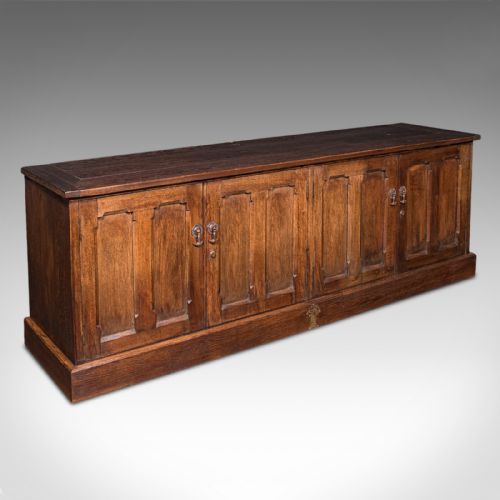
Beyond decorative plaques, the broader selection includes seating and cabinetry that incorporate gothic revival oak panel elements into their construction. These larger forms demonstrate how salvaged architectural timber found new life in nineteenth-century domestic settings.
How they were made
Makers fashioned these pieces primarily from solid oak, often complemented by secondary fruitwoods or assembled with brass, iron, and lead fittings. The timber was typically hand-carved, utilising deep relief techniques to produce intricate foliage, crests, and religious inscriptions.
Surface treatments recorded in the evidence include exposed natural grain, painted details, and occasional leather panel detailing. Structural joints rely on traditional carpentry methods suitable for heavy hardwoods, ensuring durability across centuries of reuse.
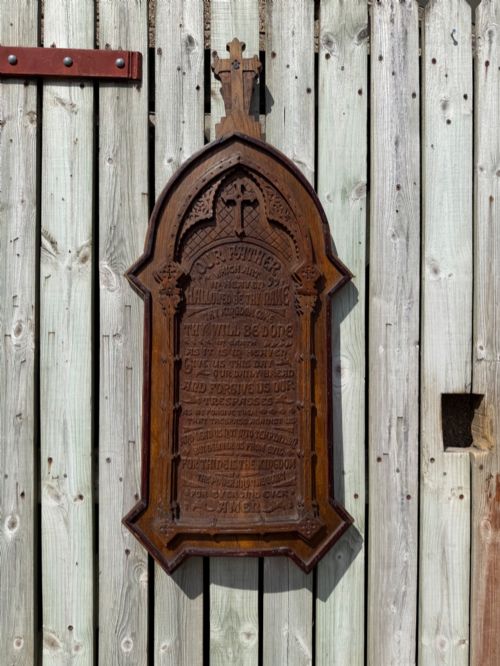
Some panels double as pious reminders, such as a carved timber rendition of The Lord's Prayer ready to chide the breakfast table.
What varies in quality
The standard of carving distinguishes superior examples from standard production, separating crisp, deep relief work from shallow, mechanical shaping. Master carvers achieved distinct depth and botanical accuracy in motifs like leaves and tracery.
Integrity of the timber and authenticity of age also dictate worth, as early seventeenth-century elements differ markedly from nineteenth-century revival interpretations. The depth of the patina and the retention of original framing elements indicate whether a piece retains its historical context.
The Gothic Revival Oak Panel Glossary
- Parchemin
- A type of carved wooden panel featuring a design that resembles folded parchment or vellum. This decorative motif appears frequently in medieval and revival cabinetry.
- Linenfold
- A style of wood carving that imitates vertical folds of fabric or linen. It is a defining characteristic of late medieval and revival oak panels.
- Wainscot
- A wooden wall panelling style or a sturdy chair type constructed with panelled backrests. These chairs mirror the heavy joinery found in interior wall linings.
- Overmantel
- A decorative structure, panel, or mirror placed directly above a fireplace mantel. They often showcase elaborate carved woodwork and architectural motifs.
- Tracery
- Architectural stone or timber ornamentation forming openwork patterns, typically seen in Gothic windows. Revival pieces translate this stonework style into carved wood.
Gothic Revival Oak Panel: Frequently Asked Questions
How were gothic revival oak panels used?
These panels originally served as architectural wall linings, church pew ends, or decorative inserts within large pieces of cabinetry and overmantels.
In domestic settings, they provided rich textural detail to plain walls or formed the structural doors of cupboards and bookcases.
Are these panels from the medieval period?
Most pieces available date from the nineteenth-century Gothic Revival movement rather than the medieval era itself.
Craftsmen of the Victorian period deliberately recreated earlier styles, occasionally incorporating genuine seventeenth-century timber elements into their new designs.
How do I hang a heavy oak panel?
Due to the substantial weight of solid oak, secure wall fixings and appropriate battens or brackets are essential for safe mounting.
Consulting a professional joiner ensures the weight is distributed properly across the wall structure without damaging the antique timber.
Can these panels be used in modern interiors?
The rich grain and dark tones of oak suit both traditional period properties and contemporary spaces seeking contrasting architectural texture.
They function effectively as wall plaques, overmantel inserts, or integrated components within bespoke interior joinery.