


Gothic Revival Nightstands
Gothic revival nightstands bring ecclesiastical character and robust timber craftsmanship directly into the bedroom.
Gothic Revival Nightstands
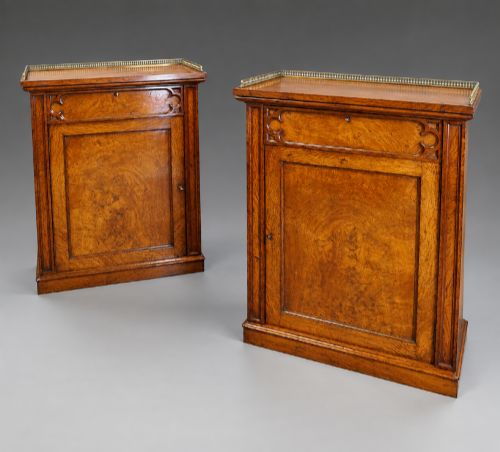
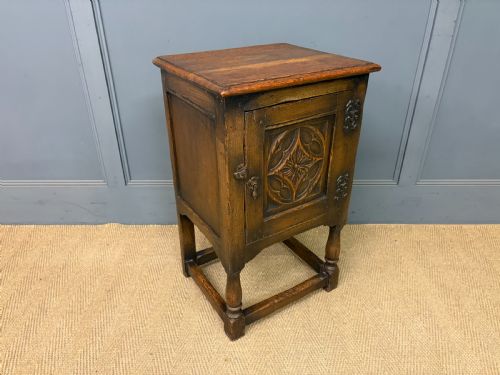
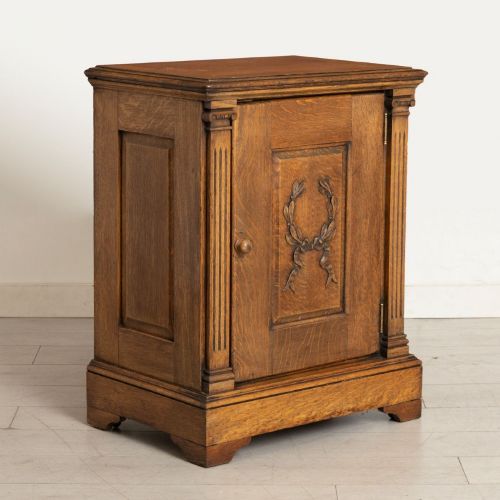
These gothic revival nightstands span multiple periods including Regency, Victorian, and the early twentieth century, appearing as bedside cabinets, side tables, and pot cupboards. A buyer searching this phrase is examining functional small storage pieces defined by architectural motifs drawn from medieval buildings. The most common examples met on this page are carved oak cabinets and pairs of bedside chests built during the nineteenth century.
Makers and workshops adapted church architecture for domestic use, producing pedestal cupboards, side cabinets, and bedside tables. The forms rely on solid timber construction designed to stand beside a bed, offering enclosed storage behind panelled doors or open surfaces for nightly use. Surviving examples demonstrate how cabinetmakers translated grand stonework into domestic proportions using familiar local and imported woods.
How they were made
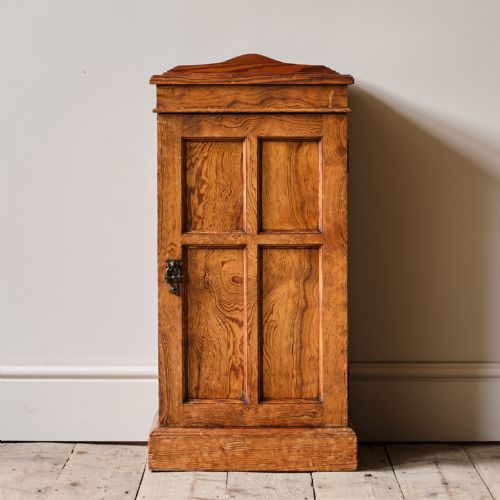
Makers constructed these pieces primarily using oak, walnut, mahogany, and Oregon pine, often selecting flame mahogany veneer for decorative surfaces. These timbers were shaped into bedside chests, side cabinets, and pot cupboards using traditional joinery suited to heavy daily use. The material selection dictates the weight and colour of each cabinet, ranging from pale pine to deep, polished mahogany.
Metalwork played a structural and decorative role, with brass and wrought iron utilised for hinges, handles, and mounts. These metal elements accentuate the medieval aesthetic, providing both functional durability and visual contrast against the dark wood surfaces. Craftspeople integrated these fittings directly into the doors and drawers of the bedside tables.
Listings show a strong representation of oak across nineteenth-century pieces, alongside occasional examples in walnut, mahogany, and Oregon pine.
What varies in quality
Quality rests in the depth and precision of the carved timber details, separating standard production pieces from finer cabinet work. Superior examples exhibit crisply executed linenfold panels, tracery, and moulding that reflect true architectural study rather than superficial decoration. The selection of figured wood, such as flame mahogany veneer, also distinguishes the upper tier of pieces.
Construction methods determine the longevity and integrity of each cabinet, particularly in the joinery of drawers and door frames. Finer pieces maintain solid internal linings and stable backboards, showing careful attention to structural stability alongside exterior ornamentation. The integration of original brass or iron hardware further elevates a piece within the range.
The Gothic Revival Nightstands Glossary
- Pot cupboard
- A small bedside cabinet originally designed to house a chamber pot behind a single door. These pieces evolved into standard bedside storage.
- Linenfold
- A style of wood carving that imitates folded linen cloth, frequently seen on Tudor and gothic revival panels. It creates a textured vertical pattern on cabinet doors.
- Pedestal cupboard
- A tall, narrow cabinet supported by a single enclosed base or plinth. This form saves floor space beside a bed while offering deep interior storage.
- Tracery
- Architectural stonework ornamentation adapted by cabinetmakers for wooden screenwork and door panels. It mimics the openwork patterns found in medieval church windows.
Gothic Revival Nightstands: Frequently Asked Questions
What periods do these pieces date from?
The pieces span several periods, primarily originating in the nineteenth century during the height of the revival movements. Examples also stretch from Regency eras through to the early twentieth century.
Cabinetmakers across these decades reinterpreted medieval design principles, resulting in varied stylistic expressions within the same general aesthetic framework.
Are pairs common for these bedside cabinets?
Many listings appear as matching pairs, reflecting the traditional arrangement of placing matching cabinets on either side of a bed. Sourcing a matched pair offers symmetry for a bedroom scheme.
Single pieces also appear frequently, often functioning as standalone side tables or pot cupboards in smaller spaces.
What woods were typically used?
Oak is the predominant timber found in these pieces, valued for its strength and historical association with medieval architecture. Walnut, mahogany, and Oregon pine also appear across the selection.
Some finer cabinets feature flame mahogany veneer to create striking grain patterns on the primary surfaces.
How do these cabinets function in a modern bedroom?
These cabinets provide enclosed storage behind doors or drawers, keeping modern bedside items concealed while offering a flat surface on top. Their compact dimensions suit them to contemporary spatial requirements.
The robust timber construction ensures they remain practical items of furniture despite their antique status.