
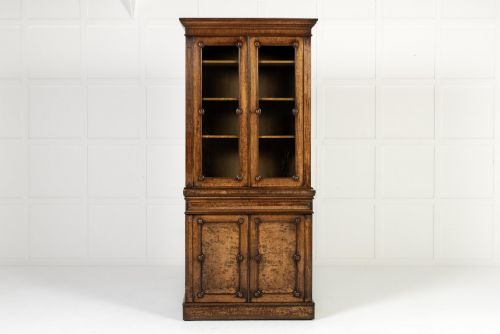


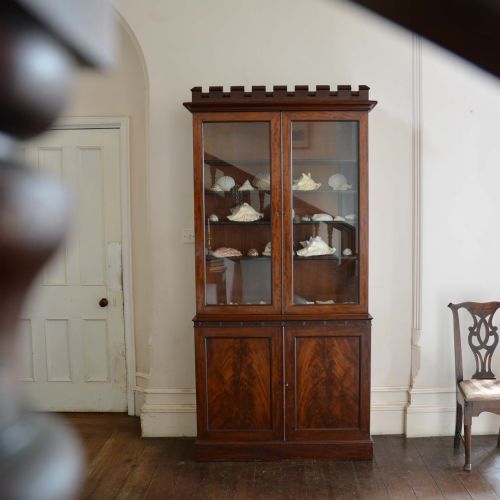

Gothic Revival Library Cabinet
A gothic revival library cabinet brings medieval architectural forms and substantial timber into the room to house serious collections.
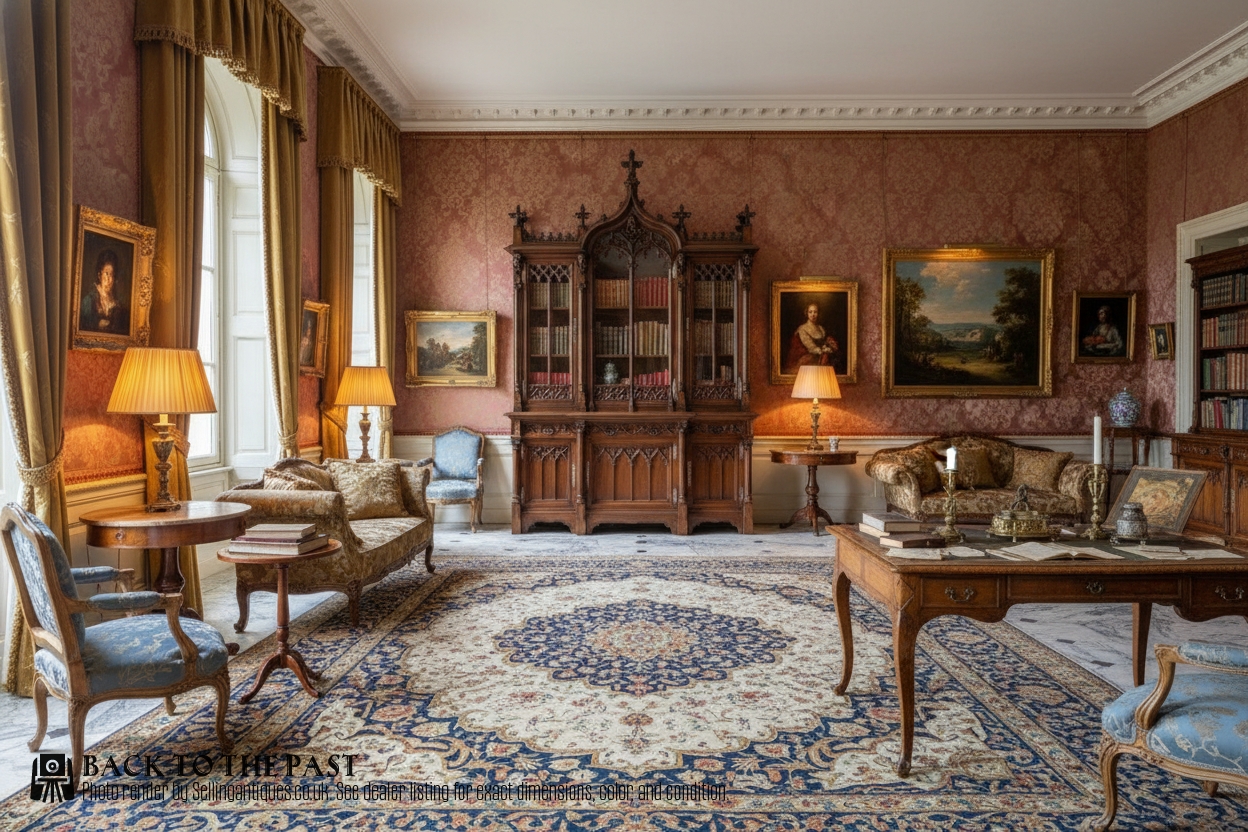
Gothic Revival Library Cabinet
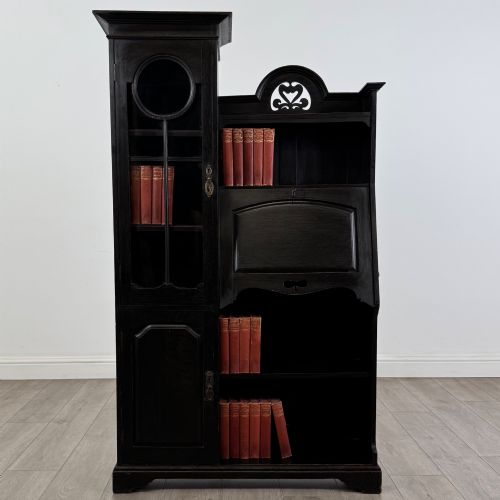
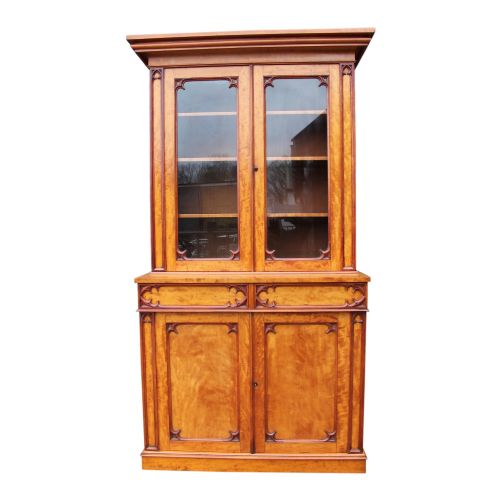
A gothic revival library cabinet takes the form of bookcases, display cabinets, and architectural cabinet bookcases designed to store and display books and papers. The versions most commonly met on this page date from the nineteenth century, including Victorian and Edwardian examples.
Makers constructed these pieces primarily in oak, mahogany, and walnut, often incorporating glass doors and brass hardware. Styles range from strict gothic revival and Jacobean revival to George III and Sheraton revival interpretations.
How they were made
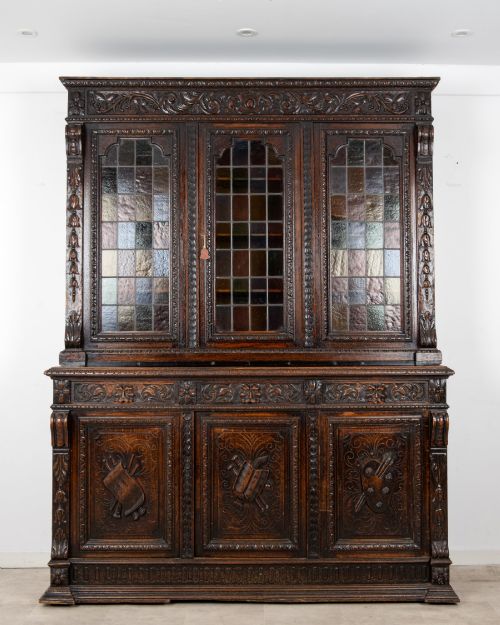
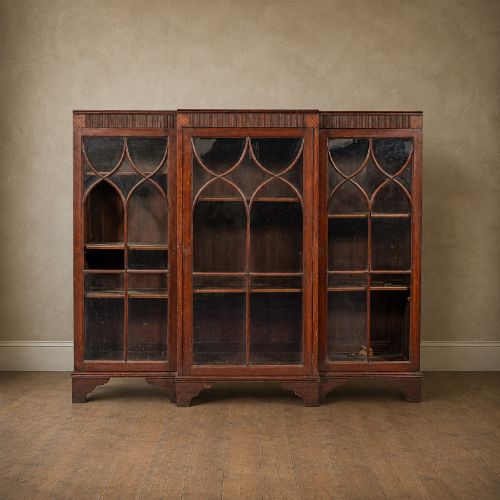
Cabinet makers utilised solid timbers like oak, pollard oak, walnut, and mahogany, frequently applying wood inlay and intricate carving to construct large breakfront and two-part bookcases. Structural integrity relied on heavy timber framing to support deep shelves and substantial glass doors.
Details such as crenelated cornices, stained glass, and brass fittings were integrated into the architectural framework. Workshops employed turning for elements like barley twist columns and shaped wooden panels to achieve the characteristic medieval aesthetic.
Listings feature nineteenth-century and Edwardian periods, utilising oak, mahogany, walnut, and pollard oak in gothic revival and revival styles.
What varies in quality
Quality separates through the selection of timber, such as figured pollard oak or rich mahogany, and the crispness of architectural carving. The ambition of the design, from simple open bookcases to monumental breakfront cabinets with specialised joinery, dictates the standing of the piece.
The integration of secondary materials like brass hardware, stained glass, and detailed wood inlay marks the distinction between standard utilitarian storage and fine cabinet work. Construction methods, including the weight of the timber and the precision of glazed doors, reflect the original workshop standards.
James Winter & Sons·Benjamin Taylor & Sons·Richard Bridgens·Gillows
The Gothic Revival Library Cabinet Glossary
- Breakfront
- A cabinet design where the central section projects forward from the flanking wings. This configuration adds architectural depth to large library bookcases.
- Crenelated cornice
- A decorative top moulding shaped like battlements. It reinforces the medieval architectural theme typical of gothic revival furniture.
- Pollard oak
- Timber taken from trees that have been pollarded, producing a dense, highly figured grain. Cabinet makers utilised this wood for striking visual texture on cabinet doors.
- Secretaire bookcase
- A tall case piece incorporating a pull-down writing drawer with fitted interior compartments above lower shelves or cupboards. These combined writing and reading storage in one unit.
Gothic Revival Library Cabinet: Frequently Asked Questions
How do I care for a large oak bookcase?
Keep the timber away from direct heat sources and sudden humidity shifts to prevent the heavy oak panels from splitting. Feed the wood occasionally with a suitable wax to maintain the finish.
Ensure heavy volumes are distributed evenly across the shelves to avoid sagging over time. Clean the glass doors with a gentle cloth without spraying liquids directly onto the surrounding wood.
Where should I place a heavy library cabinet?
Position the piece against a structurally sound interior wall away from direct sunlight that could fade walnut or mahogany surfaces. Allow enough clearance for doors to open fully without striking adjacent furniture.
Verify that the floor beneath can support the substantial weight of dense hardwoods and rows of books. Freestanding versions benefit from professional wall anchoring if they reach monumental heights.
How do I distinguish Victorian gothic from Edwardian pieces?
Victorian examples tend to feature heavier carved oak, stained glass, and prominent architectural motifs like crenelated cornices. The construction emphasises medieval mass and solemnity.
Edwardian pieces often introduce lighter satinwood or mahogany with refined inlay work, reflecting Sheraton revival influences. The overall appearance is frequently brighter and less austere than nineteenth-century counterparts.
Can these cabinets hold modern books?
Most nineteenth-century library cabinets offer adjustable shelving to accommodate varying book heights. You should measure the depth and height of your largest volumes before assigning shelves.
Ensure the shelves are thick enough to bear the weight of modern hardcover collections without bowing. Deep breakfront and open bookcases generally provide the most flexible space for mixed formats.