


Gothic Revival Desk Lamp
These gothic revival desk lamp options bring medieval ecclesiastical presence and heavy architectural weight directly into a modern room.
Gothic Revival Desk Lamp
A gothic revival desk lamp takes its design cues from medieval architecture and ecclesiastical furnishings, adapting pointed arches, tracery, and heavy vertical lines for interior illumination. Collectors searching for a gothic revival desk lamp will encounter pieces spanning the Victorian era, the nineteenth century, and subsequent decades up to nineteen thirty.
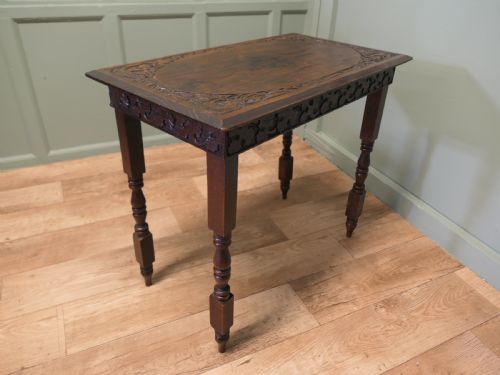
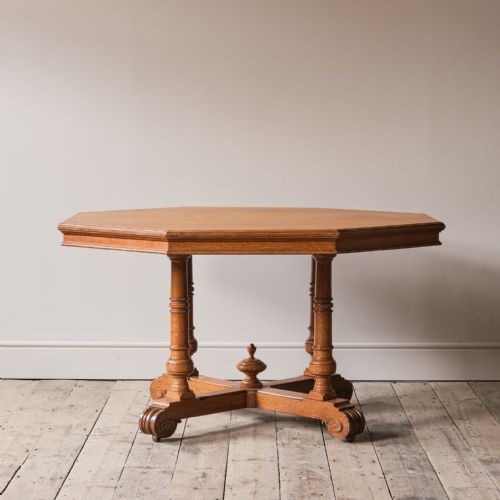
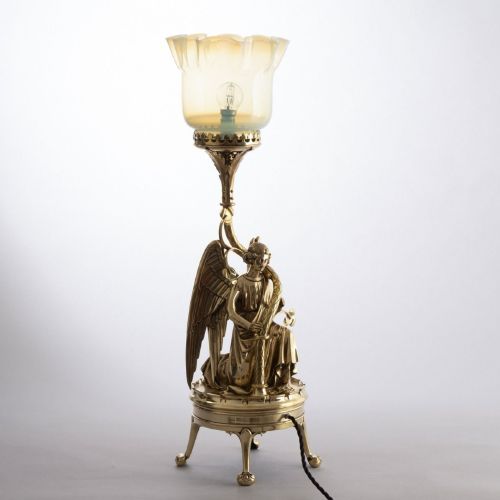
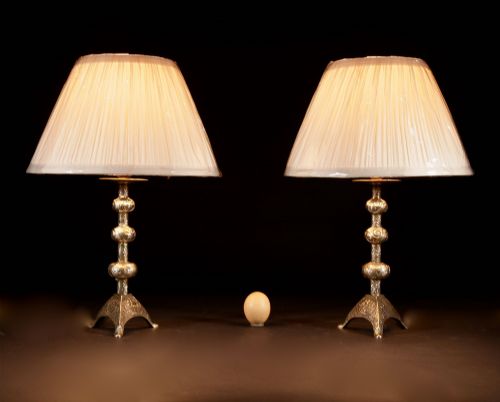
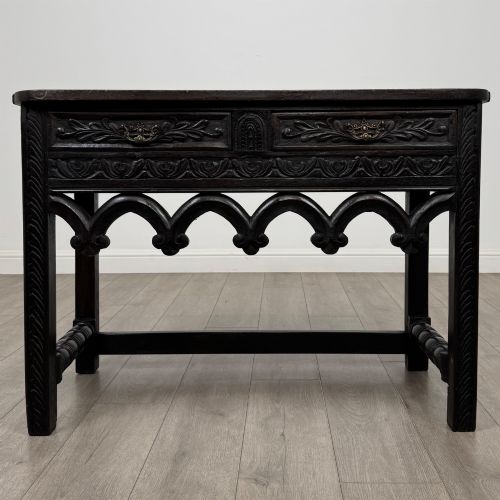
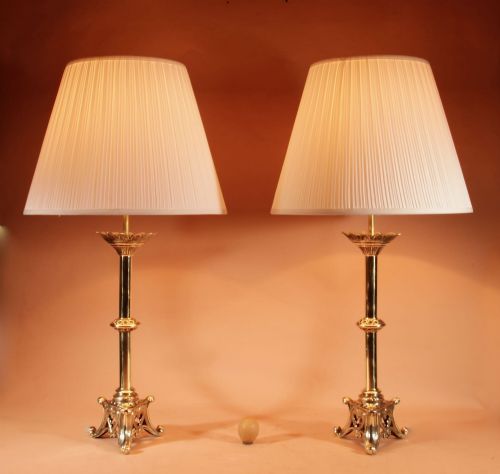
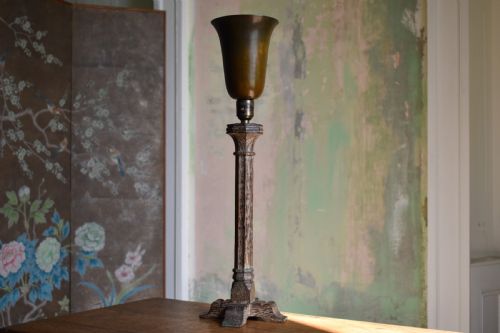
The physical objects appearing under this search include brass altar candlesticks converted to lamps, cast brass figures, and carved oak standards. Alongside dedicated lamp forms, the listings incorporate related occasional furniture such as oak octagonal centre tables, side tables, and paired table lamps referencing twelfth-century Romanesque or early gothic styles.
Most examples originate from British or French workshops, showing the widespread European appetite for medievalism during the nineteenth and early twentieth centuries. The materials range from patinated brass and silver plating to solid oak and limed oak, occasionally paired with delicate fabric shades or distinctive vaseline glass.
Materials and construction methods
Brass serves as the primary metal for these pieces, appearing both as heavy cast components and hammered sheet work. Workshops utilised patinated brass and silver plating to mimic antique liturgical metalwork, often pairing the metal bases with vaseline glass or fabric components.
Timber construction relies predominantly on oak, utilised either in its natural dark state or finished as limed oak. Carving and octagonal turning give these wooden forms their structural heft and architectural silhouette.
Object types in this selection range from dedicated table lamps and altar candlesticks to octagonal centre tables and carved oak side tables.
Assessing quality in historical lighting
Weight and metal density dictate the foundational quality of a brass piece, distinguishing solid castings from lighter, hollow construction. Superior examples retain crisp architectural detailing in the tracery and casting, whereas inferior items display softened edges and plain surfaces.
The integration of secondary materials defines the upper tier of the range, particularly where vaseline glass or specialised fabric shades complement the metal framework. Original surface patination on both the brass and the carved oak remains critical to the integrity of each piece.
The Gothic Revival Desk Lamp Glossary
- Gothic Revival
- An architectural and decorative style drawing inspiration from medieval forms, pointed arches, and ecclesiastical motifs. This aesthetic dominated nineteenth-century design across furniture and metalwork.
- Vaseline Glass
- A type of glass containing uranium dioxide, producing a distinctive yellow-green colour that glows under ultraviolet light. It frequently appears in late Victorian lighting.
- Limed Oak
- Timber treated with a white compound to highlight the grain, creating a pale, weathered finish. This technique became popular during the early twentieth century.
- Romanesque Revival
- A nineteenth-century architectural style echoing heavy round arches, thick walls, and sturdy proportions of the eleventh and twelfth centuries. It frequently shares display space with gothic pieces.
- Ecclesiastical
- Pertaining to the Christian church and its architecture, heavily influencing the form of altar candlesticks later adapted into domestic lamps.
Gothic Revival Desk Lamp: Frequently Asked Questions
What defines a gothic revival lamp?
These lamps adopt architectural motifs from medieval churches, including pointed arches, heavy buttressing, and ecclesiastical metalwork.
They translate stone and iron building traditions into domestic illumination through cast brass, carved oak, and specialist glass.
How old are these desk lamps?
The pieces span the Victorian period, the broader nineteenth century, and early decades of the twentieth century.
They reflect successive waves of medieval revivalism in European decorative arts.
Were these originally made as lamps?
Many examples began life as altar candlesticks or processional items before receiving modern electrical fittings.
Other items were constructed directly as heavy table lamps referencing early gothic and Romanesque styles.
What materials do makers use?
Construction relies heavily on cast brass, solid oak, and silver plating, sometimes incorporating vaseline glass or silk fringe.
Timber finishes range from dark carved oak to twentieth-century limed oak.
How do I style them at home?
Their strong architectural presence suits traditional studies, libraries, and eclectic interiors alongside dark wood furniture.
They provide both focused task lighting and a sculptural focal point for a desk or side table.