




French Ecclesiastical Candlestick
These French ecclesiastical candlestick pieces bring sculptural altar presence and rich chapel character into a modern interior.
French Ecclesiastical Candlestick
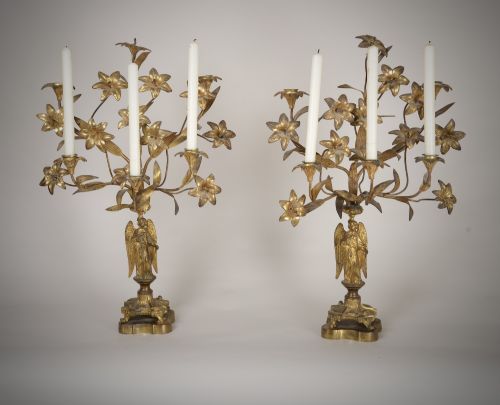
When you search for french ecclesiastical candlestick, you are looking at items designed for sacred altars and chapel spaces, originating primarily from the nineteenth century. These objects bridge liturgical devotion and decorative arts, appearing frequently as table lamps, pricket sticks, and altar candelabra.
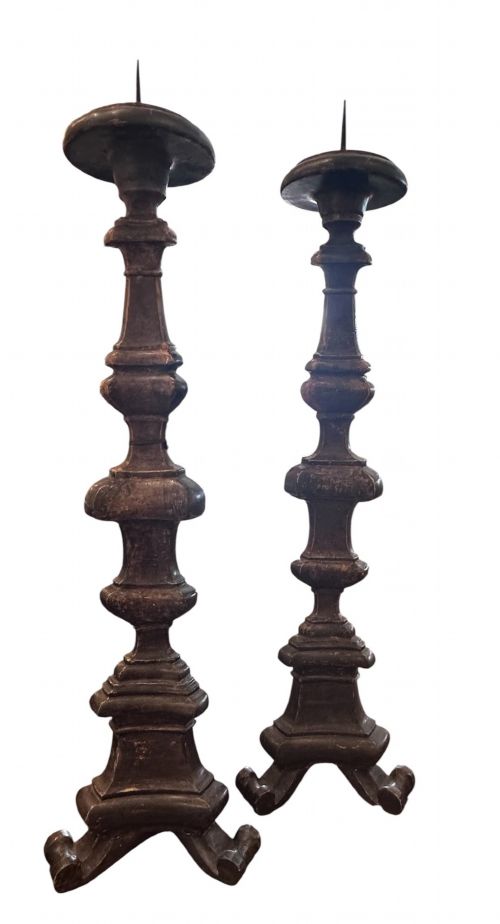
The versions you are most likely to meet on this page include nineteenth century brass and gilt metal examples, alongside carved wood pieces finished with gold or silver leaf. They span styles such as Gothic revival, French neoclassical, and continental baroque.
Makers and workshops of the period produced both pairs and larger sets, ranging from modest treen constructions to monumental floor candlesticks. Their survival reflects a strong nineteenth century appetite for historicist church furnishings.
Materials and construction
The construction of these pieces relies heavily on cast brass, gilt bronze, and turned wood, often enhanced with gesso and gold or silver leaf. Metal components were shaped through casting and turning, whilst wooden bases were hand-carved and subsequently gilded.
Surface finishes include applied metal plating, gilding, and silver leaf applied over gesso grounds. These techniques created a heavy, opulent visual weight intended to catch candlelight within dim ecclesiastical interiors.
Listings here feature nineteenth century periods alongside brass, gesso, wood, gold leaf, iron, and gilt metal.
Evaluating quality and execution
Quality in these objects rests upon the crispness of the casting in metal elements and the depth of the hand-carving in wooden pieces. Finer examples display sharp architectural details in Gothic revival mounts and smooth, balanced turnings on treen shafts.
The integrity of the original surface finish also dictates value, particularly where delicate silver or gold leaf survives intact over gesso. Heavier gauges of brass and substantial bronze castings separate superior workshop output from simpler utilitarian items.
The French Ecclesiastical Candlestick Glossary
- Pricket
- A sharp metal spike on a candlestick designed to secure a candle in place. This form is particularly common on traditional altar sticks.
- Gesso
- A plaster-based mixture applied to wood surfaces to prepare them for gilding. It provides a smooth base for gold or silver leaf.
- Treen
- Small handmade wooden objects and household wares. In ecclesiastical pieces, it refers to turned wooden shafts and bases.
- Candelabra
- A branched candlestick holding multiple lights. These grander forms often sat upon church altars alongside single sticks.
- Giltwood
- Wood that has been coated with gold leaf or gold paint. It brings a reflective, luxurious quality to carved lamp bases and candlesticks.
French Ecclesiastical Candlestick: Frequently Asked Questions
What is a pricket candlestick?
A pricket candlestick uses an upward-pointing metal spike rather than a socket to hold the candle. This traditional altar design supported large wax candles used in religious services.
Today, these pieces are frequently adapted as lamp bases or displayed simply as sculptural objects on tables and mantelpieces.
How old are these church candlesticks?
The pieces available here date predominantly from the nineteenth century, including specific years like eighteen-fifty, eighteen-eighty, and nineteen-twenty. This era saw a major revival of Gothic and baroque liturgical styles across France.
Makers drew heavily on medieval and continental ecclesiastical traditions when producing these altar lamps and candelabra.
What materials were used?
The primary materials recorded are brass, gilt metal, iron, and wood finished with gesso and gold or silver leaf. Metalwork was typically cast, whilst wooden components were turned and carved by hand.
These varied materials created the opulent, reflective surfaces required for dim church interiors.