

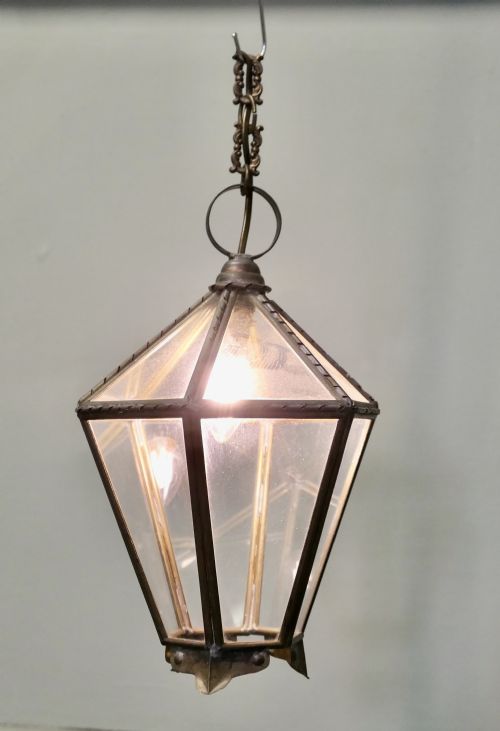


Gothic Revival Ceiling Pendant
These gothic revival ceiling pendant lights bring heavy architectural character into a room through ecclesiastical metalwork and glass.
Gothic Revival Ceiling Pendant
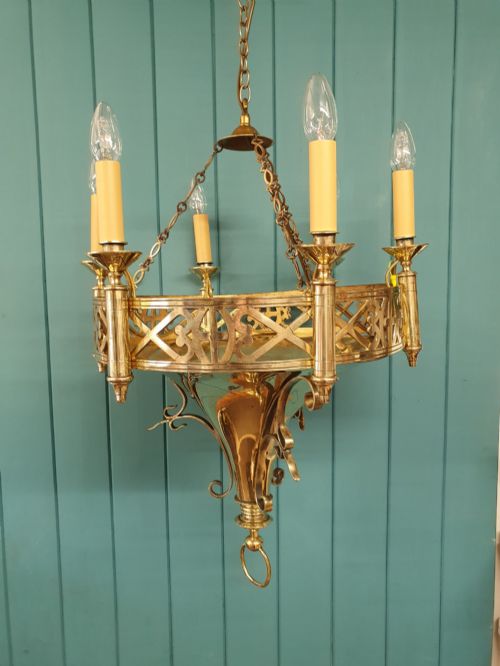
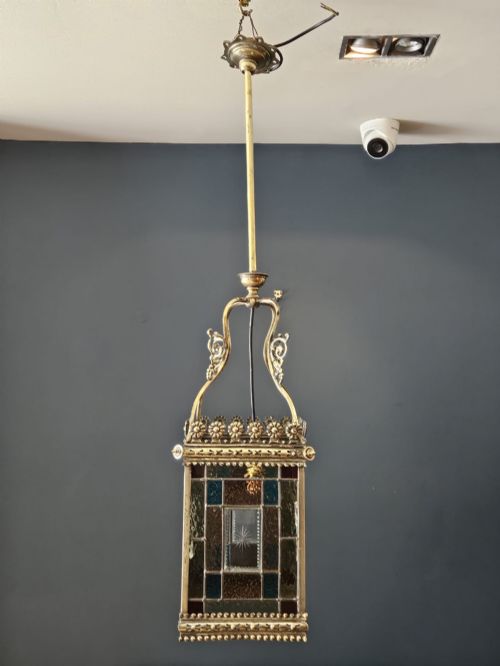
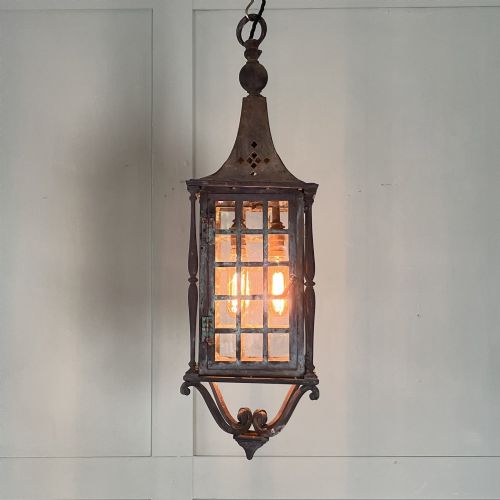
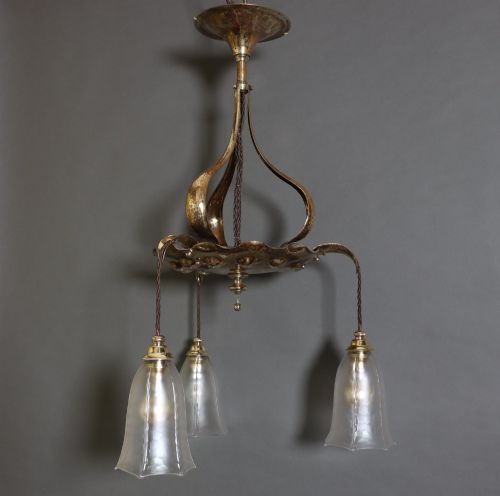
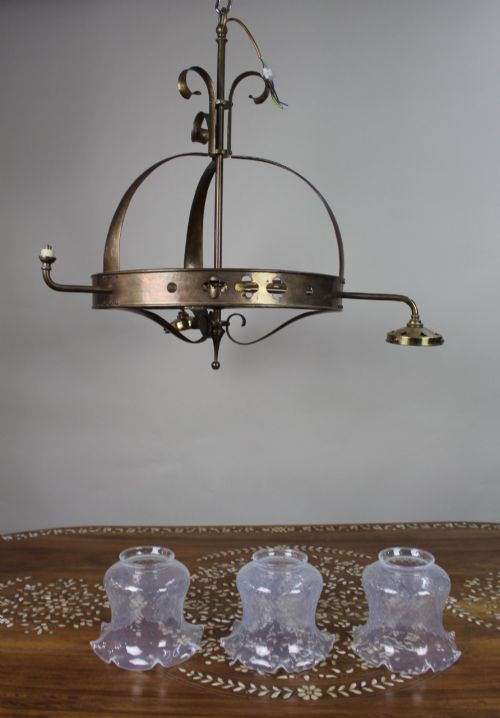
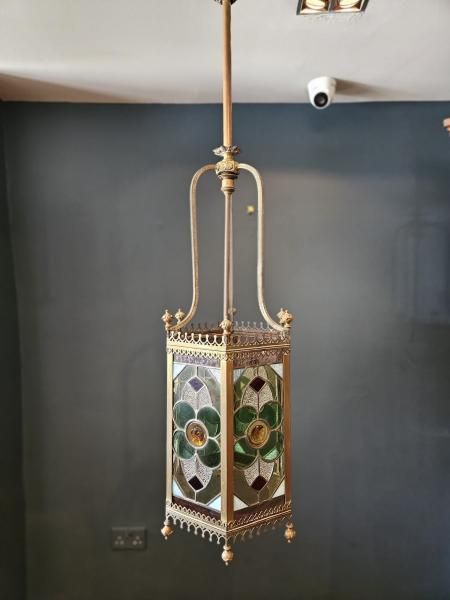
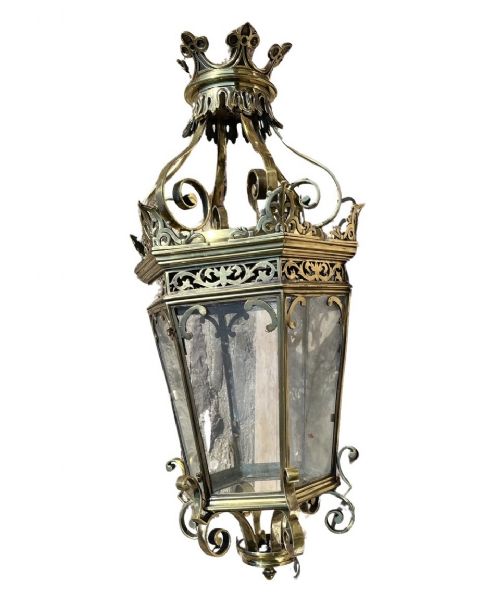
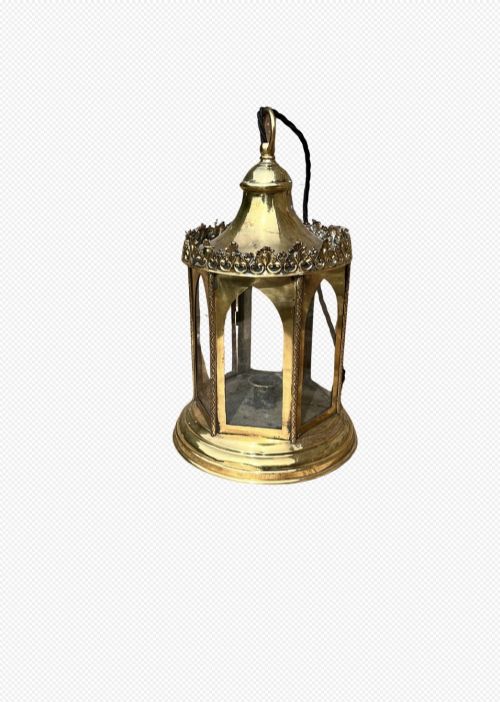
A gothic revival ceiling pendant takes many forms across this selection, appearing most frequently as brass, bronze, and wrought iron lanterns or multi-armed chandeliers. You will encounter hexagonal and square hall lanterns alongside gasoliers and chandeliers that descend from Victorian, Edwardian, and later twentieth-century periods.
The aesthetic draws heavily on medieval ecclesiastical design, translating architectural tracery and pointed arches into domestic hanging lights. Pieces range from simple English and French hall lanterns with leaded glass panels to large multi-branch chandeliers bearing ornate metalwork.
Assessing quality
Quality rests in the heaviness of the casting, the crispness of the Gothic detailing, and the integrity of the glass panels. Superior examples display substantial metal gauges, complex hand-forged or cast ornamentation, and thick bevelled or coloured glass rather than thin stamped sheet metal.
The sophistication of the design dictates distinction, separating standard utility lighting from sculptural pieces that incorporate distinct motifs like green man masks or intricate tracery. The caliber of the original metal patination and the precision of the joinery further separate fine examples.
The listings span from the nineteenth century through the 1940s, recording materials including brass, bronze, wrought iron, lead, and gilded metal.
Joseph Wilmotte
The Gothic Revival Ceiling Pendant Glossary
- Gasolier
- A light fixture originally designed to burn coal gas, featuring multiple branching arms configured for gas jets rather than electric bulbs. Many surviving examples have since been safely converted to electricity.
- Lantern
- An enclosed lighting fixture with glass sides designed to protect the flame or bulb from drafts in hallways and porches. They often feature a hinged door for internal access.
- Corona
- A circular crown-like hanging light fixture suspended horizontally by chains, derived from medieval ecclesiastical lighting in churches and cathedrals.
- Opalescent glass
- A milky, translucent glass type that diffuses light softly, frequently utilised in shades to create a warm, muted interior glow.
- Lead cames
- The slender grooved lead strips used to hold individual pieces of cut glass together in leaded windows and lantern panels.
Gothic Revival Ceiling Pendant: Frequently Asked Questions
How do I hang a heavy brass lantern safely?
Suspension requires fixing directly into ceiling joists or installing a heavy-duty pattress box capable of supporting the substantial weight of cast metal and glass. A professional electrician should assess the wiring capacity and structural ceiling support before installation.
Heavier chandeliers and lanterns often require a steel chain rated well above the actual weight of the fixture to ensure secure hanging in high-ceilinged hallways or principal rooms.
Were these lights originally wired for electricity?
Many nineteenth-century examples began life as gasoliers or candle-lit lanterns before being converted to electricity during later twentieth-century updates. Original gas keys and burners are frequently replaced with standard lamp holders during these conversions.
When examining older pieces, look for evidence of secondary drilling or adapted burner assemblies that indicate the transition from gas or candles to modern wiring.
How do I clean antique brass and glass?
Dust metal frames gently with a dry, soft cloth to preserve the historic patination accumulated over decades. Avoid harsh chemical polishes that strip away original bronze or brass ageing.
Glass panels can be carefully wiped with a damp cloth while removed from the frame, ensuring no moisture enters old electrical sockets or compromises fragile lead cames.
Where should I place a hall lantern?
These pendant fixtures suit high-ceilinged entrance halls, stairwells, and landings where their vertical drop and architectural silhouette can be fully appreciated. Their enclosed frames historically protected flames from drafts in busy corridors.
In contemporary interiors, they provide a strong focal point above a central hallway table or act as dramatic lighting in high-ceilinged period reception rooms.