



Gothic Brass Hanging Light
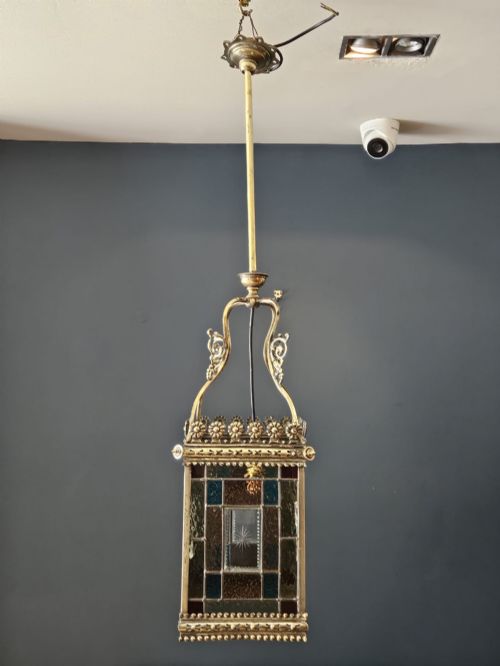
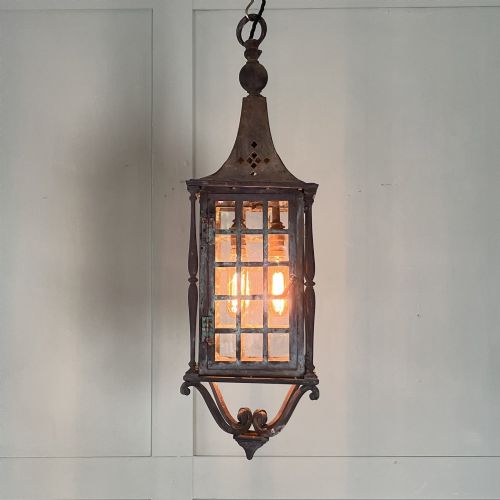
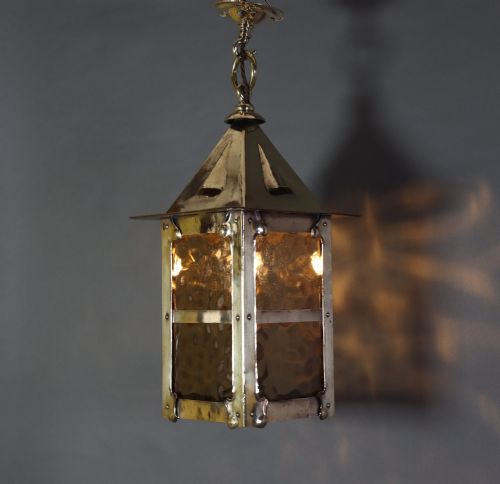
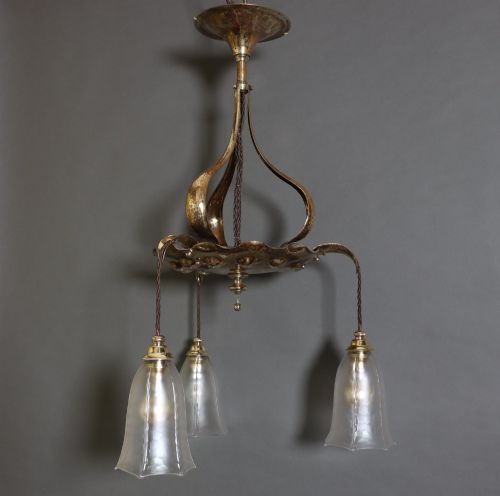
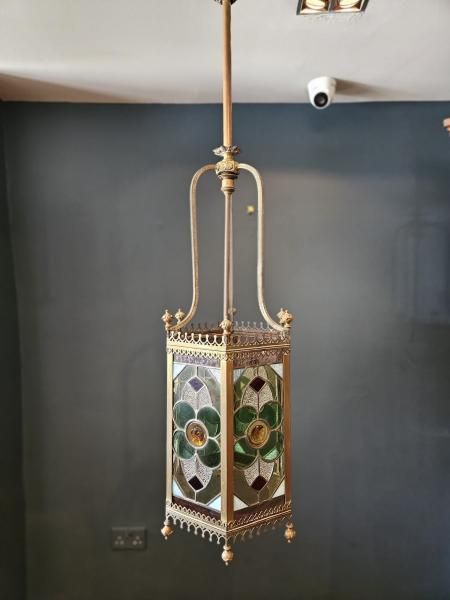
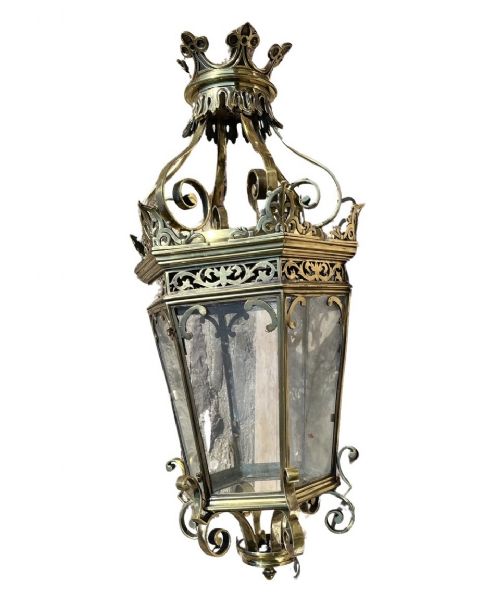
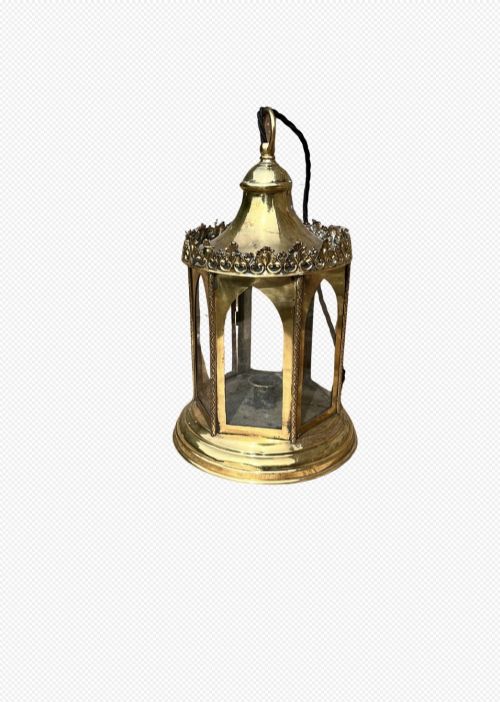
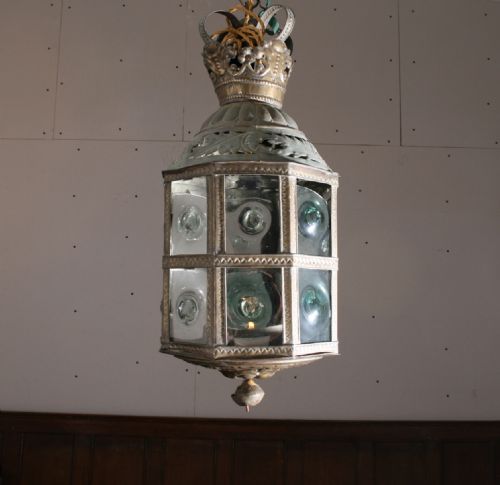
These gothic brass hanging light examples bring medieval ecclesiastical verticality into domestic spaces through pierced metalwork and leaded glass.
Gothic Brass Hanging Light
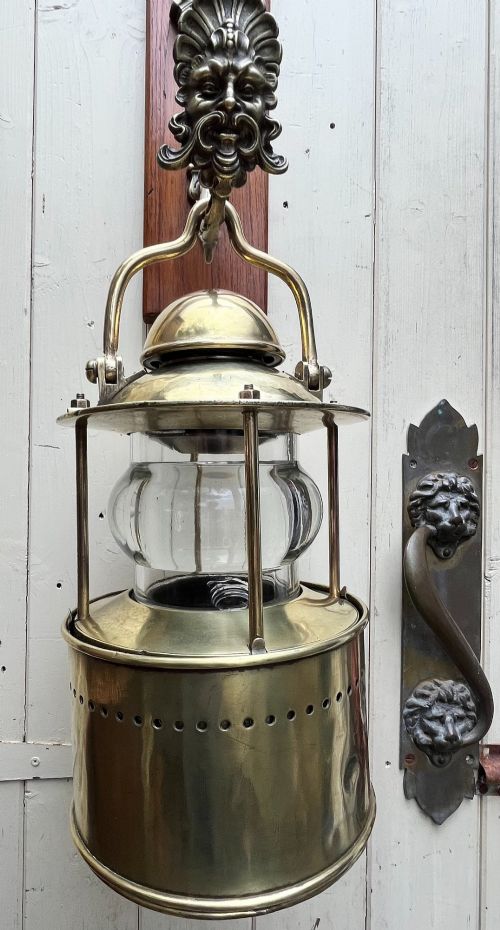
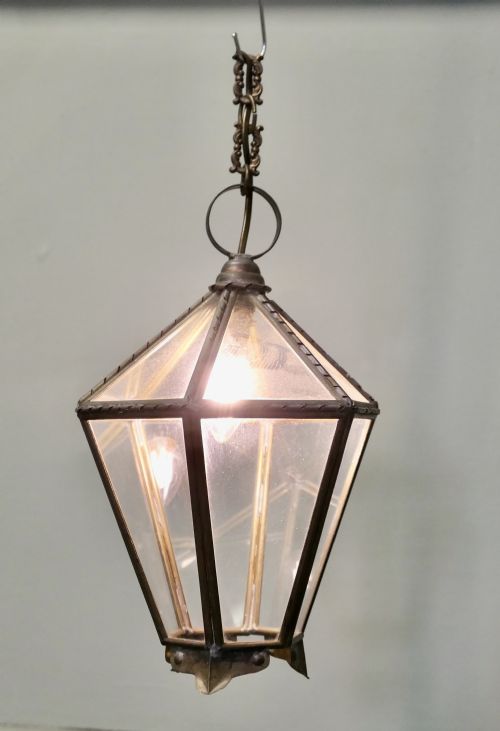
When you search for a gothic brass hanging light, you encounter lanterns, hall lights, and chandeliers from the nineteenth and early twentieth centuries. These fixtures descend from Victorian Gothic Revival, Arts and Crafts, and ecclesiastical traditions, designed to cast patterned illumination through coloured or leaded glass panels. The versions most commonly met here span the Victorian era, the Edwardian period, and the 1900s, often taking hexagonal or multi-branched forms.
Domestic examples range from modest single-bulb hall lanterns intended for porches and narrow corridors to grand multi-light chandeliers and candelabra designed for principal reception rooms. Materials extend beyond plain brass to include gilded brass, bronze, and wrought iron frameworks holding leaded, bullseye, or coloured glass. Origins vary across English, French, and Flemish workshops, reflecting a widespread European revival of medieval design principles.
How they were made
Workshops constructed these fixtures using heavy brass frameworks, joined by rivets or solder, to support panels of leaded, hand-blown, or coloured glass. Metalwork was frequently cast, pierced, or gilded, employing bronze and wrought iron details to accentuate the medieval silhouette.
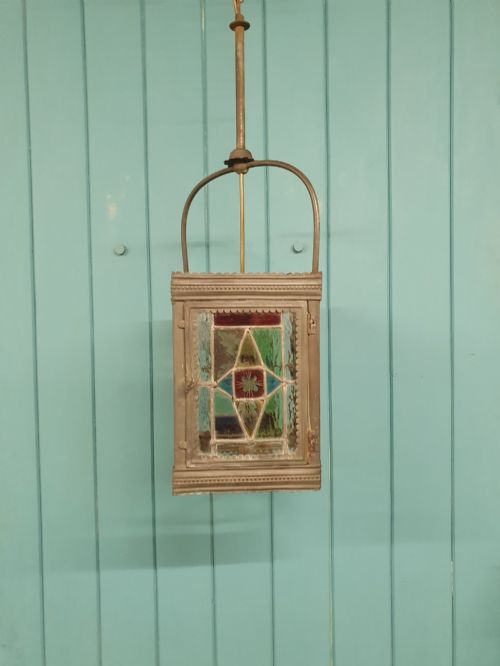
Glass elements often incorporated bullseye panes, dimpled textures, or coloured segments held together with lead cames. Fixtures originally configured for candles or gas were subsequently wired for electricity while retaining their structural metal and glass components.
Materials recorded across the inventory include brass, leaded glass, bronze, wrought iron, and gilded metal work.
What varies in quality
Quality rests in the substantial gauge of the brass framework and the crispness of the casting or piercing work. Superior pieces display hand-blown glass with distinct character, secure lead cames, and integrated architectural details rather than stamped sheet metal.
The sophistication of the design dictates value, distinguishing standard utilitarian hall lanterns from elaborate ecclesiastical chandeliers with multiple branches or fine gilding. Proportion, weight, and the integrity of the original metal finish separate fine examples from simpler production.
The Gothic Brass Hanging Light Glossary
- Gothic Revival
- An architectural and decorative movement reviving medieval structural forms, pointed arches, and ecclesiastical motifs. It heavily influenced Victorian and Edwardian lighting design.
- Leaded Glass
- Small panes of glass held together by lead strips called cames. This technique allows for geometric or patterned window designs within lantern frames.
- Bullseye Glass
- A round pane of blown glass featuring a thick central punt mark where the glassblower's pontil rod was attached. It distorts light and adds texture to lantern panels.
- Hall Lantern
- An enclosed hanging light fixture designed specifically for entrance halls, corridors, and vestibules. They typically feature glass panels to protect the flame or bulb from drafts.
- Chandelier
- A branched decorative ceiling fixture designed to hold multiple light sources. In this context, they often incorporate Gothic or ecclesiastical cast brass branches.
Gothic Brass Hanging Light: Frequently Asked Questions
Where should I hang a gothic brass hanging light?
These fixtures suit entrance halls, stairwells, and high-ceilinged reception rooms where their vertical proportions and patterned glass can be fully appreciated.
Because many examples originate as hall lanterns or multi-branch chandeliers, they provide focused downward illumination or ambient glow depending on the glass panels.
How do I date a gothic brass hanging light?
Dating relies on stylistic markers such as Victorian Gothic Revival proportions, Arts and Crafts hand-beaten textures, and Edwardian construction methods. Documentation and construction techniques like the type of solder, screw threads, and glass manufacturing methods also guide the timeline.
Earlier nineteenth-century pieces often display heavier cast brass and hand-soldered lead work, whereas twentieth-century examples incorporate simpler assembly.
Are these lights compatible with modern electricity?
Most surviving pieces have been adapted for modern electrical supplies while retaining their original brass bodies, chains, and glass panels.
Rewiring is typically straightforward for a qualified electrician, though internal lamp holders may need updating to meet current safety standards.