

Gothic Revival Accent Chair
These gothic revival accent chair options bring medieval architectural motifs and sturdy timber construction into modern seating.
Gothic Revival Accent Chair
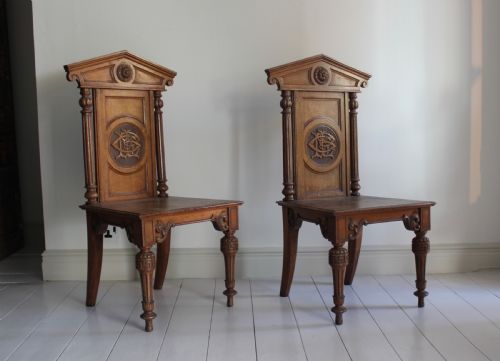
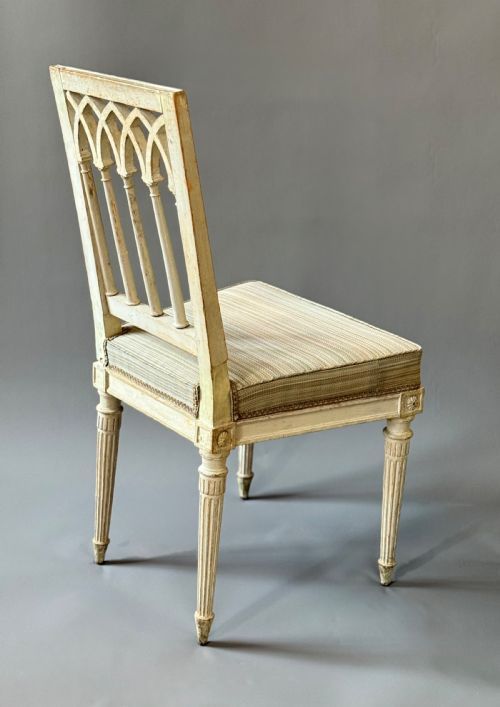
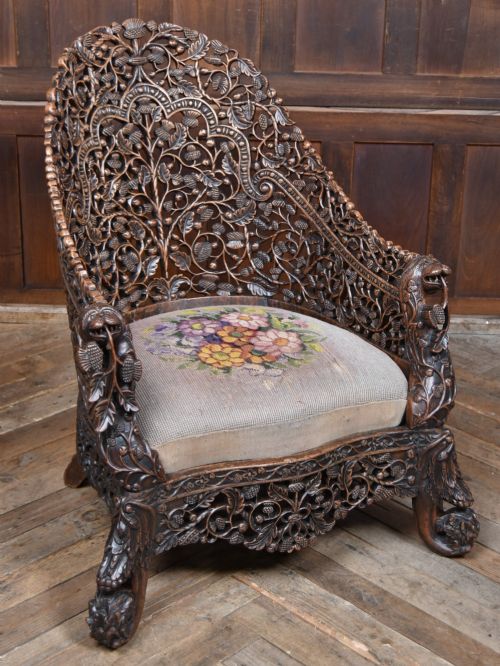
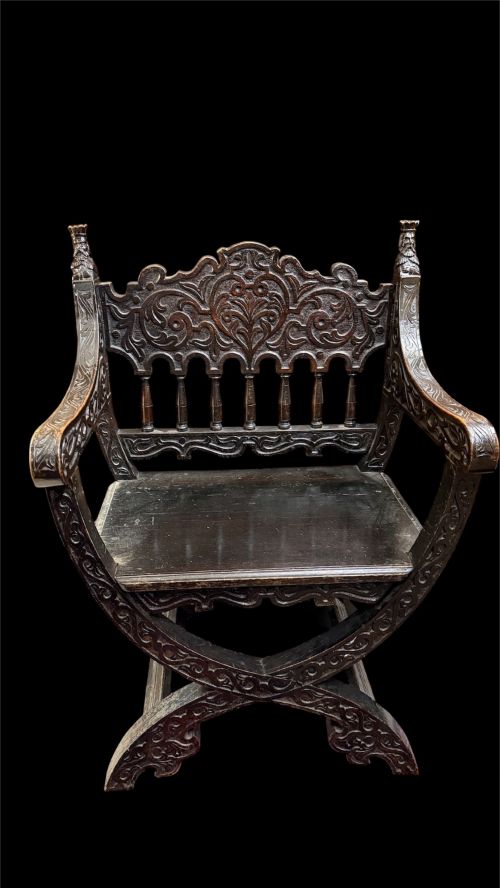
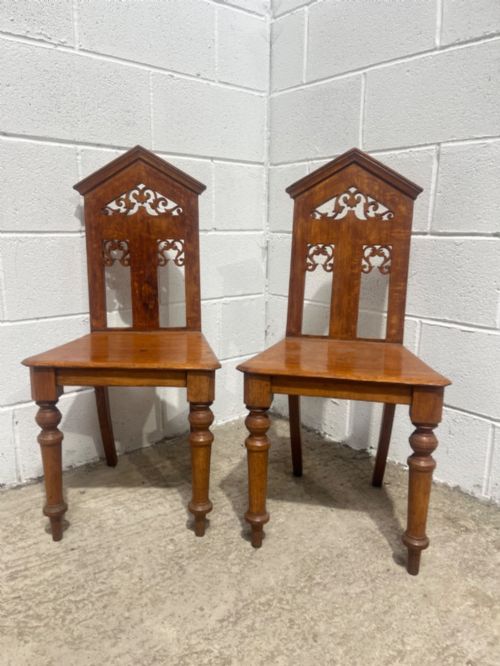
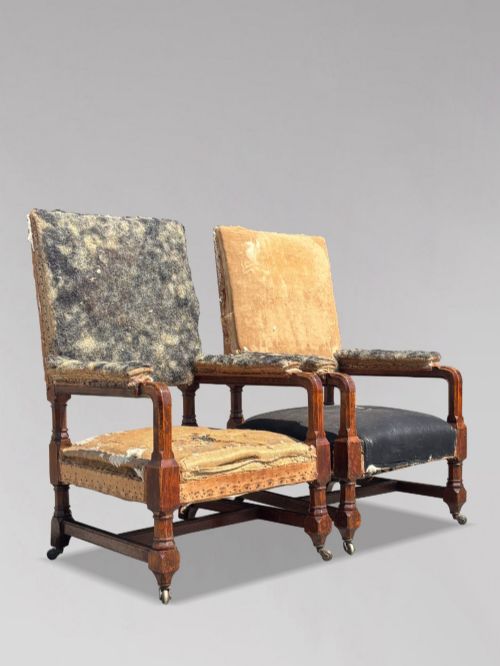
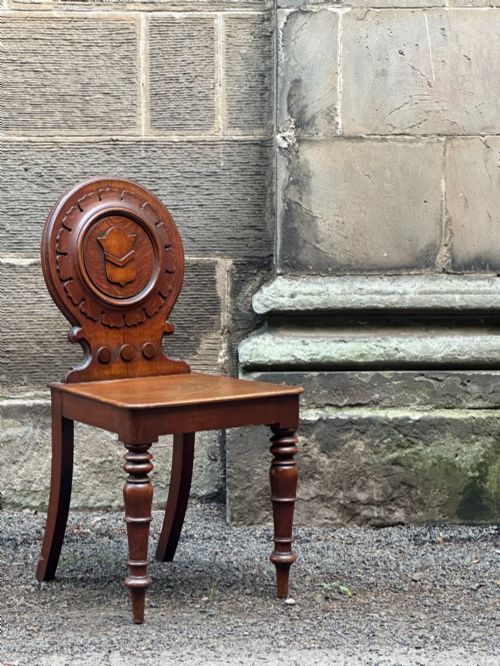
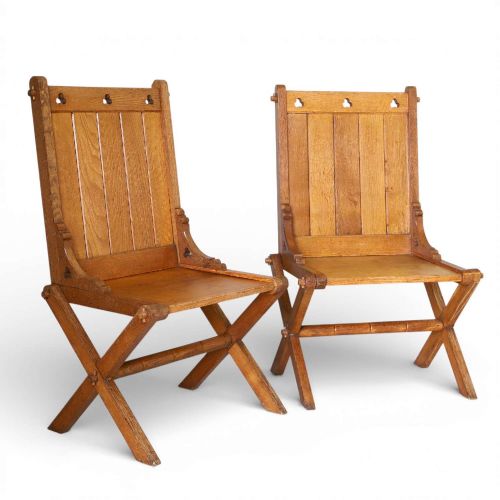
A gothic revival accent chair draws upon medieval architectural forms, pointed arches, and trefoil details first revived during the nineteenth century. These seating options appear in several structural formats including upright hall chairs, broad armchairs, and folding cross-frame variants.
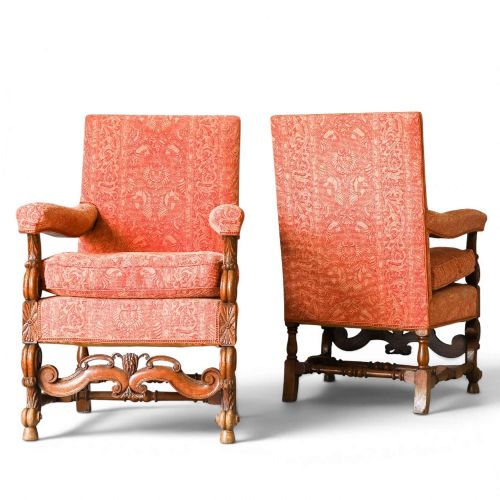
The selections recorded here span the nineteenth and early twentieth centuries, featuring robust timber frames and occasionally upholstered panels. Buyers encounter sturdy oak and walnut seating designed for hallways, libraries, and reception spaces.
Makers frequently turned to historical precedents, adapting ecclesiastical seating designs for domestic interiors. The resulting chairs combine heavy timber construction with pointed arches, carved tracery, and distinctive turned elements.
How they were made
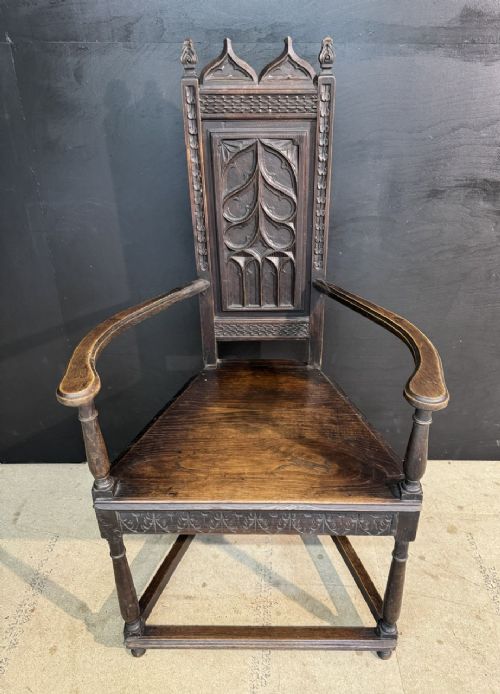
Cabinet makers built these chairs using solid timbers such as oak, walnut, mahogany, and pitch pine, often joining the structural components with mortise and tenon joints. Carpenters shaped the dense wood using hand chisels to create deep relief carvings, pointed arches, and tracery panels.
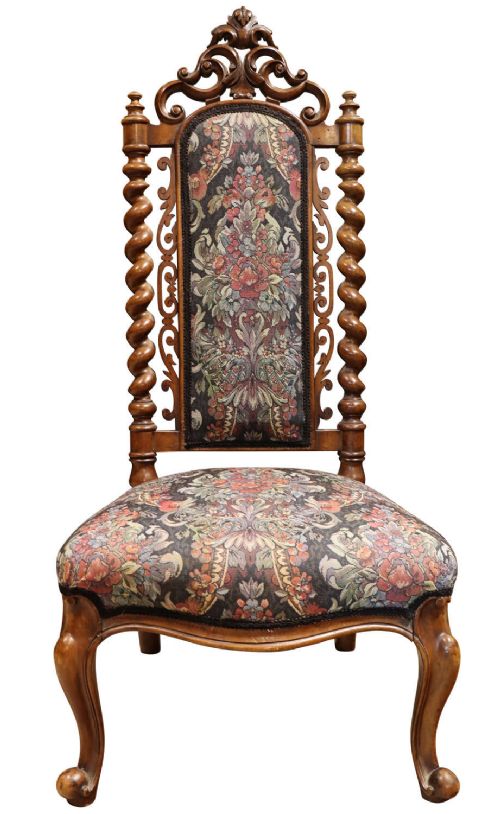
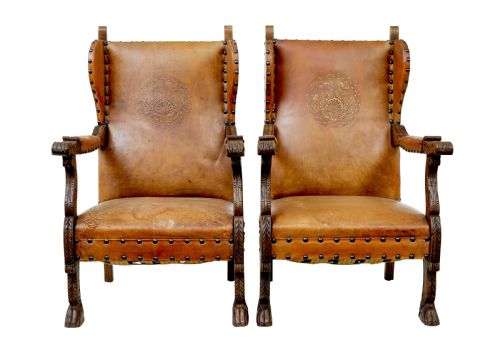
Upholstered versions incorporate durable materials like embossed leather, tapestry, and fabric secured to the wooden frames with brass tacks. Painted finishes and inlaid satinwood also appear on select variants, demonstrating diverse surface treatments employed by period workshops.
The listings show nineteenth-century oak and walnut as the primary materials for these chairs, alongside occasional mahogany and painted wood.
What varies in quality
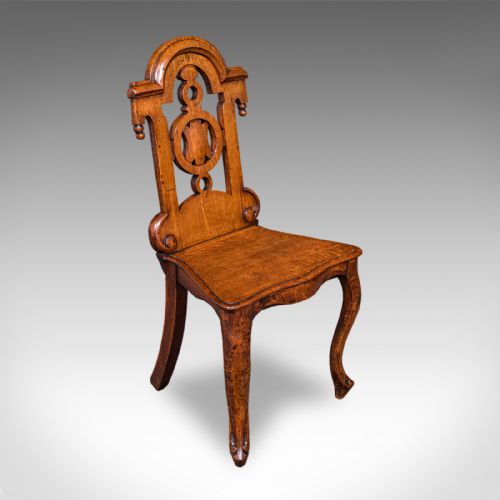
Depth and precision of the wood carving separate standard production pieces from exceptional examples created by skilled workshops. Crisp architectural lines, well-defined trefoils, and substantial timber thickness indicate superior craftsmanship.
The integrity of the structural joints and the quality of secondary materials, such as embossed leather and woven tapestry, determine the overall execution. Pieces retaining original surface finishes and documented design lineage command higher regard among collectors.
Gillows·Gillows of Lancaster·Bruce Talbert·A W N Pugin
The Gothic Revival Accent Chair Glossary
- Gothic Revival
- An architectural and decorative style drawing inspiration from medieval design, featuring pointed arches and structural heaviness. This aesthetic dominated nineteenth-century furniture production.
- Trefoil
- A three-lobed decorative ornament resembling a clover leaf, commonly pierced into chair backs and panels. It represents a fundamental geometric motif of medieval architecture.
- Glastonbury Chair
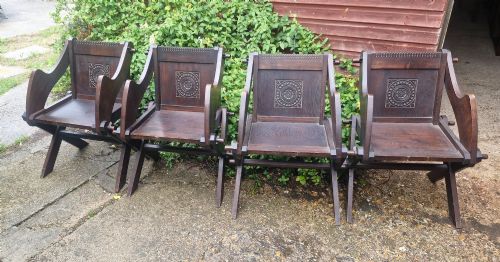
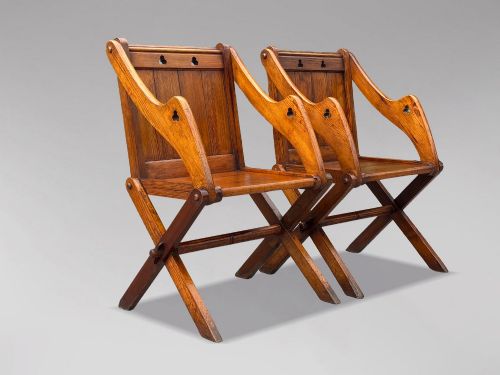
- A traditional folding armchair with X-framed legs and a sloping back panel, frequently constructed in oak. This form derives from ancient ecclesiastical seating designs.
- Wainscot Chair
- A heavy wooden armchair featuring a high paneled back and solid seat construction. These sturdy seats date back to early domestic interiors.
- Turners Chair
- A seating form constructed entirely from turned wooden spindles and cylindrical members. Also known as a spindle chair, it utilises traditional joinery techniques without flat board elements.
Gothic Revival Accent Chair: Frequently Asked Questions
What defines a gothic revival accent chair?
A gothic revival accent chair utilises medieval architectural elements, such as pointed arches, carved tracery, and trefoil motifs, applied to nineteenth-century wooden seating forms.
These pieces typically feature solid oak or walnut construction designed to create a striking visual presence in a hallway or library.
How do I identify a Glastonbury chair?
A Glastonbury chair is distinguished by its folding X-frame base and an inclined wooden back panel bearing pointed arch carvings.
This specific form emerged from historical ecclesiastical models adapted for domestic use during the Victorian era.
Where were these chairs placed historically?
Historically, these sturdy wooden seats served functional roles in grand reception spaces, entrance halls, and libraries.
Their robust timber frames and upright backs suited areas requiring durable, formal seating rather than lounging comfort.
What woods were used for these chairs?
Cabinet makers predominantly utilised native hardwoods such as oak, walnut, mahogany, and pitch pine to ensure structural stability.
Selected examples also incorporate painted surfaces, satinwood inlay, or upholstered leather and tapestry panels.