

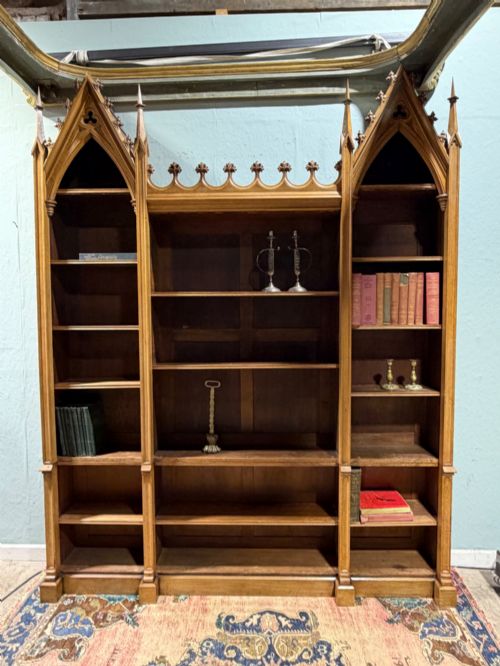
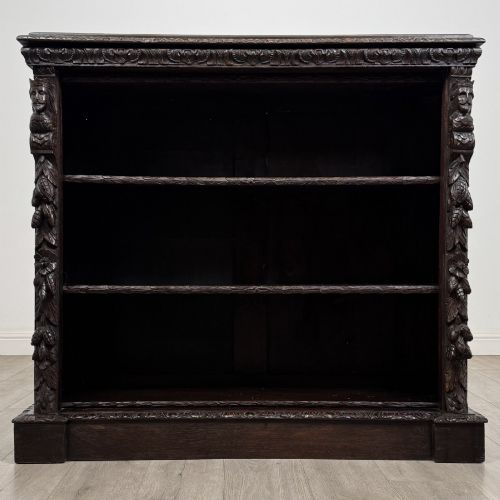
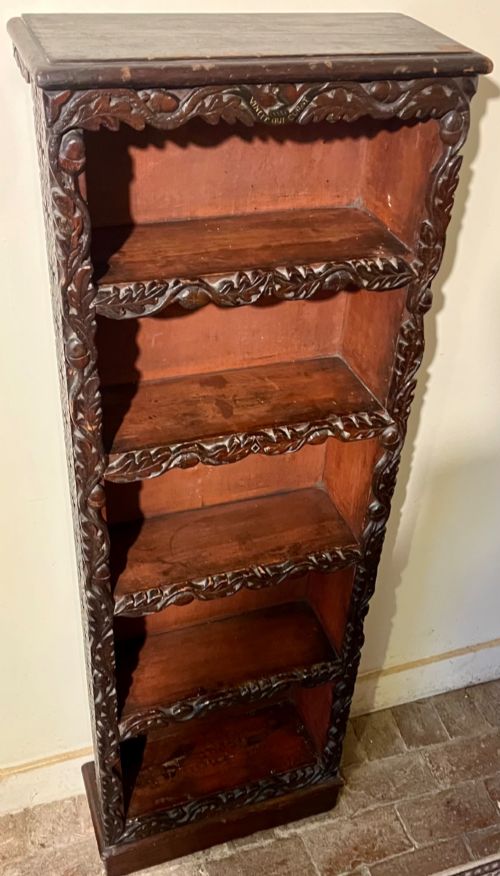
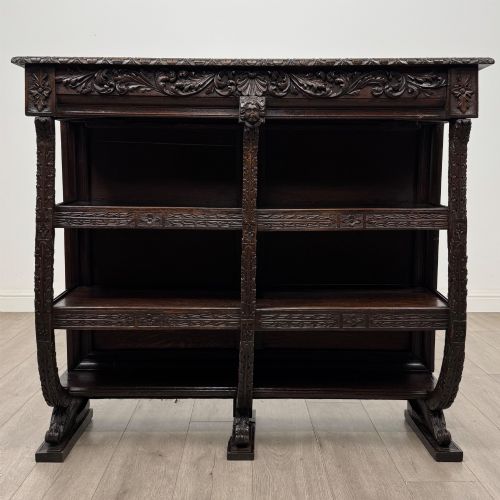
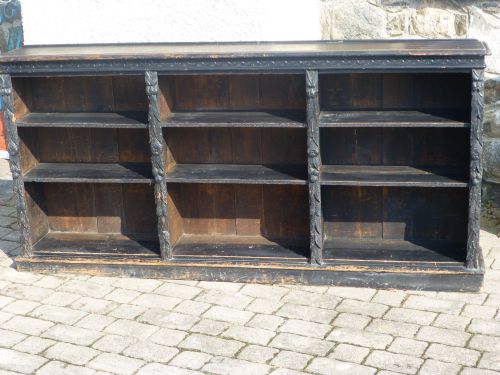


Gothic Open Shelving Unit
These gothic open shelving unit examples bring sturdy architectural character and vertical presence into a room.
Gothic Open Shelving Unit
A gothic open shelving unit combines structural timber with pointed arches, carved details, and open fronts designed for accessible book storage. You are most likely to meet Victorian and nineteenth century iterations built from heavy oak with tall, narrow proportions or low dwarf formats.
Makers shaped these pieces within the gothic revival, victorian gothic, and arts and crafts traditions, often incorporating adjustable shelves and architectural cornices. The forms range from simple tall bookcases to multi wood dresser hybrids and carved cabinets bearing crowned busts or green man motifs.
How they were made
These items rely principally on solid oak and pine timbers, sometimes finished with ebonising or enhanced through wood inlay. Joinery techniques support tall upright frames designed to bear heavy volumes without sagging.
Metal elements such as brass and iron appear in structural brackets, hinges, and fittings. Carving is executed directly into the timber, featuring architectural motifs and figural details.
Gothic Open Shelving Unit Retail Price Guide 2026
Typical asking prices for gothic open shelving unit among the pieces listed under this phrase on Sellingantiques today, from the lower quarter to the upper quarter. They describe what is for sale here now, not the wider market.
Keep an eye out for carved green man faces hiding amongst the foliage, keeping a watchful eye on your collection.
What varies in quality
The standard of carving distinguishes standard utility shelving from finer architectural pieces. Crisp relief work on crowned busts, green man masks, and tracery panels indicates a higher grade of workshop execution.
Timber selection and secondary wood usage also separate pieces, with dense solid oak and multi wood inlay outperforming basic pine construction. The presence of adjustable shelf mechanisms adds functional refinement.
The Gothic Open Shelving Unit Glossary
- Gothic Revival
- A nineteenth century architectural and decorative style that revives medieval forms, pointed arches, and heavy ornamentation. It influences the structural lines and decorative motifs found on these bookcases.
- Ebonised oak
- Timber treated with a chemical stain or pigment to imitate heavy ebony wood. This dark finish creates a dramatic silhouette on nineteenth century shelving.
- Dwarf bookcase
- A low standing shelving unit designed to sit beneath window height. These compact pieces offer accessible open storage without dominating vertical wall space.
- Green Man
- A sculptural motif representing a human face entwined with foliage and vines. It symbolises rebirth and appears frequently in carved nineteenth century woodwork.
Gothic Open Shelving Unit: Frequently Asked Questions
Where should I place a gothic open shelving unit?
These tall and narrow units suit studies, living rooms, and libraries where vertical wall space is available. They anchor a room by introducing heavy timber textures and period architecture.
Ensure the unit is secured to the wall if it holds heavy volumes, particularly in taller nineteenth century formats.
How do I adjust the shelves?
Many nineteenth century bookcases feature traditional wooden support strips or metal pins inserted into vertical slots. These allow the shelves to be positioned at different heights to accommodate volumes of varying sizes.
Take care when shifting heavy oak boards within older housing to avoid damaging the internal uprights.
Are these units suitable for heavy books?
Solid oak construction provides the natural strength required to support dense rows of hardback volumes. The thick timber uprights and fixed or heavy gauge shelves bear substantial weight without bending.
Inspect the internal shelf supports to confirm they are secure before loading large collections.
How do I tell Victorian gothic from later pieces?
Victorian examples typically display deep hand carving, such as green man masks or architectural tracery, executed in heavy oak. Later pieces from nineteen thirty often feature simpler, cleaner lines with less ornamentation.
Examine the timber patination and joinery style to understand the period of manufacture.