

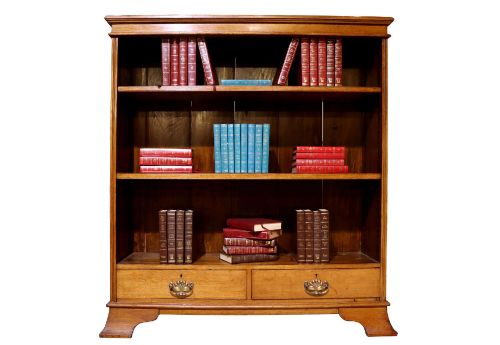

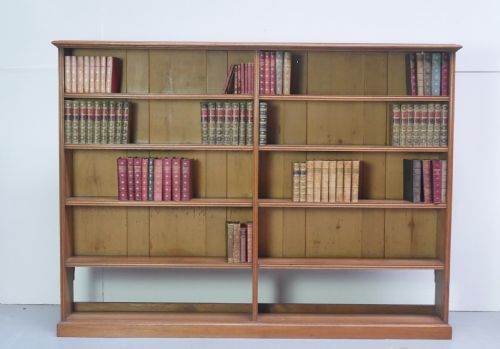


Large Oak Shelving Unit
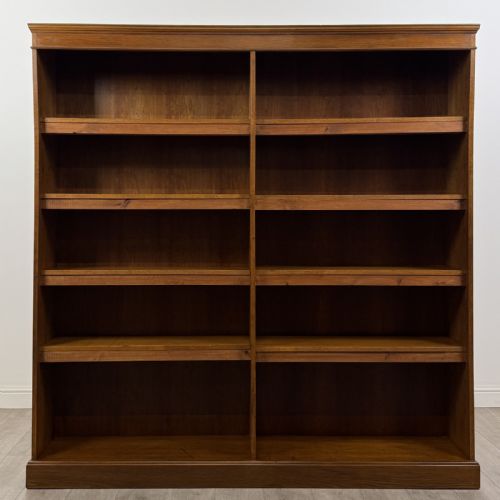
These large oak shelving unit pieces are substantial bookcases and storage furniture built to hold heavy libraries.
Large Oak Shelving Unit
When you search for a large oak shelving unit, you find open bookcases, library bookcases, and wall shelves spanning several centuries. The pieces on this page originate from the eighteenth, nineteenth, and early twentieth centuries, encompassing Victorian, Edwardian, and French Provincial traditions.
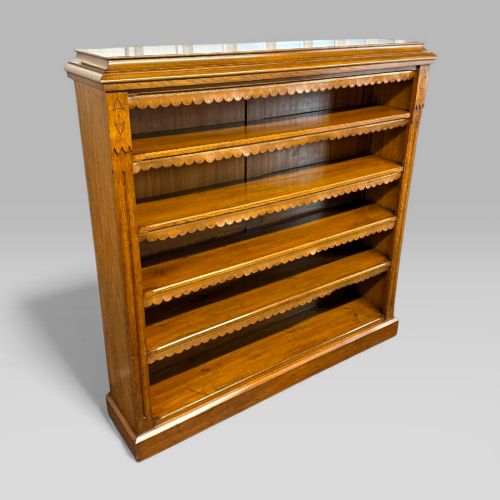
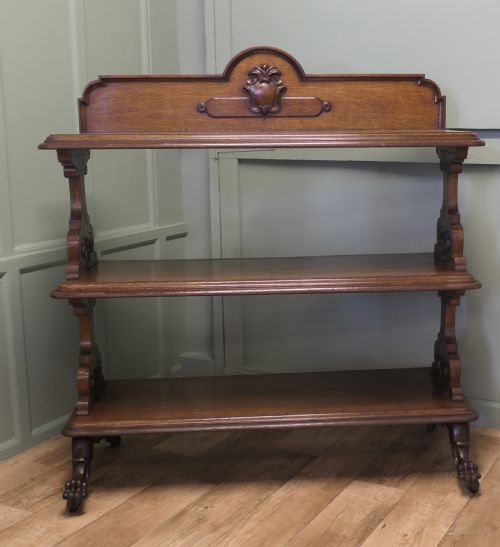
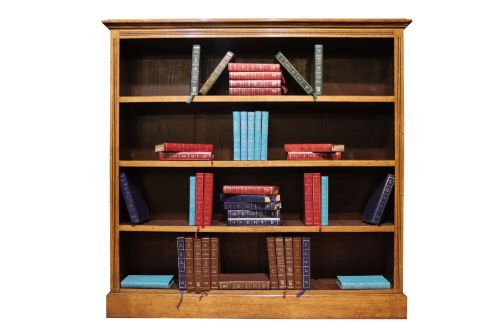
Open bookcases form the core of what appears here, often tall or wide enough for substantial book collections. Alongside bookcases, you encounter buffets, servers, and wall hanging shelves built from the same heavy timber.
Makers and workshops across Britain and France produced these items to serve functional roles in country houses and libraries. The survival of these pieces demonstrates the enduring utility of tall open shelving.
How they were made
Carpenters constructed these units primarily from solid oak, sometimes utilising bleached oak or golden oak finishes. Brass and iron hardware frequently appears on fitted sections and structural supports.
Craftsmen applied carving techniques to decorate surfaces, particularly on Victorian Gothic Revival and Aesthetic Movement examples. Shelving units often incorporate adjustable shelves to accommodate varying book sizes.
Large Oak Shelving Unit Retail Price Guide 2026
Typical asking prices for large oak shelving unit among the pieces listed under this phrase on Sellingantiques today, from the lower quarter to the upper quarter. They describe what is for sale here now, not the wider market.
Listings feature oak, bleached oak, and golden oak combined with brass and iron across nineteenth and twentieth-century periods.
What varies in quality
The distinction between standard utility items and exceptional pieces rests in the depth of the carved ornamentation and the selection of the timber. Country house pieces often display finer carving work and superior golden oak grain figures.
Proportion and structural integrity define the higher tiers of these units, where heavy cornices and substantial uprights remain straight and true. Simpler provincial items rely on honest construction without elaborate decorative flourishes.
The Large Oak Shelving Unit Glossary
- Open bookcase
- A bookcase without doors, allowing direct access to the shelves. This form dominates the selection of shelving units.
- Golden oak
- A bright, warm shade of oak timber popular during the Victorian and Edwardian periods. It highlights the natural grain of the wood.
- Gothic Revival
- A nineteenth-century style drawing inspiration from medieval architecture. Pieces in this style often feature pointed arches and heavy carved details.
- Bleached oak
- Oak timber treated to achieve a lighter, paler tone. This finish appears frequently on eighteenth-century French pieces.
Large Oak Shelving Unit: Frequently Asked Questions
Are the shelves adjustable?
Many of these bookcases feature adjustable shelves to suit different volumes. This flexibility was standard in larger library furniture.
Check individual listings to confirm whether the particular unit retains its original adjustable shelf mechanisms.
How do I date an oak bookcase?
Dating relies on stylistic clues such as Victorian Gothic carvings or Edwardian proportions. The listed periods span from the eighteenth to the twentieth century.
Materials like bleached oak or golden oak also point toward specific regional traditions and eras of manufacture.
Can these hold heavy books?
These robust units were originally constructed for extensive private libraries and country house collections. Solid oak provides the necessary strength for heavy volumes.
Ensure the wall or floor surface is level to support the substantial weight of both the unit and its contents.
What is French provincial style?
French provincial pieces reflect rural craftsmanship from regions outside Paris, prioritising sturdy utility and simple forms. Bleached oak finishes often characterise these older items.
They bring a distinct continental presence compared to British Victorian and Edwardian library furniture.