




Gothic Oak Throne Chair
A gothic oak throne chair brings commanding architectural presence and ecclesiastical heritage into a room, fashioned for dramatic scale and historic styling.
Gothic Oak Throne Chair
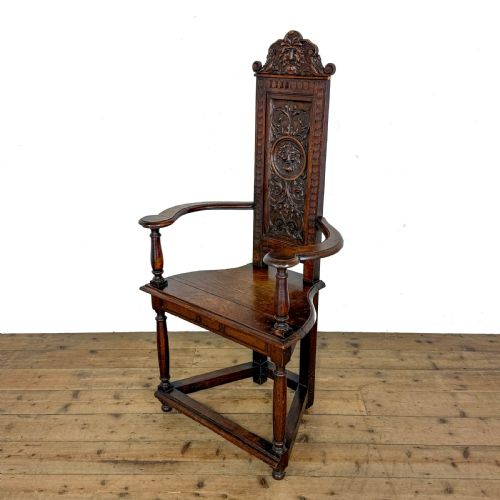
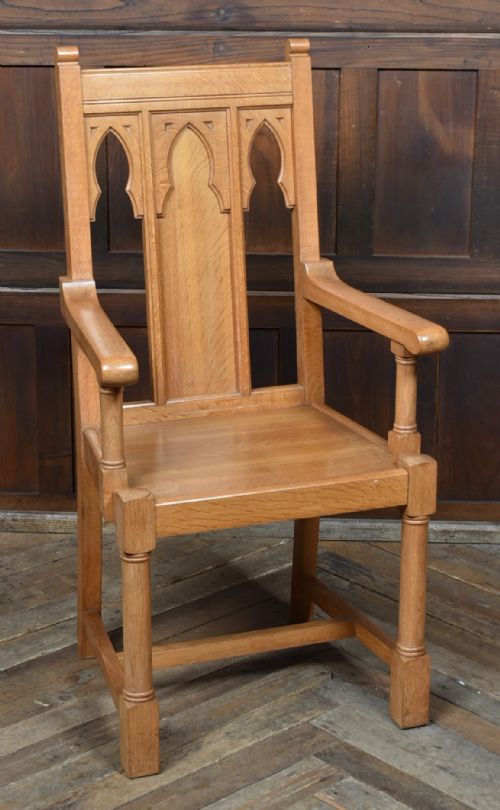
A gothic oak throne chair draws upon medieval architecture and ecclesiastical seating forms, utilising tall backs and substantial armrests to create an imposing visual weight. These seating pieces emerge predominantly from nineteenth-century revival periods, translating historical church and hall seating into domestic and institutional environments.
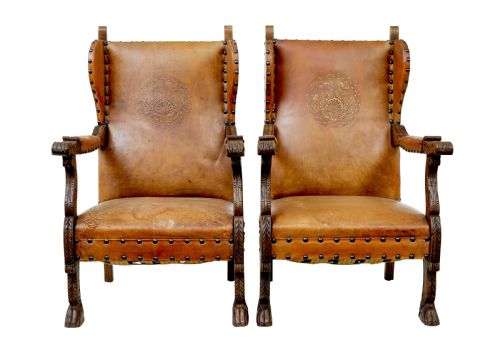
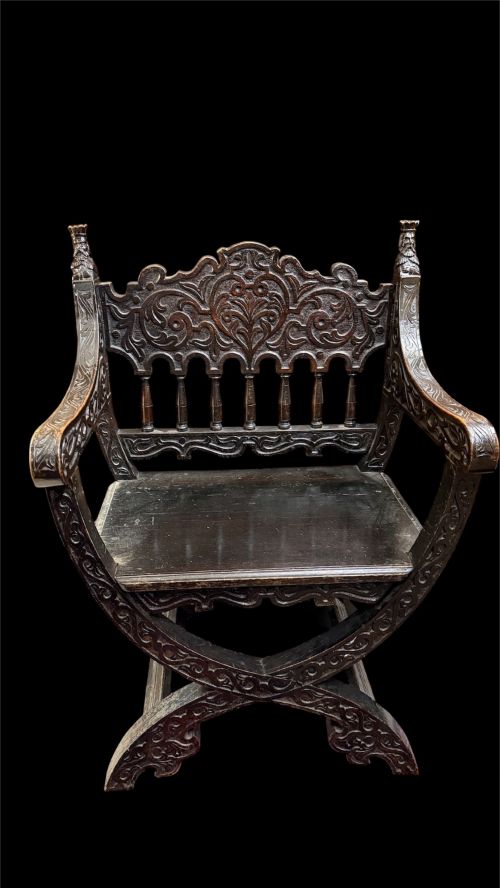
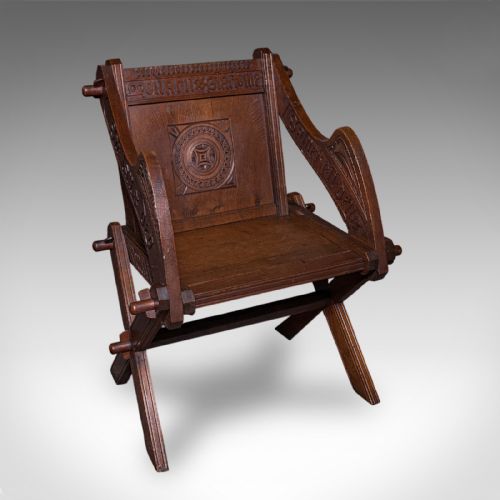
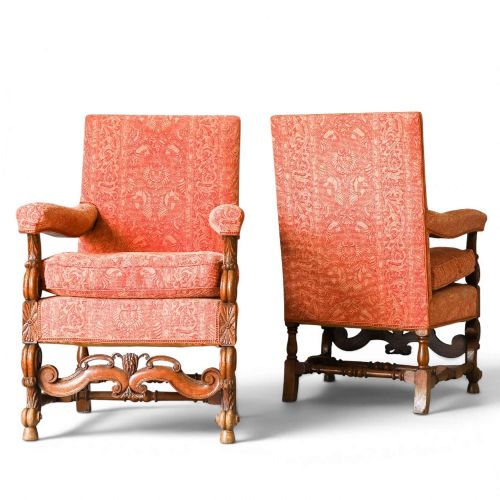
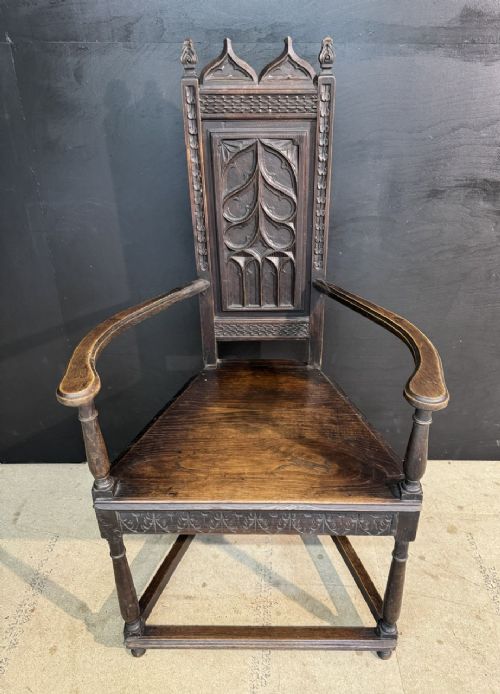
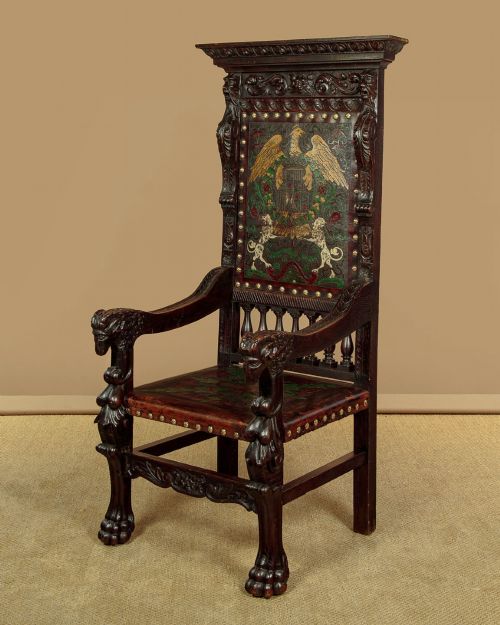
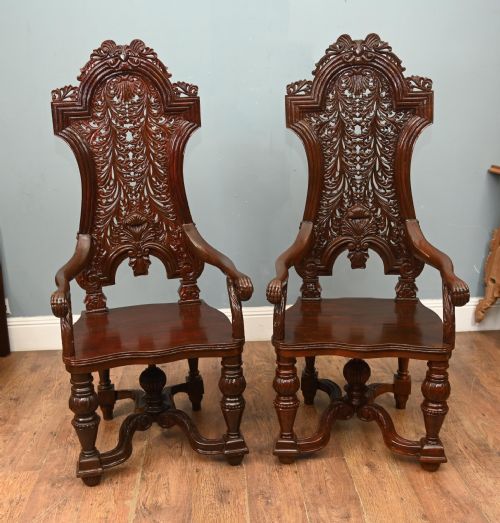
The versions most frequently encountered on this page combine nineteenth-century manufacturing with Gothic Revival, Jacobean Revival, or French Renaissance styling. Examples range from high-backed wainscot chairs and Glastonbury X-frame seats to monumental armchairs embellished with carved panels and heraldic motifs.
How they were made
Construction relies heavily upon solid timber frames, predominantly oak supported by occasional secondary woods like walnut or beech. Joinery techniques employ traditional mortise and tenon methods alongside pegging to ensure structural stability across large seating forms.
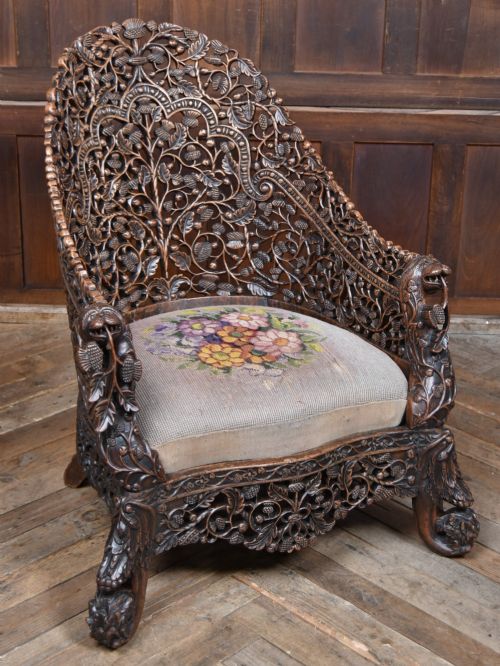
Surface ornamentation integrates deep relief hand carving with applied leather, embossed upholstery, brass detailing, and tapestry panels. Makers utilised regional woodcarving traditions, occasionally incorporating painted elements or contrasting finishes to accentuate tracery and linenfold panels.
Keep an eye out for hidden hounds and cheeky green men peering from the woodwork.
What varies in quality
Quality separates through the depth, crispness, and individual character of the hand carving rather than mechanical uniformity. Pieces featuring detailed figural elements, such as green men or hunting hounds, demonstrate superior artisan investment compared to shallow, repetitive machine stamping.
The integrity of the timber framing and the authenticity of period upholstery materials dictate longevity and structural grade. Well-preserved original joinery and period-appropriate leather or tapestry enhance the historic character of the seating.
A.W.N. Pugin
The Gothic Oak Throne Chair Glossary
- Wainscot chair
- A heavy wooden armchair of seventeenth-century origin featuring a panelled back and solid wooden seat. This form became a popular template for later revival seating.
- Glastonbury chair
- An X-framed folding armchair associated with ecclesiastical design, featuring a sloping panel back and flat armrests. It gained widespread popularity during the nineteenth-century Gothic Revival.
- Gothic Revival
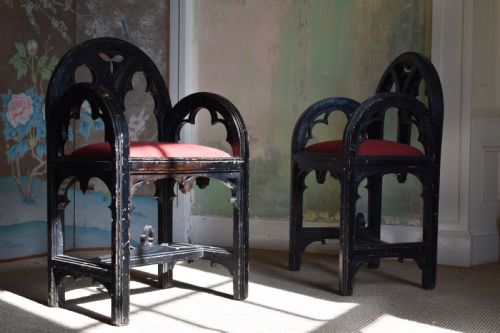
- An architectural and decorative style drawing inspiration from medieval Gothic forms, including pointed arches, tracery, and quatrefoils. This aesthetic dominated nineteenth-century furniture production.
- Turner's chair
- A three-legged armchair constructed from turned wooden spindles and triangular seats, also known as a Saxon chair. These pieces rely on sophisticated geometric turning rather than flat panels.
- Caquetoire
- A lightweight sixteenth-century conversational armchair featuring a high, narrow back and santed sides. Revival examples replicate this French seating form for domestic libraries and parlours.
Gothic Oak Throne Chair: Frequently Asked Questions
What is a gothic oak throne chair?
A gothic oak throne chair is a substantial revival seating piece designed with medieval architectural motifs, high panelled backs, and heavy armrests.
These pieces draw inspiration from church stalls, bishops' chairs, and historic hall furniture to create an imposing decorative focal point.
How were gothic chairs used historically?
Historically, such large chairs served as seats of authority for heads of households, clergy members, or presiding figures in institutional halls.
In domestic settings, they functioned primarily as conversation pieces or prominent armchairs placed in studies, libraries, and morning rooms.
How do I live with a throne chair?
Living with a substantial throne chair involves positioning it against a solid wall or within a sufficiently spacious room to balance its visual weight.
Pairing the dark timber and leather or tapestry upholstery with simpler surrounding furniture allows the carved details and historic proportions to stand out.
How can I tell the period of a chair?
Dating relies upon examining the timber grain, tool marks, joinery methods, and the specific characteristics of the revival style applied.
Nineteenth-century revival pieces often display machine-assisted elements alongside hand carving, whereas older examples show distinct hand-tool signatures and timber shrinkage consistent with age.