
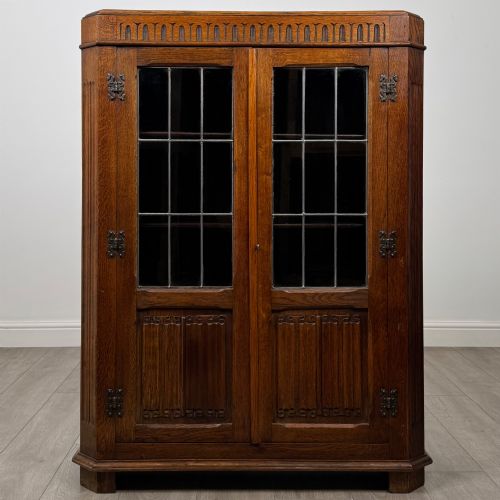
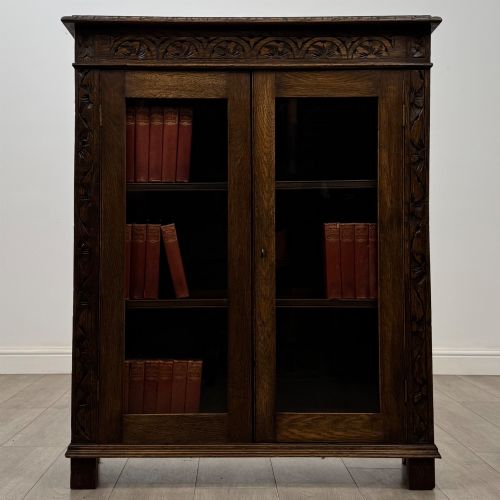
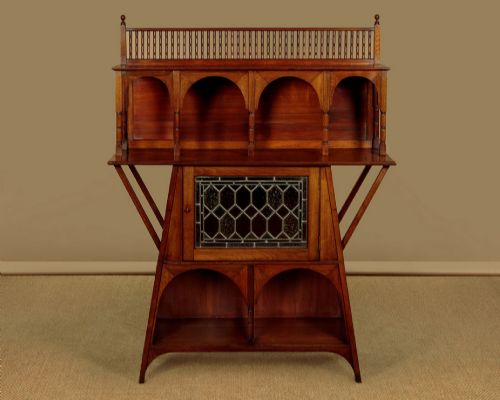
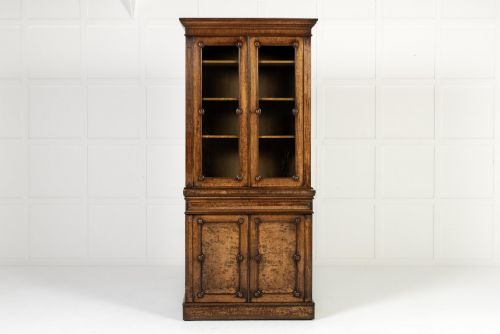


Gothic Oak Display Cabinet
A gothic oak display cabinet brings architectural drama and rich timber texture to a room, housing collections behind glass.
Gothic Oak Display Cabinet
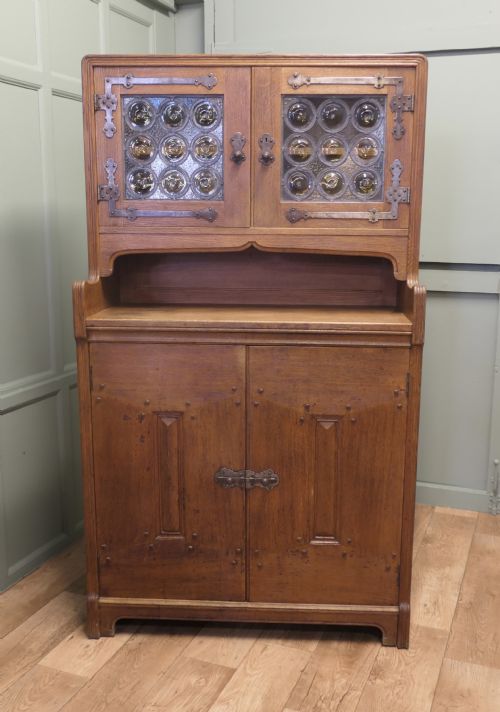
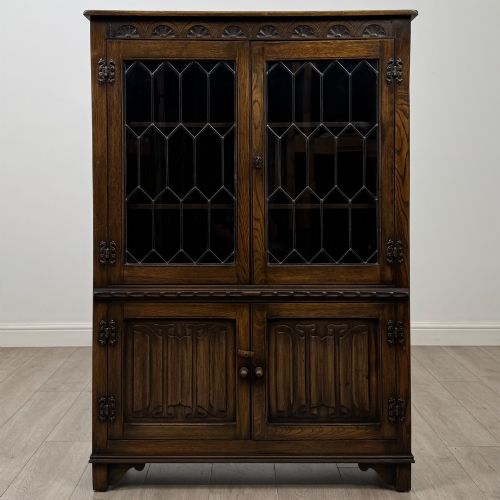
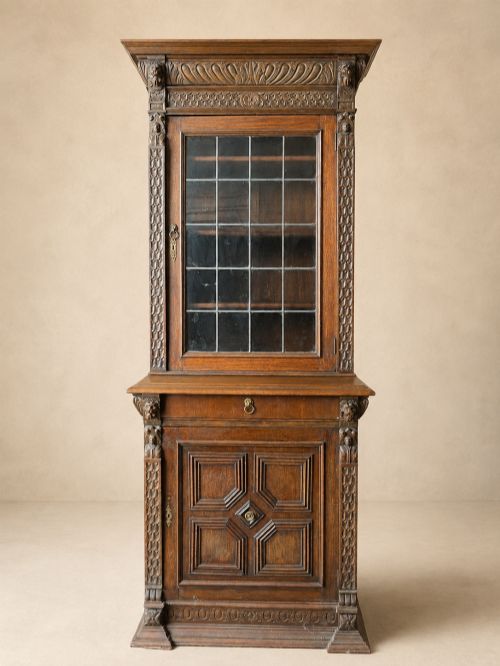
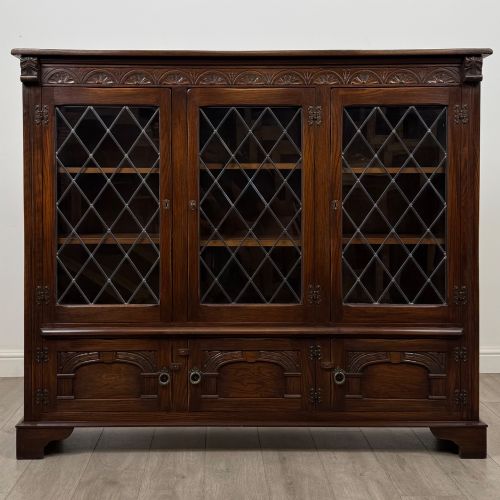
A gothic oak display cabinet combines architectural timber framing with glazed compartments designed to showcase books, china or curiosities. The pieces on this page span the nineteenth century through the Edwardian era, taking the form of bookcases, cabinets and glazed wall units.
Most examples meet under Victorian and Edwardian periods, displaying distinct Gothic Revival or Arts and Crafts characteristics. Makers utilised solid oak, pollard oak and golden oak to construct tall breakfront bookcases, smaller corner cupboards and cabinets on stands.
Buyers encounter regional interpretations spanning English workshops alongside continental pieces influenced by Jacobean and Renaissance revivals. The form ranges from monumental carved side cabinets to slender display shelves fitted with stained glass.
How they were made
Cabinet makers built these pieces primarily from solid oak and pollard oak, often combining beech or multi-wood elements for internal framework and shelves. Construction relied on traditional joinery techniques, resulting in heavy, robust carcasses capable of supporting deep carved decoration.
Glazing played a central function, incorporating clear glass panels alongside leaded or stained glass windows to illuminate the interior. Iron, brass and fabric provided hardware and backing, while surface finishes highlighted the natural grain and carved linenfold details.
Listings feature oak, pollard oak, stained glass and brass across nineteenth-century and Edwardian periods.
What varies in quality
Quality depends upon the depth and crispness of the carved ornamentation, distinguishing deeply hand-carved panels from mechanical or shallow relief work. The choice of timber also dictates standard, selecting figured pollard oak or golden oak over plain utility boards.
Structural integrity and original components separate superior examples, noting whether leaded glass, brass fittings and interior shelves remain intact. The sophistication of architectural elements, such as tracery, pointed arches and breakfront proportions, elevates the piece.
Liberty & Co.·John Moyr Smith·Benjamin Taylor & Sons
The Gothic Oak Display Cabinet Glossary
- Gothic Revival
- An architectural and decorative style drawing inspiration from medieval design, featuring pointed arches, tracery and heavy carved motifs.
- Pollard Oak
- Timber taken from trees that were pollarded, producing a highly figured, mottled grain pattern prized by cabinet makers.
- Linenfold
- A style of wood carving that imitates folded linen, commonly seen on panels of cupboards and cabinet doors.
- Breakfront
- A cabinet design where the central section projects forward from the flanking wings, creating visual depth.
- Aesthetic Movement
- A late nineteenth-century design current emphasising visual beauty and artistic craftsmanship over historical revivals.
Gothic Oak Display Cabinet: Frequently Asked Questions
How do I style a gothic oak display cabinet at home?
Position the piece against a neutral wall where its heavy timber and architectural carvings can serve as a focal point. Balance the dark wood tones by displaying lighter ceramics, books or glassware behind the glazed doors.
Allow adequate floor space around monumental pieces so the vertical proportions and detailed cornices remain unobstructed by other furnishings.
What periods do these cabinets represent?
The selection spans the nineteenth century through the Edwardian period, capturing Victorian revivals and later arts and crafts movements. Most examples date from mid-Victorian decades up to nineteen hundred.
Specific stylistic influences range from medieval Gothic Revival to Renaissance and Jacobean revivals executed in oak.
How do I care for antique oak furniture?
Maintain the timber by applying natural beeswax occasionally to nourish the grain and protect the surface from drying out. Keep the cabinet away from direct heat sources and strong sunlight to prevent the oak from splitting.
Clean the glass panels and leaded sections gently with a soft cloth, avoiding harsh chemical cleaners that might affect the surrounding wood.
What is the difference between a bookcase and a display cabinet?
Bookcases typically feature open fronts or adjustable wooden shelves intended primarily for storing volumes. Display cabinets incorporate glazed doors and sometimes fabric linings designed specifically to protect and exhibit collectibles.
Many nineteenth-century pieces combine both functions, offering enclosed lower cupboards alongside upper glazed display sections.