
Gothic Carved Wooden Chairs
These gothic carved wooden chairs bring medieval architectural drama to a room, forged from sturdy timber with pointed arches and intricate relief work.
Gothic Carved Wooden Chairs
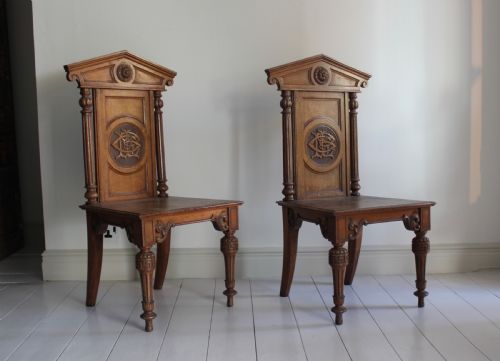
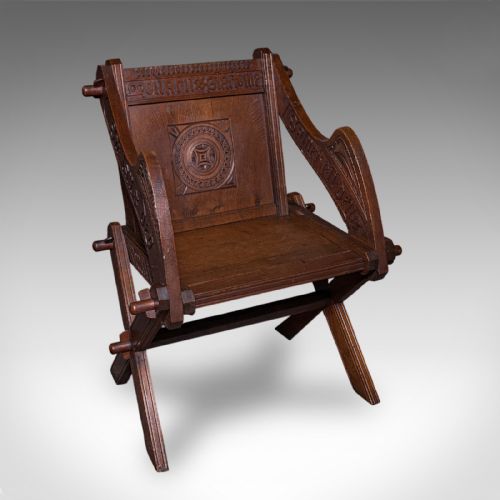
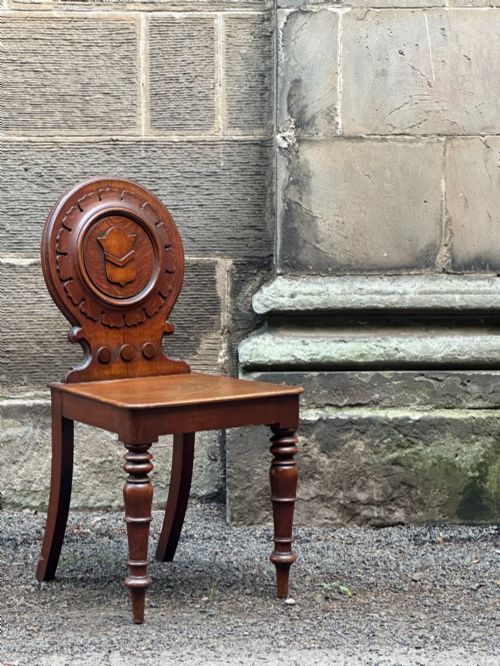
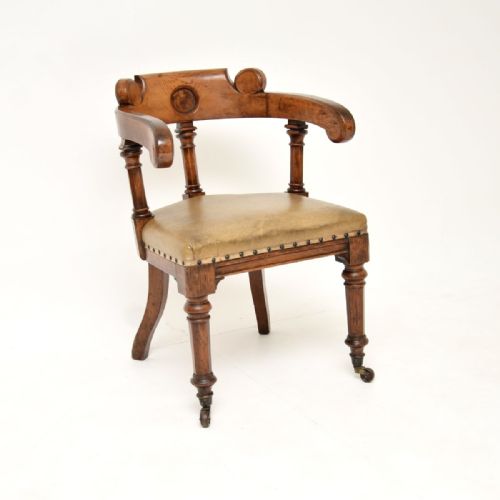
When you search for gothic carved wooden chairs, you encounter seating built during the nineteenth century under the influence of the Gothic Revival. These pieces draw heavily on medieval ecclesiastical and domestic forms, ranging from tall chapel thrones to hall seats and library chairs.
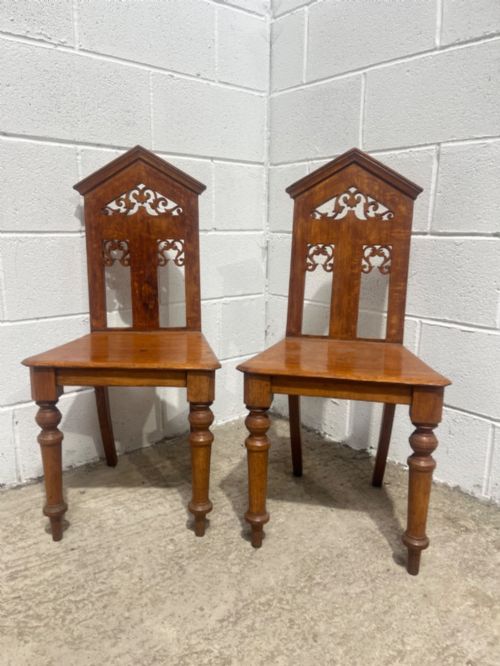
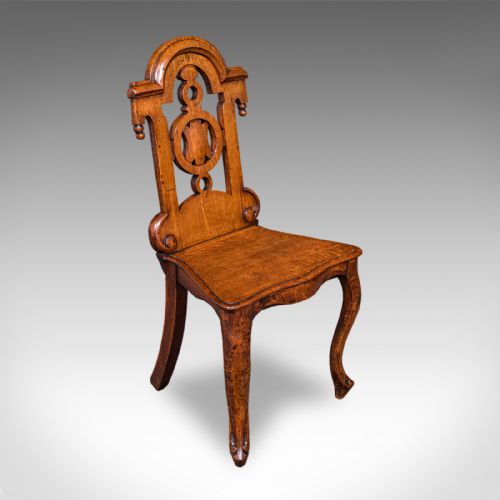
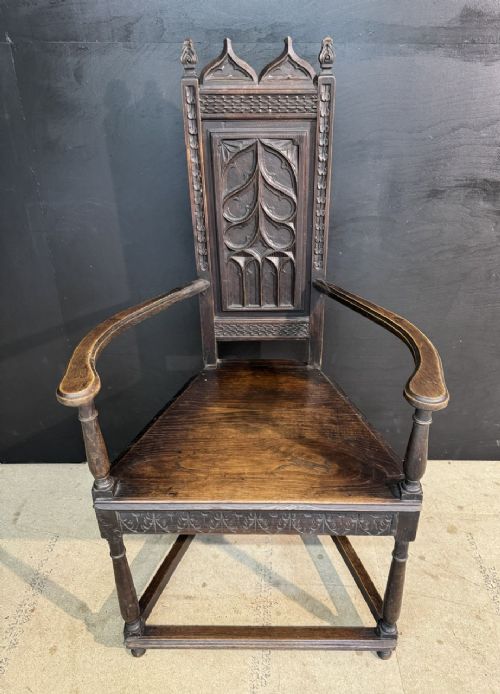
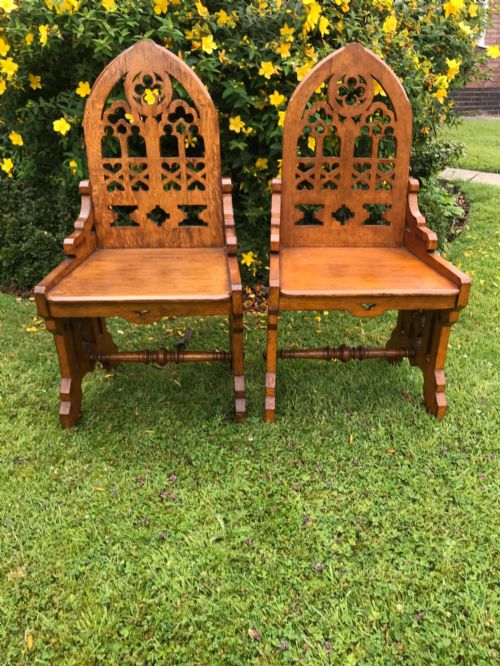
You are most likely to meet oak hall chairs and armchairs bearing architectural linenfold panels, pointed archways, and tracery. English and Scottish workshops produced much of this seating, alongside French interpretations in walnut and pitch pine.
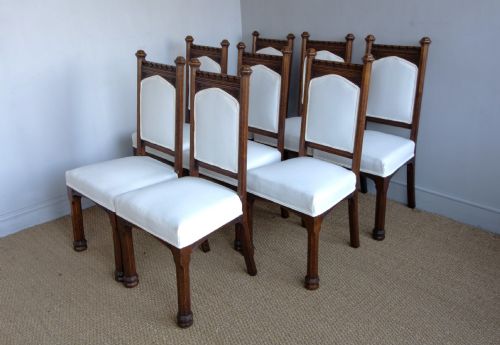
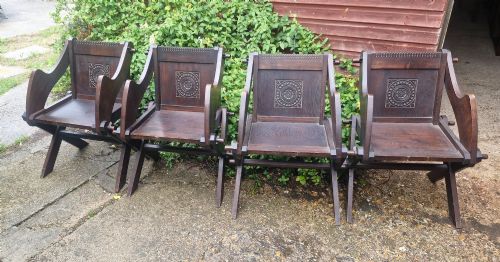
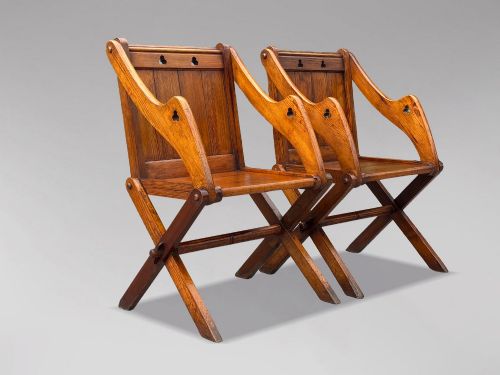
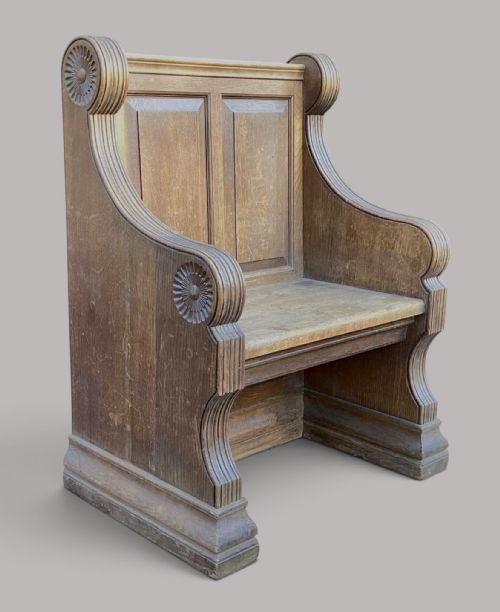
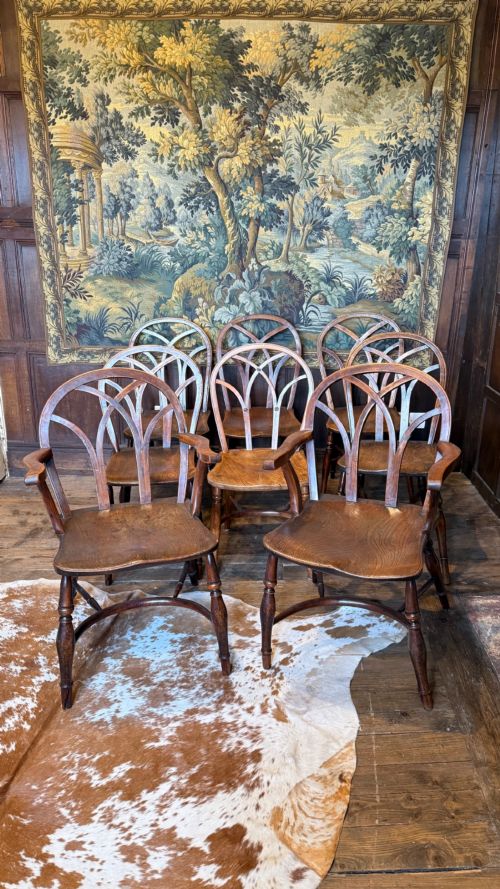
The selection includes specific regional forms such as Glastonbury armchairs, Turner's chairs, and wainscot seats. Sets of dining chairs and pairs of hall chairs appear frequently, alongside occasional metamorphic library chair steps.
How they were made
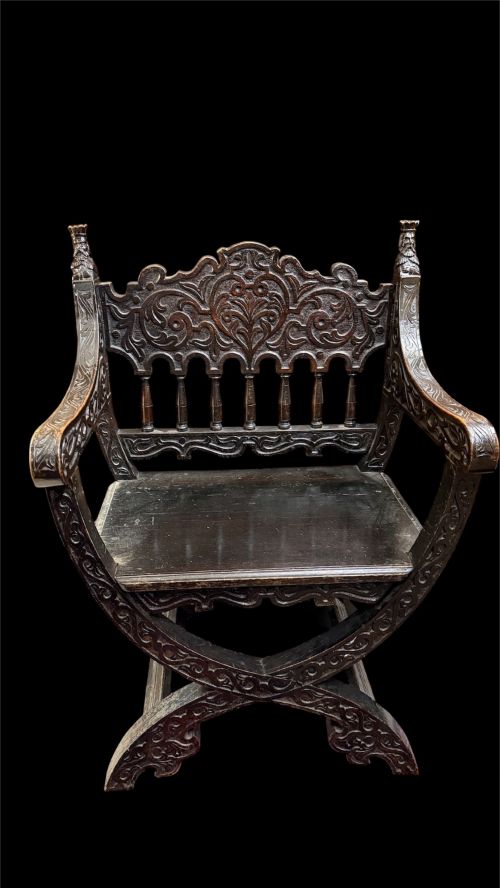
Solid timber forms the foundation of these pieces, with English and continental oak dominating the selection alongside walnut, pitch pine, and mahogany. Woodworkers shaped heavy planks using traditional hand-carving techniques to render deep relief patterns, tracery, and turned elements like barley twists.
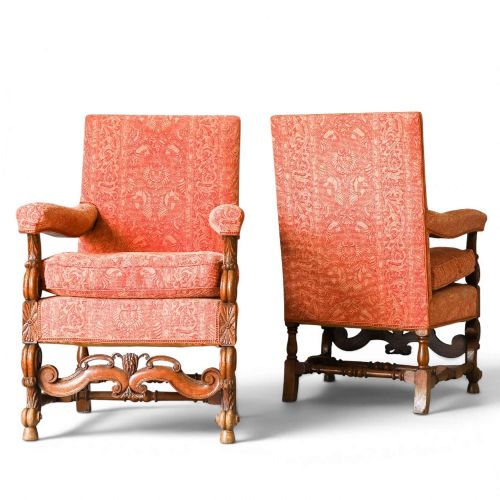
Joinery relied upon pegged mortise and tenon construction to withstand the weight of substantial frames and high backs. Upholstered variants incorporated fabric and leather secured with brass studs, whilst others relied entirely on carved wooden seats.
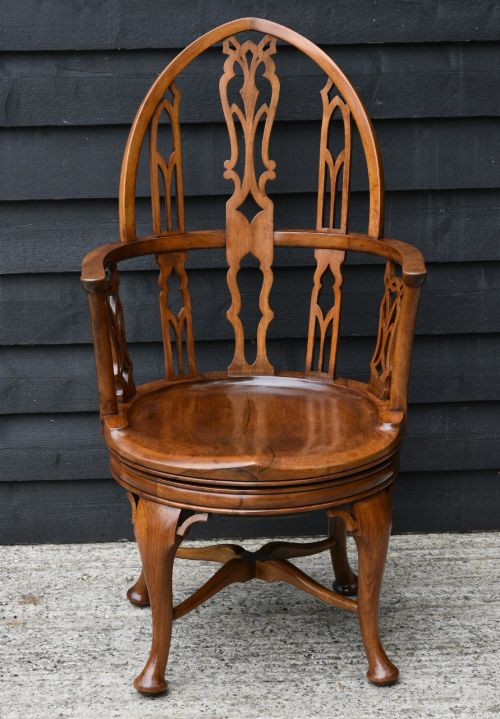
Makers occasionally utilised secondary timbers and applied painted finishes to achieve specific aesthetic effects. Metal components such as brass brackets and swiveling desk mechanisms appear on later nineteenth-century revolving chairs and metamorphic library steps.
Listings feature oak, walnut, pitch pine, and mahogany across styles including Gothic Revival, Jacobean Revival, Arts and Crafts, and Aesthetic Movement.
What varies in quality
The depth and crispness of the hand-carved detail separate standard production from superior work. Sharp, undercut tracery and well-defined linenfold panels require skilled hand tool use, whereas mass-produced or later copies often show softer, shallower moulding.
The choice of timber and the integrity of the joinery dictate the stability and longevity of each seat. Heavy oak and walnut frames held together with original pegged joints represent a higher standard of construction than pieces relying on modern metal fasteners.
Proportion and stylistic consistency also mark out better examples. Well-balanced armchairs and matched sets of dining chairs maintain architectural harmony across every component, whereas lesser examples can feel ungainly or mismatched in their revival details.
Liberty & Co·Norwich Maker
The Gothic Carved Wooden Chairs Glossary
- Glastonbury chair
- A low-backed armchair with an X-frame base and a sloping panel back, popular during the nineteenth-century Gothic Revival. These seats often bear inscribed decoration or religious motifs.
- Linenfold
- A carved wood panel motif resembling folded drapery or fabric. This technique appeared frequently on fifteenth-century church furniture and returned in nineteenth-century revival pieces.
- Wainscot chair
- A heavy wooden armchair constructed with panelled backrests and solid wooden seats. They originated in sixteenth and seventeenth-century domestic interiors and were heavily replicated during the Victorian era.
- Turner's chair
- A type of armchair constructed entirely from turned wooden spindles and members intersecting at angles. Also known as a Saxon or roundel chair.
- Tracery
- Openwork ornamentation in stone or wood featuring intersecting ribs, commonly found in Gothic windows. Nineteenth-century furniture makers translated this architectural detail into chair backs and panels.
Gothic Carved Wooden Chairs: Frequently Asked Questions
What periods do these chairs come from?
The majority of these pieces date from the nineteenth century, spanning the Victorian era and the height of the Gothic Revival movement. You will also find examples extending into the early twentieth century, incorporating Arts and Crafts influences.
Craftsmen during these periods drew inspiration from medieval, Jacobean, and Renaissance designs, reinterpreting older architectural motifs for contemporary domestic and ecclesiastical spaces.
How were Glastonbury chairs used?
Glastonbury chairs served as substantial armchairs in studies, libraries, and reception halls. Their sloping panel backs and sturdy X-frames provided rigid support rather than relaxed lounging.
In period interiors, these seats often stood near fireplaces or in entrance halls as decorative statement pieces that displayed the owner's taste for medieval history.
Are metamorphic library chairs practical?
Metamorphic library chairs function primarily as sturdy seating before transforming into sets of steps for reaching high bookshelves. This dual purpose made them valuable space-saving items in nineteenth-century studies and libraries.
Using them requires operating the pivot or folding mechanisms carefully to shift the wooden treads safely between positions without straining the antique joints.