



Gothic Carved Oak Lectern
These gothic carved oak lectern examples bring heavy ecclesiastical presence and rich period character into a room.
Gothic Carved Oak Lectern
A gothic carved oak lectern represents ecclesiastical furniture originating primarily from Victorian and Edwardian church settings, adapted today for domestic or institutional interiors. These architectural pieces take the form of standing pulpits, reading podiums, duet stands, and prayer desks designed to hold large volumes. A buyer searching this phrase encounters robust ecclesiastical woodwork carrying deep historical weight.
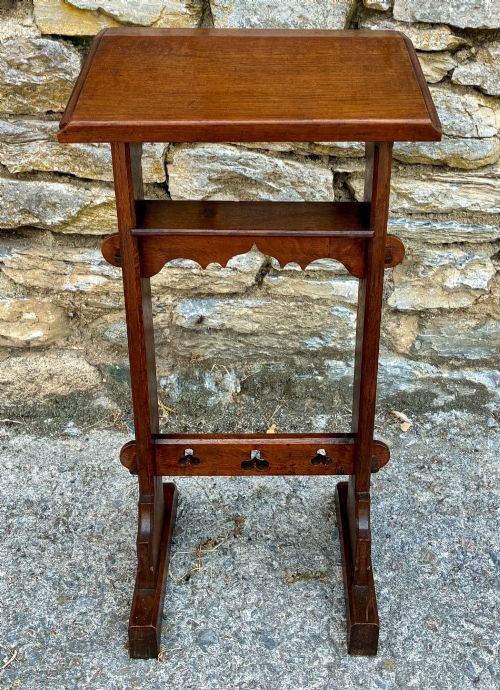
The pieces listed on this page span the nineteenth century through the early twentieth century, showing strong ties to the Gothic Revival and Arts and Crafts styles. Most examples serve as functional reading surfaces, whilst adapted variants function as reception desks or home bars. They suit libraries, studies, and grand hallways where traditional woodwork commands attention.
How they were made
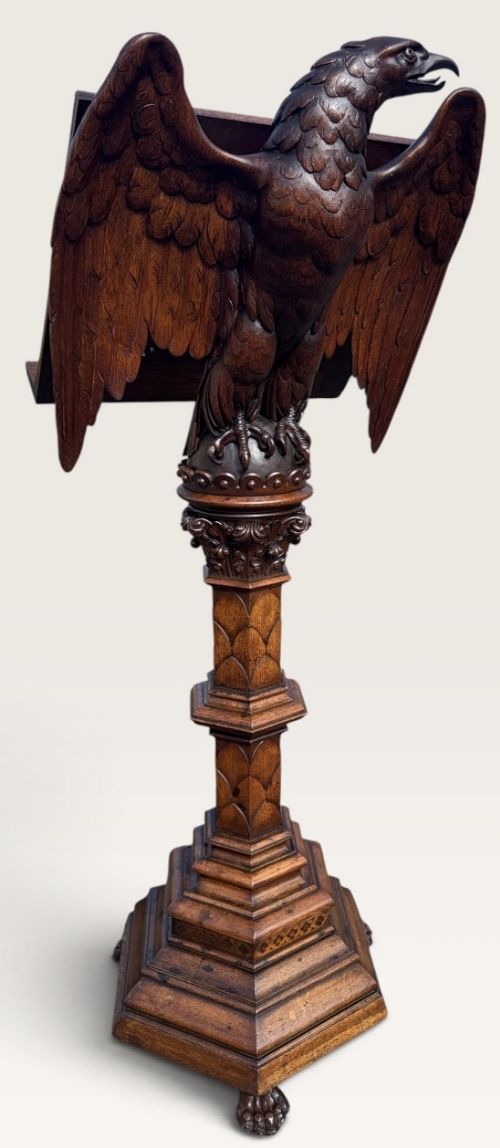
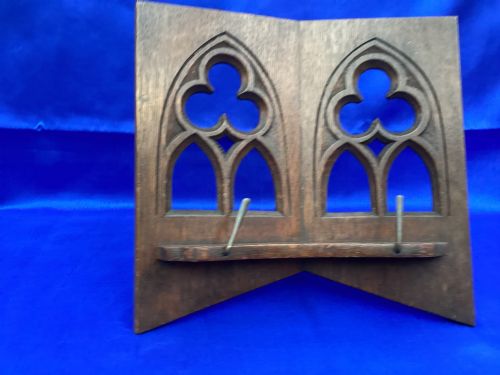
Makers utilised solid timber throughout, relying on dense oak to support heavy carved ornamentation and structural book rests. The material receives detailed hand-chiselling to form pointed arches, tracery, and figural elements such as winged cherubs and eagles.
Metal components appear selectively in brass, providing hinges, brackets, or reading mounts that complement the dark grain of the timber. Construction methods follow traditional cabinet-making and joinery practices suited to heavy church furniture built to endure.
Listings feature oak and brass materials spanning the Victorian, Edwardian, and Gothic Revival styles.
What varies in quality
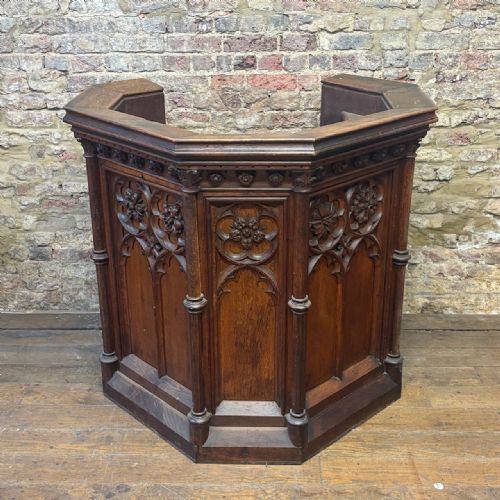
The depth and ambition of the hand-carving define the distinction between standard items and exceptional works. Master carvers executed intricate architectural tracery and expressive figural motifs with precision, whereas simpler pieces rely on basic linenfold or geometric panels.
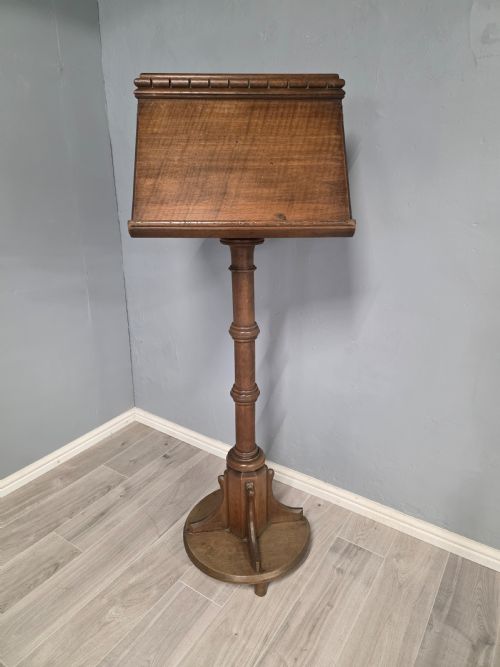
Proportion and structural integrity also separate fine examples from ordinary ones. Well-balanced pedestal stands and substantial reading desks demonstrate careful timber selection and sound joinery that survives centuries of use.
Pugin
The Gothic Carved Oak Lectern Glossary
- Gothic Revival
- An architectural and decorative style drawing inspiration from medieval design, featuring pointed arches and heavy timber elements. This aesthetic dominates ecclesiastical furnishings from the Victorian era.
- Ecclesiastical
- Pertaining to the Christian church or clergy, describing items originally constructed for use within places of worship. Such pieces often incorporate religious symbolism and robust construction.
- Tracery
- Openwork ornamentation of stone or wood, commonly found in Gothic windows and repeated as decorative carving on church furniture. It adds linear complexity to flat wooden panels.
- Prayer desk
- A devotional piece of furniture incorporating a sloped top for reading and a lower kneeling bench. These serve as intimate variations of the larger standing lectern.
- Duet stand
- A specialised reading stand designed to hold two scores or books simultaneously, often featuring adjustable double desks. These unusual forms accommodate multiple readers.
Gothic Carved Oak Lectern: Frequently Asked Questions
How do I care for antique oak furniture?
Maintain timber surfaces by applying natural beeswax occasionally to nourish the grain and protect against dry indoor atmospheres. Avoid placing heavy items near direct heat sources to prevent timber splitting.
Dust regularly with a soft, dry cloth rather than using wet sprays or silicone polishes that build up and attract dirt over time.
Where do these lecterns originate?
Most examples emerge from nineteenth and early twentieth century ecclesiastical workshops responding to the Gothic Revival movement in Britain. Churches, chapels, and monastic institutions commissioned these stands for reading scriptures and leading services.
Later decades saw many pieces decommissioned and entering the domestic antique market for use in private libraries and grand hallways.
Can I use a church lectern at home?
These imposing stands function well as reading podiums, music stands, or unique reception desks in large domestic spaces. Their architectural presence anchors a study or library effectively.
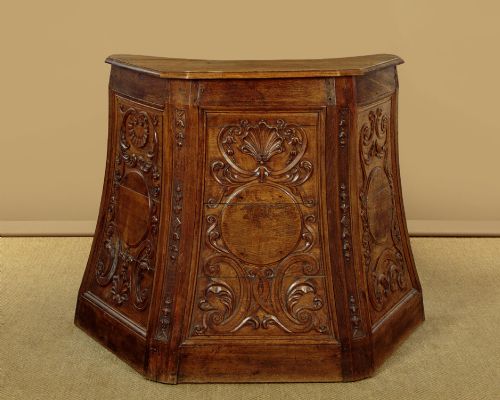
Some adapted versions even serve alternative domestic functions such as cocktail bars or display stations, depending on the specific form.
How do I date a carved oak lectern?
Examine the style of the carving, construction joints, and overall proportions to determine the period of origin. Pieces bearing Victorian Gothic Revival characteristics typically date from the nineteenth century, whilst simpler Arts and Crafts interpretations often emerge around nineteen hundred.
Archival clues like tool marks and brass hardware further assist in placing the object within a specific decade.