

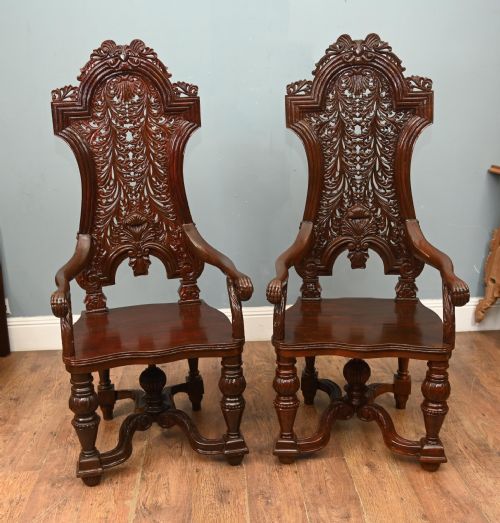


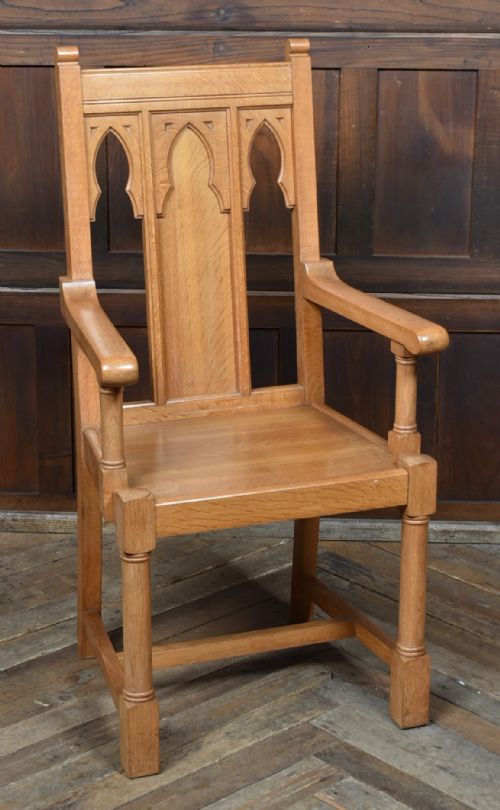


Gothic Back Armchair
A gothic back armchair brings architectural verticality and carved timber presence into a room, offering serious seating rooted in historic revival design.
Gothic Back Armchair
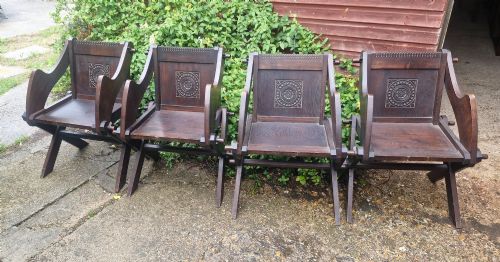
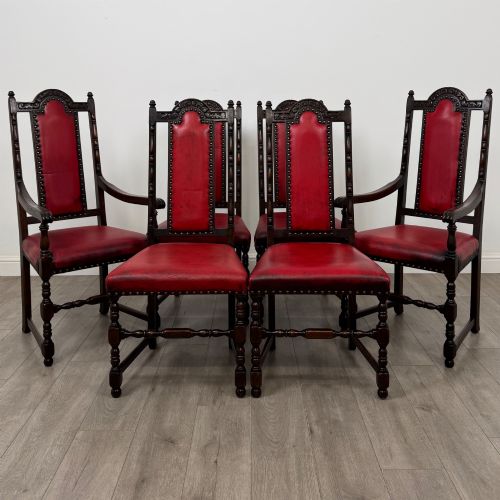
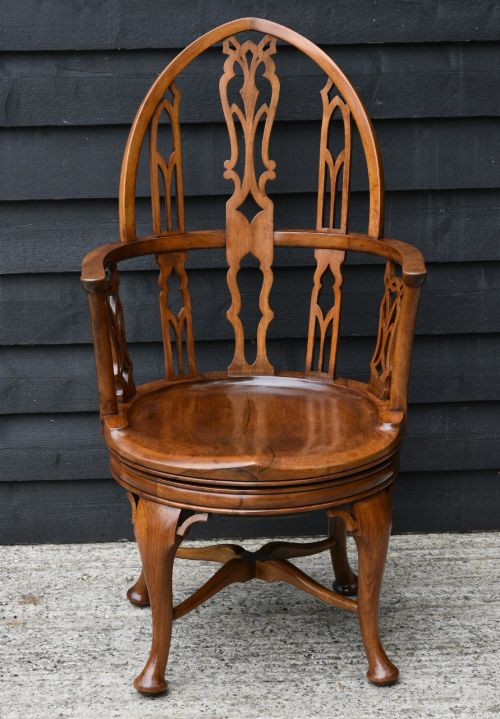
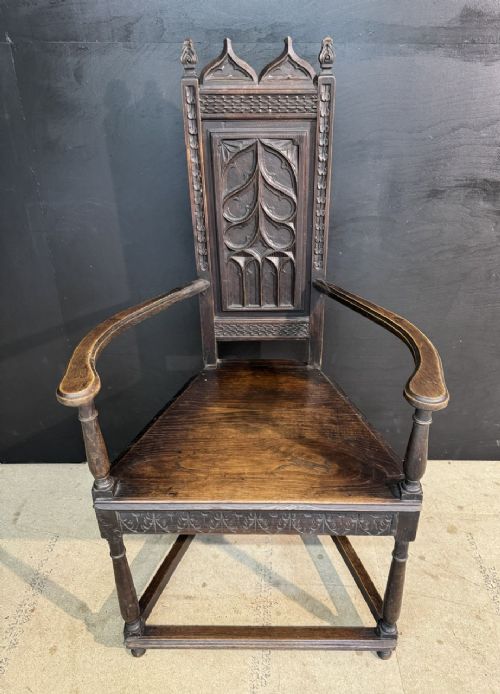
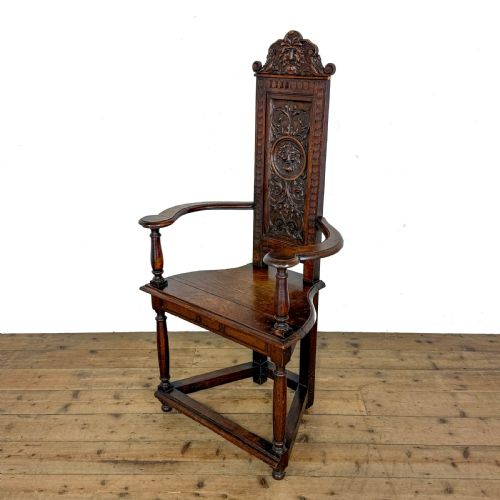
When searching for a gothic back armchair, buyers encounter substantial seating defined by pointed arches, tracery, and high panelled backs. The pieces on this page stem predominantly from the nineteenth century, taking forms such as wainscot chairs, heavy throne seats, and library armchairs.
Makers of these revival pieces drew directly upon medieval and seventeenth-century joinery traditions, translating architectural motifs into domestic furniture. Oak forms the backbone of these selections, often enriched with carved strapwork, linenfold panelling, or figural details.
While many examples lean into strict ecclesiastical or revivalist aesthetics, others blend styles like Jacobean, Arts and Crafts, or Renaissance influences. This variety ensures that a gothic back armchair functions equally well as a commanding desk seat or a standalone architectural statement.
How They Were Made
Joiners relied heavily on solid oak, walnut, and pitch pine, constructing frames using traditional mortise and tenon joints secured with wooden pegs. This sturdy timber skeleton supported deep relief carving, executed by hand with gouges and chisels to produce sharp geometric tracery and organic foliage.
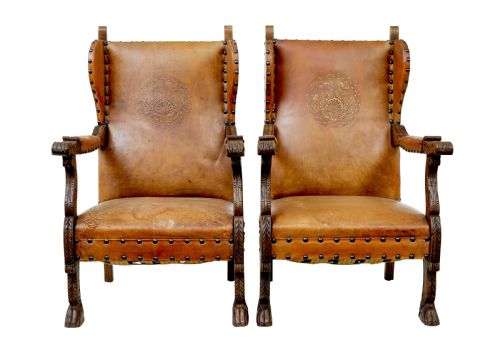
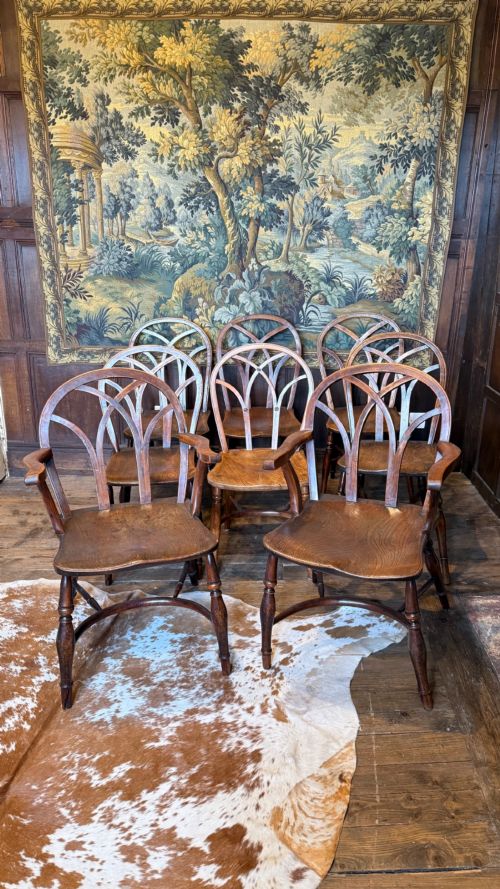
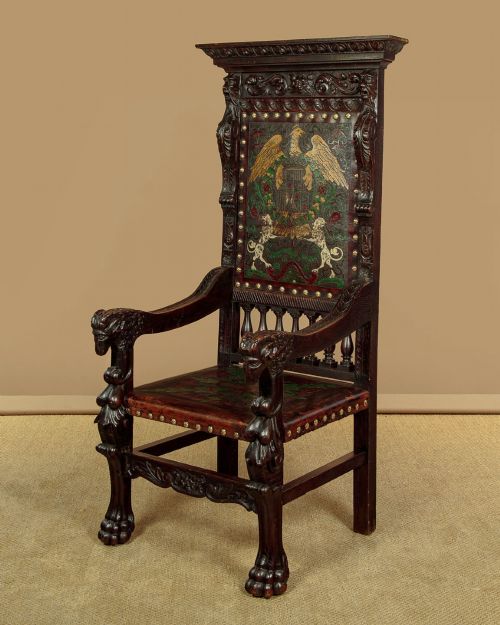
Upholstery, where present, typically consists of embossed, painted, or plain leather fixed with brass studs, or heavy textiles secured to buttoned pads. Secondary timbers like elm and yew appear in vernacular Windsor variations, shaped by steam-bending and spindle-turning.
Listings feature robust nineteenth-century oak and walnut frames, spanning architectural Gothic revival and vernacular Windsor forms.
What Varies in Quality
The distinction between ordinary production and superior work lies in the depth and crispness of the timber carving. Finer examples display meticulous undercutting and well-proportioned architectural details that remain sharp and deliberate across the crest and back panel.
Material selection also dictates standing, with dense, figured oak or richly patinated walnut outperforming plain or later-softened timber. Original surface finishes and untouched patination elevate a piece far above heavily stripped or excessively restored alternatives.
S&H Jewell·Collier and Plucknett·Ben Gilling·Allsop Worksop
The Gothic Back Armchair Glossary
- Wainscot chair
- A heavy wooden armchair dating back to sixteenth and seventeenth-century domestic interiors, characterised by a panelled wooden back and solid seat.
- Tracery
- Openwork ornamentation resembling Gothic window stonework, carved into the wooden back panels or splats of revival seating.
- Turners chair
- An armchair constructed entirely from turned wooden spindles and posts, following medieval joinery methods.
- Caquetoire
- A lightweight sixteenth-century French conversation chair featuring a high, narrow back and santed sides designed for seated talk.
- Show wood
- Exposed polished or carved wooden framing around an upholstered armchair, allowing structural craftsmanship to remain visible.
Gothic Back Armchair: Frequently Asked Questions
Where did people put a gothic back armchair?
Historically, these substantial chairs occupied high-status positions in great halls, libraries, and studies, often placed at the head of a long table or beside a fireplace.
Today, they serve as striking focal points in a hallway, study, or living room, anchoring a corner with architectural weight.
How do I care for leather on these chairs?
Leather upholstery on period seating requires gentle cleaning with a soft, dry cloth and occasional treatment with appropriate conservation balms to prevent drying.
Avoid placing antique leather in direct sunlight or near heat sources to preserve the original surface and embossed details.
Are these chairs comfortable for daily use?
Many nineteenth-century revival designs prioritized architectural presence and upright posture over modern sink-in cushioning, offering firm support.
Upholstered variants and padded library armchairs provide a more relaxed seating experience suited to extended periods of reading.
How can I tell an original Victorian revival piece from a later copy?
Examine the timber colour, tool marks, and construction wear for consistency with nineteenth-century workshop methods and natural ageing.
Hand-cut joints, genuine patination on the oak, and period upholstery methods generally indicate nineteenth-century production.