




Gothic Architectural Painting
Gothic architectural painting captures stone vaulting, ruined abbeys and ancient cathedrals through the brush, offering a direct window into historic ecclesiastical design.
Gothic Architectural Painting
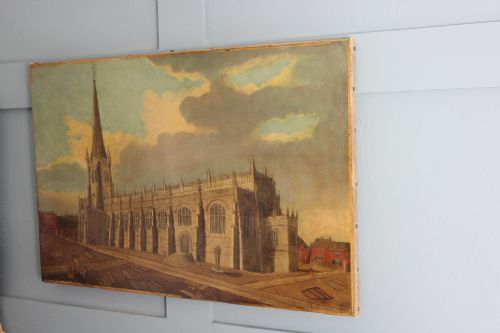
When you search for gothic architectural painting, you encounter works focused on cathedrals, abbeys, and ecclesiastical structures, executed across the nineteenth and twentieth centuries. These pieces record significant religious buildings, ruined abbeys, and academic halls through watercolours, oils on canvas, and monochrome ink drawings.
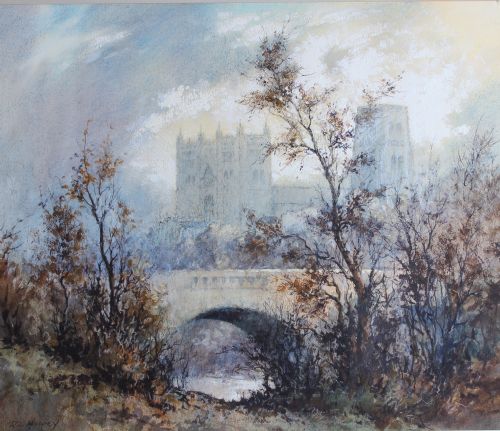
The versions most frequently met on this page include detailed watercolours of English cathedrals such as Durham, Lincoln, and Norwich, alongside oil paintings depicting continental European castles and French cathedral scenes. Artists working in these periods often recorded the atmospheric qualities of ancient stone, lancet windows, and towering spires.
Beyond direct cathedral portraits, the selections span broader interpretations of gothic subject matter, including depictions of ruined abbeys framed by spring landscapes or bustling morning scenes outside European churches. These representations reflect enduring nineteenth-century revival interests and subsequent twentieth-century documentation of historic architecture.
Materials and technique
These works rely primarily on traditional supports such as canvas, paper, wood panels, and board, paired with oil paint, watercolour, or monochrome ink. Painters built up compositions by combining fine brushwork for architectural tracery with looser washes for skies and surrounding landscapes.
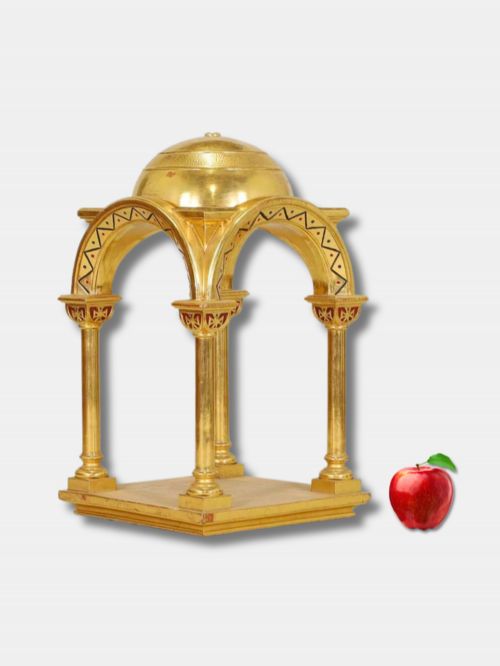
Many watercolours and oil paintings incorporate gesso grounds or gilded frames, particularly when capturing the ornate interiors of tabernacles and cathedral halls. The physical application ranges from meticulous architectural drafting to more impressionistic handling of light falling across stone facades.
The listings combine nineteenth-century oils and watercolours with twentieth-century artistic responses to historic British and European architecture.
Markers of quality
Quality in these works rests upon the precision of the architectural perspective and the artist's ability to render the mass and texture of ancient stone. Superior pieces demonstrate a confident command of scale, capturing the soaring verticality of gothic arches without distortion.
The handling of light and atmosphere separates accomplished works from ordinary topographical records, with finer paintings using subtle tonal shifts to describe weathered masonry and stained glass illumination. Preservation of the original medium, untouched surfaces, and period framing further distinguish the finest examples.
Robert Leslie Howey·Karl Herrle·John Sowden·Fred Lawson·George De Paris·Tom Dudley·Joseph Murray Ince
The Gothic Architectural Painting Glossary
- Gothic Revival
- An architectural and artistic movement reviving medieval forms, prominent throughout the nineteenth century. It heavily influenced both structural design and painting subjects.
- Watercolour
- A painting method where pigment is suspended in a water-based, translucent solution. It was widely utilised by nineteenth-century artists recording British cathedrals.
- Gesso
- A plaster-like mixture applied to wood panels or canvases as a base for painting or gilding. It frequently underlies gilded tabernacles and frames from the period.
- Monochrome
- A painting or drawing executed in a single colour or tint, often shades of grey or sepia. This technique was common in early architectural studies and prints.
- Tracery
- The stonework supports in gothic windows holding stained glass in place. Painters rendered these intricate geometric patterns with precise linear control.
Gothic Architectural Painting: Frequently Asked Questions
How do I date a gothic painting?
Dating relies on stylistic markers within the artwork, costume details of any figures present, and the physical characteristics of the canvas, paper, or frame. Reference to specific building phases or contemporary restoration work also helps establish a chronological bracket.
Signatures, dates inscribed by the artist, and framing techniques offer further confirmation. Comparing the handling of light and pigment to known dated works by the same hand provides precise context.
Were these painted on site?
Many artists produced preliminary sketches and watercolours on location outside cathedrals and ruins to capture accurate architectural proportions. Finished oil paintings were frequently developed later in the studio using these observational studies.
Topographical accuracy in works depicting specific sites like Durham or Lincoln suggests direct observation. Studio finishing allowed artists to enhance atmospheric lighting and compositional drama.
How should I frame these paintings?
These works suit period frames such as nineteenth-century giltwood mouldings or simple ebonised profiles that complement the architectural subject matter. Heavy Victorian frames enhance works with dark, moody cathedral interiors.
For watercolours under glass, traditional mounts with subtle wash lines match the aesthetic of the period. Maintaining appropriate conservation framing protects paper and canvas from environmental damage.
What is the difference between an oil and a watercolour?
Oils utilise pigment suspended in drying oils applied to canvas, panel, or board, offering rich colour saturation and textured brushwork. Watercolours employ water-soluble pigments on paper, resulting in transparent, luminous effects suited to capturing light.
Architectural oils often command greater presence with heavy impasto on stone surfaces. Watercolours offer delicate precision in delineating complex window tracery and masonry.