




German Landscape Oil Painting
These german landscape oil painting works capture pastoral vistas and townscapes across the nineteenth and twentieth centuries.
German Landscape Oil Painting
A german landscape oil painting brings nineteenth and twentieth century rural views, mountain scenes and winter townscapes into the room. You will encounter nineteenth century realism, romanticism, and later twentieth century expressionist approaches.
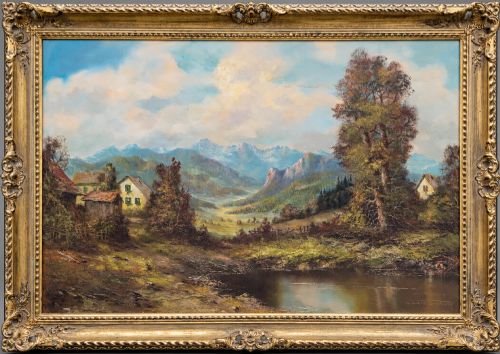
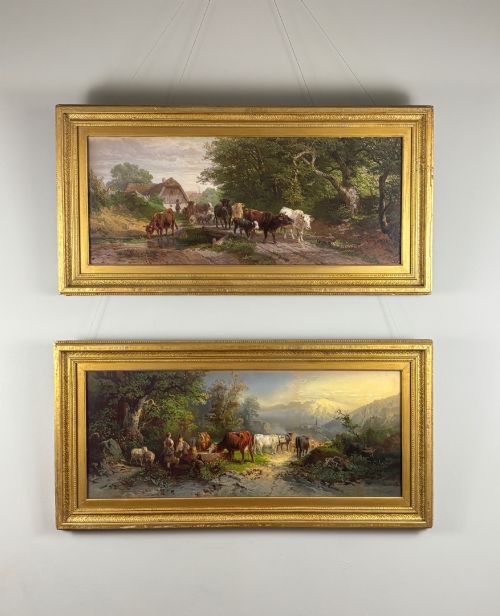
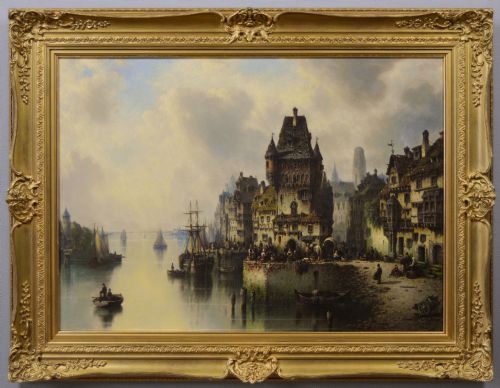
The subjects range from tranquil cattle resting in rural landscapes and high mountain passes to frozen river quays and Bavarian gothic castles. Many pieces depict specific locations such as Godesberg or Schloss Hohenschwangau.
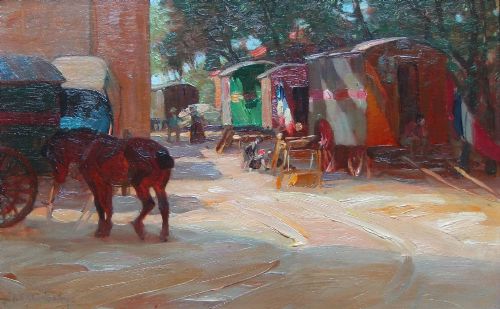
The nineteenth century works often lean towards careful academic observation and atmospheric pastoral moods. Later twentieth century examples show shifts towards expressionist and impressionistic brushwork.
Materials and painting techniques
Artists painted primarily in oil paint on canvas or wooden board, building texture and depth through layered brushstrokes. The physical support provides the stable base necessary for these pigments to endure over decades.
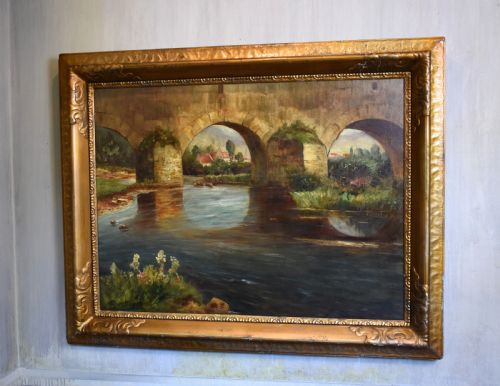
Many works retain their original giltwood frames adorned with gold leaf, which complement the tones of the oil paint. The combination of canvas and wood grounds the composition while the framing encloses the view.
The archive records styles ranging from Biedermeier and nineteenth century romanticism to german expressionism.
Distinctions in quality and execution
Quality rests in the handling of light, atmospheric depth and the confidence of the brushwork across the canvas. Stronger pieces convey a palpable sense of place, whether capturing the crisp chill of a winter townscape or the warm glow of an arcadian meadow.
The relationship between the painting and its original giltwood frame also influences the overall integrity of the piece. Superior examples demonstrate a cohesive harmony between the artist's touch and the period presentation.
Johann Friedrich Voltz·Paul Ehrenberg·Carl Adolf Mende·Heinrich Harder·Hein Hoppmann·Karl Herrle·Franz Reder Broili·Ludwig Hermann·Wilhelm Alexander Meyerheim·Melchior Kern·Karl Adam Heinisch·Gudrun Sibbons
The German Landscape Oil Painting Glossary
- Oil on Canvas
- Pigments bound in a drying oil applied to a woven fabric support. This traditional method allows for subtle blending and rich texture.
- Giltwood
- Wood carved and coated with gold leaf or metallic gilt powder. It forms the decorative border around many period paintings.
- Biedermeier
- A stylistic period from the mid nineteenth century emphasising domestic comfort and clean realism. It reflects middle class tastes in Central Europe.
- German Expressionism
- A twentieth century movement prioritizing emotional experience over physical reality. It uses bold colours and distorted forms to convey inner feelings.
- 19th Century Realism
- An artistic approach focusing on everyday subjects and unvarnished nature. Artists aimed to depict the world with photographic fidelity before the term existed.
German Landscape Oil Painting: Frequently Asked Questions
How do I date a german landscape oil painting?
Look to the clothing of figures, the architectural style of buildings, and the framing methods used. Stylistic markers from romanticism to expressionism also point to specific decades.
Signatures, dates inscribed on the canvas or board, and dealer records help narrow the exact period of execution.
What subjects appear in these paintings?
Common subjects include mountain vistas, forest paths, pastoral meadows with livestock, and bustling townscapes along rivers. Artists frequently recorded specific geographic landmarks and castles.
Winter scenes and harbour views also recur, capturing seasonal changes and architectural details across Germany.
How should I display an oil painting?
Keep paintings away from direct sunlight and sudden temperature shifts to protect the canvas and oil pigments. Stable indoor environments prevent the wood and canvas from warping.
Ensure the painting hangs securely using hardware suited to the weight of the canvas and its frame.
What is the difference between realism and expressionism?
Realism focuses on accurate depictions of nature, light, and everyday rural life as observed by the artist. Details are rendered with precision and optical truth.
Expressionism distorts form and colour to evoke emotional resonance rather than visual accuracy, reflecting twentieth century artistic shifts.