
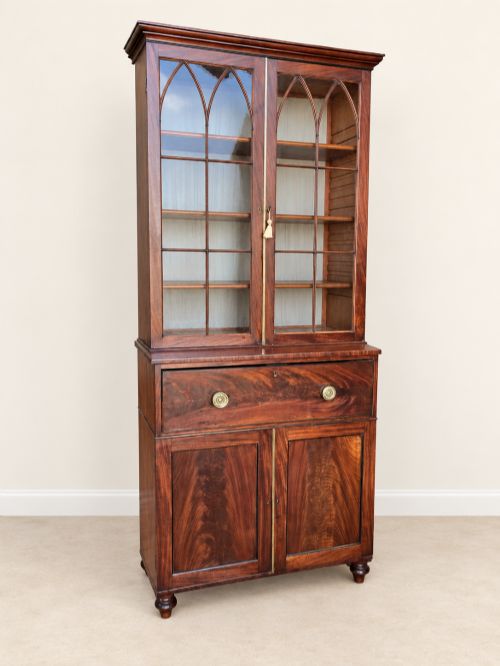
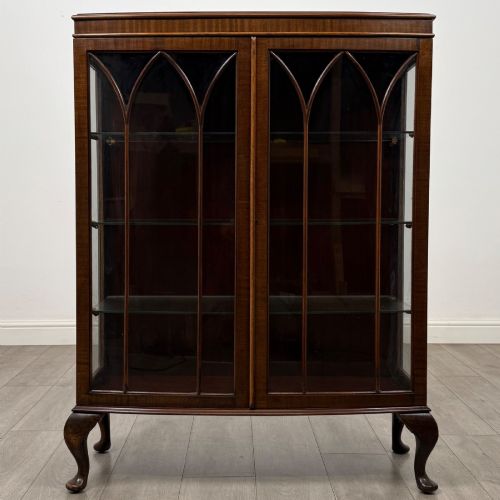
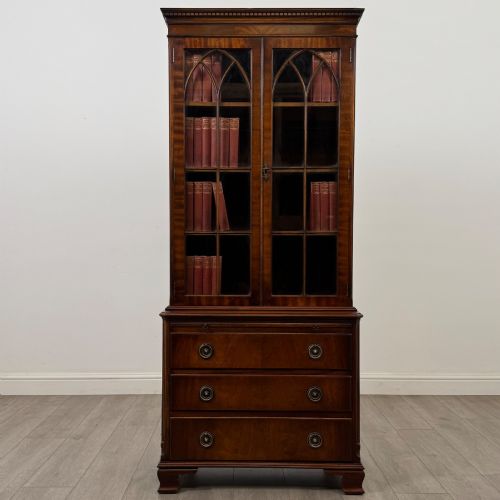
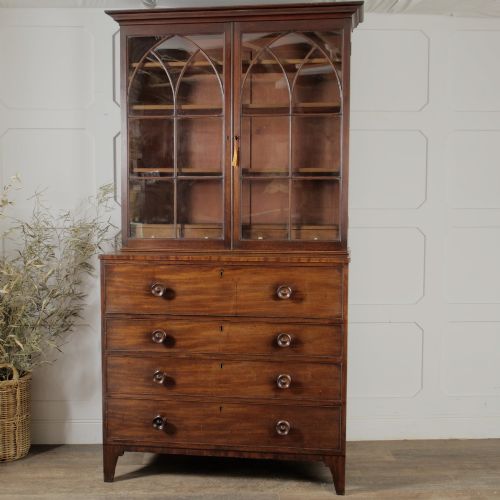
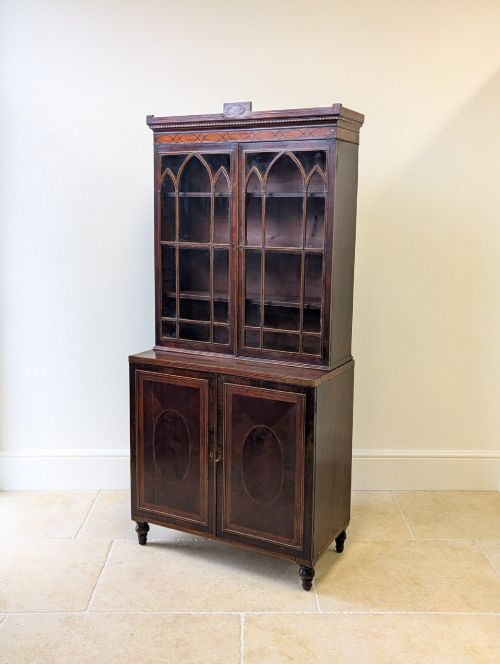
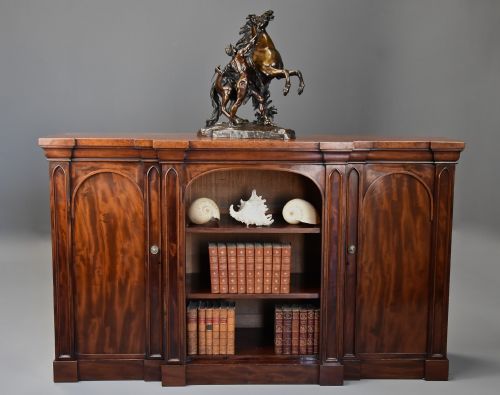


Gothic Arch Mahogany Bookcase
These gothic arch mahogany bookcase examples offer architectural pointed glazing and rich timber figures that suit studies and libraries.
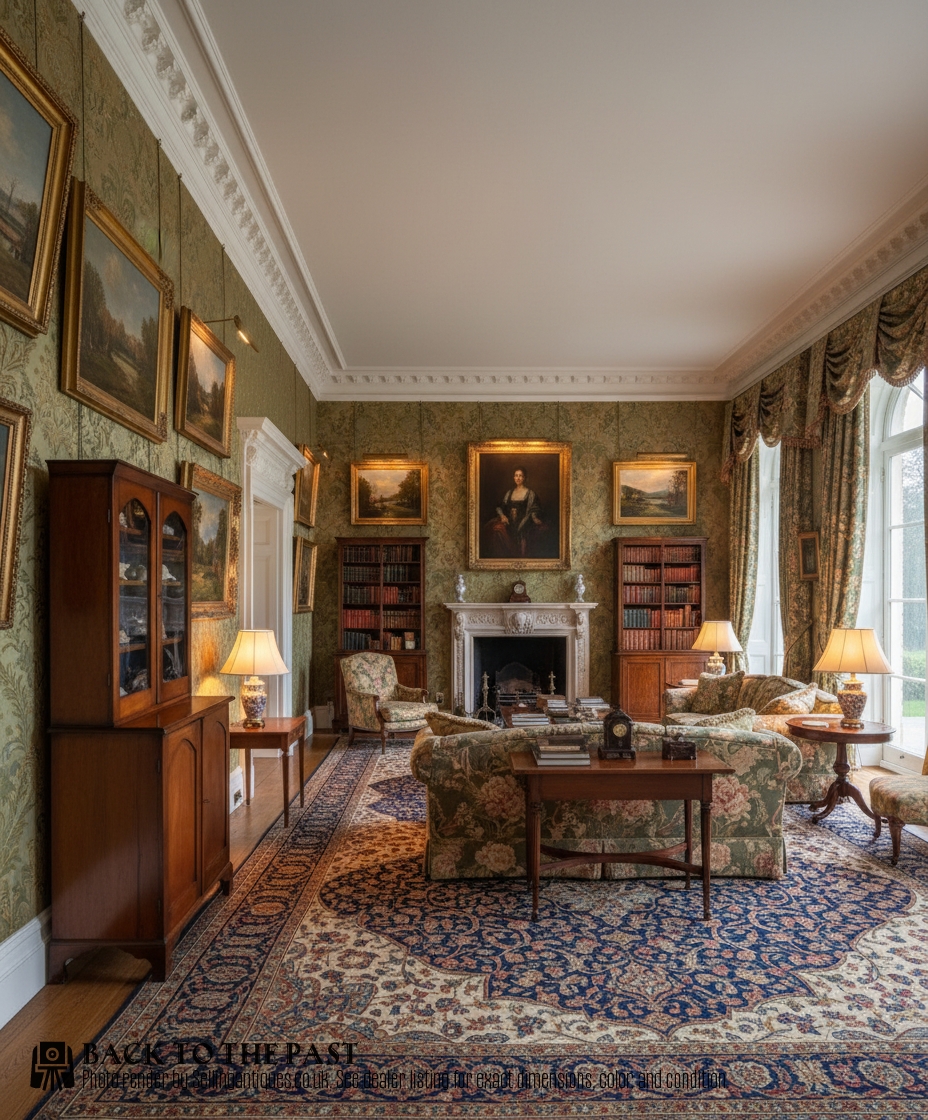
Gothic Arch Mahogany Bookcase
A gothic arch mahogany bookcase combines deep red timber tones with pointed arched glazing bars, reflecting structural church designs adapted for domestic rooms. You will encounter breakfront library pieces, secretaire variants with fitted writing drawers, and taller display cabinets across Georgian, Regency, and Victorian periods.
The form relies on vertical proportions, often pairing glazed upper shelves with enclosed wooden cupboards below. Pieces range from grand breakfront library editions to compact corner cabinets and provincial Welsh or Irish interpretations.
Materials and construction
Makers utilised solid mahogany and flame mahogany veneer over secondary softwoods, occasionally adding satinwood inlay or brass fittings to enrich the surface. Glass panes were hand-cut and fitted into intricate wooden tracery that formed the characteristic pointed arches.
Cabinetmakers constructed these pieces in sections, joining heavy base cupboards with upper shelving units to allow transport. Drawer linings typically employed oak or pine, assembled with traditional hand-cut dovetails.
The listings show mahogany combined with flame veneer, brass, leather, and satinwood across Regency, Georgian, and Victorian periods.
Qualities that distinguish the work
The distinction lies in the crispness of the Gothic tracery and the figured choice of the mahogany grain on the door panels. Superior examples display balanced proportions, fine joinery in the arched framing, and original brass hardware.
Later revival pieces or altered formats show heavier mouldings and simpler internal construction compared to the fluid lines of early nineteenth-century workshops.
The Gothic Arch Mahogany Bookcase Glossary
- Breakfront
- A cabinet design where the central section projects forward from the flanking wings. This configuration creates architectural depth and allows for larger central shelving.
- Secretaire
- A desk form featuring a drop-front drawer that conceals small pigeonholes and writing surfaces. It integrates a bureau workspace within a standard bookcase height.
- Tracery
- The stonework-inspired stonework patterns adapted into wooden glazing bars on cabinet doors. It defines the pointed gothic arches characteristic of these pieces.
- Flame mahogany
- A veneer cut from the fork of the mahogany tree where the branches join the trunk. It creates a rippling flame-like pattern across large cabinet doors.
Gothic Arch Mahogany Bookcase: Frequently Asked Questions
How do I date a gothic arch mahogany bookcase?
Dating relies on carcass construction, glass characteristics, and timber selection rather than just stylistic labels. Georgian and Regency pieces often feature hand-blown cylinder glass and finer interior drawer dovetails.
Later Victorian and Edwardian revival items display machine-sawn elements, heavier cornices, and brighter reddish finishes. Examining the backboards and screw types helps confirm the period of manufacture.
Are the shelves adjustable?
Earlier Georgian and Regency examples typically utilise fixed wooden shelving supported on fixed battens or simple wooden pegs. Mid-nineteenth-century library pieces and later versions frequently introduce ratcheted wooden uprights for movable shelf placement.
Checking the interior walls reveals whether the vertical supports are original additions or later alterations made to accommodate modern books.
How should I clean the mahogany?
Maintaining the finish requires regular dusting with a dry, soft lint-free cloth to prevent particulate buildup on the timber surface. Avoid silicone sprays or modern household polishes that can penetrate old wax and soften the patina.
Applying a traditional beeswax formulation occasionally helps nourish the dry mahogany and preserves the warm lustre of the wood.
Can these bookcases be dismantled for moving?
Most large breakfront and library bookcases separate into distinct sections, usually a heavy base cupboard, an upper glazed bookcase, and a separate cornice. Smaller corner cabinets and single-door variants are generally built as one solid unit.
Enlisting professional handlers ensures that heavy glass doors and pegged joints are separated safely without straining the frame.