

Victorian Glazed Book Cabinet
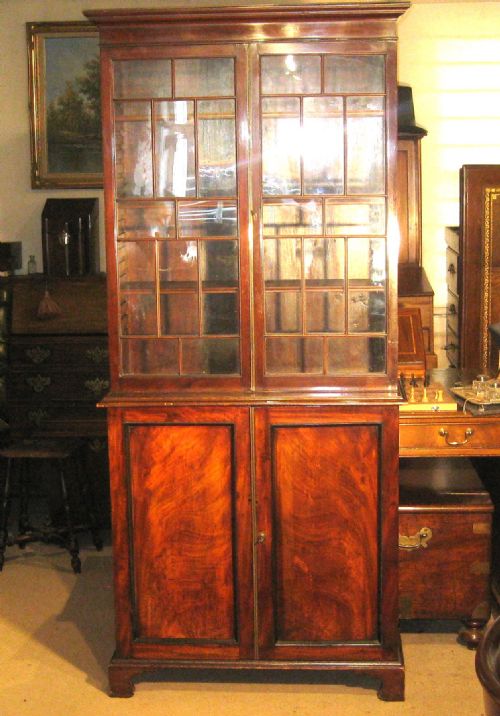
When you search for a victorian glazed book cabinet, you are looking at substantial timber storage built to protect volumes behind glass.
Victorian Glazed Book Cabinet
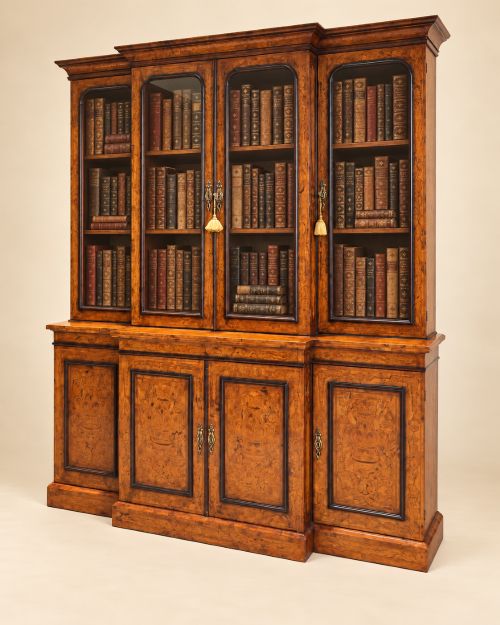
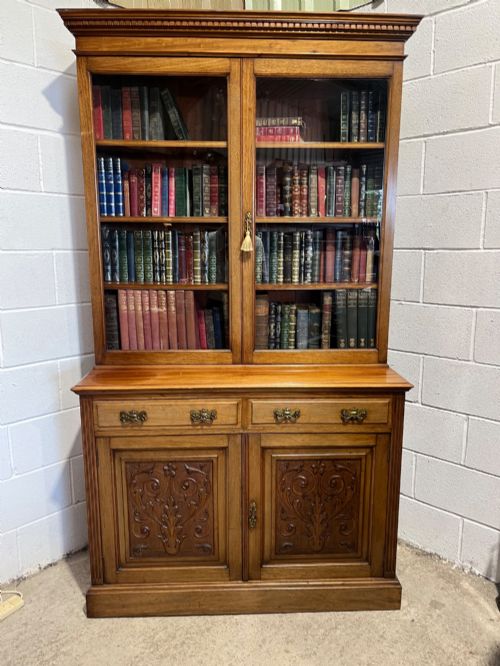
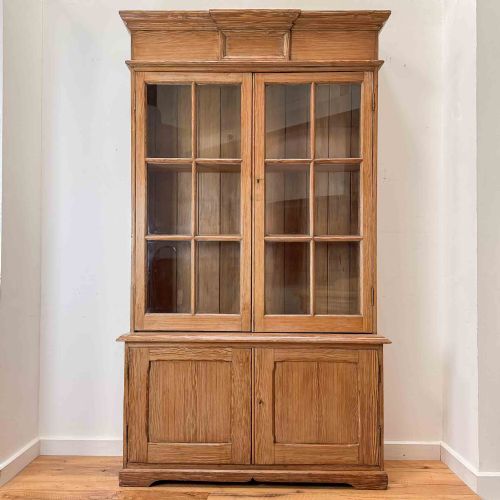
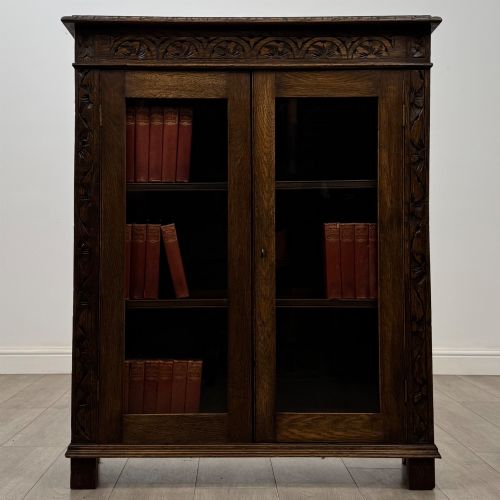
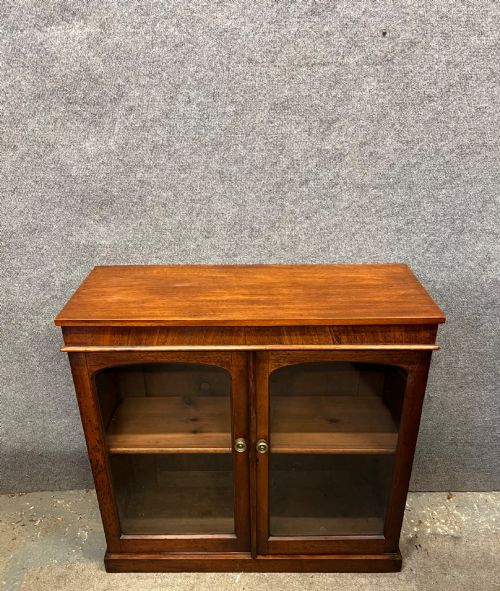
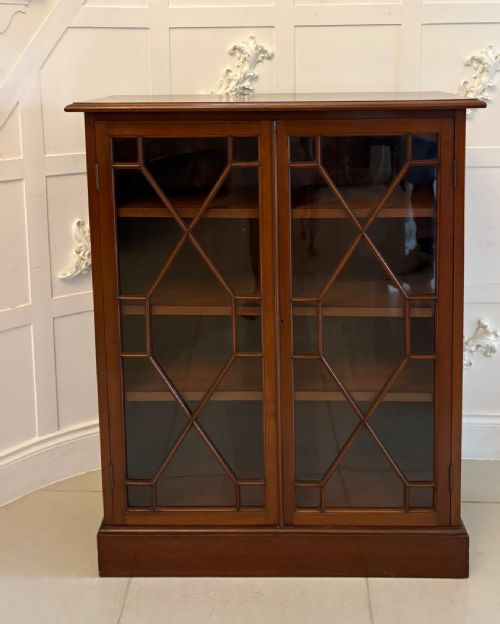
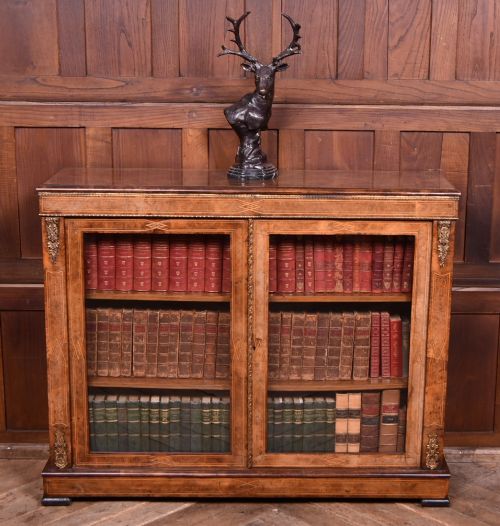
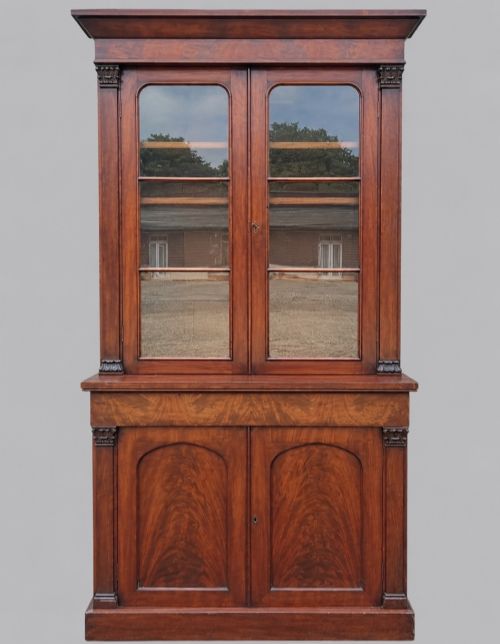
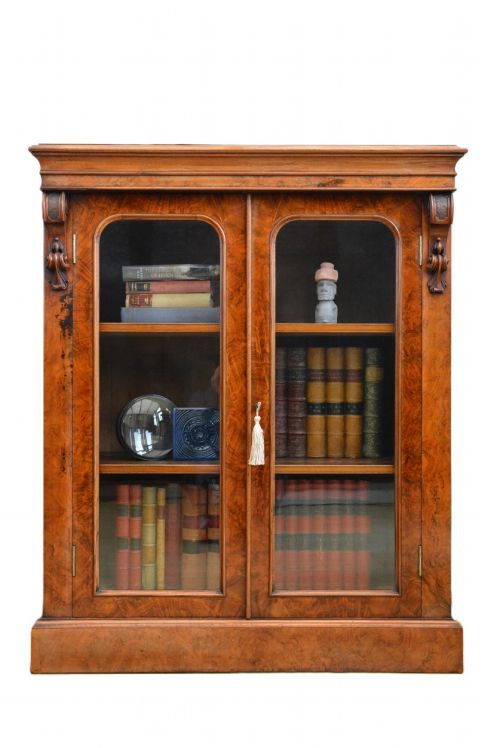
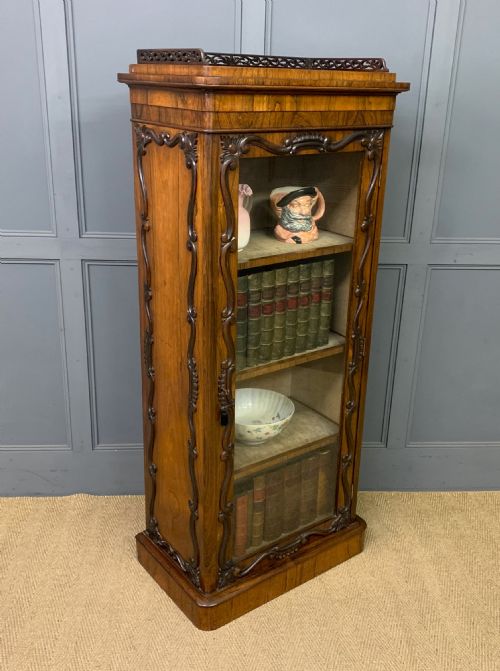
A victorian glazed book cabinet is a piece of home library furniture designed with glass-fronted doors to keep dust from valuable volumes. These items appear in formats ranging from small single-door display cupboards to large breakfront library bookcases.
Most examples seen here date from the nineteenth century, including pieces spanning the early Victorian era through to late Victorian and Arts and Crafts periods. Makers utilised woods such as mahogany, walnut, oak, and rosewood to construct these functional storage units.
How They Were Made
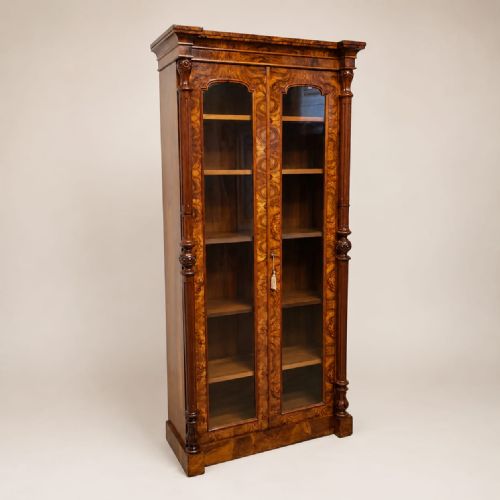
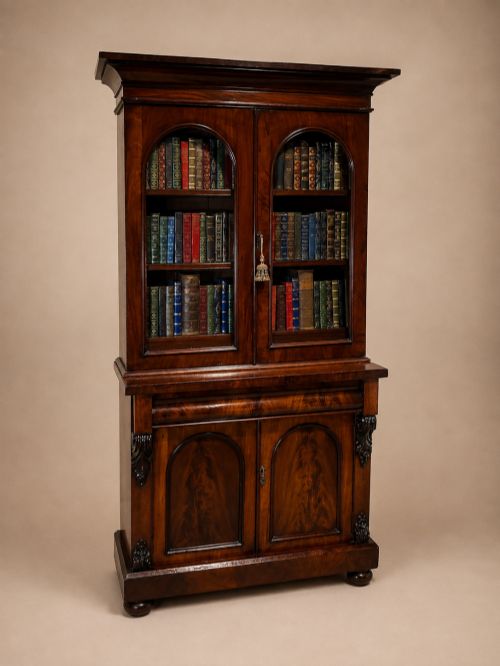
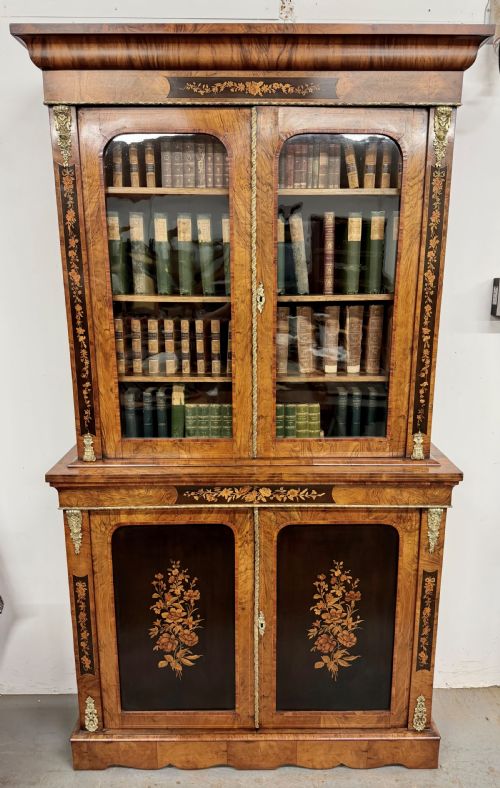
Cabinet makers built carcasses from solid hardwoods like mahogany and oak, often applying figured walnut, burr walnut, or satinwood veneers to prominent surfaces. Glass panes were fitted into timber doors using glazing bars or astragals to create secure viewing panels.
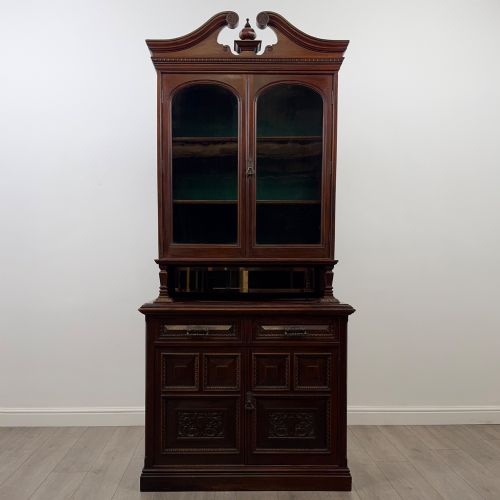
Interiors typically contained adjustable wooden shelving to accommodate books of varying heights, while lower sections frequently incorporated solid cupboards or drawer chests. Brass fittings and carved details appeared on finer expressions of the style.
Listings feature mahogany, walnut, oak, and rosewood cabinets built across the nineteenth century, including Georgian and Regency survivals.
What Varies in Quality
Quality rests upon the selection of timber veneers and the precision of the cabinetwork, from plain mahogany boards to heavily figured burr walnut with marquetry inlay. The crispness of carved mouldings and the presence of named workshops distinguish standard utility pieces from exceptional commissions.
Proportion and scale also dictate distinction, with larger breakfront libraries or tall narrow formats requiring more sophisticated joinery than basic upright cabinets.
James Winter·Gillows·Holland and Sons
The Victorian Glazed Book Cabinet Glossary
- Breakfront
- A piece of furniture where the central section projects forward from the flanking wings. This architectural arrangement creates depth and visual weight.
- Astragal
- A small convex moulding used on glass doors to divide panes. These wooden strips hold the individual glass sections securely in place.
- Burr walnut
- Timber taken from the wart-like growth on a walnut tree, producing swirling grain patterns. Cabinet makers prized this veneer for high-status display surfaces.
- Secretaire
- A cabinet incorporating a pull-down writing drawer fitted with small compartments and pigeonholes. It combines storage with a compact writing desk.
- Marquetry
- Inlaid wood pieces arranged in decorative patterns on a furniture surface. Craftsmen used contrasting veneers to create floral or geometric designs.
Victorian Glazed Book Cabinet: Frequently Asked Questions
How are adjustable shelves fitted?
Shelves rest upon wooden bearer strips or metal ratchets set into the interior sides of the cabinet. This system allows owners to alter shelf heights for different book sizes.
Original mechanisms remain visible inside the glazed upper sections of nineteenth-century examples.
How do I care for the timber?
Polished hardwood surfaces require occasional dusting with a dry, soft cloth to prevent particulate buildup. Avoid placing the cabinet near direct heat sources or strong sunlight.
Applying a traditional beeswax feed maintains the lustre of mahogany and walnut veneers.
Are the doors lockable?
Most glazed cabinets retain their original brass or steel locks operating with working keys. These secure the glass doors against accidental opening.
Interior drawers and lower cupboards often feature matching locking mechanisms.