

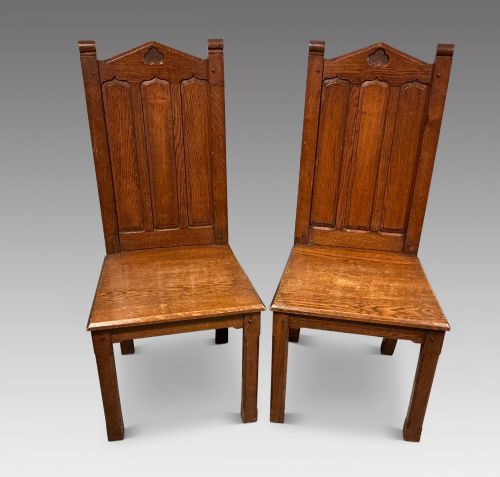
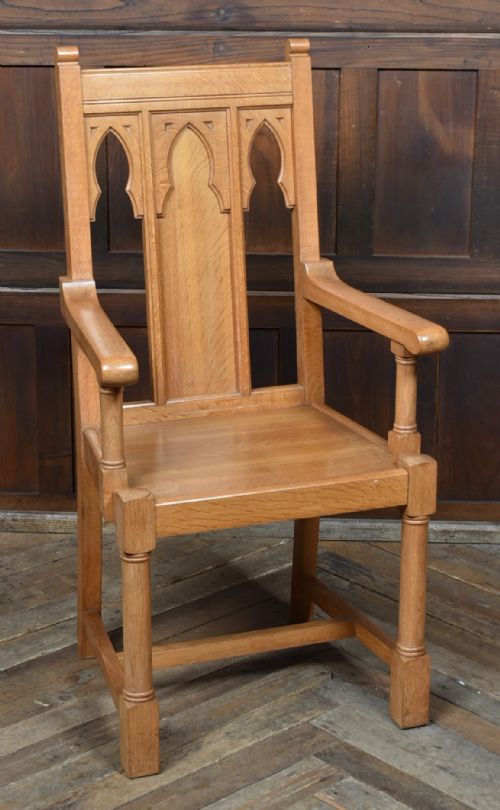


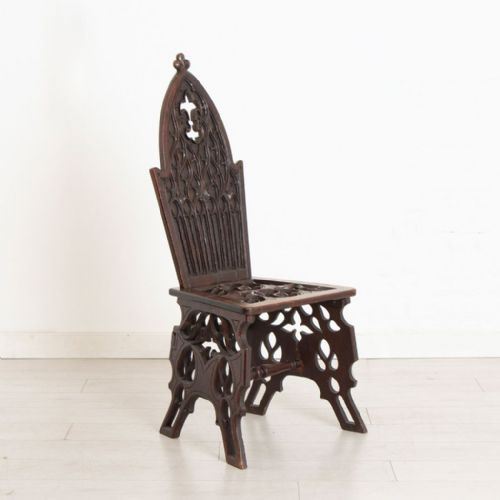

Gothic Arch Hall Chair
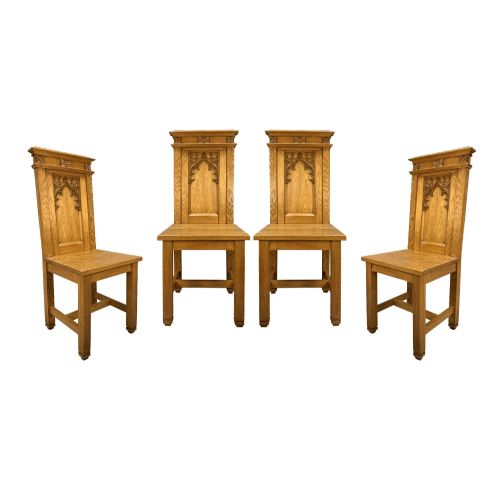
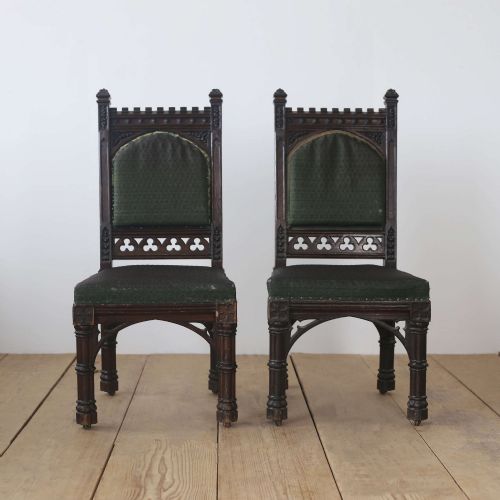
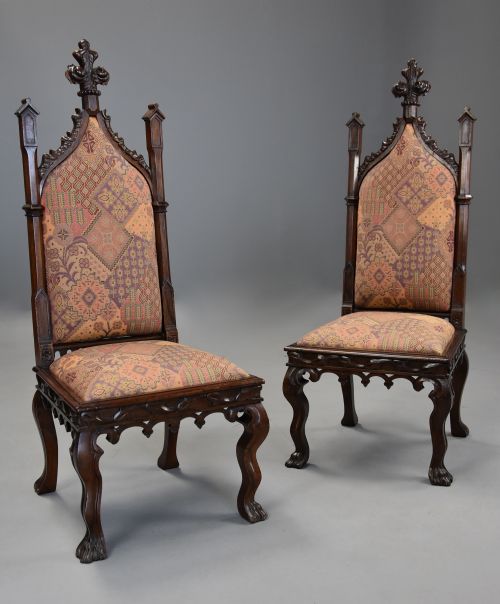
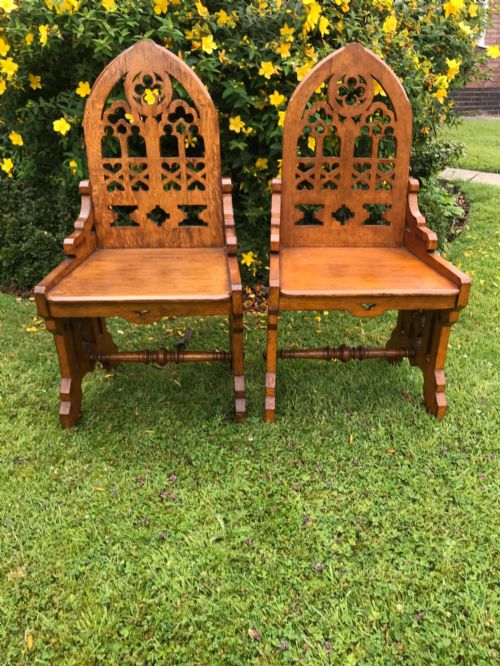
These gothic arch hall chair pieces are striking examples of revival design, prized for their pointed structural lines and architectural presence.
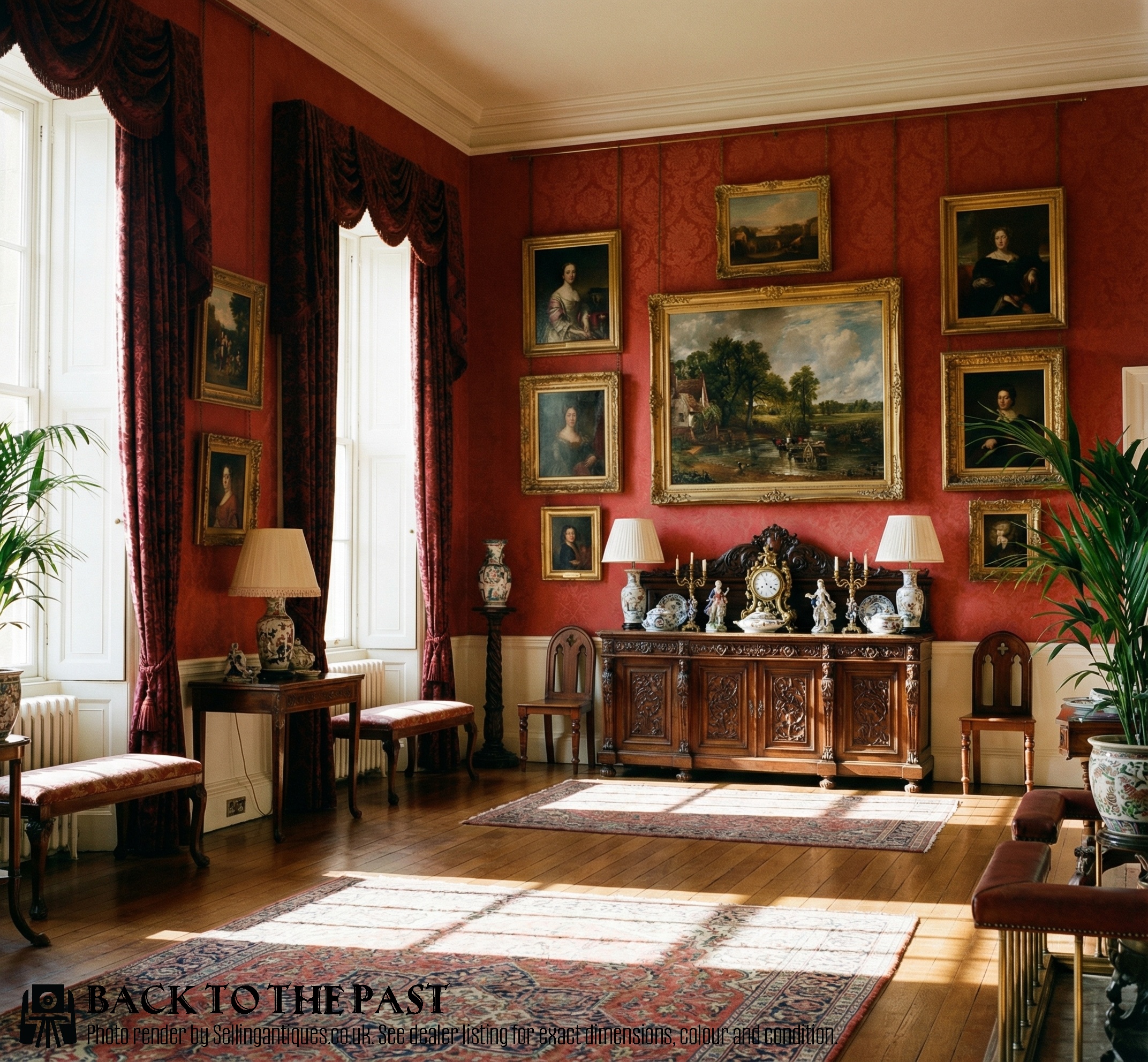
Gothic Arch Hall Chair
A gothic arch hall chair brings distinct ecclesiastical character to domestic spaces through pointed lancet arches and tall timber backs. The selection spans the nineteenth century and into the Edwardian era, predominantly featuring hall chairs alongside larger armchairs and chapel thrones.
Makers often drew upon medieval ecclesiastical architecture, translating stone window tracery into woodwork intended for grand hallways and reception rooms. Oak is the primary timber met here, accompanied by mahogany, pitch pine, and rosewood.
Most examples survive as matched pairs rather than single seats, reflecting their original purpose of lining the corridors of country houses and institutional buildings. Forms range from austere rustic pitch pine seats to elaborately carved rosewood and mahogany showpieces.
How they were made
Cabinetmakers utilised dense native and imported timbers, primarily solid oak and mahogany, relying on traditional pegged joinery to support the upright loads of high-backed designs. Pitch pine and rosewood were also employed to achieve varied grain patterns and rich surface tones.
Surface ornamentation involved deep relief carving to replicate stone tracery,quatrefoils, and crocketed spires directly onto the timber frames. Certain armchairs incorporate buttoned leather or textile upholstery secured with brass tacks.
Listings span the nineteenth century to the Edwardian period, with oak dominating the material selection alongside pitch pine, mahogany, and rosewood.
What varies in quality
The distinction between standard utility seating and exceptional workshop production lies in the crispness of the architectural carving and the selection of timber. Finer examples display deeply undercut tracery and balanced proportions that mimic actual stone masonry.
Stamped maker marks or original paper labels from prominent workshops elevate an object by confirming documented craftsmanship and specific period provenance. The integrity of the original joints and the preservation of the raw timber grain dictate overall structural standing.
W.A. Willcocks·Gillows of Lancaster·A.W.N. Pugin
The Gothic Arch Hall Chair Glossary
- Gothic Revival
- An architectural and decorative movement drawing inspiration from medieval forms, prevalent across the nineteenth century. This style manifested in pointed arches, quatrefoils, and heavy timber construction.
- Tracery
- The stonework ornamentation supporting glass in a Gothic window, translated by cabinetmakers into pierced wooden chair backs. It defines the distinctive silhouette of these seats.
- Pitch Pine
- A dense, resinous softwood utilised by nineteenth-century makers for robust institutional and domestic furniture. It yields a strong grain pattern when finished.
- Quatrefoil
- A decorative ornamental design consisting of four lobes or foil shapes, frequently pierced through the backs of these chairs. It is a fundamental motif of medieval architecture.
- Glastonbury Chair
- A type of folding wooden armchair with X-framed supports, associated with ecclesiastical seating and revival designs. Examples often feature inscribed religious or decorative texts along the top rail.
Gothic Arch Hall Chair: Frequently Asked Questions
Where were these chairs used?
These seats were designed primarily for the grand hallways, entrance lobbies, and reception rooms of nineteenth-century residences and institutions.
Their upright proportions and architectural backs meant they functioned more as decorative statements for visitors than casual lounging seats.
How do I care for antique oak?
Maintain the timber by applying natural beeswax occasionally to nourish the grain and prevent the wood from drying out.
Keep the seating away from direct heat sources and dramatic humidity shifts to protect the historical joinery.
Are these seats comfortable?
Most examples feature rigid timber seats and straight vertical backs intended for upright posture in a hallway or reception setting.
Versions upholstered in buttoned leather or textile provide a softer sit compared to plain wooden boards.
How do I date these pieces?
Dating relies upon examining the timber species, construction methods, and the specific evolution of revival motifs across the nineteenth century.
Later Edwardian iterations often display lighter proportions and simplified carving compared to substantial mid-Victorian examples.