

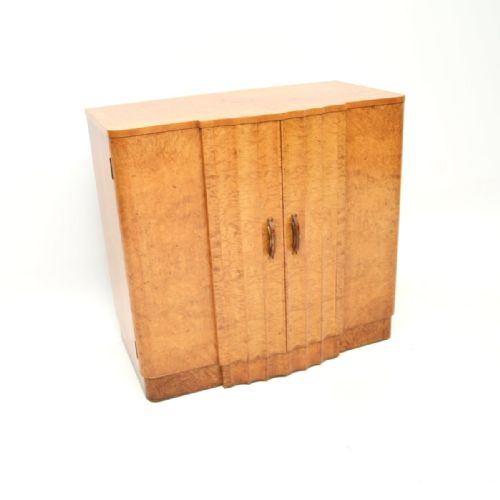
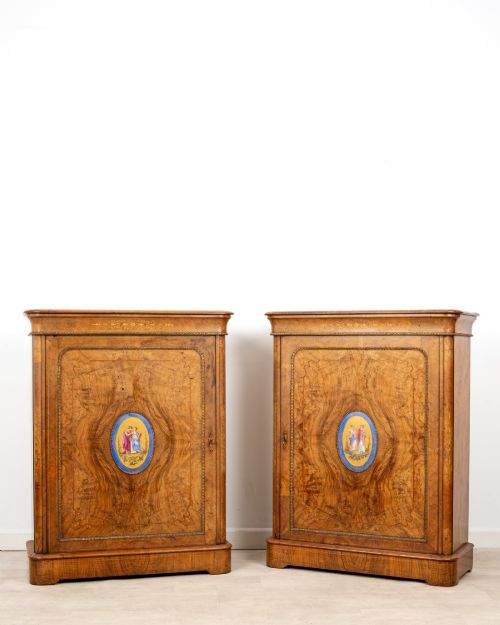
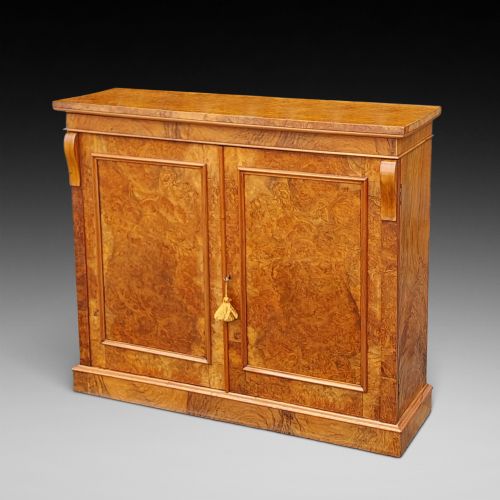
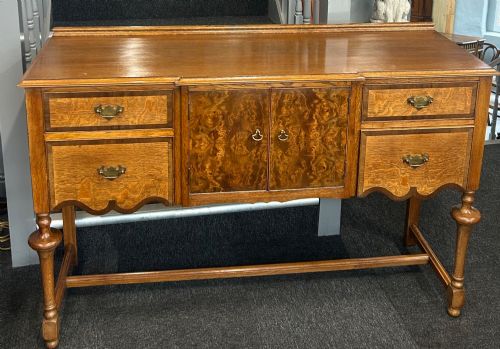
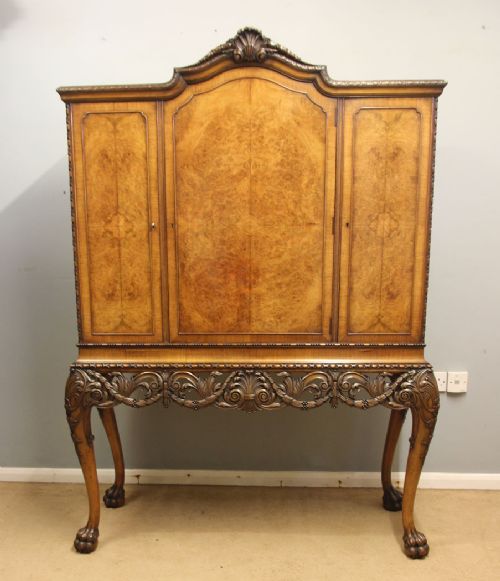
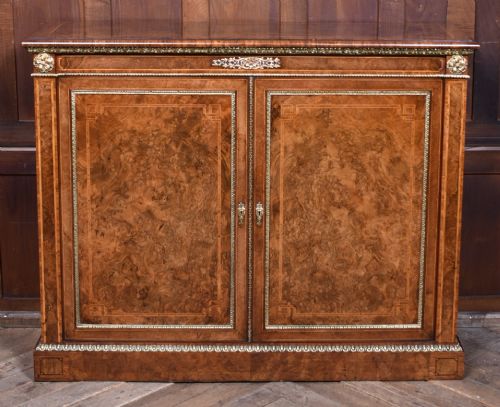


Golden Walnut Credenza Cabinet
A golden walnut credenza cabinet brings rich timber figure and historic presence into a room, combining display space with concealed storage.
Golden Walnut Credenza Cabinet
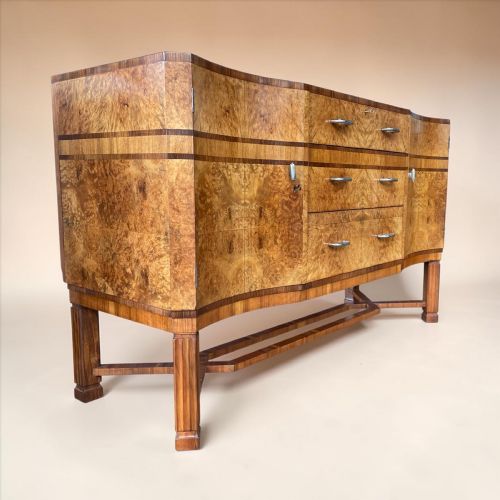
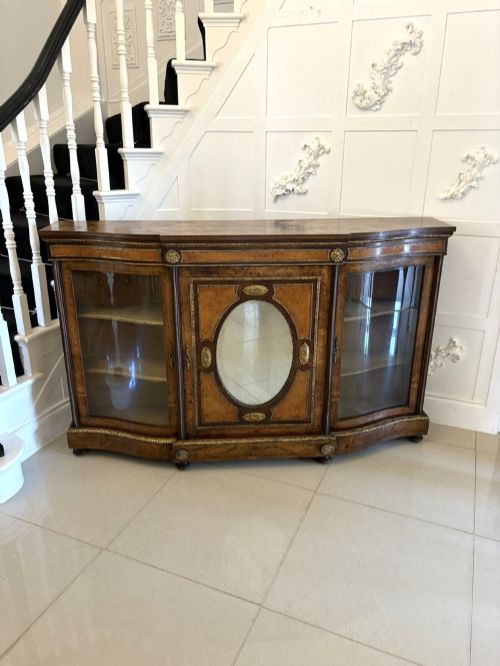
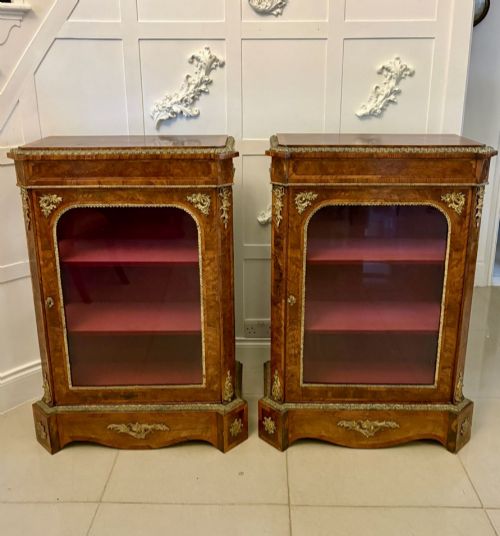
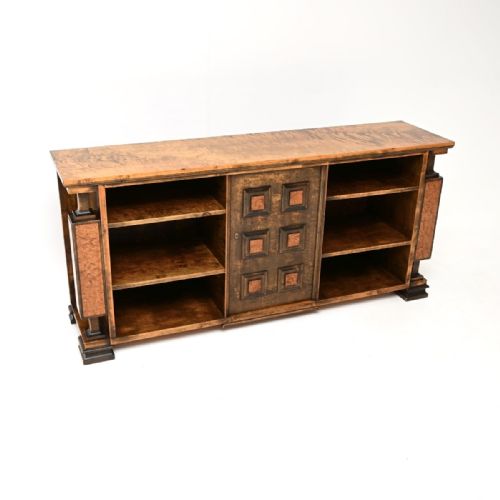
A golden walnut credenza cabinet is a substantial storage piece designed for formal rooms, appearing in forms such as sideboards, pier cabinets, and cocktail cabinets.
The selections span periods from the nineteenth century through the Edwardian era to Art Deco, with Victorian and 1930 examples forming the backbone of the offerings.
Makers and designers from these eras utilised the warm tones of walnut timber to anchor dining rooms, salons, and drawing rooms with practical elegance.
Factors influencing quality
Quality rests heavily on the selection and symmetry of the veneer work, where continuous figure patterns across doors and panels demonstrate superior skill.
The refinement of cast ormolu mounts, the clarity of glass, and the integration of decorative plaques separate standard production from exhibition pieces.
Structural integrity and the preservation of original patination on the walnut surfaces determine the enduring standing of each cabinet.
Listings span multiple eras, featuring Victorian burr walnut alongside 1930s Art Deco pieces by Harry and Lou Epstein.
Harry and Lou Epstein
The Golden Walnut Credenza Cabinet Glossary
- Credenza
- A low dining or salon cabinet, typically featuring central cupboard doors flanked by curved glass end cupboards. This form became central to nineteenth-century interior displays.
- Burr Walnut
- A distinctive timber taken from the growth growths of a walnut tree, yielding complex, swirling grain patterns. It forms the primary decorative surface for many cabinets.
- Ormolu
- Gilded bronze ornamentation applied to furniture surfaces. Makers cast these mounts to accent corners, friezes, and door panels.
- Demi-Lune
- A half-moon shape used for the footprint of specific side cabinets and commodes. This curved profile allows the cabinet to sit neatly against a wall.
- Pier Cabinet
- A narrow display cabinet designed to fit the wall space between windows. These pieces often feature glazed doors for housing ceramics and books.
Golden Walnut Credenza Cabinet: Frequently Asked Questions
What is a golden walnut credenza cabinet used for?
These cabinets served historically to store dining silver, linens, and glassware while providing a flat surface for serving food or displaying decorative objects.
In modern rooms, they function effectively as media consoles, hallway storage units, or prominent focal points in living spaces.
How do I distinguish Victorian from Art Deco cabinets?
Victorian examples tend to feature ornate ormolu mounts, curved glass, inlaid details, and rich burr walnut veneers with traditional revival styling.
Art Deco pieces emphasise geometric symmetry, streamlined shapes, and contrasting veneers like satin birch without historical revival motifs.
Where should I place a credenza in my home?
A credenza suits dining rooms as a sideboard, living rooms as a display cabinet, or entrance halls where its surface can hold everyday items.
Ensure adequate wall space allows the doors to open fully without obstructing movement through the room.
How do I care for walnut veneer surfaces?
Protect the timber by keeping cabinets away from direct sunlight and maintaining stable indoor humidity levels to prevent veneer lifting.
Dust regularly with a dry cloth and apply occasional appropriate wax polish to maintain the sheen of the walnut grain.