





Golden Satinwood Pedestal Table
A golden satinwood pedestal table brings luminous timber and architectural proportion to a room, offering a versatile surface suited to both formal display and everyday writing.
Golden Satinwood Pedestal Table
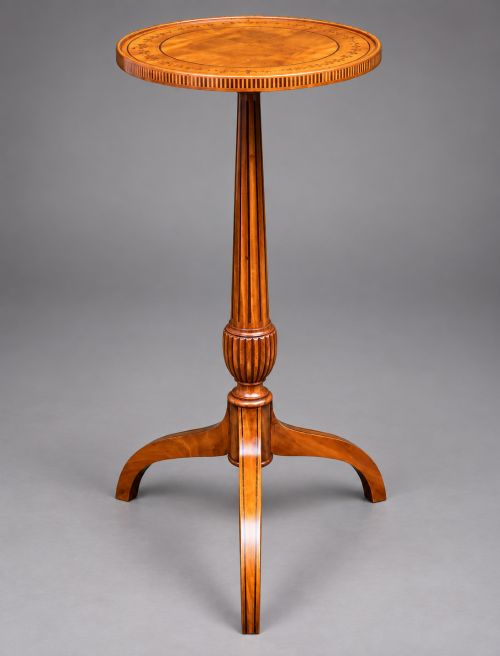
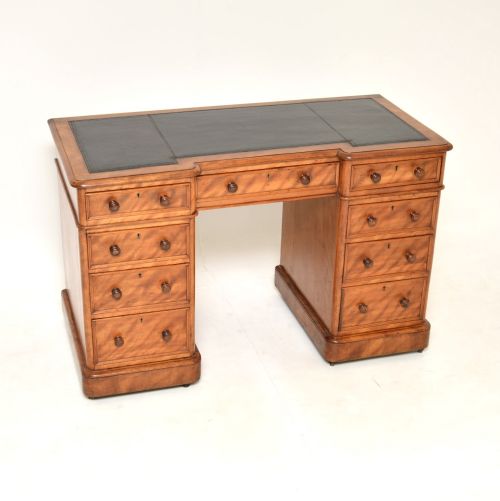
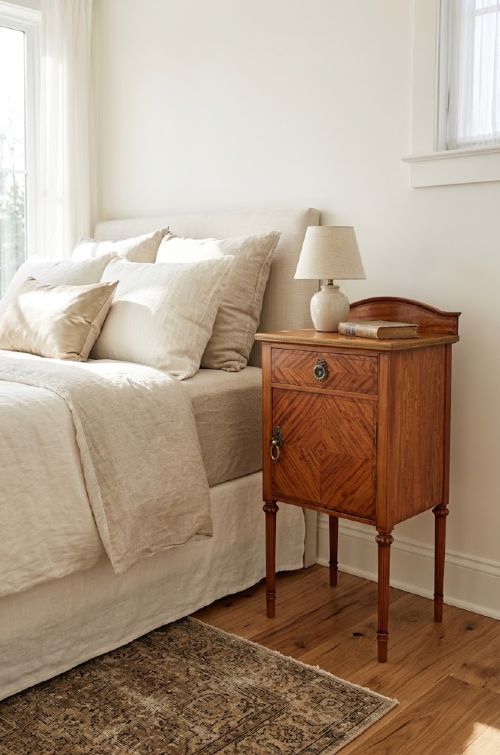
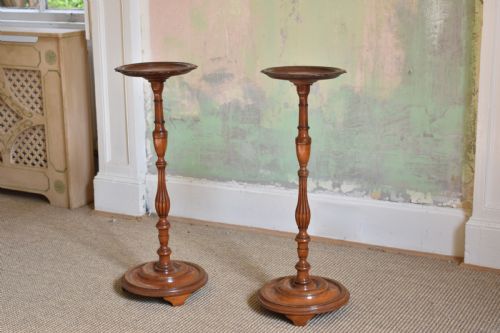
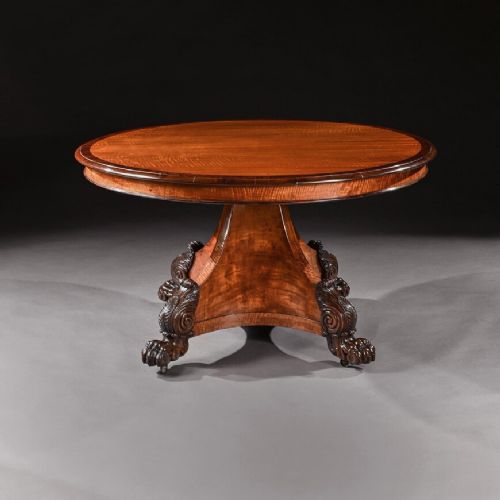
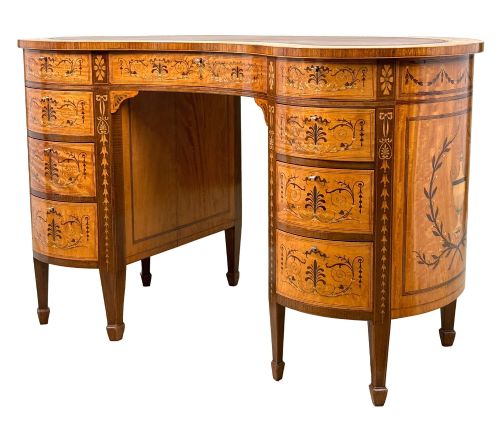
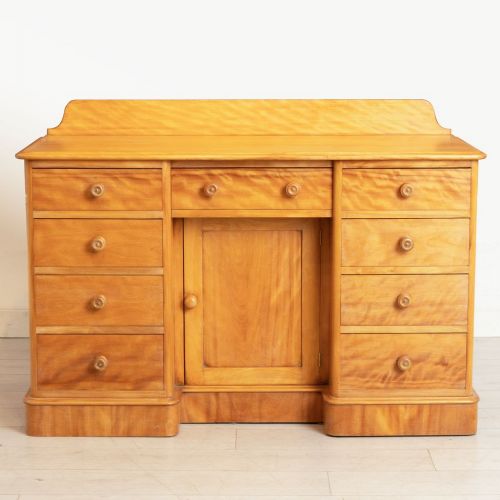
A golden satinwood pedestal table encompasses a range of freestanding furniture designed around a central support, appearing primarily as desks, occasional tables, and bedside cabinets. The selections span the nineteenth century through the Edwardian era and the art deco period, reflecting varied revivals from the georgian style to grand regency and neo-classical designs.
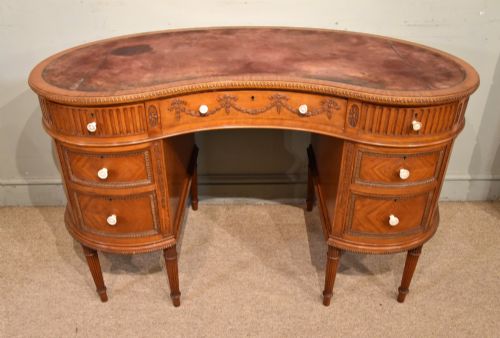
Buyers seeking this specific furniture form will encounter pieces executed in satinwood alongside related timbers like satin birch and rosewood. These works frequently incorporate structural elements such as brass fittings and leather writing surfaces, demonstrating the high standards of nineteenth-century cabinet makers and twentieth-century workshops alike.
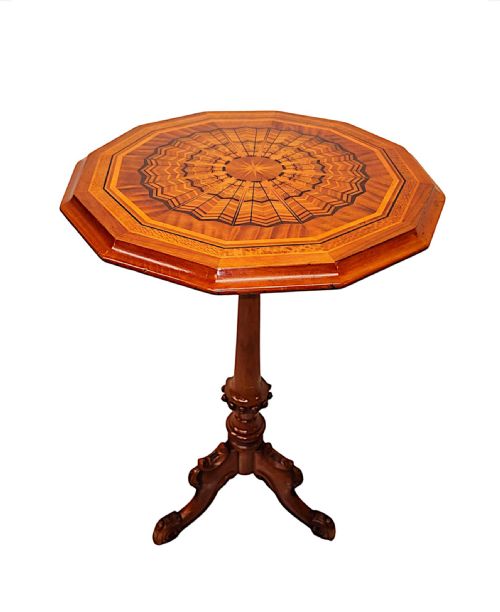
The objects serve diverse functions within domestic interiors, moving from compact bedside tables to expansive centre tables and pedestal desks. Craftsmanship across these forms demonstrates complex marquetry, crossbanding, and figured timber selection tailored to refined reception rooms and private chambers.
Materials and construction methods
Cabinet makers utilised highly figured timbers such as satinwood and satin birch, applying them as veneers over stable secondary woods like pine and oak. These surfaces were frequently enhanced with intricate marquetry and contrasting crossbanding in rosewood, walnut, and kingswood.
Structural integrity relied on traditional joinery techniques combined with brass hardware, leather inserts, and internal oak-lined drawers. The application of polished finishes highlighted the natural chatoyancy of the primary wood, creating the characteristic golden warmth seen in nineteenth-century and Edwardian pieces.
Listings feature desks, bedside cabinets, and centre tables executed in satinwood, satin birch, and rosewood across multiple nineteenth-century and twentieth-century periods.
Assessing quality and execution
Quality in these pieces rests upon the selection of the timber and the precision of the inlay work, where superior examples exhibit highly figured grain and seamless marquetry. The sophistication of the design, whether following a sheraton revival or an art deco aesthetic, dictates the overall refinement of the cabinet work.
Internal construction offers further distinction between standard production and master craftsmanship, visible in the choice of secondary woods such as oak for drawer linings and the retention of original brass handles. The crispness of carved details and the harmonious matching of veneers across multiple surfaces separate exceptional furniture from ordinary utility pieces.
Gillows·Maple & Co·Edwards & Roberts·Peters of Genoa·John Taylor of Edinburgh
The Golden Satinwood Pedestal Table Glossary
- Satinwood
- A dense, lustrous tropical timber prized for its golden colour and reflective grain. It was extensively utilised by cabinet makers during the eighteenth and nineteenth centuries for high-status furniture.
- Pedestal table
- A freestanding table supported by a central pillar rising from a stable base or footed platform. This form allows maximum legroom while providing a solid structural core.
- Crossbanding
- A decorative border technique where strips of veneer are laid perpendicular to the grain of the main surface. This frames the top or drawer front with a contrasting band of timber.
- Marquetry
- The art of applying pieces of veneer to a structure to form decorative patterns and pictorial designs. Craftsmen combined various woods to achieve tonal contrast and depth.
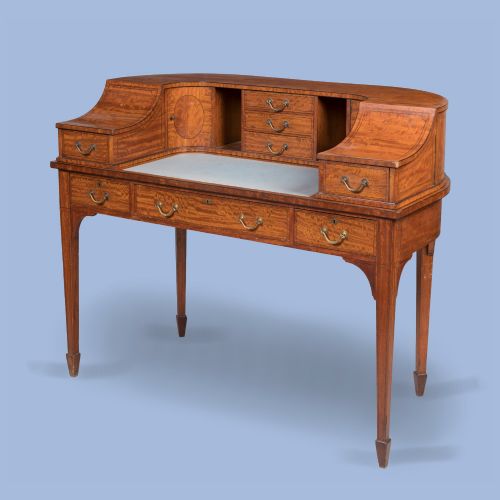
- Carlton house desk
- A distinctive writing desk featuring a curved superstructure of small drawers and compartments around the perimeter of the writing surface. This form originated in the late eighteenth century and saw revivals in the Edwardian period.
Golden Satinwood Pedestal Table: Frequently Asked Questions
What periods do these tables come from?
The pieces span the nineteenth century through the Edwardian era, with additional examples from the art deco period of the nineteen-thirties. You will find items representing various revivals, including georgian, regency, and neo-classical styles.
Craftsmanship evolves across these periods, moving from intricate nineteenth-century marquetry to clean twentieth-century geometric lines while retaining the characteristic golden timber.
How were pedestal desks used?
These desks served as functional writing and administrative stations in private libraries, studies, and grand reception rooms. Their central pedestals housed banks of drawers for correspondence and documents.
Many incorporate integrated leather writing surfaces and specialised compartments, balancing practical storage with refined decorative presence.
How do I care for satinwood furniture?
Protect the polished timber from direct sunlight and excessive moisture to preserve the golden hue and natural lustre of the grain. Occasional dusting with a soft, dry cloth maintains the finish without chemical buildup.
Avoid placing items with high heat or dampness directly onto the wooden surface to prevent marking the antique polish.
Are bedside cabinets matching pairs?
Many bedside pieces survive as matched pairs, though individual cabinets and nightstands also appear within the selection. These companion pieces were designed for twin bedrooms or larger chamber suites.
Pairs often exhibit symmetrical veneer patterns and corresponding hardware, though minor variations can occur in antique pieces constructed by hand.