
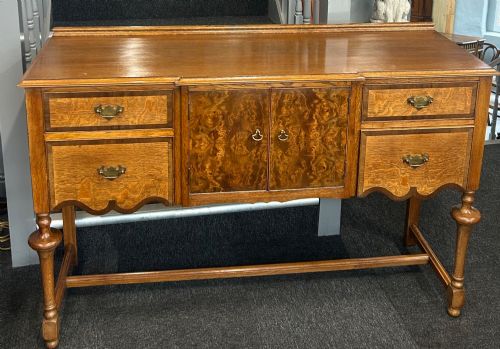


Golden Oak Buffet Server
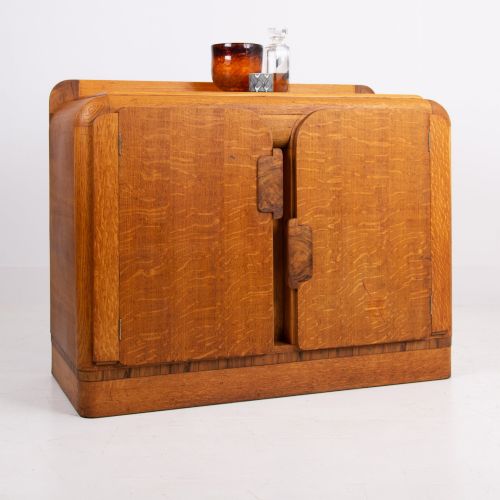
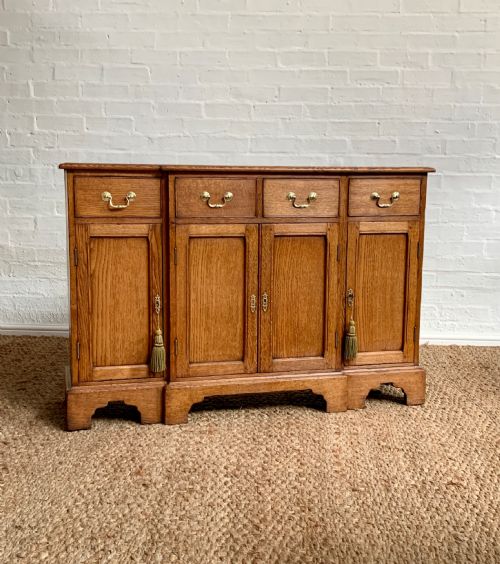
These golden oak buffet server pieces bring warm timber tones and practical dining storage, spanning Edwardian, Victorian, and Arts and Crafts designs.
Golden Oak Buffet Server
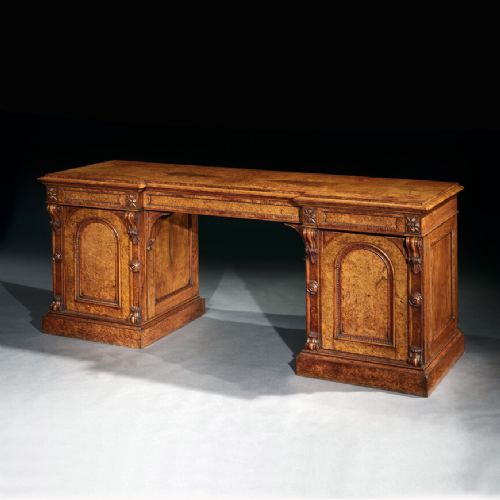
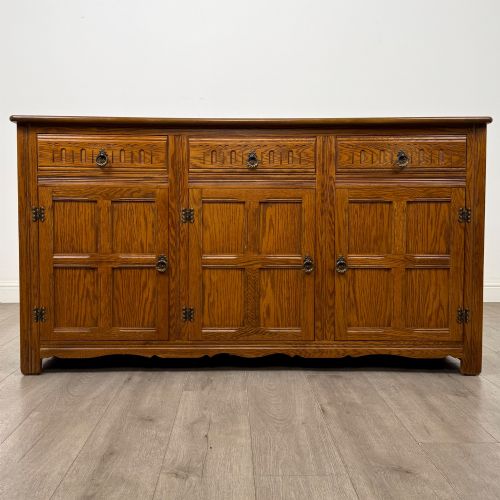
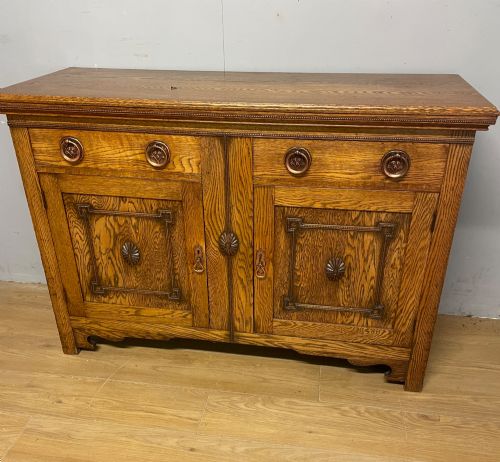
A golden oak buffet server serves as a sturdy dining room storage piece, frequently appearing under related descriptions like sideboards, dressers, and serving tables. Buyers encounter these forms across multiple distinct eras, including the Victorian period, the Edwardian years, and the early twentieth century.
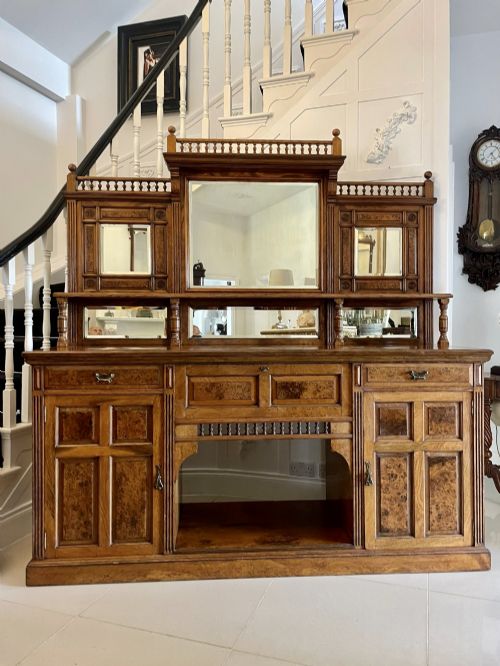
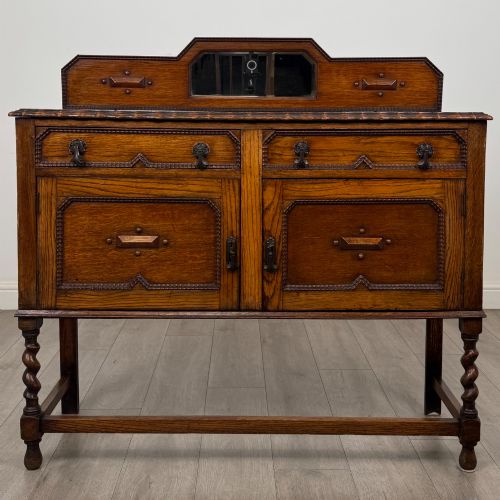
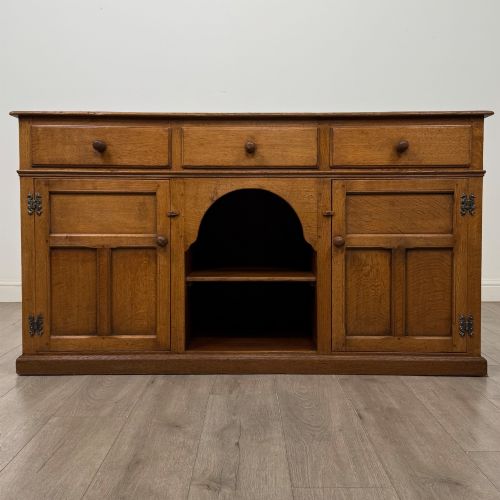
The selection ranges from Arts and Crafts cabinets to Jacobean Revival dresser bases and mirror-backed sideboards. Golden oak and pollard oak finishes dominate the offerings, providing both lighter domestic tones and heavily figured timber grain.
Maker attributions and stylistic influences vary significantly across the inventory. Pieces range from Cotswold School and Gomme productions to items styled after Heal's of London.
Materials and construction methods
Makers utilised solid oak, burr walnut, and highly figured pollard oak for carcass construction and drawer fronts. Timber selection dictated the visual weight and warmth of each server.
Metal components such as brass, copper, iron, and glass appear as hardware, mirror plates, and cabinet door glazing. These secondary materials provide functional contrast to the dominant wood surfaces.
Listings feature oak, pollard oak, walnut, brass, copper, and glass across Victorian, Edwardian, Arts and Crafts, and Art Deco styles.
Assessing quality in construction and design
The degree of timber figure, particularly in pollard oak and burr walnut sections, separates standard items from exceptional examples. Superior execution shows in the careful matching of grain patterns across doors and drawer fronts.
Stylistic ambition and maker attribution elevate certain pieces above utility furniture. Pieces bearing documented workshop origins or distinct Arts and Crafts movement characteristics demonstrate greater design sophistication.
Gomme·Heals of London
The Golden Oak Buffet Server Glossary
- Pollard oak
- A timber taken from trees that were pollarded, producing dense, highly figured clusters of growth rings. This decorative wood was favoured for Victorian and mid-nineteenth-century cabinet fronts.
- Dresser base
- A lower storage cabinet fitted with cupboards or drawers, omitting the upper plate rack of a traditional kitchen dresser. These serve effectively as sideboards or serving tables.
- Mirror back
- An upright wooden superstructure incorporating a mirror plate, attached to the rear of a sideboard. This element reflects light and displays decorative objects.
- Arts and Crafts
- A design movement prioritising traditional craftsmanship, simple forms, and visible construction methods over mass-produced ornamentation. Pieces often display honest joinery and minimal hardware.
- Cotswold School
- A twentieth-century regional offshoot of the Arts and Crafts movement focused on solid wood construction and hand tool proficiency. Furniture from this circle values plain surfaces and structural integrity.
Golden Oak Buffet Server: Frequently Asked Questions
What is a golden oak buffet server used for?
These items provide enclosed storage for dining room tableware, linens, and serving dishes while offering a top surface for food presentation.
Historically placed in dining spaces, they combine practical utility with decorative presence through panelled doors and polished timber surfaces.
How do I identify an Edwardian golden oak sideboard?
Edwardian examples typically present lighter golden oak tones, restrained carving, and simpler proportions compared to heavier Victorian predecessors.
They frequently incorporate stylistic elements borrowed from earlier periods while maintaining domestic utility suited to twentieth-century homes.
What distinguishes Arts and Crafts oak sideboards?
Arts and Crafts pieces emphasise plain timber surfaces, honest construction, and functional metal hardware made from brass or copper.
They avoid excessive machine ornamentation in favour of solid joinery and clean architectural lines.
Where should I place a mirror-backed sideboard?
A mirror-backed sideboard suits a dining room wall where the integrated mirror can reflect natural light and room interiors.
Ensure the wall fixtures and floor level support the substantial weight of these large timber and glass assemblies.