


Golden Bronze Figurine
These golden bronze figurine pieces bring character and presence to a room, offering both sculptural weight and fine metalwork detail.
Golden Bronze Figurine
When you search for golden bronze figurine, you look at solid metal sculptures shaped into animals, figures, and groups spanning the nineteenth and twentieth centuries. These objects range from naturalistic animal studies to stylised human forms created during periods such as Art Nouveau and Art Deco.
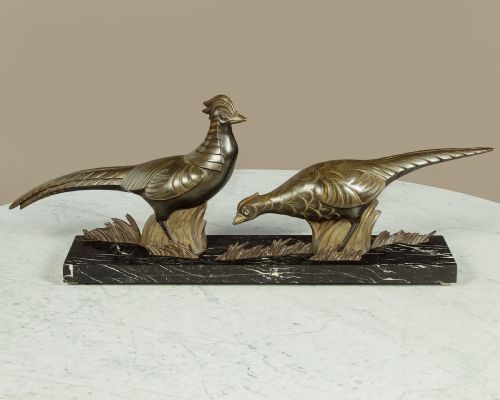
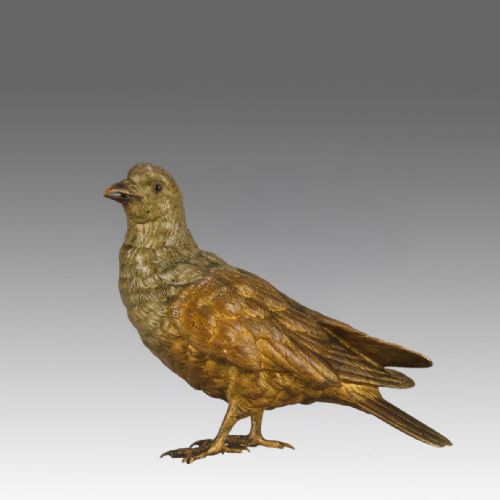
You are most likely to meet animalier subjects on this page, particularly birds like pheasants and pigeons, alongside classical figures and orientalist bronzes. They appear mounted on bases of marble or onyx, or stand alone as heavy metal casts.
The origins stretch across European workshops, including Austrian cold-painted foundries and French studios, as well as nineteenth century Indian casting traditions. Each piece represents a specific moment in decorative metalwork, from the realism of the late eighteen-hundreds to the clean lines of nineteen-thirty.
How they were made
The foundation of these works is cast bronze, sometimes enhanced with gilt metal or patinated finishes that mimic the warm tones of gold. Cold-painted surfaces appear on Austrian pieces, where pigment is applied to the metal after casting rather than fired in a kiln.
Many sculptures incorporate mixed media elements, pairing heavy metal figures with polished bases of marble, onyx, or slate. The casting process captures intricate feather detail, musculature, and drapery before final hand-finishing and patination.
Several pheasants and a standing pig populate these listings, proving that nineteenth-century founders took farmyard and game birds just as seriously as classical heroes.
What varies in quality
The integration between the bronze figure and its stone base indicates overall workshop standard, where better items use dense, well-fitted marble or onyx rather than generic supports. The weight and balance of the cast itself point to the amount of metal used in the original production.
Franz Bergman·Antonio Merente·Le Courtier
The Golden Bronze Figurine Glossary
- Cold-painted bronze
- Metal sculpture painted with non-fired colours after casting. This technique is particularly associated with Viennese foundries of the early twentieth century.
- Animalier
- The realistic depiction of animals in sculpture. Practitioners focused on capturing the anatomy and movement of beasts and birds.
- Gilt bronze
- Bronze that has been coated with a thin layer of gold or gold-coloured metal. It gives the object a bright, reflective surface finish.
- Patinated metal
- Metal treated with chemicals or heat to alter its surface colour and texture. This creates deep brown, green, or golden tones that protect and age the material.
Golden Bronze Figurine: Frequently Asked Questions
What is a cold-painted bronze figurine?
A cold-painted bronze is a metal sculpture finished with oil-based paints applied after the casting process. These paints add naturalistic colour to birds, animals, and human figures.
Over decades, handling can cause gentle wear to the paint surface, which collectors view as part of the history of the object.
How do I clean a bronze sculpture?
Bronze requires very little maintenance beyond the occasional removal of dust with a soft, dry brush. Avoid using commercial metal cleaners or water, which can strip away the original patina.
Keeping the piece away from direct sunlight and moisture helps preserve both the metal and any painted or gilt surfaces.
How can I tell the period of a bronze?
Dating relies on stylistic clues, casting methods, and any maker signatures or foundry marks stamped into the metal. Art Deco pieces show geometric styling, while nineteenth-century works often favour naturalism.
The choice of base material, such as specific types of marble or onyx, also points toward the era of production.
Are these pieces solid bronze?
Most of these sculptures are cast in solid bronze, though some utilise gilt metal or patinated alloys depending on the workshop and period. The weight of the piece usually reflects the density of the metal used.
Stone elements like marble or onyx serve as separate bases to anchor the heavy metal figures.