




Gold Wall Candle Holder
A gold wall candle holder brings warmth and reflected light to a room, drawing the eye with gilt surfaces and flickering candlelight.
Gold Wall Candle Holder
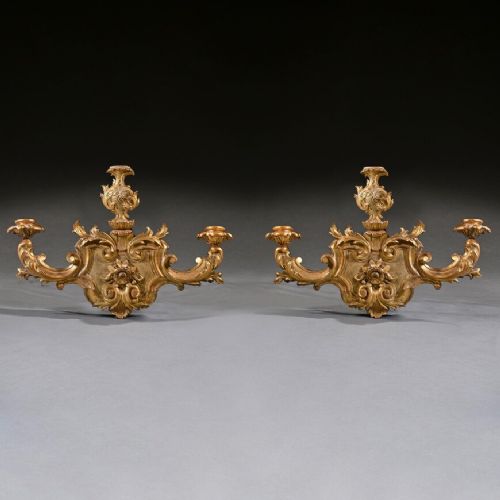
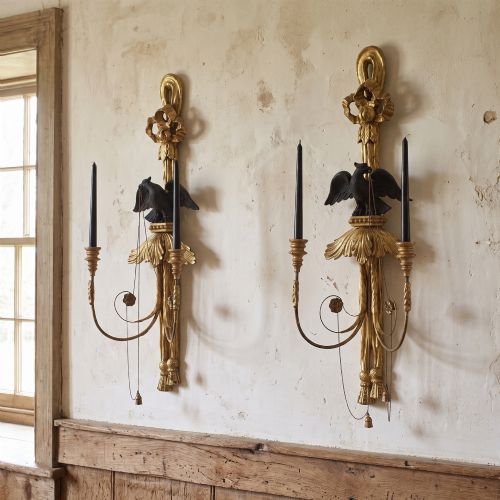
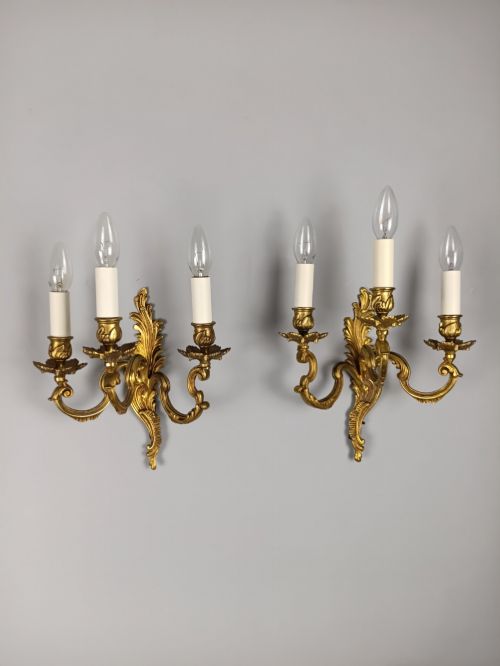
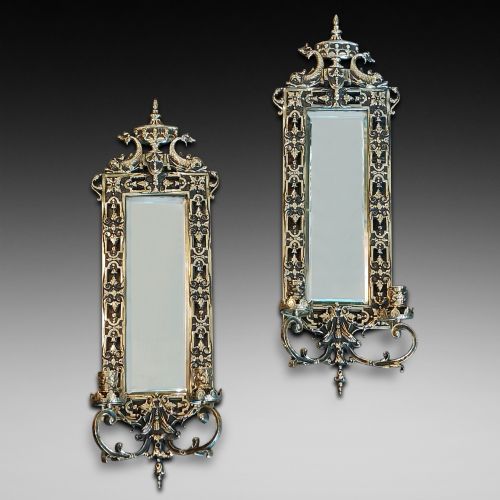
A gold wall candle holder encompasses decorative wall sconces, girandole mirrors and wall lights finished in giltwood, ormolu, brass and gold leaf. These pieces originate from periods spanning the eighteenth century through to the early twentieth century.
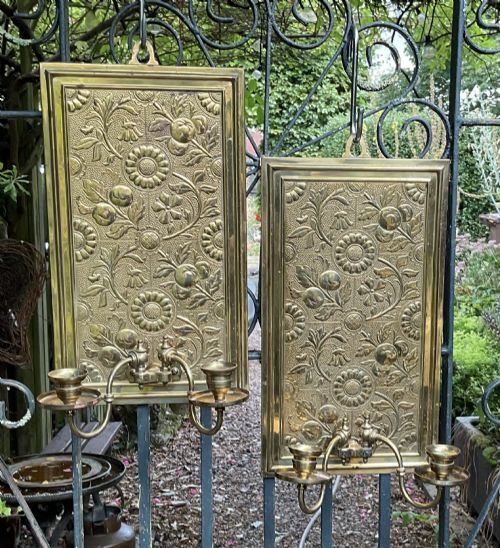
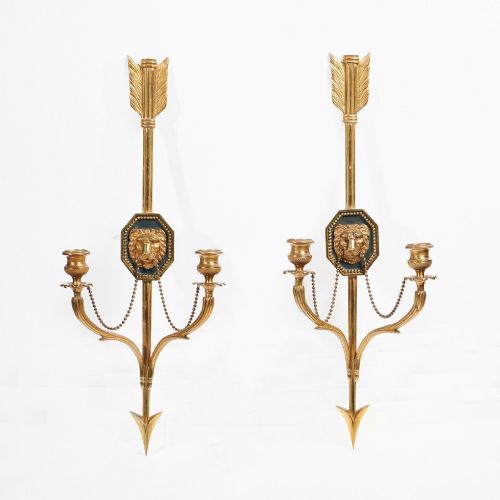
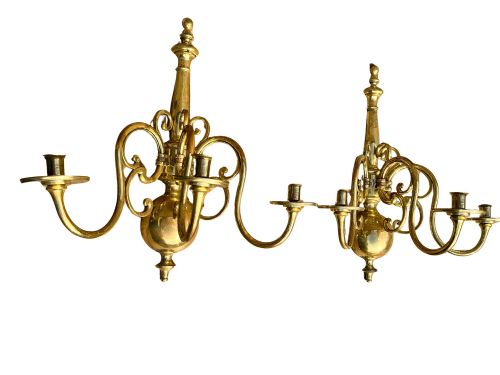
Buyers will frequently encounter paired sets designed to flank a mirror, mantelpiece or doorway. Styles range from ornate French Rococo and Neoclassical designs to simpler Victorian brass brackets and Aesthetic Movement pieces.
Materials and construction
Craftsmen shaped these fixtures from carved wood, cast bronze and brass before applying layers of gold leaf, gesso or gilding. Ormolu and gilt bronze components provide weight and durability, often combined with mirrored glass plates to amplify the glow of the candles.
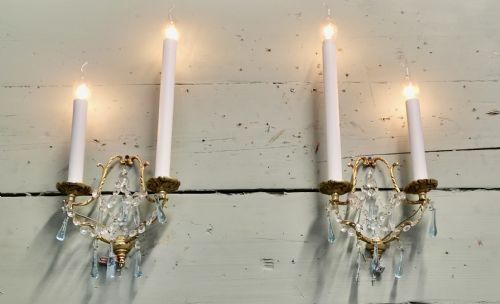
Many examples incorporate multiple branches or arms to hold candles securely while distributing light across a room. Crystal drops and glass inserts are frequently integrated to catch and refract the illumination.
Gold Wall Candle Holder Retail Price Guide 2026
Typical asking prices for gold wall candle holder among the pieces listed under this phrase on Sellingantiques today, from the lower quarter to the upper quarter. They describe what is for sale here now, not the wider market.
Mirrored wall sconces were originally designed to double the flicker of a single candle, turning dim rooms into glittering chambers.
Assessing quality and craftsmanship
Quality rests in the crispness of the carving or casting, particularly in foliage, scrolls and figural details found on Rococo and French Empire styles. Hand-applied gold leaf and deep ormolu chasing indicate superior workshop standards compared to simpler pressed brass alternatives.
The integration of the mirror plate and the structural stability of the candle arms also define better examples. Pieces that retain their original gilding without excessive modern intervention command greater appreciation among collectors.
Bruce Talbert·Liberty
The Gold Wall Candle Holder Glossary
- Ormolu
- Gilded bronze, where a mixture of gold and mercury is applied to a bronze base and heated to leave a rich metallic finish.
- Girandole
- A branched candle holder, often incorporating a wall mirror that reflects the light into the room.
- Giltwood
- Timber, usually carved wood or gesso, that has been coated with a thin layer of gold leaf or gold paint.
- Sconce
- A wall-mounted lighting fixture designed to hold candles or electric lamps.
- Neoclassical
- A style drawing inspiration from the classical art and architecture of ancient Greece and Rome, characterised by symmetry and restraint.
Gold Wall Candle Holder: Frequently Asked Questions
How do I hang a heavy gold wall candle holder safely?
These fixtures often possess substantial weight due to their bronze, carved wood or mirrored components. Secure fixings into solid masonry or direct wall studs are essential to support the load.
Ensuring the bracket or hanging loop at the back is sound prevents any strain on the decorative arms or gilt surface during daily use.
Can I burn real candles in antique wall sconces?
Real candles may be used provided the wax is monitored to prevent drips onto sensitive gilt surfaces or antique wood. Drip catchers or appropriately sized candles protect the finish from heat damage.
Many period pieces have been adapted for electricity over time, offering an alternative for continuous lighting without the maintenance of open flames.
How should I clean gilded and brass wall fixtures?
Dusting with a soft, dry brush removes surface particles without disturbing delicate gold leaf or aged patina. Moisture and commercial chemical cleaners should be avoided to prevent stripping the historic finish.
Brass and ormolu components benefit from gentle wiping with a dry microfiber cloth to maintain their lustre over the years.
How do I distinguish eighteenth-century pieces from later copies?
Earlier pieces exhibit hand-carved wooden details, old gesso preparations and tool marks specific to historical joinery and casting methods. Examination of the reverse side often reveals period fixings and timber shrinkage appropriate to age.
Later Victorian and twentieth-century revivals tend to use standardised machine methods and different alloy compositions that reflect their era of manufacture.