

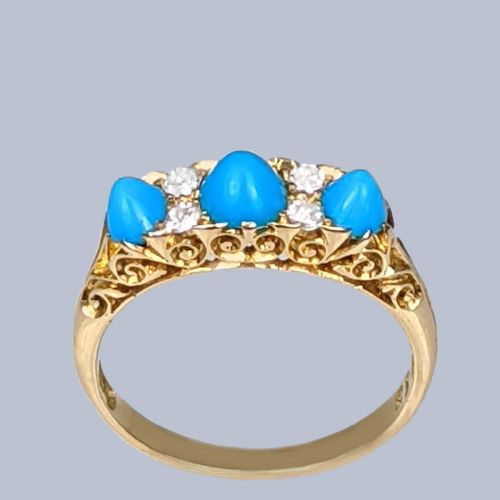
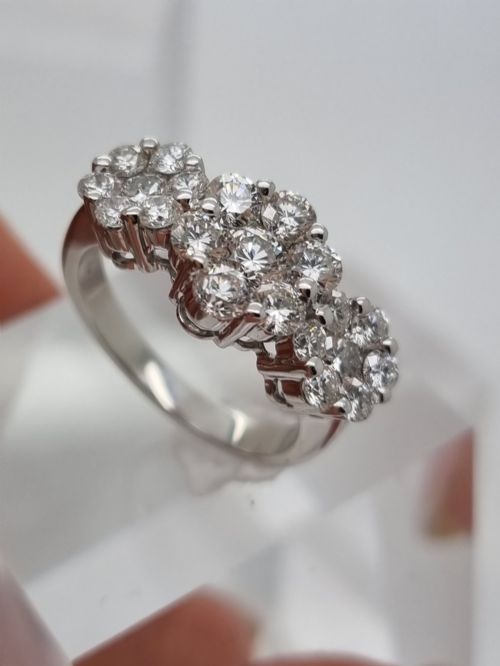
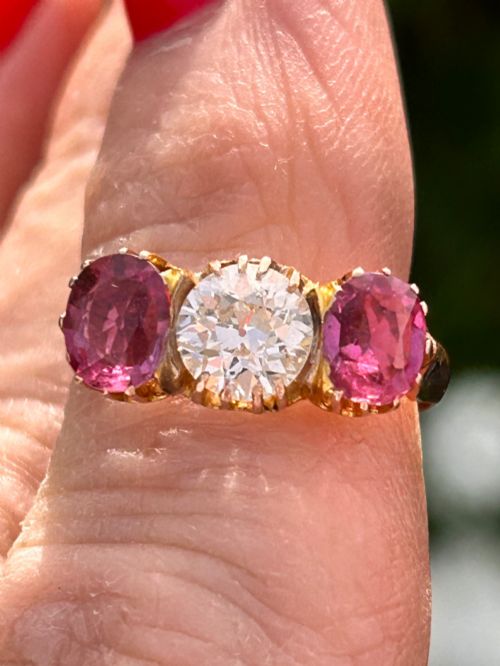
Gold Three Stone Ring
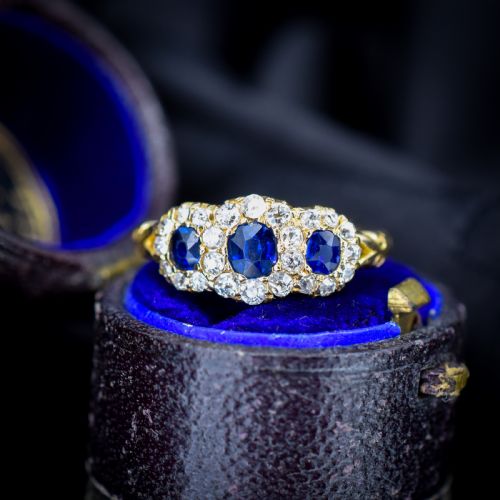
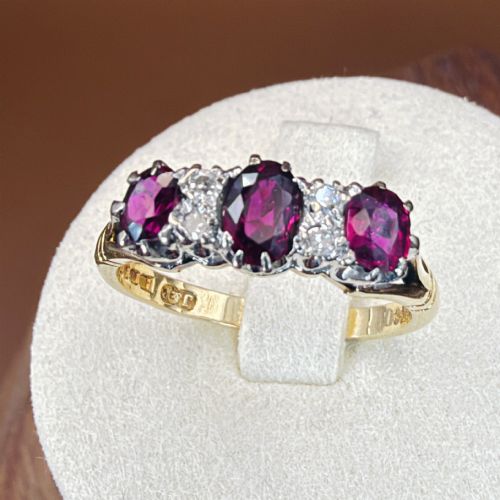
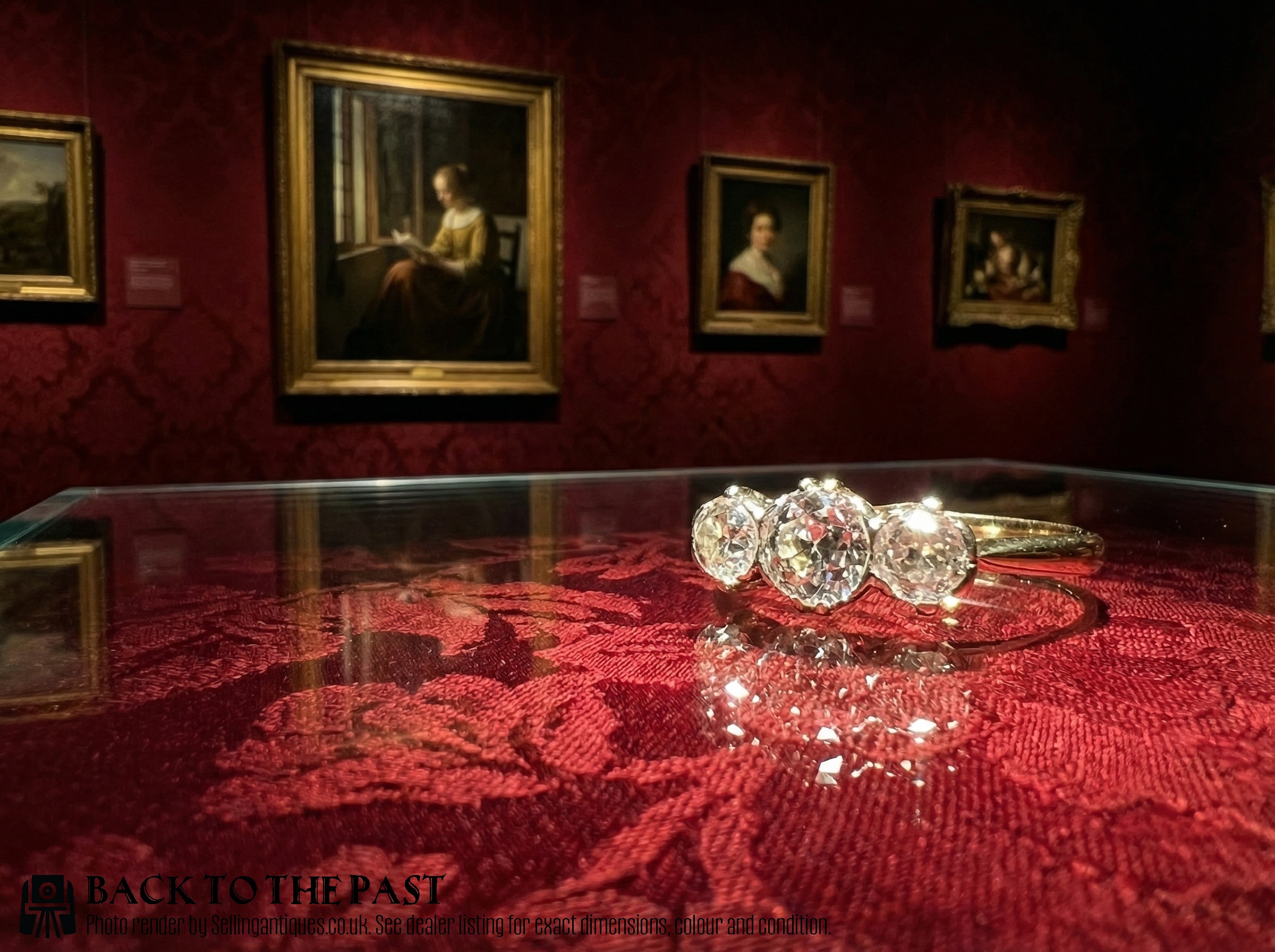
A gold three stone ring brings together three distinct gems on a precious band, spanning eras from the Victorian period through to the mid-century.
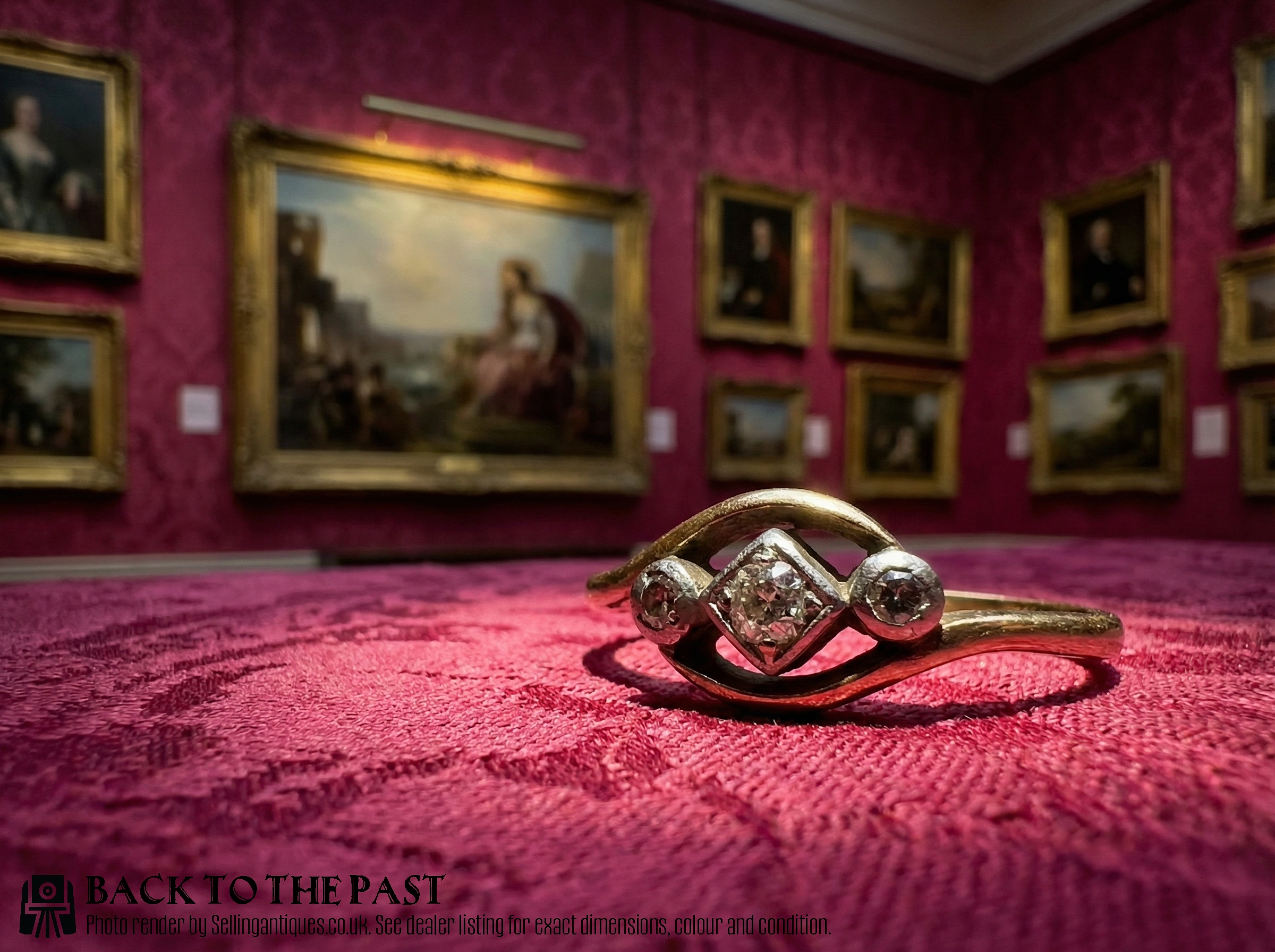
Gold Three Stone Ring
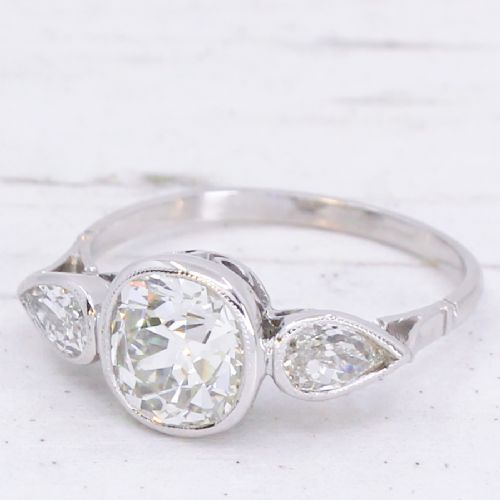
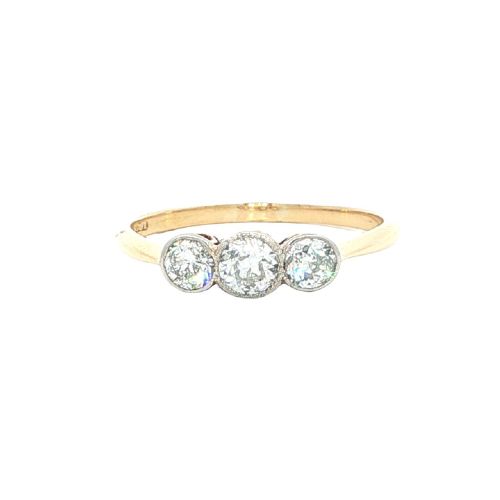
A gold three stone ring, frequently described as a trilogy ring, showcases a central gemstone flanked by two matching or complementary side stones. The design often signifies the past, present, and future, making it a traditional choice for commitments and significant anniversaries.
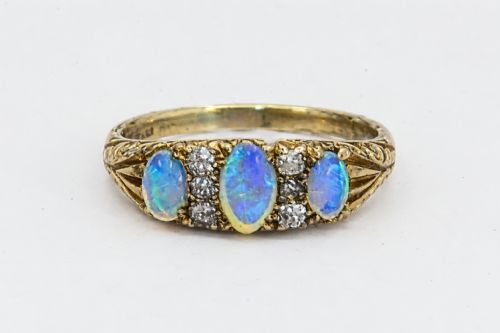
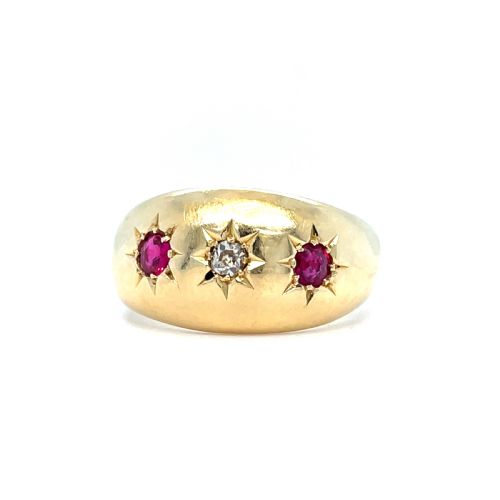
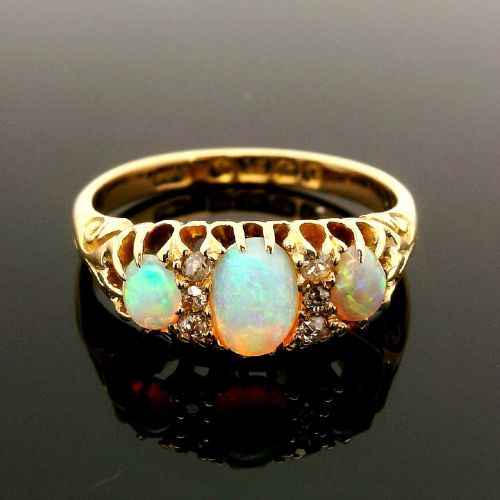
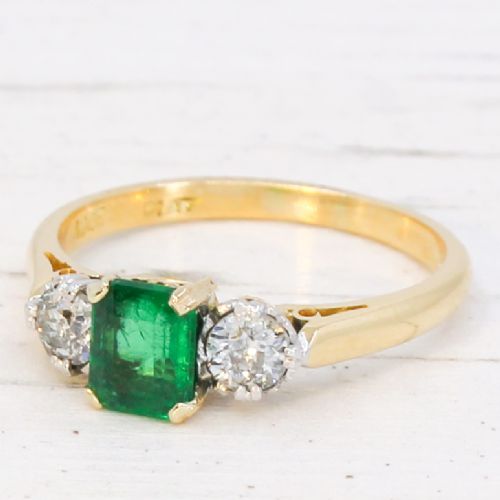
The selections on this page span from nineteenth-century Georgian and Victorian examples through Edwardian pieces and Art Deco creations up to mid-century vintage items. Diamonds dominate the offerings, frequently paired with rubies, sapphires, emeralds, or opals in linear or gypsy settings.
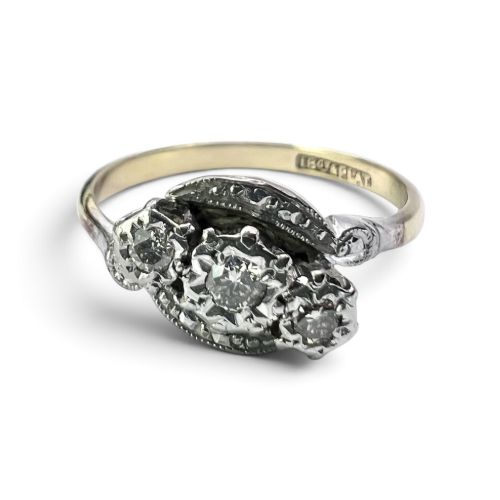
Yellow gold and white gold form the primary metal choices, often combined with platinum settings for the stones. Buyers encounter traditional claw settings, boat shapes, and flush gypsy mountings across the various historical periods.
Materials and Construction
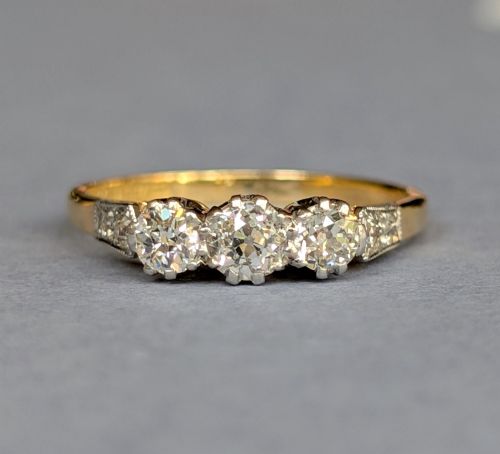
Goldsmiths utilised 18ct yellow gold, 18ct white gold, and occasionally 9ct gold for the shanks, combining these with platinum to securely hold the upper stones. Platinum claws and settings became prevalent in Edwardian and Art Deco pieces to provide a bright, durable contrast to the warm gold bands.
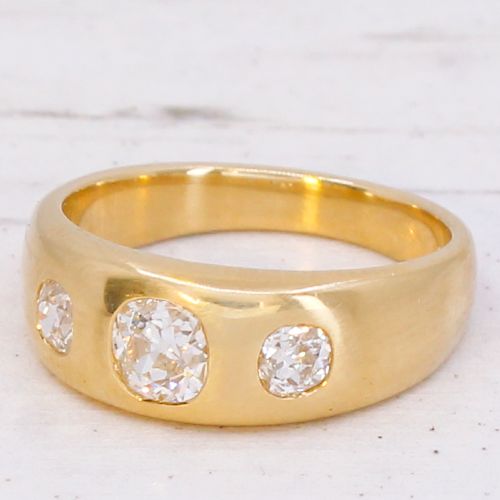
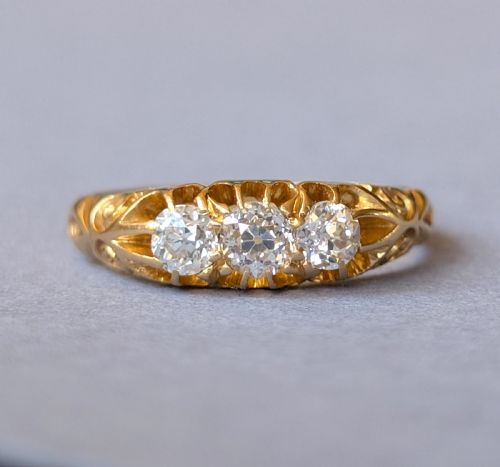
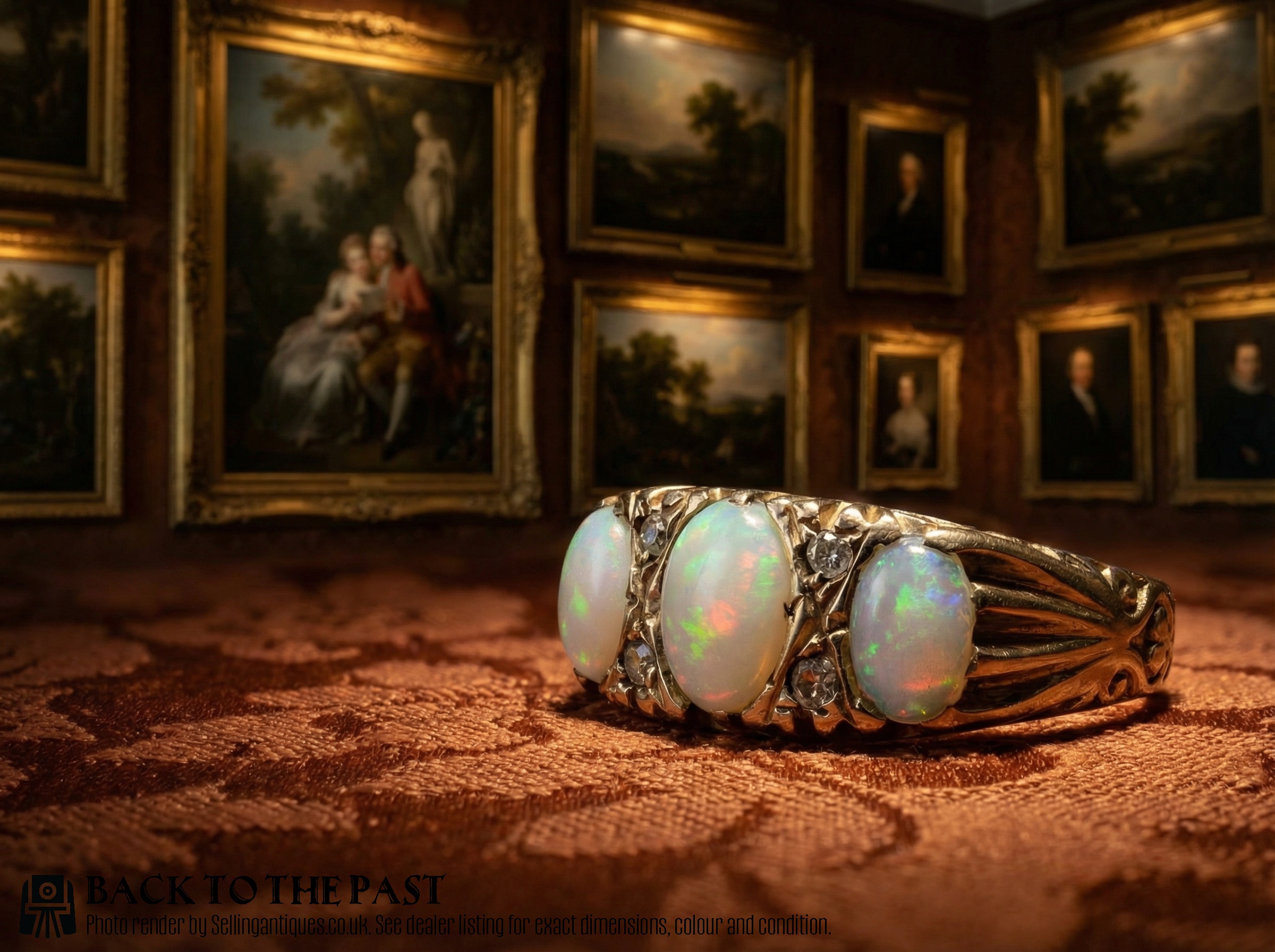
Gemstones such as old mine cut, old cushion cut, and old European cut diamonds were hand-set alongside natural rubies, sapphires, emeralds, and opals. Jewelers employed meticulous hand-finishing, channel work, and starburst engravings around the stones to enhance the visual weight of the face.
Gold Three Stone Ring Retail Price Guide 2026
Typical asking prices for gold three stone ring among the pieces listed under this phrase on Sellingantiques today, from the lower quarter to the upper quarter. They describe what is for sale here now, not the wider market.
Listings feature yellow gold, white gold, and platinum paired with diamonds, rubies, sapphires, emeralds, opals, and turquoise across multiple eras.
Evaluating Quality and Craftsmanship
The distinction between standard examples and superior pieces rests upon the calibre and matching of the gemstones, particularly the cut and clarity of the central diamonds. Fine specimens demonstrate thoughtful graduation or uniform sizing of stones, alongside crisp metalwork that remains sharp rather than worn down by decades of polishing.
Original hallmarks and untouched setting integrity elevate a piece, showing how well the construction has survived from the Victorian or Edwardian eras. The harmony between the metal colour, such as rich 18ct yellow gold, and the accompanying coloured stones defines the overall visual success of the ring.
The Gold Three Stone Ring Glossary
- Trilogy ring
- A ring featuring three principal gemstones set in a row on the band. This term is frequently used interchangeably with a three stone ring.
- Old cut diamond
- A diamond cut by hand before modern machinery standardised proportions, characterised by a smaller table, higher crown, and open culet. These stones project a distinct, softer brilliance under candlelight.
- Gypsy ring
- A style where the gemstones are flush-set directly into the thick metal band, often featuring starburst engravings around the stones. This form gained immense popularity during the late Victorian and Edwardian periods.
- Boat ring
- A navette-shaped setting resembling the hull of a boat, which spreads the visual impact of the stones across the finger. It is a common silhouette found in early twentieth-century pieces.
- Collet setting
- A collar of metal that encircles the girdle of a gemstone to hold it securely in place. It represents a traditional method of stone retention seen frequently in antique jewellery.
Gold Three Stone Ring: Frequently Asked Questions
What do the three stones represent?
Historically, a trilogy configuration represents the past, present, and future of a relationship. This symbolism made the design a popular choice for engagement rings throughout the Victorian and Edwardian eras.
Over time, the style evolved in aesthetic execution from starburst gypsy mountings to sleek Art Deco platinum settings, yet the underlying sentiment remained a primary driver for buyers.
How do I care for antique opals?
Antique opals require careful handling because they contain natural water content and possess a softer Mohs hardness than diamonds. Owners should avoid harsh chemical dips, ultrasonic cleaners, and sudden thermal shocks.
Storing the ring away from extreme dryness and removing it during heavy manual tasks will help preserve the play of colour within the stone for decades to come.
What is an old mine cut diamond?
An old mine cut diamond is an antique precursor to the modern round brilliant, hand-faceted with a cushion-like girdle shape, a small table, and a deep pavilion. These stones were shaped individually by hand to maximise weight retention under candlelight.
Their distinctive proportions yield chunky, broad facets that produce a characteristic warm flash rather than the pinpoint sparkle of modern gems.
Are these rings suitable for daily wear?
Most 18ct gold and platinum pieces from the Victorian, Edwardian, and Art Deco periods were built for daily use, though older settings benefit from periodic inspection by a professional jeweller. Rings featuring softer gems like opals require more mindfulness than an all-diamond configuration.
Ensuring the claws or flush settings remain secure will protect the stones during regular wear.