



Gold Thread Needlework
Gold thread needlework brings centuries of fine metal and silk handcraft to your walls in framed textile art.
Gold Thread Needlework
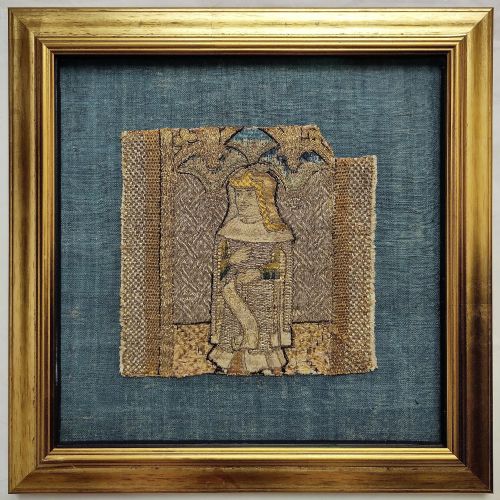
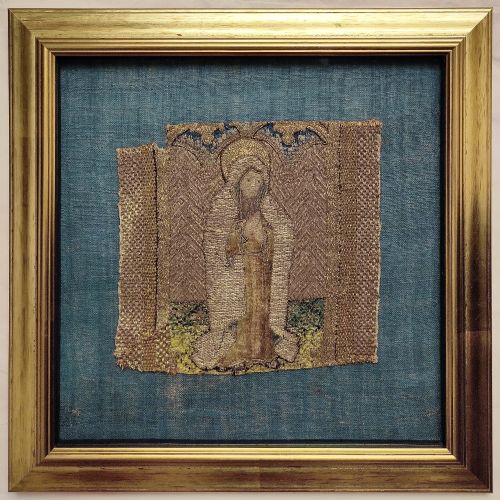
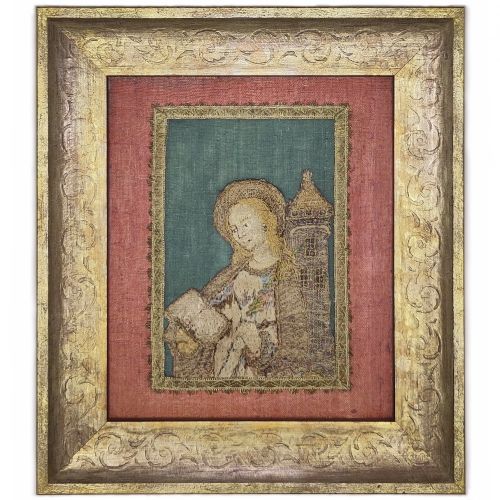
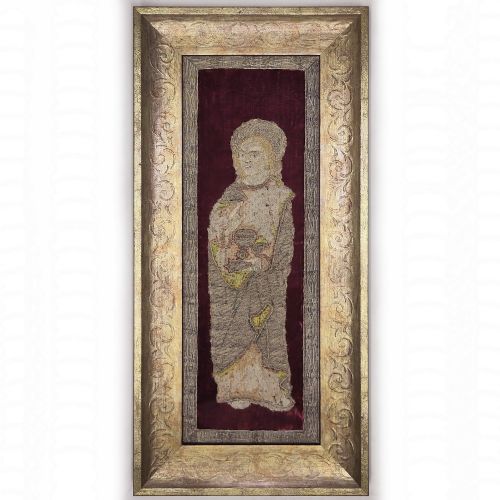
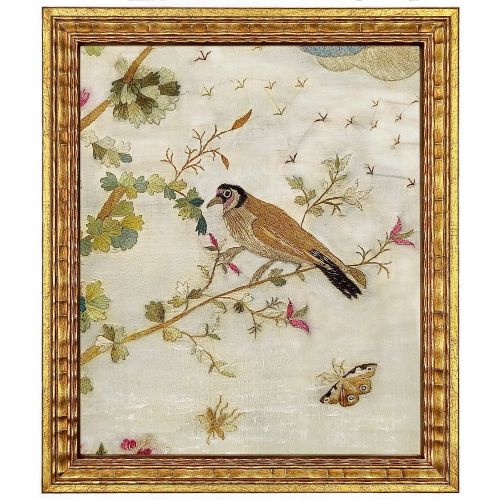
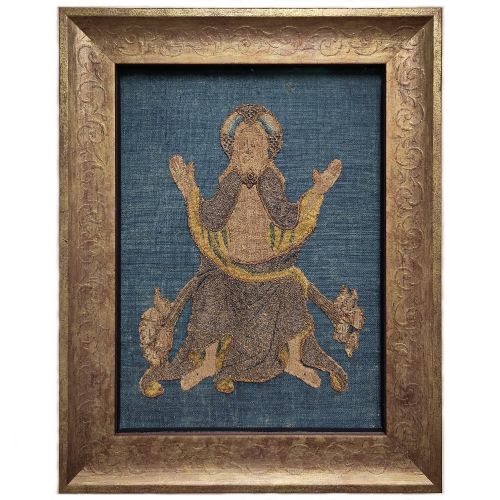
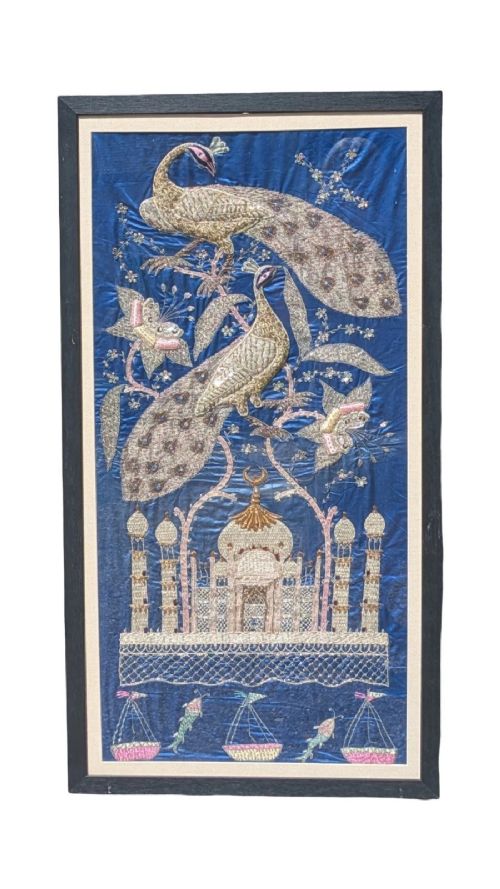
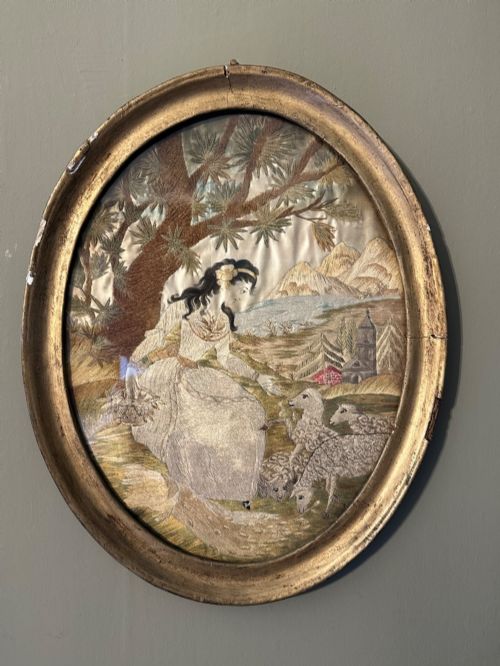
Gold thread needlework encompasses historical framed textile art, wall art, and embroidered panels spanning from pre-sixteenth century church vestments to nineteenth century silk pictures. When you search for gold thread needlework, you encounter ecclesiastical fragments, pictorial silk scenes, and framed embroidery created across Britain, Europe, and India.
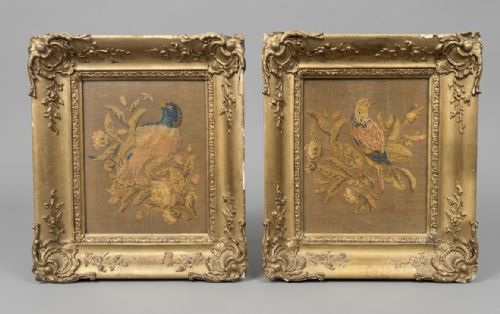
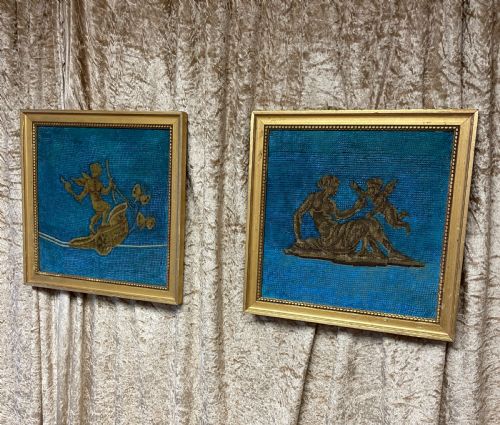
The most frequent examples on this page include early church embroidery fragments such as opus anglicanum and orphrey panels, alongside eighteenth and nineteenth century framed silk pictures and needlework scenes. These textile works typically arrive mounted and glazed in period wooden frames, ranging from simple mouldings to giltwood settings.
The origins stretch from medieval English workshops to eighteenth century Dutch households, nineteenth century British parlours, and twentieth century Indian studios. Each piece preserves delicate metallic threads and dyed silks on linen or silk grounds, offering a direct tangible link to historic needlecraft traditions.
How they were made
These textiles rely on combinations of silk, linen, metallic thread, and metal thread worked by hand upon woven foundation fabrics. Artisans utilised techniques including long stitch and stumpwork, securing metal wires and gilt threads alongside fine silk floss to build rich pictorial or liturgical surfaces.
Framing methods follow the period of the textile or its subsequent curation, employing wood, giltwood, and glass to protect fragile fibres from atmospheric damage. Mounts and backing boards stabilize the delicate panels, while nineteenth century and earlier frames often feature original gilding or hand-carved details.
Gold Thread Needlework Retail Price Guide 2026
Typical asking prices for gold thread needlework among the pieces listed under this phrase on Sellingantiques today, from the lower quarter to the upper quarter. They describe what is for sale here now, not the wider market.
Materials recorded across the inventory include silk, linen, wood, glass, metallic thread, metal thread, and giltwood.
What varies in quality
The distinction between ordinary and exceptional examples rests in the complexity of the needlework and the survival of the original metallic threads. Tightly worked opus anglicanum and intricate stumpwork display superior depth, sculptural relief, and technical execution compared to simpler domestic needle pictures.
Condition and completeness also determine distinction, as early orphrey panels and ecclesiastical fragments often survive as isolated figures rather than full vestments. The integrity of the silk ground and the retention of bright metal lustre separate well-preserved historical panels from heavily restored or degraded examples.
The Gold Thread Needlework Glossary
- Opus Anglicanum
- English medieval embroidery, famed for its intricate split stitch and underside couching of gold and silver thread. This prestigious needlework was produced primarily for ecclesiastical vestments and hangings.
- Orphrey
- An embroidered band or panel applied to ecclesiastical vestments, frequently depicting saints or biblical figures. These strips often survive independently as framed textile art.
- Stumpwork
- A raised embroidery style popular in the seventeenth century, utilising padding, wire foundations, and diverse stitches to create three-dimensional figures. Kings, queens, and courtly scenes were common subjects.
- Long stitch
- An embroidery technique where parallel or overlapping stitches of varying lengths fill pictorial designs. It appears frequently in Georgian and Regency silk pictures.
- Giltwood
- Wood carved and coated with a thin layer of gold leaf or gold paint. Frames of this material often enclose historical needlework panels.
Gold Thread Needlework: Frequently Asked Questions
What is gold thread needlework?
Gold thread needlework comprises historical hand-embroidered textiles incorporating metal threads, gold wire, and silk upon linen or silk grounds. These works range from medieval ecclesiastical fragments to framed pictorial scenes from later centuries.
They represent centuries of skilled handcraft, preserving intricate stitching techniques and precious metallic materials designed for display.
How were these textiles used originally?
Many early pieces functioned as ecclesiastical vestments, altar frontals, or church hangings, serving liturgical roles in medieval and Renaissance worship. Later examples were created specifically as domestic wall art and decorative pictures for private homes.
Over time, surviving fragments from ecclesiastical garments were salvaged and framed for preservation and display as standalone artworks.
How do I care for framed needlework?
Protect antique textiles from direct sunlight, high humidity, and extreme temperature fluctuations to prevent silk degradation and metal tarnishing. Keep them behind glass in stable indoor environments.
Avoid opening sealed frames yourself, as historic fabrics require specialised conservation methods to prevent fibre loss and structural damage.
How can I tell the period of a piece?
Dating relies upon the stitching technique, material characteristics, subject matter, and the style of the accompanying frame. Medieval ecclesiastical fragments show distinct stitch types like underside couching, while seventeenth century works often feature raised stumpwork.
Stylistic conventions in costume, hair, and framing provide further clues to whether a piece originates from the Georgian era, the Regency period, or the nineteenth century.