


Ecclesiastical Artwork
Ecclesiastical artwork gathers sacred wall art, paintings, stained glass panels, and carved religious sculptures spanning from the seventeenth century to the mid-twentieth century.
Ecclesiastical Artwork
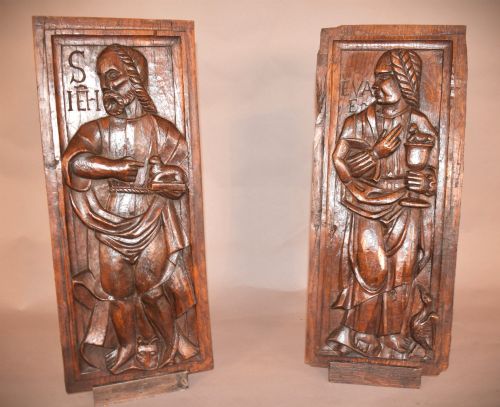
Ecclesiastical artwork brings together sacred objects and devotional pieces created for religious spaces and domestic prayer, ranging from seventeenth-century carved saints and panels to nineteenth-century Gothic Revival stained glass.
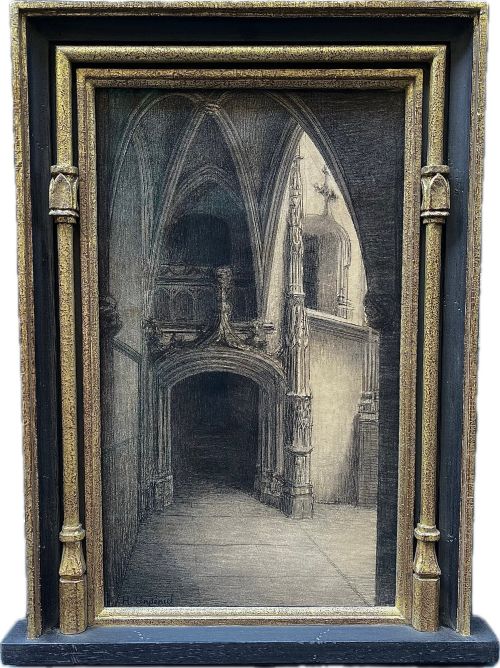
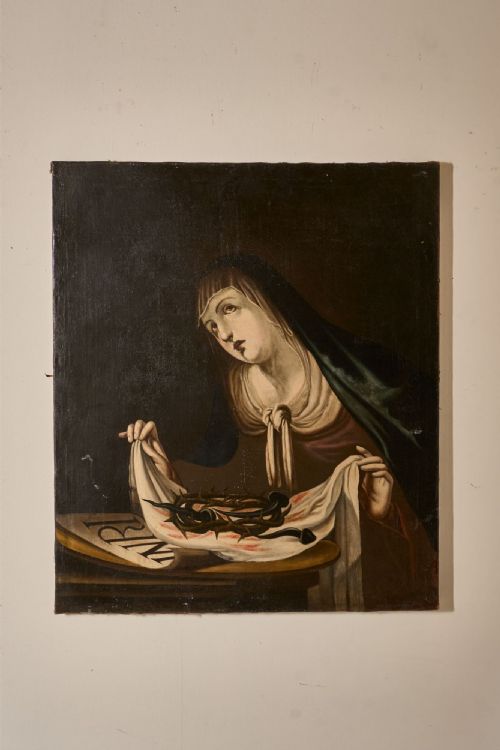
The pieces appearing on this page include oil paintings on canvas, framed architectural drawings of churches, needlepoint pictures, and carved olive wood figure groups.
Buyers encounter works spanning several distinct periods, notably seventeenth-century baroque pieces, eighteenth-century Spanish paintings, and nineteenth-century items influenced by Gothic Revival styles and Victorian sensibilities.
Materials and construction methods
Makers utilised traditional mediums including oil paint on canvas and wood panel, alongside graphite on paper for architectural drawings.
Sculptural pieces and carved panels employ solid timber such as oak and olive wood, occasionally accented with gold leaf.
Textile works incorporate detailed needlepoint technique, while stained glass panels combine coloured glass within lead cames.
Distinctions in craftsmanship and execution
Quality separates academic or studio execution from primitive or outsider art, though both possess distinct historical character.
The fineness of detail in carved facial expressions, drapery folds, and painted brushwork distinguishes accomplished workshop production from simpler regional output.
Henri Charles Angéniol·R.P. Phillimore·Joseph Hansom·Guido Reni
The Ecclesiastical Artwork Glossary
- Gothic Revival
- A nineteenth-century architectural and artistic style drawing inspiration from medieval forms, pointed arches, and ecclesiastical traditions. This aesthetic heavily influenced church furnishings and decorative arts of the period.
- Stained glass
- Coloured glass pieces assembled within lead strips to form pictorial windows or panels depicting religious scenes. These are traditionally mounted to allow light to pass through.
- Needlepoint
- A form of counted thread embroidery stitched onto canvas mesh to create pictorial representations. Antique religious examples often depict saints and biblical figures.
- Baroque
- An ornate artistic style prevalent from the seventeenth century characterised by dramatic movement and deep emotional intensity. Religious works from this era focus on theatrical displays of faith.
Ecclesiastical Artwork: Frequently Asked Questions
How do I hang antique stained glass?
Stained glass panels require secure chain suspensions fixed directly into window frames or wall studs to support their weight.
Position them where natural light can pass through the glass to reveal the colours and leadwork clearly.
How are carved wood panels cleaned?
Dust carved wood gently using a soft, dry brush to remove particles from deep recesses without disturbing the surface.
Avoid applying water, modern polishes, or liquid cleaners directly onto aged or waxed timber finishes.
What periods do these artworks represent?
The available selection covers items from the seventeenth century through to the mid-twentieth century.
Earlier pieces often feature baroque or Spanish school influences, while later works lean towards Victorian Gothic Revival and outsider art.
Where were these religious items used?
Many pieces originated inside churches, chapels, and cathedrals as architectural elements, altarpieces, or windows.
Others were created specifically for private devotional spaces and domestic prayer within family homes.