
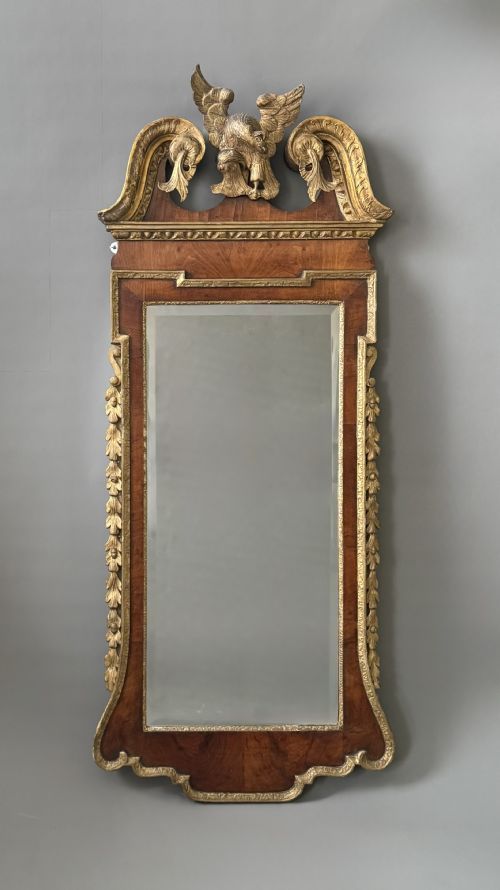
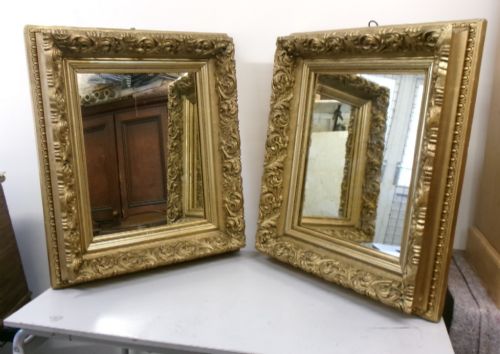
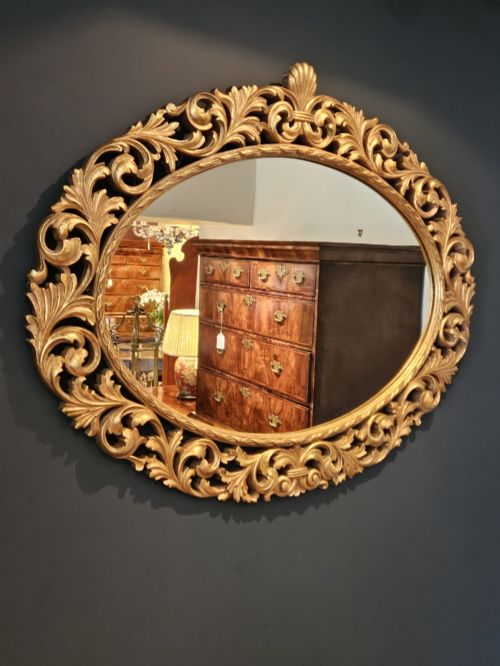


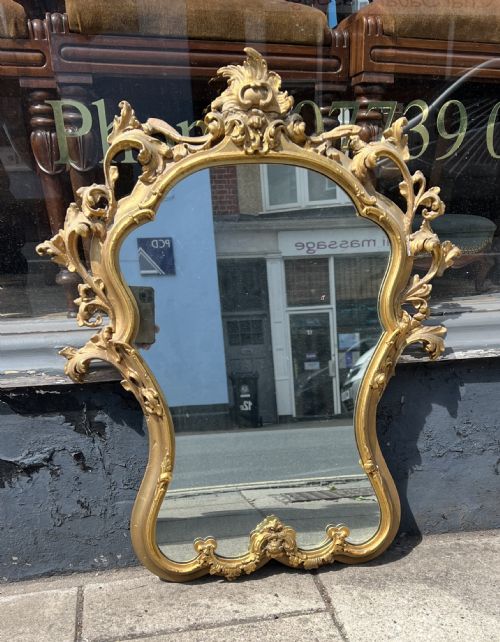


Gold Scroll Frame Mirror
A gold scroll frame mirror brings warmth and ornate movement to a room, catching the light across centuries of craftsmanship.
Gold Scroll Frame Mirror
A gold scroll frame mirror embodies the theatrical curves and asymmetrical flourishes of the Rococo and Baroque styles. These looking glasses serve as substantial wall pieces, often filling the space above a mantelpiece or acting as a focal point on a principal wall.
Buyers encounter examples spanning from the seventeenth century through the Georgian and Victorian eras up to the nineteen-thirties. The selection includes grand overmantels, vertical pier glasses, and smaller oval or cushion frames originating from English, French, Italian, and Spanish workshops.
Materials and construction
Craftsmen shaped these frames from carved timber such as walnut or applied moulded composition and gesso over a wooden base. Artisans then gilded the surfaces using fine gold leaf or liquid gold paint to achieve a brilliant metallic sheen.
Mirror plates range from original bevelled or engraved glass with natural foxing to later replacements. Joinery techniques and carver marks reflect the period of origin, from seventeenth-century Baroque framing to nineteenth-century revival methods.
Materials documented across the collection include giltwood, gesso, composition, walnut, and engraved mirror glass.
Understanding quality
The depth and crispness of the hand-carved scrolling separate superior frames from simpler moulded versions. Sharp undercut foliage and dynamic asymmetry denote skilled workmanship by master carvers.
The integrity of the original gilding and the character of the mirror plate dictate the overall desirability of the piece. Intact gold leaf layers patinated by age hold greater distinction than heavily restored or repainted surfaces.
The Gold Scroll Frame Mirror Glossary
- Giltwood
- Wood that has been coated with gold leaf. This material forms the primary structure of finer antique scroll frames.
- Gesso
- A plaster-like mixture applied to a wooden frame to create a smooth surface for gilding. Carvers often model fine relief details directly into this layer.
- Pier glass
- A tall mirror designed to hang on the wall between windows. These pieces frequently feature elaborate scrollwork to balance the vertical space.
- Overmantel mirror
- A wide looking glass created to sit specifically above a fireplace mantel. They dominate a chimney breast with sweeping gilt frames.
- Foxing
- Brown age spots and speckling that develop within the silver backing of old mirror glass. Collectors value this natural sign of antiquity on original plates.
Gold Scroll Frame Mirror: Frequently Asked Questions
How do I hang a heavy gold scroll frame mirror safely?
These heavy frames require professional wall anchors suited to your specific wall type, such as brick or lath and plaster. Weight should be distributed across sturdy brackets rather than a single picture wire.
Consult a professional installer to ensure the hanging hardware engages securely with the structural studs or masonry. Safety and proper balance protect both the antique frame and the wall below.
Are the mirror plates usually original?
Many antique mirrors retain their original glass, which often exhibits characteristic foxing, minor warping, and grey patches. These age traits confirm the historic nature of the looking glass.
Some pieces have received replacement plates over the centuries to maintain a clearer reflection. Examining the silvering from the reverse helps determine whether the glass dates to the same period as the frame.
How do I distinguish a Georgian mirror from a Victorian revival piece?
Georgian frames display the hand-tooled depth and timber construction characteristic of eighteenth-century joinery and carving traditions. The wood choice, often walnut beneath the gilding, provides a useful clue.
Victorian revival and later pieces from the nineteenth and twentieth centuries frequently employ composition mouldings over pine or timber bases. Examining the backboards and fixings usually clarifies the manufacturing era.