


Detailed Gilded Mirror
A detailed gilded mirror brings a room alive with reflective depth and carved ornamentation.
Detailed Gilded Mirror
A detailed gilded mirror is a statement wall hanging or overmantel piece designed to catch and amplify light within a room. When buyers search for a detailed gilded mirror, they encounter a range of nineteenth-century wall mirrors and overmantels originating from English, French, and Italian workshops. These pieces span historical periods from the Victorian era back through Regency and Revival styles, offering ornate frames adorned with carved motifs.
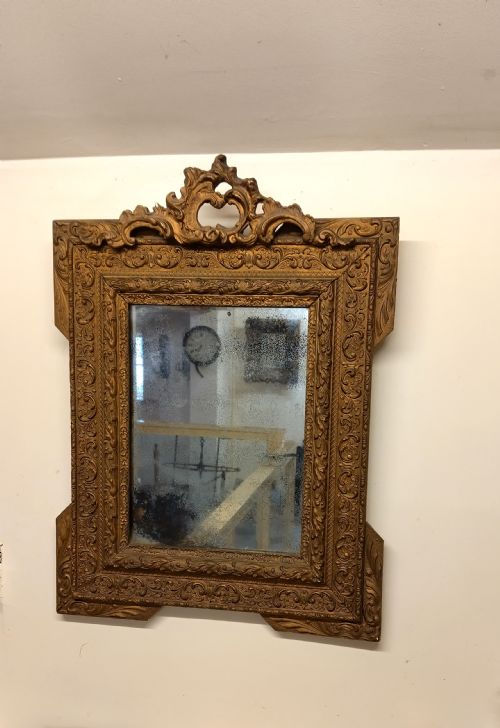
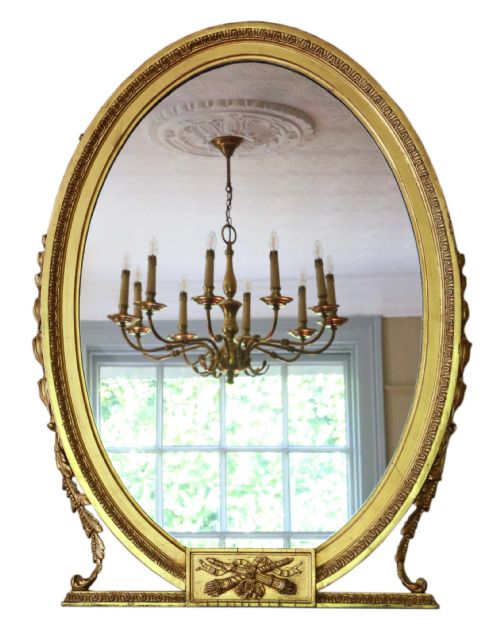
The most common examples on this page are nineteenth-century wall and overmantel mirrors featuring giltwood or gesso frames. Buyers frequently find rectangular, arched, and convex shapes incorporating classical details such as Vitruvian scrolls, floral carvings, and occasionally whimsical figures like birds or squirrels. They function as both historical artefacts and practical interior focal points.
How they were made
The construction of these pieces relies heavily on timber frames built from wood, sometimes accented with ebonised details or paint. Artisans applied layers of gesso to the wooden substrate to create a smooth, responsive base for carving intricate decorative elements like scrolls, flowers, and motifs. This plaster-like mixture allowed craftsmen to achieve sharp relief before applying the final metallic finish.
Gilding the prepared surface involved applying thin sheets of gold leaf over the gesso or bole, sealing the metal to the carved wood. Many pieces also incorporate specialised glass components, including convex plates or engraved Venetian verre eglomise panels with gilded highlights. These traditional materials work together to create the luminous, reflective surfaces characteristic of the period.
Listings feature nineteenth-century periods including Victorian, Regency, and French Rococo Revival styles.
What varies in quality
The distinction between tiers of quality lies primarily in the depth, crispness, and hand of the carving on the frame. Finer examples exhibit deeply undercut gesso and giltwood ornamentation where floral elements, scrolls, and figures are rendered with anatomical and botanical precision. Weaker pieces display softer, shallower moulding where intricate details blur into the surrounding frame structure.
Materials and secondary decorative techniques also dictate the upper range of these mirrors. Superior pieces incorporate specialist glass such as convex plates or engraved verre eglomise highlights that demonstrate high levels of artisan skill. The integrity of the original gilding and the harmony between the wooden frame and its decorative elements further separate standard production from exceptional work.
The Detailed Gilded Mirror Glossary
- Giltwood
- Wood carved and subsequently covered with gold leaf or metal leaf. This material forms the primary structure of many ornate nineteenth-century frames.
- Gesso
- A plaster mix applied to a wooden frame to create a smooth surface for carving and gilding. It allows for sharp relief work and intricate decorative details.
- Convex glass
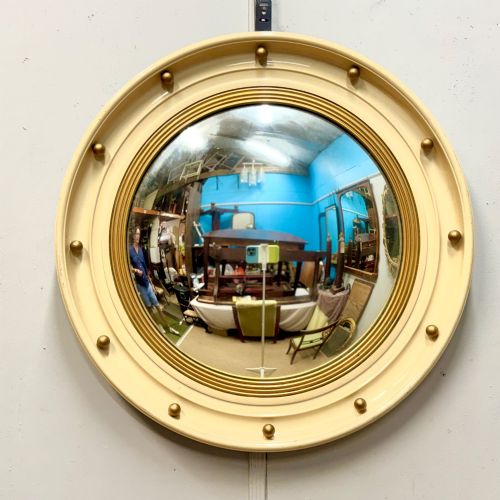
- A curved mirror glass that provides a wide-angle, distortion-heavy reflection of the room. It is frequently found in round butler mirrors from the nineteenth century.
- Verre eglomise
- A cold decoration technique where glass is gilded and engraved on the reverse side. It appears on Venetian mirrors to add detailed highlights and borders.
- Overmantel mirror
- A large horizontal mirror designed specifically to hang above a fireplace mantel. These pieces often feature architectural elements like arched tops or detailed crestings.
Detailed Gilded Mirror: Frequently Asked Questions
How do I hang a heavy overmantel mirror safely?
Heavy overmantel mirrors require robust wall fixings anchored directly into masonry or substantial wall studs. Weight distribution must be calculated carefully to support the combined mass of the wood, gesso, and glass.
Professional mirror hangers often utilise specialised brackets or a French cleat system to distribute the load evenly. Ensuring the frame's structural integrity before hanging prevents strain on the original joints.
Are convex mirrors period correct for small rooms?
Convex mirrors suit compact spaces well because their curved glass captures a wide field of view, creating an illusion of depth. They were utilised extensively during the Regency and Victorian periods in tighter hallways and parlours.
Their reflective properties bounce available natural light around dark corners without overwhelming the room scale. This makes them a practical choice for functional interior styling.
What is the difference between an overmantel and a wall mirror?
Overmantel mirrors are traditionally built with wider horizontal proportions to sit comfortably above a fireplace surround. Wall mirrors feature vertical or symmetrical dimensions intended for general room placement.
While both utilise similar giltwood and gesso techniques, their scale and framing motifs reflect their intended architectural placement. Overmantels frequently incorporate heavier crestings to anchor large wall spaces.
How should I clean antique giltwood frames?
Giltwood frames require gentle maintenance using a soft, dry brush to remove dust from intricate carvings. Moisture can degrade historic gesso and lift delicate gold leaf layers.
Chemical cleaners and abrasive cloths must be avoided to protect the original metallic finish. Regular dusting preserves the surface without disturbing the historical patina.