

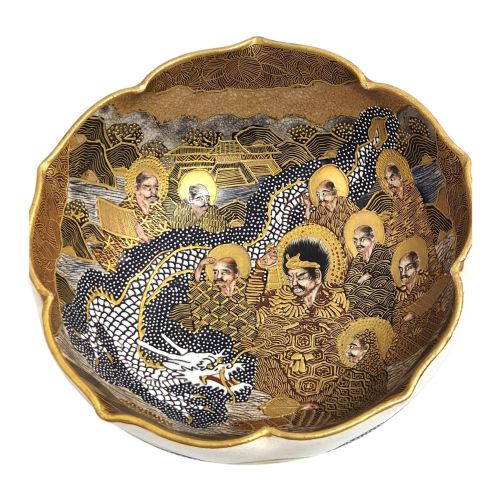


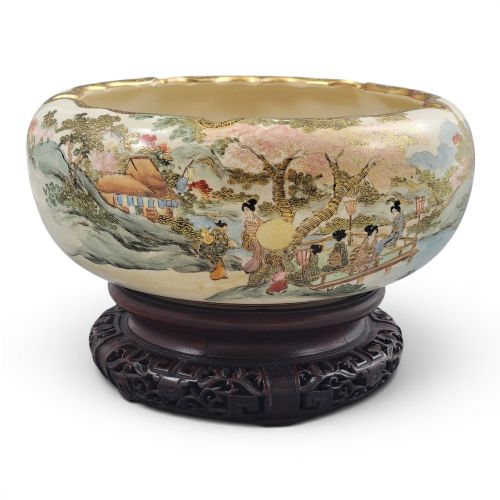


Gold Satsuma Ceramic Bowl
These gold satsuma ceramic bowl pieces are finely painted earthenware vessels richly detailed in gilt, offering a glimpse into intricate Meiji craftsmanship.
Gold Satsuma Ceramic Bowl
A gold satsuma ceramic bowl is typically an earthenware vessel decorated during the Meiji and Taisho periods, often featuring intricate figurative or floral motifs.
Buyers will encounter various forms on this page, ranging from standard decorative bowls and footed burners to sugar bowls and matching bowls and saucers.
The origins span Kyoto studios and Yokohama workshops, capturing traditional Japanese craftsmanship intended for both domestic appreciation and export.
How They Were Made
Potters shaped these objects from earthenware, applying an absorbent cream-coloured glaze that crackled slightly during the firing process.
Artisans then hand-painted complex scenes using polychrome enamel pigments and enriched the surfaces with gold leaf, gilt, and gold gilt accents.
Gold Satsuma Ceramic Bowl Retail Price Guide 2026
Typical asking prices for gold satsuma ceramic bowl among the pieces listed under this phrase on Sellingantiques today, from the lower quarter to the upper quarter. They describe what is for sale here now, not the wider market.
Some bowls depict intense samurai battles right next to tranquil scenes of women and children resting under camellia trees.
What Varies in Quality
The distinction between average and exceptional pieces lies in the precision of the brushwork and the complexity of the subject matter, such as detailed samurai battles or layered thousand flowers patterns.
Signature panels and maker marks from renowned studios indicate higher atelier standards, whereas unmarked pieces often display simpler floral decoration.
Hododa·Taizan·Kozan·Shizan·Kinkozan·Nikko·Shozan
The Gold Satsuma Ceramic Bowl Glossary
- Earthenware
- A porous type of pottery fired at lower temperatures, forming the structural body beneath the glaze. It requires careful handling.
- Gilt
- A thin layer of gold applied to the ceramic surface to highlight borders, figures, and patterns. It catches the light differently depending on its thickness.
- Shimazu Mon
- A crest or badge associated with the Shimazu clan, frequently found on Satsuma wares produced in Satsuma Province and Kyoto. It marks familial patronage.
- Millefleur
- A decorative style translated as thousand flowers, densely covering the ceramic surface in a mosaic of tiny blossoms. Each petal is individually painted.
Gold Satsuma Ceramic Bowl: Frequently Asked Questions
Are these bowls waterproof?
The underlying earthenware and crackle glaze mean these vessels are generally suited for dry decorative display rather than holding liquids.
Water can seep into the porous body and potentially discolour the delicate enamels over time.
How do I spot a signed piece?
Signatures typically appear on the base in handwritten script, often accompanied by a studio seal or the Shimazu family crest.
These marks indicate the workshop or master responsible for the painting rather than the potter who formed the clay.
What is Meiji period pottery?
The Meiji period spans the late nineteenth and early twentieth centuries, a time when Japanese ceramic production flourished for international export.
Pieces from this era are celebrated for their micro-detailed enamel work and lavish use of gold gilt.
How should I clean my bowl?
Dusting gently with a dry, soft brush is the safest way to maintain the surface without disturbing the raised enamel and gold leaf.
Chemical cleaners and damp cloths must be avoided to protect the fragile glaze and metallic highlights.