
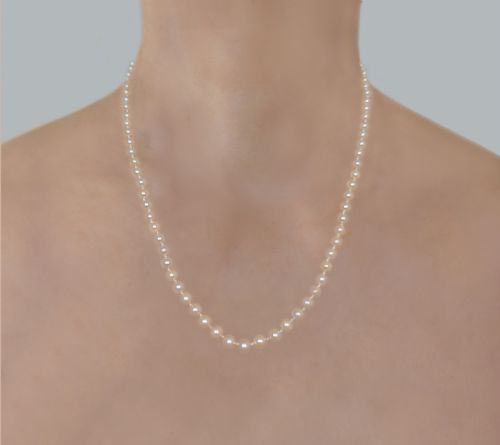


Gold Sapphire Necklace
A gold sapphire necklace brings together rich blue gems and precious metal in enduring designs ranging from Edwardian fringe work to mid-century pearl clasps.
Gold Sapphire Necklace
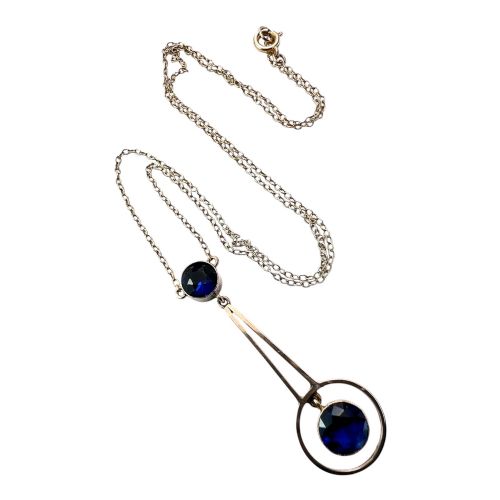
A gold sapphire necklace encompasses several distinct historical forms, from delicate drop pendants of the early twentieth century to elaborate cluster settings. Buyers searching this phrase encounter everything from Victorian crescent motifs to mid-century pearl strands secured with gem-set clasps.
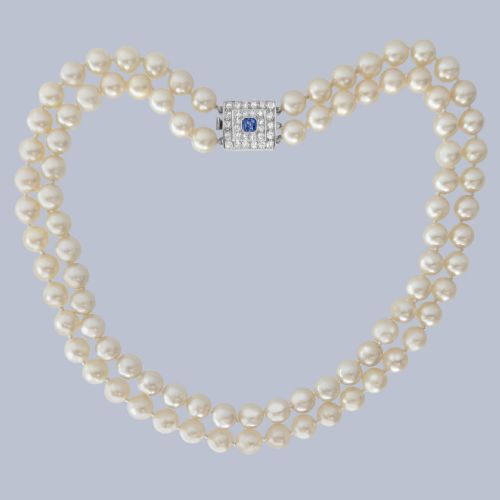
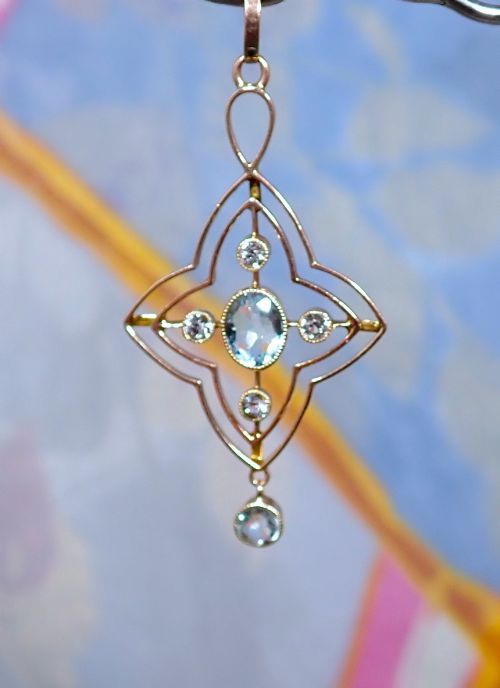
The most common examples on this page are Edwardian drop pendants and multi-strand cultured pearls featuring gemstone clasps in yellow or white gold. These items reflect changing decorative tastes across the decades, utilising stones shaped into cabochons, marquise cuts, and traditional clusters.
What varies in quality
The distinction between standard examples and the finest pieces lies in the origin and treatment of the sapphires, alongside the intricacy of the surrounding metalwork. Unheated stones or specific geographic varieties like Montana sapphires elevate a piece, as do symmetrical hand-formed clusters and delicate milgrain detailing.
Construction robustness also defines the range, seen in the weight of the gold mount and the security of integrated box clasps on multi-strand pearl necklaces. Superior items maintain original fastenings and well-matched gemstone groupings that reflect careful design coherence.
Keep an eye out for whimsical motifs including tiny gold elephants, dragonflies, and flower vases tucked into the pendant designs.
The Gold Sapphire Necklace Glossary
- Cabochon
- A gemstone shaped and polished with a smooth, rounded convex surface rather than faceted. This cut is frequently utilised for sapphires to display depth and internal phenomena.
- Seed pearl
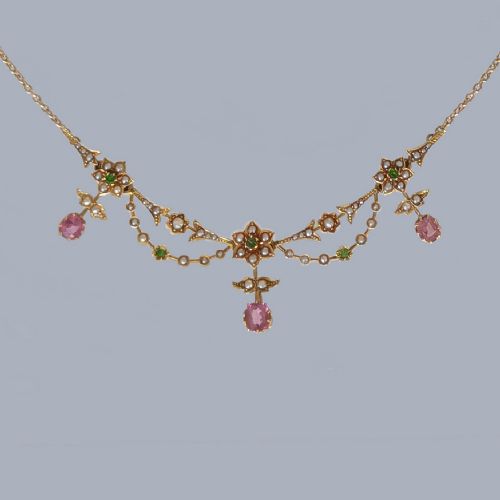
- A very small, naturally occurring or cultured pearl used in clusters and delicate floral wreaths. These small pearls create textural contrast against larger faceted sapphires and gold settings.
- Milgrain
- A decorative jewellery technique involving a line of tiny metal beads along the edge of a setting. This subtle border work appears frequently on Edwardian and Art Deco mounts.
- Cluster pendant
- A central gemstone surrounded by a ring of smaller accent stones, typically diamonds or white sapphires. This arrangement maximises visual impact and light reflection.
Gold Sapphire Necklace: Frequently Asked Questions
How do I care for a vintage pearl and sapphire necklace?
Store pearl strands flat in a soft pouch to prevent stretching and keep them separate from harder gemstones that might scratch the surface. Wipe pearls gently with a damp cloth after wearing and avoid submerging antique strung pieces in water.
Sapphires tolerate gentle cleaning with warm soapy water and a soft brush, but composite pieces involving pearls require caution around the stringing material. Regular professional checks ensure the security of older gold settings.
What is the difference between Edwardian and mid-century sapphire pendants?
Edwardian pendants lean towards intricate openwork, foliate motifs, and the combination of sapphires with seed pearls and aquamarines in yellow gold. Designs from this era often employ delicate drops and milgrain detailing.
Mid-century pieces frequently utilise heavier white or yellow gold settings, geometric cluster arrangements, and multi-strand pearl necklaces with decorative sapphire clasps. These later items reflect a shift towards bolder, structured compositions.
Can I wear a gold sapphire necklace every day?
Sapphires possess high natural durability, making them suitable for regular wear when securely set in gold mounts. Pendant necklaces experience less physical friction than rings, which helps protect the metal and stones during daily use.
Pieces incorporating pearls require more mindful handling because organic gems are softer and sensitive to chemicals, perfumes, and cosmetics. Removing pearl-strung necklaces before swimming or sleeping preserves their condition.
How can I tell if a sapphire is natural?
Examination under magnification reveals natural internal inclusions, growth lines, and colour zoning that distinguish earth-mined stones from synthetic alternatives. Certified pieces often document these optical characteristics directly.
Older pieces from the Victorian and Edwardian eras naturally house unheated, untreated stones mined before widespread synthetic production. Consulting dealer descriptions and historical hallmarks provides further context regarding stone origin.