




Gold Ruby Halo Ring
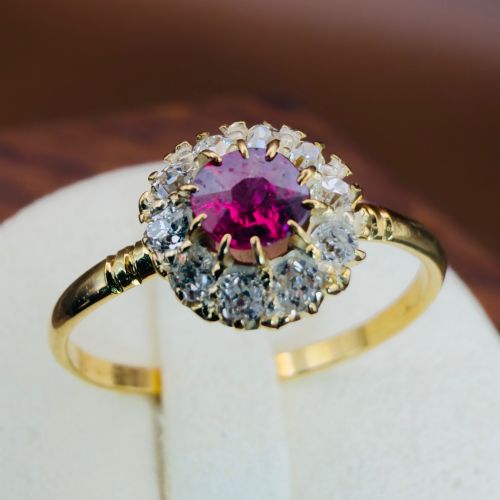
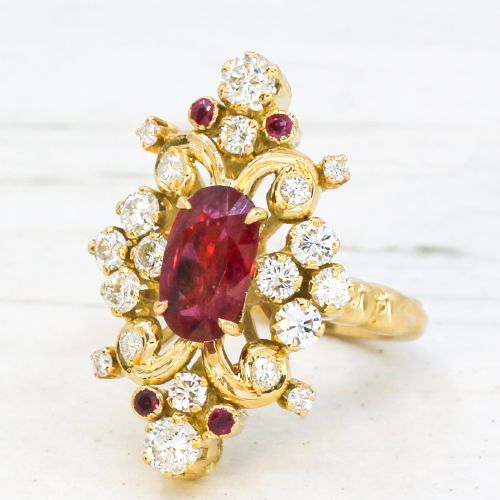
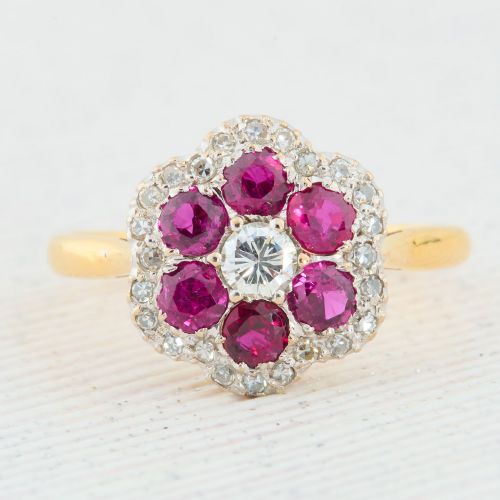
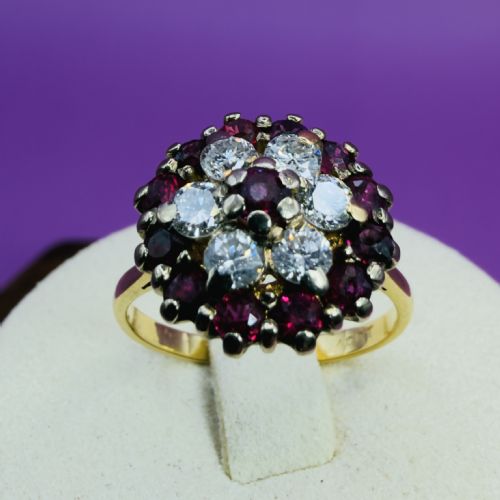
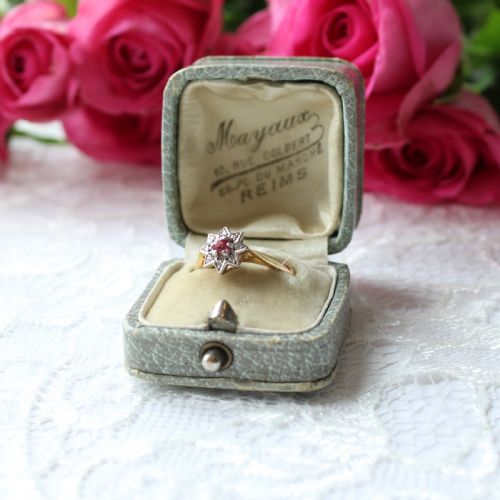
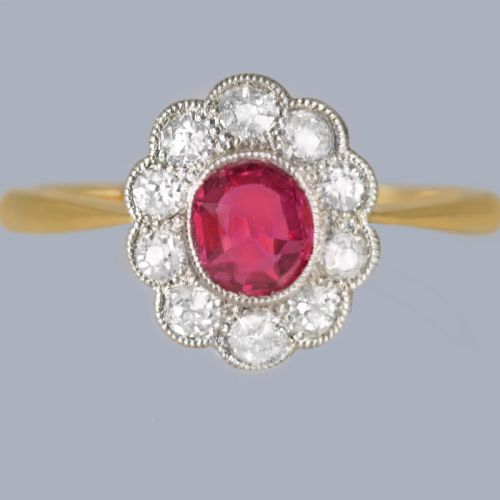
A gold ruby halo ring brings together a bright central red stone encircled by diamonds in settings spanning the Georgian era to the mid-century.
Gold Ruby Halo Ring
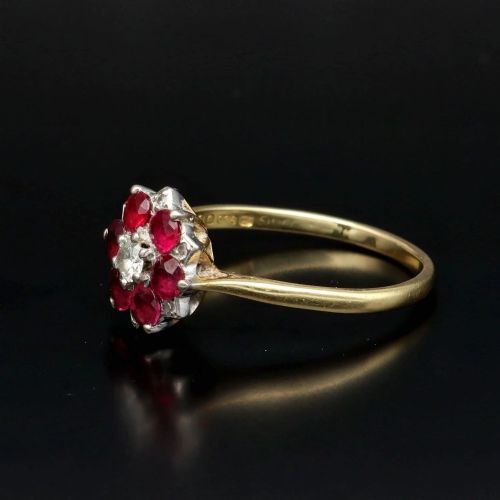
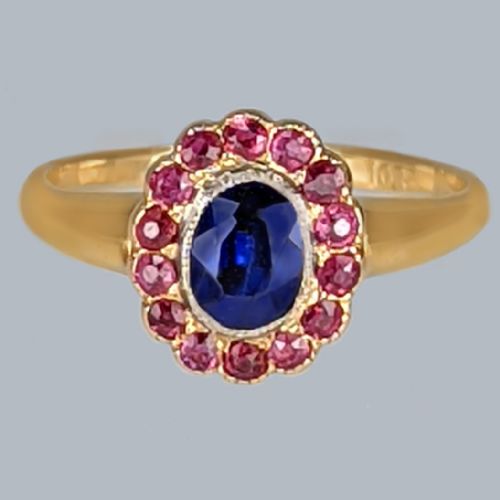
A gold ruby halo ring centres on a red corundum surrounded by a border of smaller diamonds, forming a distinctive floral or geometric cluster. The gold ruby halo ring appears frequently in Victorian, Edwardian, Art Deco and mid-century designs, reflecting changing tastes in gemstone arrangement over successive decades.
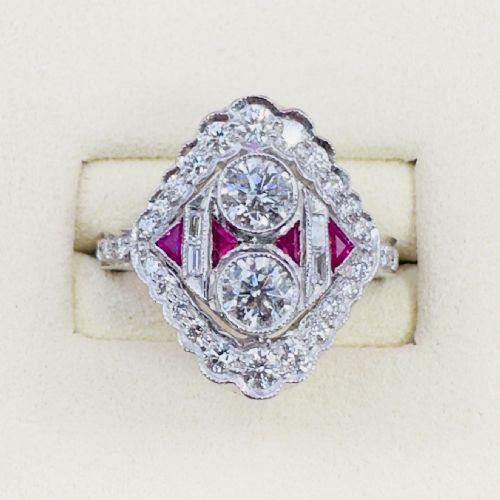
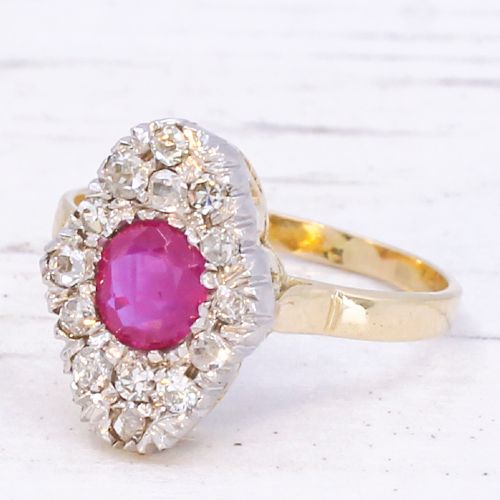
Most examples on this page utilise 18ct yellow or white gold, alongside platinum mountings, framing central stones that range from modest fractions of a carat to substantial multi-carat Burmese origins. Buyers encounter varied cluster geometries, including traditional round forms, elongated navette shapes, and angular marquis silhouettes.
How they were made
Goldsmiths shaped mounts primarily from 18ct yellow and white gold, occasionally incorporating platinum to secure delicate diamond claws around the central red gemstone. Stones were hand-set into cluster formations, utilising grain, bezel or prong techniques peculiar to periods such as the Edwardian era and the Art Deco movement.
Makers integrated supporting diamonds in circular or stepped halos to amplify the optical presence of the primary ruby. Gemmological reports often accompany these pieces to document treatments, origins such as Burma or Mogok, and carat weights.
The inventory spans multiple historical periods, covering Georgian, Victorian, Edwardian, Art Deco, and mid-century decades.
What varies in quality
The distinction between tiers rests upon the origin, saturation and clarity of the central ruby, alongside the matching quality and cut of the surrounding diamonds. Untreated stones from specific sources like Mogok command greater attention than synthetic alternatives or heated variants.
Engineering precision in the metalwork also separates examples, visible in the symmetry of the halo, the integrity of the claw settings, and the retention of crisp geometric lines in Art Deco or Victorian mounts.
The Gold Ruby Halo Ring Glossary
- Halo
- A concentric ring of smaller gemstones, usually diamonds, encircling a larger central stone. This arrangement maximises light reflection and visually enlarges the primary gem.
- Cluster
- A setting style where multiple smaller stones group tightly around a focal centrepiece. In these rings, the cluster creates a pronounced floral or geometric face.
- Navette
- A boat-shaped gemstone setting that tapers to points at both ends. Also known as a marquise shape, it lengthens the appearance of the finger.
- Corundum
- The mineral family encompassing both rubies and sapphires. Chromium trace elements provide the distinct red coloration found in rubies.
- Unheated
- A term indicating a natural gemstone has undergone no thermal enhancement to improve colour or clarity. Such stones retain their geological properties entirely unaltered.
Gold Ruby Halo Ring: Frequently Asked Questions
How do I clean my halo ring?
Warm soapy water and a soft brush safely clear away daily residue from behind the cluster settings.
Avoid harsh chemical dips that might weaken older gold alloys or damage organic gems like pearls.
Can I wear my ring daily?
Gold and diamond offer strong durability for regular wear, though rubies require moderate care against sharp impacts.
Removing the ring during manual tasks protects the delicate claw settings of the halo.
What does unheated mean for rubies?
Unheated stones possess natural colour and clarity formed directly within the earth without artificial thermal enhancement.
This lack of treatment often increases desirability among collectors of vintage fine jewellery.
How do I identify Art Deco rings?
Art Deco pieces display symmetrical geometric motifs, sharp angles, and frequent use of white gold or platinum.
These characteristics contrast with the softer floral curves typical of earlier Victorian and Edwardian examples.