


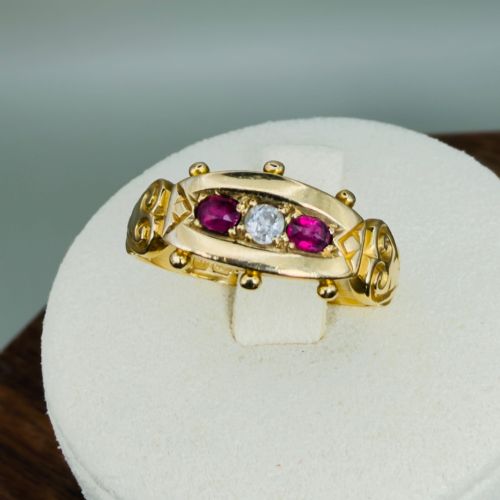
Gold Ruby Gemstone Ring
A gold ruby gemstone ring brings together deep red corundum and precious metal, ranging from Victorian cluster designs to mid-century band styles.
Gold Ruby Gemstone Ring
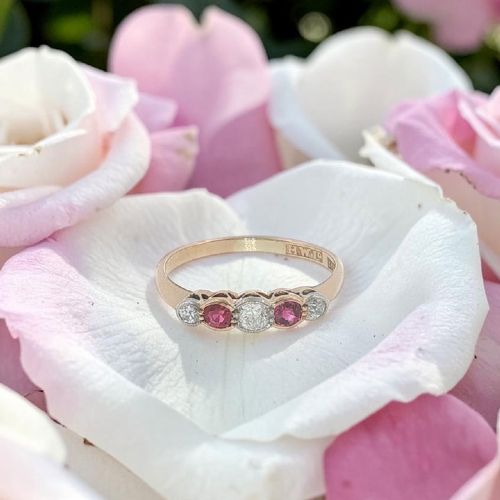
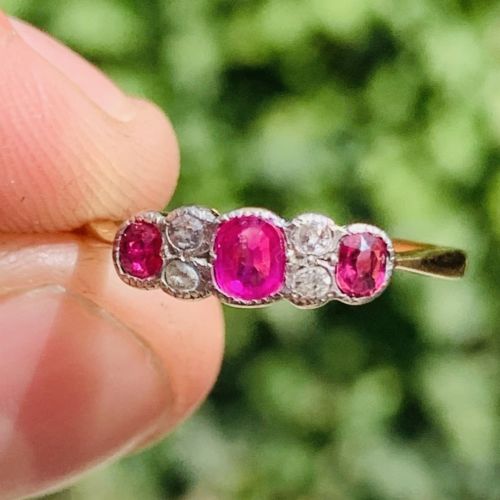
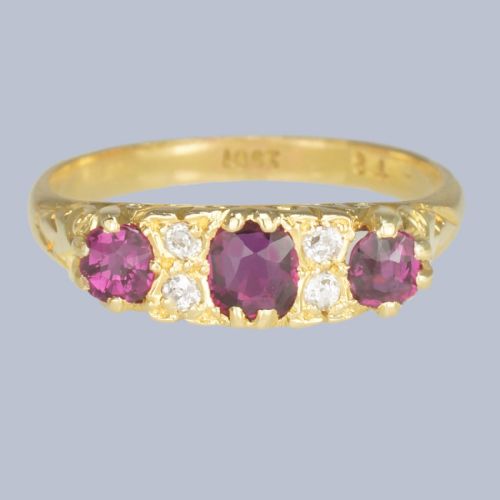
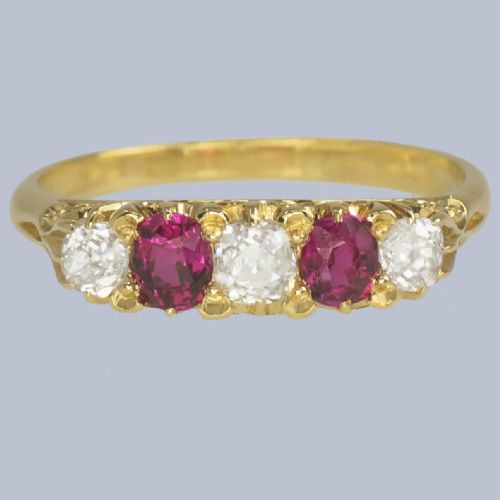
A gold ruby gemstone ring represents a category of finger ornaments featuring red corundum set alongside diamonds, pearls, or garnets in yellow gold, white gold, or platinum mounts. Buyers searching for a gold ruby gemstone ring encounter items spanning the nineteenth century through the Edwardian, Art Deco, and mid-century periods.
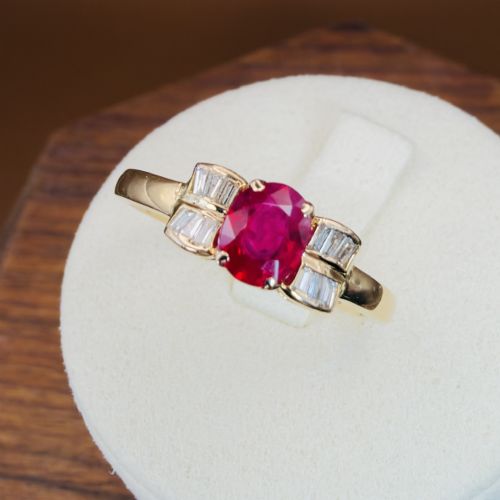
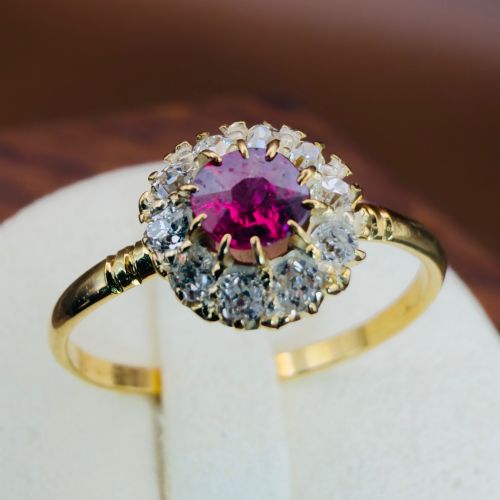
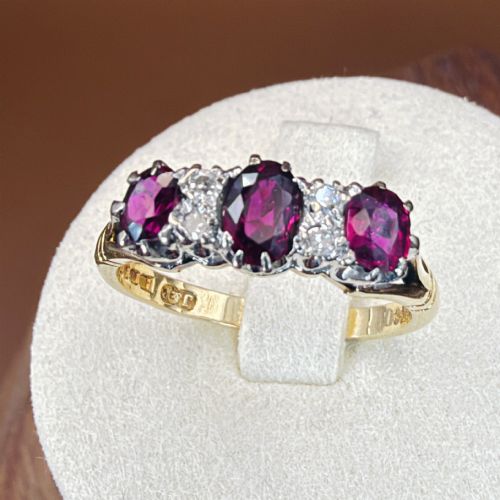
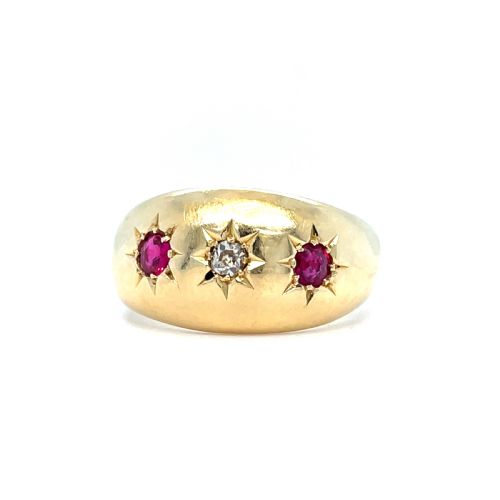
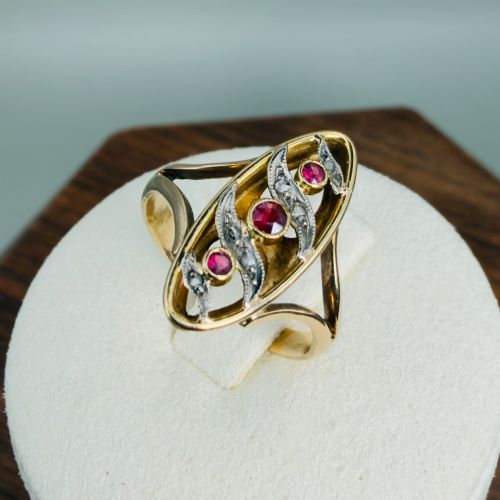
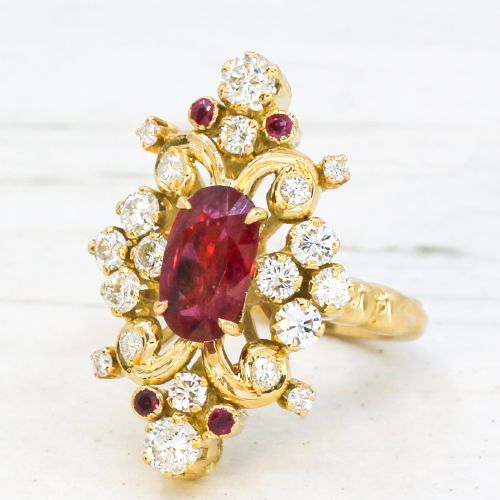
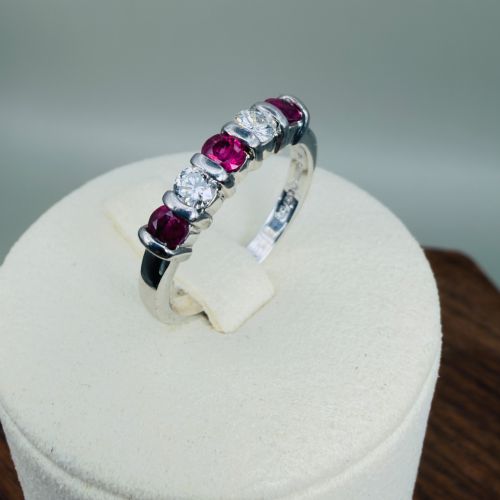
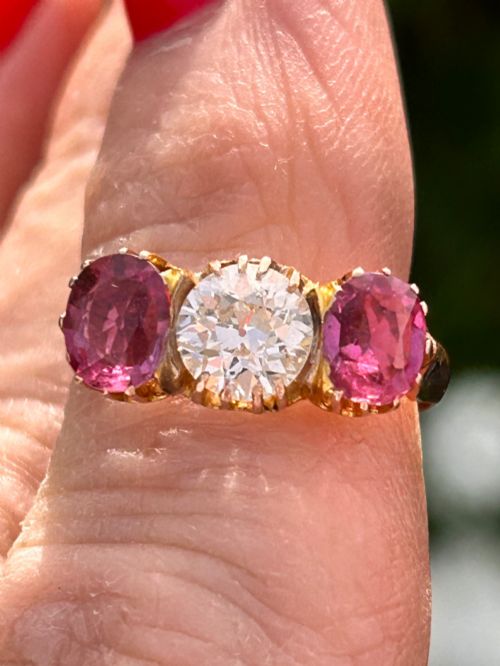
The selections on this page span diverse structural forms, including cluster rings, multi-stone band rings, trilogy settings, starbursts, navette styles, and gypsy mountings. Edwardian and Victorian iterations frequently incorporate old cut diamonds within halo or cluster arrangements, whilst later twentieth-century pieces utilise oval cuts and white gold.
Origin details in the record point to specific geographical sources such as Burma and Mong Hsu, alongside British assay office hallmarks from towns like Birmingham and Chester. Pieces range from delicate pearl-accented bands to substantial three-carat oval stone centrepieces.
Factors in quality
Quality rests upon the origin, treatment status, and cut of the central ruby, distinguishing unheated natural Burmese stones from standard commercial variants. The presence of gemmological documentation provides verifiable evidence of stone provenance.
The precision of the metalwork, from hand-carved starburst bands to intricate navette and floral cluster configurations, dictates the standard of manufacture. The matching and grading of accompanying old cut diamonds further separate standard commercial productions from finer workshop creations.
Several rings feature starburst engravings radiating outwards from the gemstones, ensuring the metalwork sparkles even when the light misses the stones.
The Gold Ruby Gemstone Ring Glossary
- Cluster ring
- A ring featuring a central gemstone surrounded by a border of smaller stones, typically diamonds encircling a ruby.
- Navette
- A boat-shaped gemstone setting that tapers to points at either end, also referred to as a marquise style.
- Old mine cut
- An early diamond cut characterised by a cushion outline, high crown, and large culet facet, common in Victorian jewellery.
- Trilogy ring
- A mounting that holds three distinct gemstones in a row, often symbolising past, present, and future.
- Gypsy ring
- A band style where the stones are flush-set directly into the thick metal surface rather than held in raised claws.
Gold Ruby Gemstone Ring: Frequently Asked Questions
What periods do these rings date from?
The inventory spans the nineteenth century through to the mid-twentieth century. Pieces represent Victorian, Edwardian, Art Deco, and 1950s or 1960s eras.
Specific dating is often confirmed through British hallmarks, Birmingham or Chester assay marks, and distinct stylistic characteristics of each decade.
Are the rubies natural or treated?
Many listings feature natural stones, with select pieces accompanied by gemmological reports confirming unheated Burmese origins from regions such as Mong Hsu and Mogok.
Certain items may include synthetic stones or standard commercial treatments as recorded in the individual descriptions.
What metals are used in the settings?
Gold and platinum form the primary structural materials for these rings. Options include 18ct yellow gold, 18ct white gold, 15ct gold, and 9ct gold bands.
Combinations of yellow gold and platinum are particularly common in Edwardian and Art Deco cluster settings.
What stone cuts are most common?
Old cut and old mine cut diamonds frequently accompany rubies in Victorian and Edwardian examples. Baguette cuts and modern oval faceted cuts appear more often in mid-century pieces.
Cluster designs arrange these smaller stones around central oval or round cut rubies.
How should I care for an antique ring?
Precious metals and gemstones require gentle cleaning with warm soapy water and a soft brush. Avoid harsh chemical dips, particularly for pieces containing pearls or softer gems.
Routine inspection by a jeweller ensures that older claw settings and flush mountings remain secure during daily wear.