

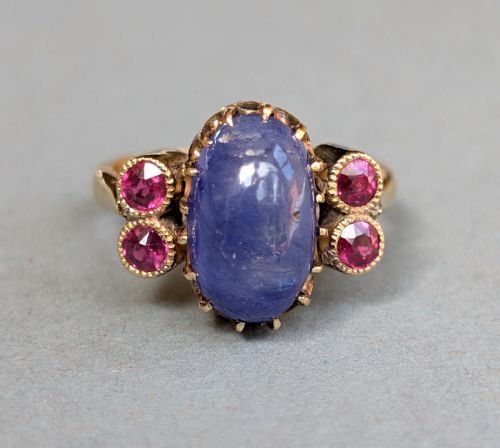
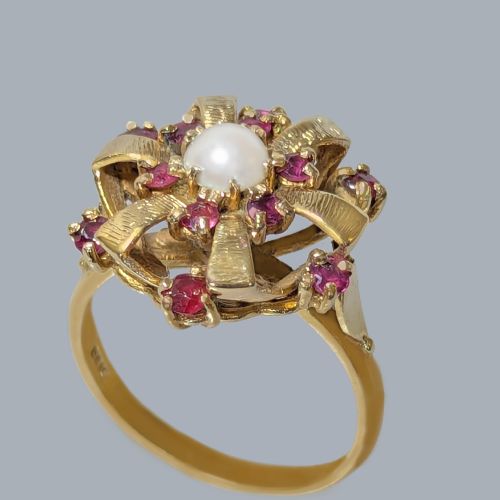

Gold Ruby Cocktail Ring
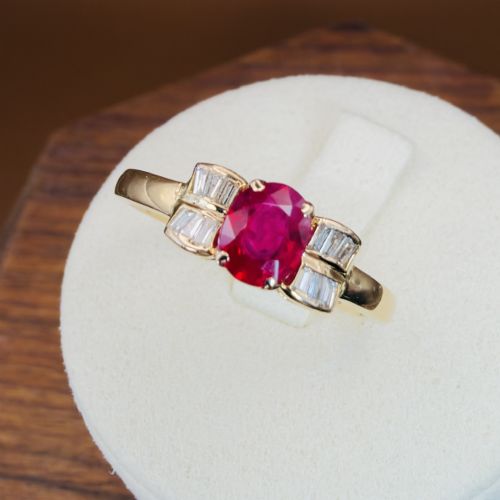
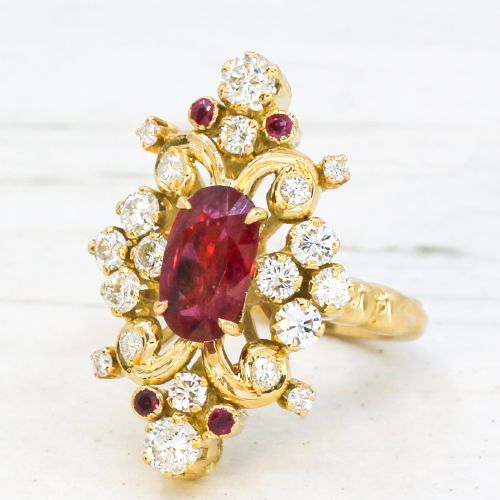
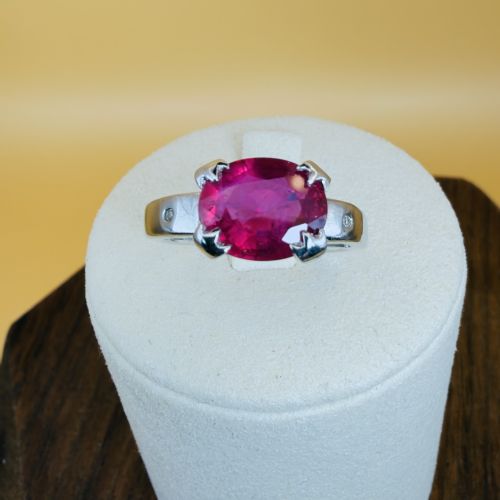
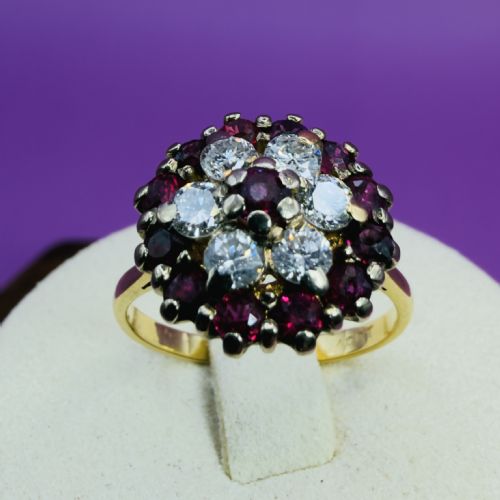
A gold ruby cocktail ring brings bold mid-century scale and vibrant red colour to the hand.
Gold Ruby Cocktail Ring
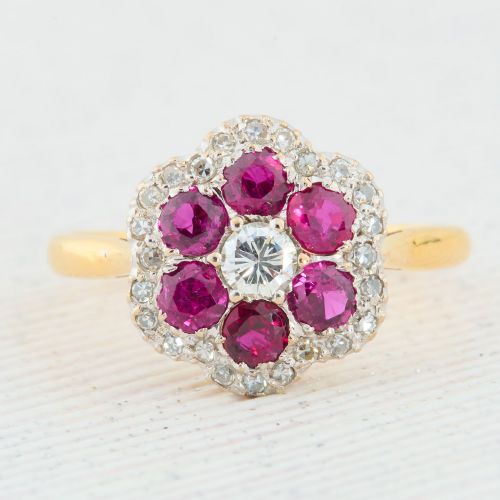
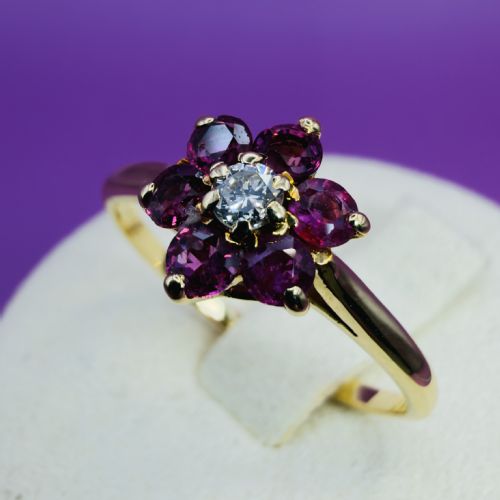
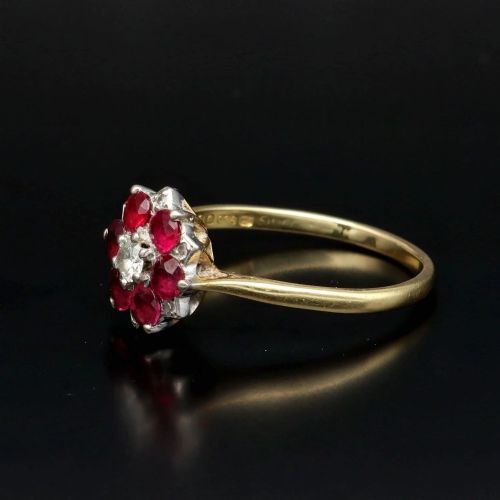
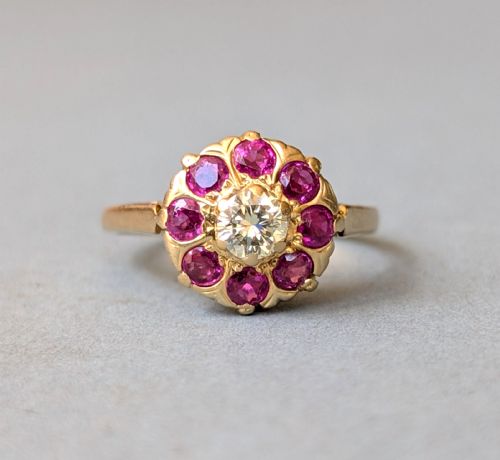
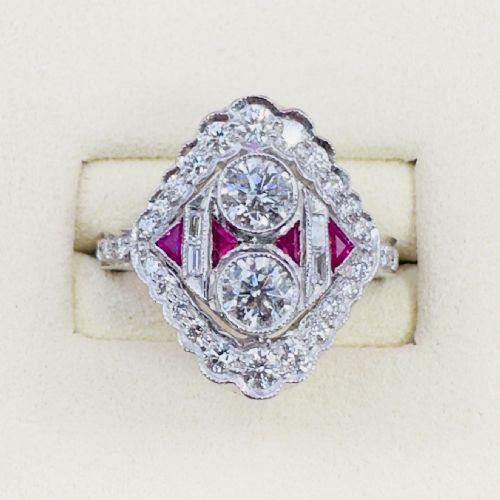
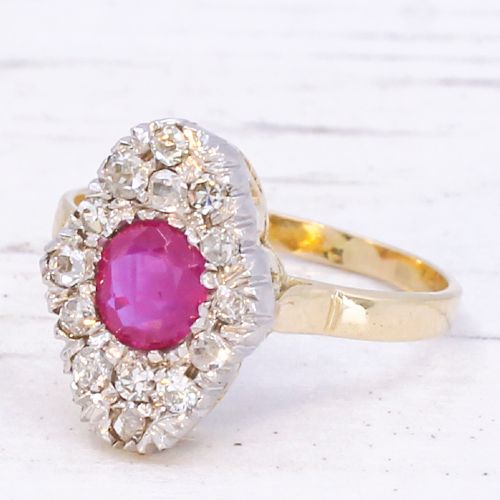
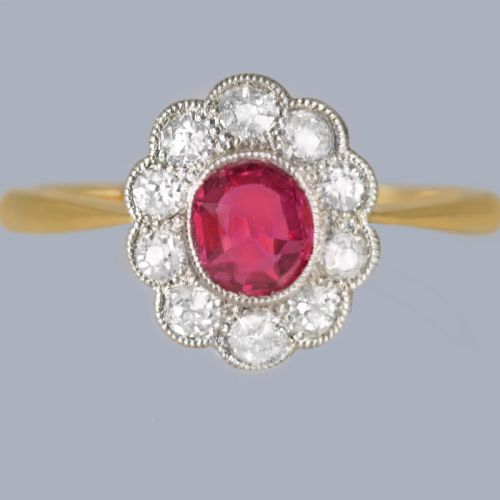
A gold ruby cocktail ring serves as a striking statement piece designed for evening wear and social occasions. When searching for a gold ruby cocktail ring, buyers encounter substantial dress rings spanning the Victorian, Edwardian, Art Deco, Retro Modern, and mid-century periods.
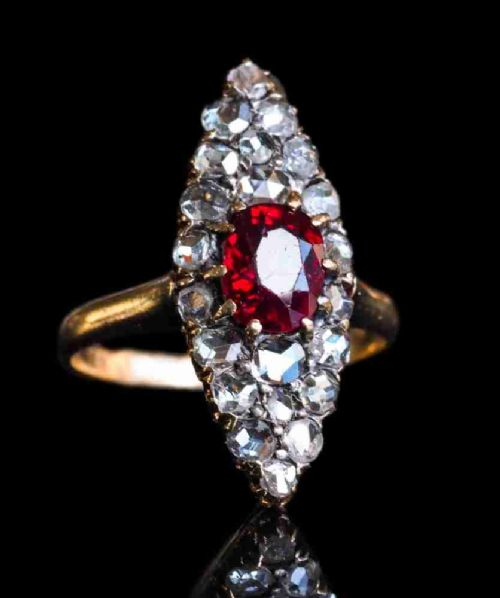
Cluster formations dominate the selection, bringing together central red rubies surrounded by glittering diamonds in circular, oval, floral, or geometric layouts. These pieces range from delicate early twentieth-century navette settings to heavy, sculptural mid-century tank and bombé designs.
How they were made
Goldsmiths utilised 18ct yellow gold, 18ct white gold, and platinum to mount the stones securely while creating contrasting metal tones. Platinum frequently frames the diamond clusters in Art Deco pieces, enhancing the brilliance of the white stones against the fiery red rubies.
Gemstones are shaped into oval, cushion, pear, princess, baguette, and round cuts, then secured using claw, channel, or bezel settings. Heavier castings define the post-war Retro and mid-century examples, providing the structural weight required for large cocktail silhouettes.
Listings span from the late nineteenth century through the 1960s, featuring both 18ct yellow and white gold.
What varies in quality
The distinction between tiers rests upon the origin, carat weight, and treatment of the central ruby, alongside the overall design ambition. Natural, unheated stones originating from sources such as Burma or Mong Hsu command greater attention than synthetic alternatives.
Construction heft and gemstone pairing further separate standard dress rings from exceptional collector pieces. Heavy gold fabrication, harmonious diamond proportioning, and documented gemmological reports elevate the standing of individual items.
Kutchinsky
The Gold Ruby Cocktail Ring Glossary
- Cluster ring
- A ring featuring a central prominent gemstone encircled by a border of smaller stones, typically diamonds. This layout maximises visual impact and perceived gemstone size on the hand.
- Navette
- A boat-shaped or marquise setting that tapers to pointed ends along the finger. This elongated silhouette gained popularity during the late nineteenth and early twentieth centuries.
- Tank ring
- A bold, architectural style of jewellery emerging from the mid-twentieth century featuring heavy, volumetric gold forms inspired by military machinery. These rings often incorporate channel-set rubies and diamonds.
- Bombé ring
- A heavily domed or rounded ring design that swells outward from the finger. The curved surface provides a dramatic canvas for pavé or cluster settings.
- Unheated ruby
- A natural ruby that has undergone no thermal enhancement to improve its colour or clarity. Such stones remain entirely natural from the mine.
Gold Ruby Cocktail Ring: Frequently Asked Questions
What defines a cocktail ring?
A cocktail ring is an oversized, decorative piece meant to draw attention during evening gatherings. These rings typically feature large central gemstones or heavy cluster designs.
Historically worn during prohibition-era parties, they prioritize bold visual style over understated daily wear.
How do I date a gold ruby ring?
Dating relies on stylistic markers such as geometric platinum mountings from the Art Deco era or heavy gold volumes from the mid-century period. Hallmarks stamped inside the band provide official assay office marks and date letters.
Gemstone cuts also offer clues, as specific faceting styles correspond to particular manufacturing decades.
Are all rubies natural?
Listings include both natural stones and synthetic alternatives created in laboratories. Gemmological reports often accompany older pieces to verify the origin and treatment status of the ruby.
Natural stones show internal growth characteristics under magnification, whereas synthetics display distinct manufacturing traces.
Can I wear my ring every day?
Rubies rank high on the hardness scale, making them durable enough for regular wear when securely set in gold or platinum. However, vintage and antique settings with delicate claws require mindful care during physical tasks.
Removing the ring before heavy work protects the mounting and prevents stone loss.