


Retro Ruby Diamond Ring
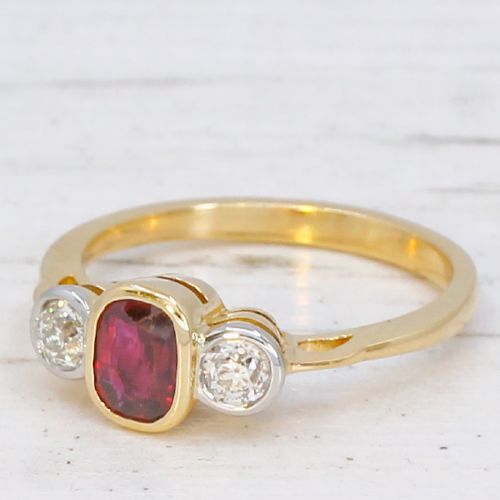
A retro ruby diamond ring brings together warm gold and vibrant gems, offering bold twentieth-century character for everyday wear.
Retro Ruby Diamond Ring
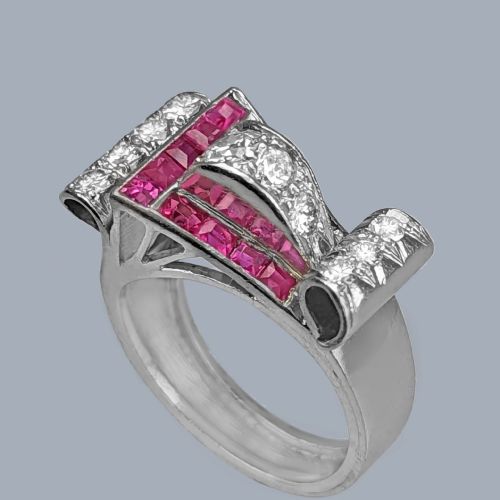
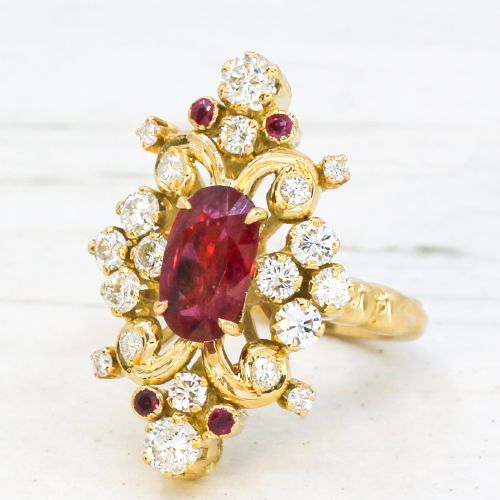
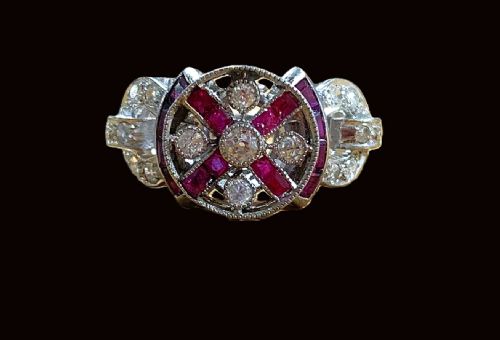
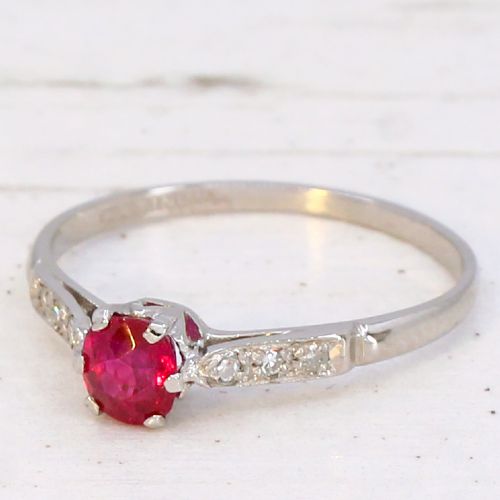
When searching for a retro ruby diamond ring, you encounter bold mid-century designs spanning the 1940s and 1950s alongside earlier Art Deco and Edwardian pieces. These rings typically showcase vivid rubies paired with sparkling diamonds, set into substantial mountings that reflect the heavy, sculptural metalwork popular during wartime and post-war decades.
Materials and construction
These pieces rely heavily on 18ct yellow gold, 18ct white gold, and platinum to support weighty stone settings. Metals are often folded, ribbed, or curved into volumetric shapes characteristic of the mid-century period, providing a solid architectural base for the gems.
Gems are secured using claw, bezel, or flush settings, integrating old cut, rose cut, and emerald cut diamonds alongside natural Burmese or unheated rubies. Master jewellers balanced these heavy metal structures with precise stone placement to maximise light reflection.
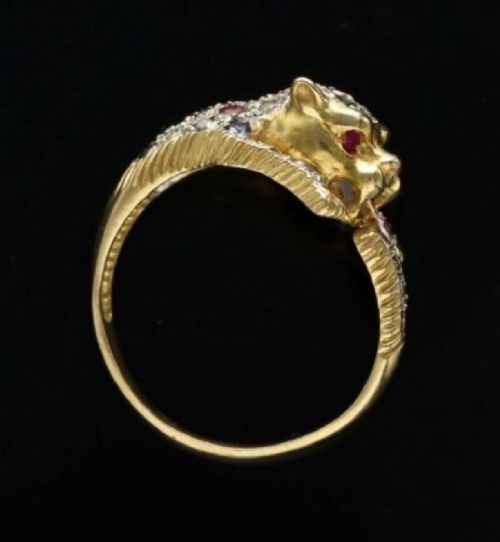
Several rings double as miniature menageries, featuring multi-gem panthers and leopards prowling the finger.
Distinctions in quality
Quality rests in the origin and visual performance of the stones, particularly the depth of colour in the rubies and the cut precision of the diamonds. Natural unheated stones from sources like Burma command greater appreciation than synthetic alternatives.
The execution of the metalwork defines the superior pieces, where fluid lines, heavy casting, and crisp detailing distinguish bespoke workshop output from mass-produced items.
Kutchinsky
The Retro Ruby Diamond Ring Glossary
- Tank ring
- A chunky, voluminous ring style named after military vehicles, popular during the 1940s. These pieces feature flat planes of gold and prominent central stone settings.
- Cocktail ring
- A large, eye-catching ring designed to be noticed across a room. They frequently combine multiple rubies and diamonds in elaborate geometric or floral arrangements.
- Old cut
- A diamond cutting style predating modern brilliants, characterised by a small table, high crown, and large culet. These stones exhibit a softer, warmer candlelit sparkle.
- Bombé ring
- A rounded, dome-shaped ring popular in mid-century jewellery design. The domed profile allows clusters of rubies and diamonds to project dramatically from the finger.
- Unheated ruby
- A natural ruby that has undergone no thermal enhancement to improve colour or clarity. Such stones are prized for their untouched geological origin.
Retro Ruby Diamond Ring: Frequently Asked Questions
How do I date a retro ruby diamond ring?
Dating relies on stylistic clues such as heavy gold tank construction, geometric motifs, and French import stamps typical of the 1940s and 1950s.
Assay marks and hallmarks inscribed inside the band provide further chronological markers, distinguishing mid-century examples from earlier Art Deco or Edwardian pieces.
Are these rings suitable for daily wear?
Most of these rings are robustly constructed with thick gold or platinum bands designed to withstand regular use.
Ruby and diamond rank high on the hardness scale, though antique claw settings benefit from occasional professional inspection to ensure stone security.
What is the difference between synthetic and natural rubies here?
Natural rubies form organically over millions of years, often carrying geographical provenance such as Burma and commanding greater collector interest.
Synthetic rubies created in laboratories share identical chemical properties but lack the natural inclusions and historical rarity valued by purists.
Why are platinum and yellow gold both used?
Platinum gained favour during periods of platinum restriction or for securely holding diamonds in bright white settings, while yellow gold provided warm contrast.
Many mid-century designs combine both metals to accentuate different sections of the geometric framework.