


Gold Ruby Cluster Ring
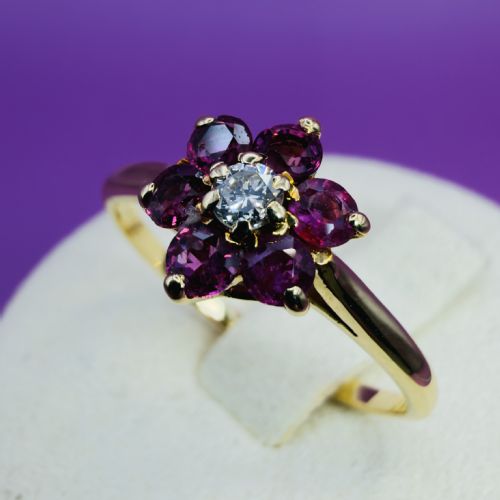
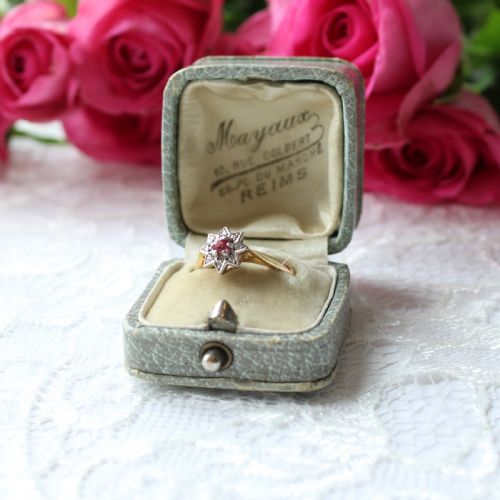
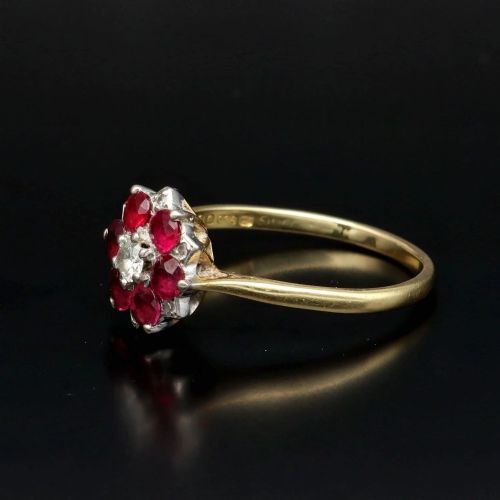
A gold ruby cluster ring brings together vibrant red stones and yellow gold in a format designed to command attention on the hand.
Gold Ruby Cluster Ring
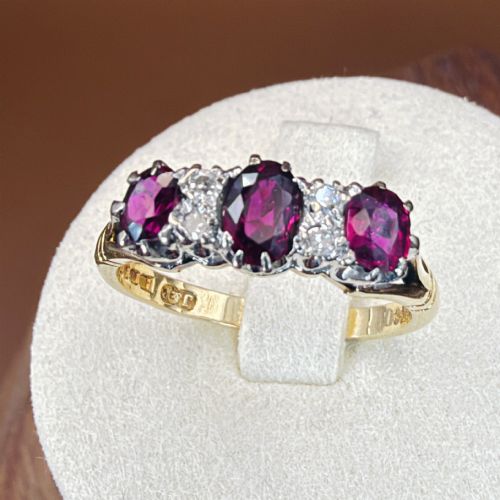
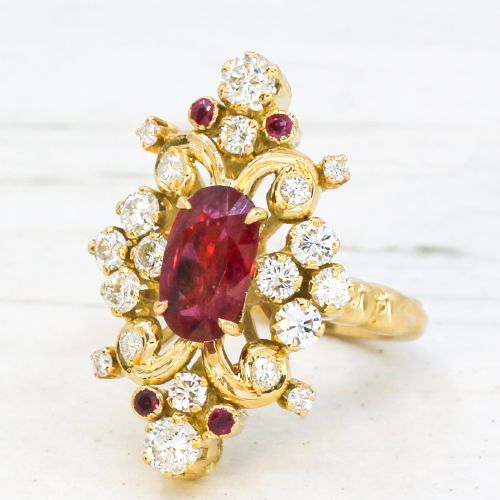
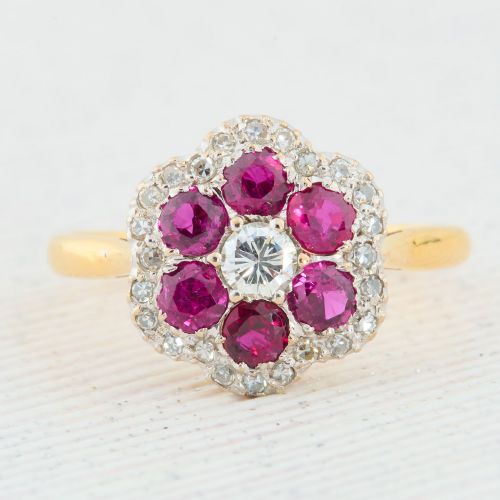
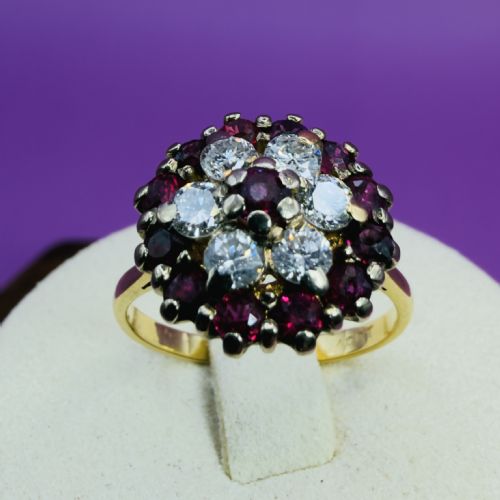
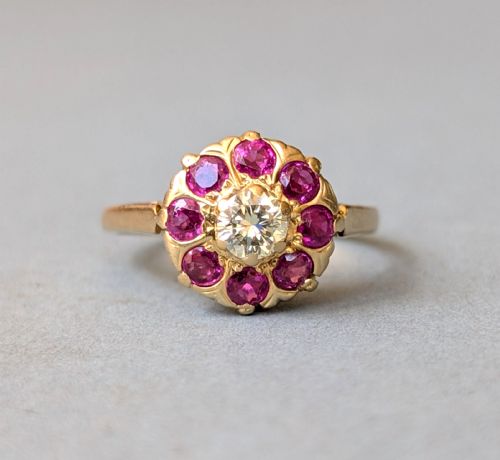
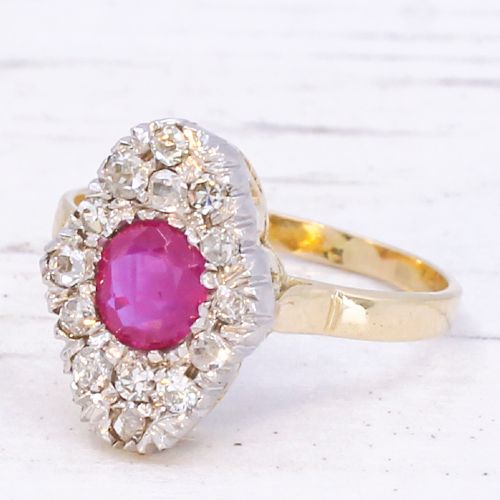
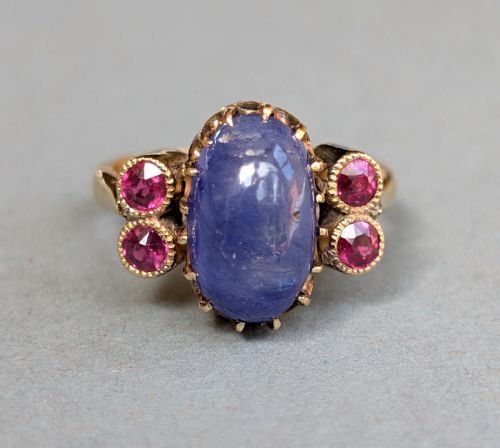
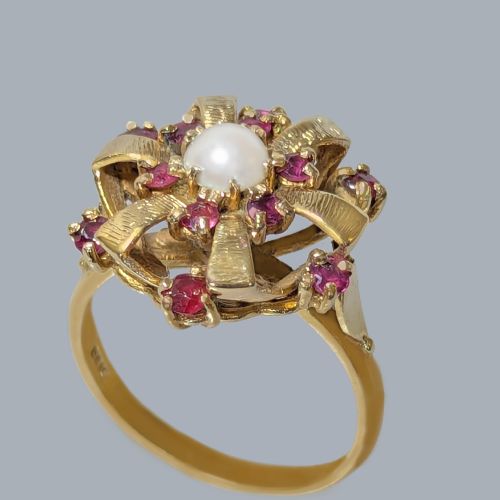
A gold ruby cluster ring centres on a vivid red ruby encircled by smaller stones, most frequently diamonds, mounted upon a band of gold. These pieces draw immediate focus through their distinctive geometric or floral arrangements.
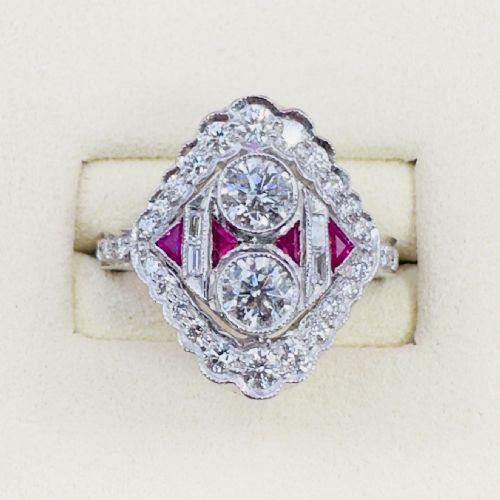
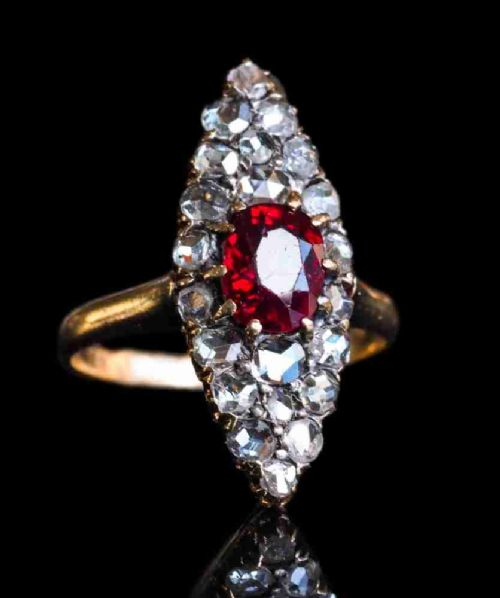
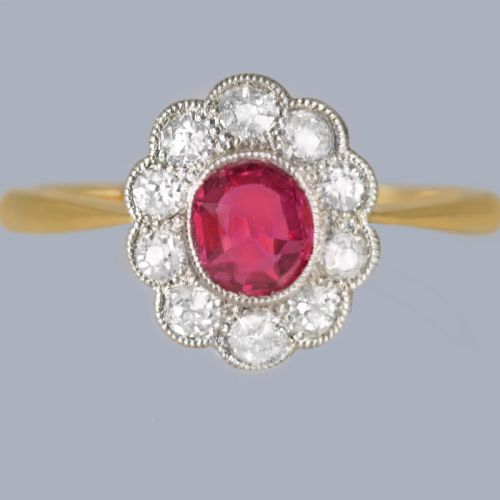
Examples on this page span the Victorian era, the Edwardian period, the 1920s, the 1950s and the 1960s. Designs range from traditional round daisy arrangements to elongated navette and boat shapes.
Materials and construction
Goldsmiths utilised 18ct yellow gold, 18ct white gold, 9ct gold and platinum to house rubies alongside diamonds, sapphires and opals. Metal choice shifted across decades from rich yellow gold in Victorian and mid-century pieces to platinum and white gold in earlier Art Deco designs.
Stone settings rely on claw mounts, bezels and channels to secure oval, cabochon, princess and old cut gems into cohesive floral or geometric clusters.
Gold Ruby Cluster Ring Retail Price Guide 2026
Typical asking prices for gold ruby cluster ring among the pieces listed under this phrase on Sellingantiques today, from the lower quarter to the upper quarter. They describe what is for sale here now, not the wider market.
Listings incorporate items spanning the Victorian era through the 1960s, rendered in yellow gold, white gold, platinum and 9ct or 18ct gold.
Factors of quality
Quality rests in the optical depth of the ruby and the precision of the surrounding stone arrangement. Superior pieces display vibrant, evenly saturated red tones paired with well-matched diamonds that enhance rather than overpower the central gem.
Construction integrity dictates longevity, where solid claw work and substantial gold weight in the shank distinguish finer workshop output from lighter commercial production.
The Gold Ruby Cluster Ring Glossary
- Cluster ring
- A ring featuring a prominent central stone surrounded by a geometric ring of smaller stones. This format maximises visual impact and perceived size.
- Navette
- An elongated boat-shaped stone setting that tapers to points at either end. This silhouette flatters the length of the finger.
- Old cut
- A diamond facet style hand-cut before modern machinery, characterised by a smaller table and higher crown. These stones produce a softer candlelight sparkle.
- Cabochon
- A gemstone shaped and polished with a smooth, rounded dome rather than faceted edges. This cut emphasises colour density over brilliance.
- Daisy cluster
- A circular ring arrangement where a central stone sits amid a ring of matched round stones resembling petals. This style appears frequently across mid-century pieces.
Gold Ruby Cluster Ring: Frequently Asked Questions
How do I date a gold ruby cluster ring?
Dating relies on hallmarks, metal types and stone cuts. Victorian and Edwardian examples often feature distinct navette silhouettes and old cut diamonds.
Mid-century pieces from the 1950s and 1960s tend to utilise brighter yellow gold and cleaner round cut stones in compact daisy formations.
Are all rubies in these rings natural?
While many pieces contain natural unheated or heat-treated rubies, some period and vintage examples incorporate synthetic rubies. Jewellers have used synthetic stones in fine settings for over a century.
Examination under magnification often reveals clues regarding stone origin and treatment history.
What metals were used for the bands?
Gold forms the primary structural metal across the inventory, appearing predominantly in 18ct yellow gold and 9ct yellow gold. Platinum and 18ct white gold also appear, particularly in pieces influenced by Art Deco design.
Colour variations reflect prevailing aesthetic preferences of each decade of manufacture.
How should I care for an antique cluster ring?
Regular gentle cleaning in warm soapy water maintains the brilliance of both the gold and the stones. Avoid harsh chemical dips, especially if the ring contains softer gems like opals.
Periodic inspection by a jeweller ensures the claw settings remain secure around each stone.