
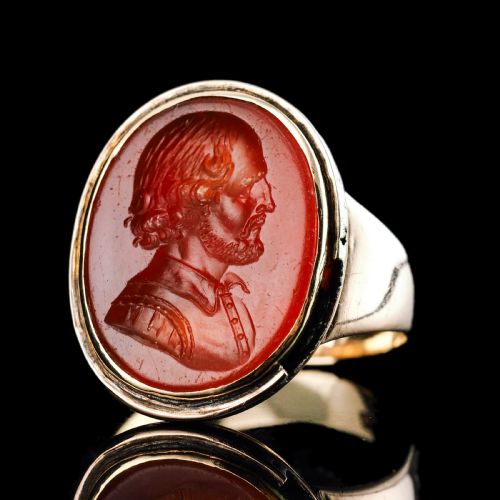


Gold Portrait Ring
These gold portrait ring pieces are wearable historical miniatures, combining precious metal with carved cameos, intaglios, and hand-painted likenesses to keep ancestral faces close.
Gold Portrait Ring
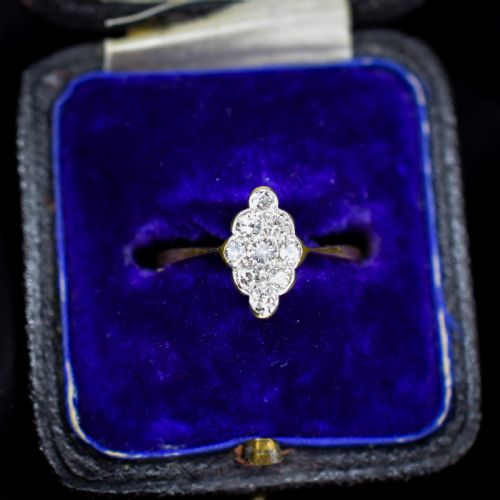
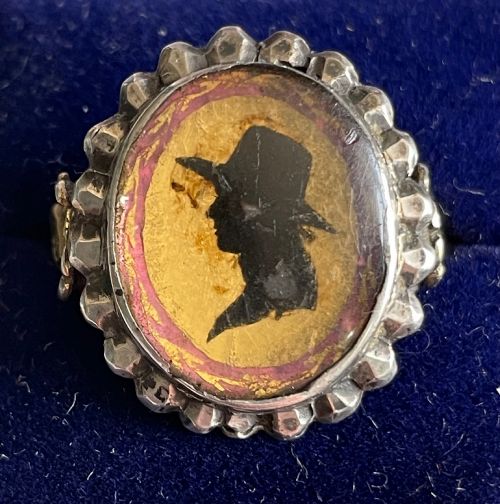
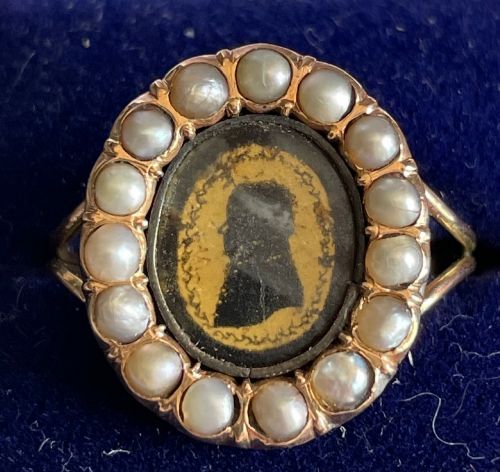
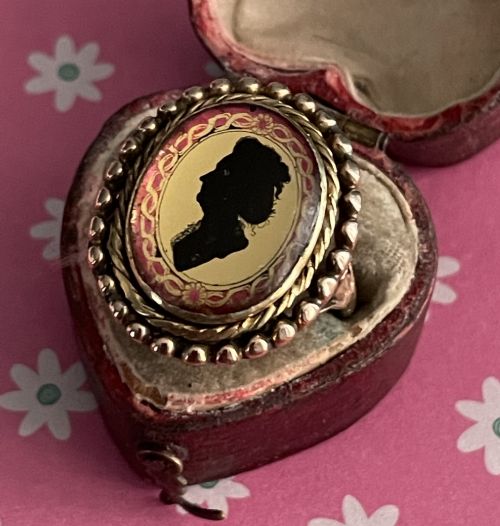
A gold portrait ring is a piece of jewellery designed to commemorate an individual through a miniature likeness, silhouette, or profile carved into stone. When searching for a gold portrait ring, collectors encounter forms spanning the Georgian, Victorian, and Edwardian eras, alongside pieces from the early twentieth century. The most common varieties met on this page include hardstone and agate cameos, glass silhouettes, and rock crystal intaglios set in yellow or rose gold bands.
Many examples utilise classic motifs, drawing upon Classical Revival styles or depicting specific historical figures such as Prince Albert and William Shakespeare. The selection ranges from substantial nineteenth-century signet styles to delicate Edwardian iterations, encompassing both rings and related fob seal formats. These ornaments serve as direct physical links to past lives, executed in materials that have survived centuries of wear.
How they were made
Makers fashioned these rings using gold of varying purities, including 9ct and 18ct yellow and rose gold, alongside occasional platinum accents. The portraits themselves were carved directly into hardstones such as carnelian, agate, and black opal, or rendered as delicate hand-painted miniatures under protective glass and rock crystal.
Techniques varied from reverse-painted verre églomisé silhouettes to intricate relief carvings in coral and layered stone. Goldsmiths secured these miniature artworks within closed or open-backed bezel settings, frequently incorporating shoulders and mountings shaped by hand during the Georgian and Victorian periods.
One listed ring hides the stern profile of Prince Albert beneath a tiny hand-painted miniature made to be worn secretly against the skin.
What varies in quality
The weight and purity of the gold mount also distinguish standard work from finer productions. Exceptional pieces feature robust, well-preserved metalwork and original bezels that securely frame the delicate imagery without distortion.
Francis Cotes
The Gold Portrait Ring Glossary
- Intaglio
- A gem or stone carved sunken beneath the surface so that an impression can be made in relief. This technique was frequently utilised for seals and signet rings.
- Cameo
- A method of carving where the subject is raised in relief against a contrasting background. It relies on the natural colour banding of stones like agate and carnelian.
- Verre églomisé
- A process of applying cold painting and gold leaf to glass. This fragile technique created silhouettes seen in continental Georgian pieces.
- Navette
- A boat-shaped gemstone or ring setting featuring pointed ends. The elongated form was popular in Georgian and later revival jewellery.
- Fob seal
- A small engraved stone or metal stamp attached to a watch chain or worn as a ring. They were used to press initials or crests into sealing wax.
Gold Portrait Ring: Frequently Asked Questions
What is a gold portrait ring?
A gold portrait ring is a finger ornament featuring a painted miniature, silhouette, or carved stone likeness of a person. These pieces functioned as memorials, tokens of affection, or displays of status.
They combine precious metal bands with artistic representations executed in media like hardstone, glass, and enamel during past centuries.
How do I date a portrait ring?
Dating relies on stylistic clues, materials, and mounting techniques typical of periods like the Georgian, Victorian, and Edwardian eras. Silhouette work and verre églomisé often point to the eighteenth or early nineteenth century.
Later Victorian and Edwardian examples introduce different gold purities and distinct carving depths that separate them from earlier iterations.
What materials were used?
Makers constructed the bands from 9ct and 18ct gold, sometimes incorporating platinum in later Edwardian designs. The portrait elements utilised hardstones, carnelian, agate, coral, black opal, and glass.
Protective coverings over painted miniatures typically consisted of rock crystal or clear glass secured within gold bezels.