





Carved Coral Jewellery
Carved coral jewellery brings together organic ocean material and meticulous handwork, offering warm red tones and detailed relief work that elevate everyday wear.
Carved Coral Jewellery
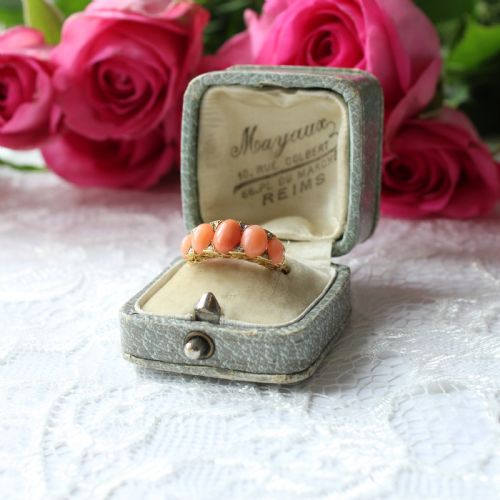
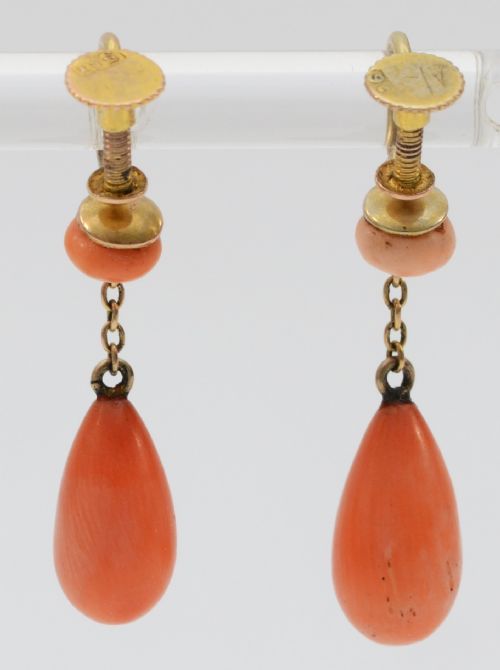
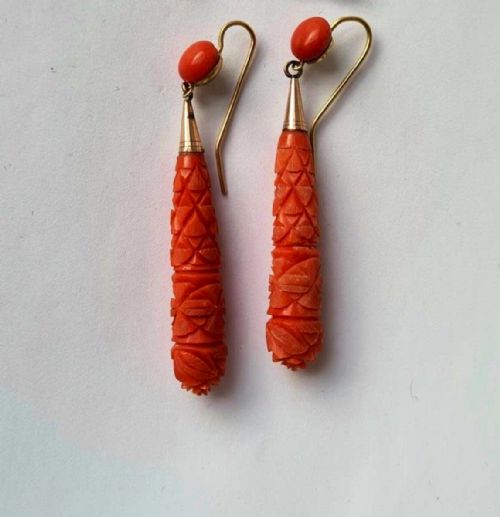
Carved coral jewellery encompasses rings, earrings, bracelets, brooches, necklaces and pendants fashioned from natural coral material. Pieces range from detailed floral cameos and animal subjects to geometric arrangements set into precious metals.
The selections encountered most frequently on this page stem from the Victorian period, showcasing the era's fascination with naturalism and detailed relief carving. Alongside these Victorian examples, items from the Regency era, the 1920s, the 1930s and the 1940s appear with distinct stylistic traits.
Makers shaped the coral into botanical motifs, cameo portraits and figural insects like flies, mounting the carved elements securely into gold and silver settings. These configurations reflect both classic revival aesthetics and later artisan or bohemian expressions.
How they were made
Craftsmen shaped natural coral and natural red coral by hand using specialised cutting and engraving tools to achieve fine surface detail. The resulting carved elements, such as floral cameos or fly motifs, required immense patience to prevent the brittle marine material from fracturing.
Makers set the carved coral components into gold, 18ct gold, 15ct gold, 12ct gold, silver and gilt metal mounts. Additional elements like diamonds and seed pearls were frequently incorporated into the metalwork to complement the organic orange and red hues of the coral.
Listings feature gold, 18ct gold, 15ct gold, 12ct gold and silver alongside natural coral and natural red coral materials.
What varies in quality
Depth and precision of the hand-carving separate standard items from superior pieces, particularly in cameos and floral subjects where relief work defines the form. Crisp edges and expressive detailing indicate a skilled hand at the bench.
The quality of the supporting metalwork and the selection of accompanying gems, such as matched diamonds or seed pearls, influence the overall character of the piece. Integrated settings that securely hold the coral without excessive adhesive demonstrate thoughtful construction.
The Carved Coral Jewellery Glossary
- Cameo
- A method of carving an object such as a carved coral gemstone in relief, producing a raised design against a contrasting background. This technique highlights the natural colour variations within the material.
- Natural coral
- Unaltered marine skeleton utilised directly in jewellery manufacture without artificial dyeing or stabilization. Its organic origin gives each carved element a distinct texture and hue.
- Seed pearl
- Very small, naturally occurring pearls often clustered around central stones in Victorian designs. They provide a delicate, lustrous border that contrasts with the matte warmth of carved coral.
- Filigree
- Ornamental work consisting of fine wire twisted and soldered into intricate patterns. This technique frequently appears in Victorian gold and silver mounts holding coral elements.
- Boat ring
- A ring setting shaped like an elongated boat, designed to present a row of stones or carved sections horizontally across the finger. It allows multiple elements to sit closely together.
Carved Coral Jewellery: Frequently Asked Questions
How do I care for carved coral jewellery?
Coral is an organic material that is relatively soft and sensitive to acids, perfumes and harsh household chemicals. Wipe it gently with a soft, damp cloth after wearing and store it away from harder gems to prevent scratching.
Avoid submerging antique coral pieces in liquid cleaners or ultrasonic baths. Gentle handling preserves the delicate carved surfaces and the integrity of the historical metal mountings.
What periods are common in carved coral?
The majority of pieces originate from the Victorian era, reflecting a strong cultural appreciation for natural materials and detailed botanical or figural carving. Regency pieces and later twentieth-century items from the 1920s, 1930s and 1940s also appear.
Each period imparts distinct mount styles and metal purities, moving from early nineteenth-century yellow gold configurations through to later geometric and artisan settings.
Is all coral red?
Natural coral spans a spectrum of shades ranging from pale pink and salmon to deep natural red coral. The specific hue depends on the species of coral and the depth of water from which it originated.
Variations in colour often guide how the carver utilised the material, sometimes placing lighter and darker zones strategically within cameos or floral reliefs.
How do I style these pieces today?
Carved coral brooches and pendants pair well with structured lapels and simple solid-fabric garments that let the detailed relief work stand out. Rings and earrings add a warm, organic accent to both evening wear and tailored daytime attire.
Because these items carry historical character, mixing them with modern minimalist garments creates a striking visual contrast that highlights the craftsmanship.