


Gold Pendulum Clock
A gold pendulum clock brings decorative presence and precise nineteenth-century mechanics into a room, spanning French Empire designs to porcelain-mounted revival pieces.
Gold Pendulum Clock
A gold pendulum clock encompasses mantel clocks, wall clocks, and longcase clocks primarily originating from nineteenth-century France and Britain. Buyers seeking this phrase usually encounter ornate gilt bronze, ormolu, and brass table timepieces driven by pendulum movements.
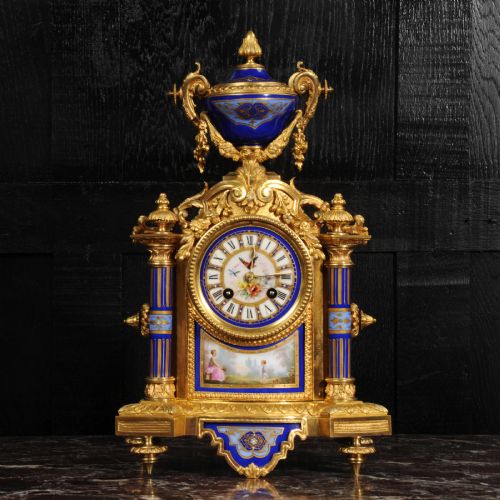
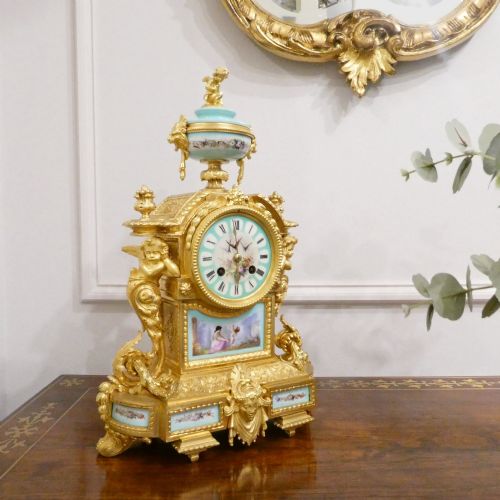
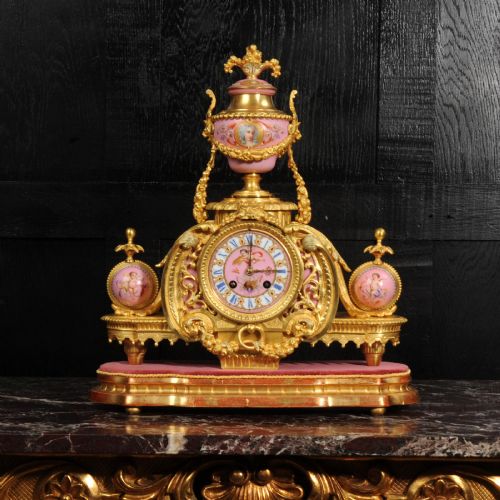
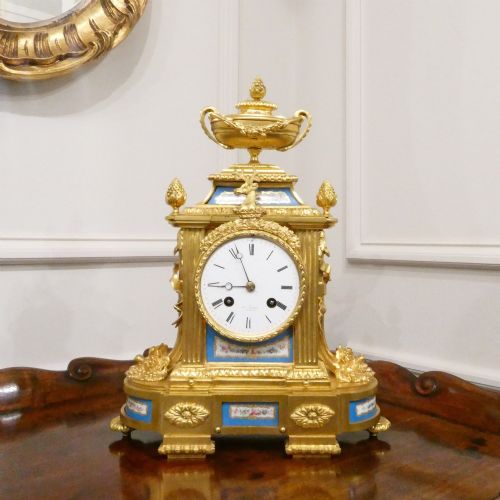
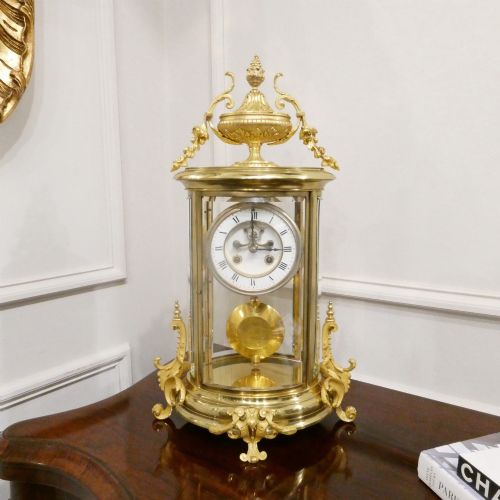
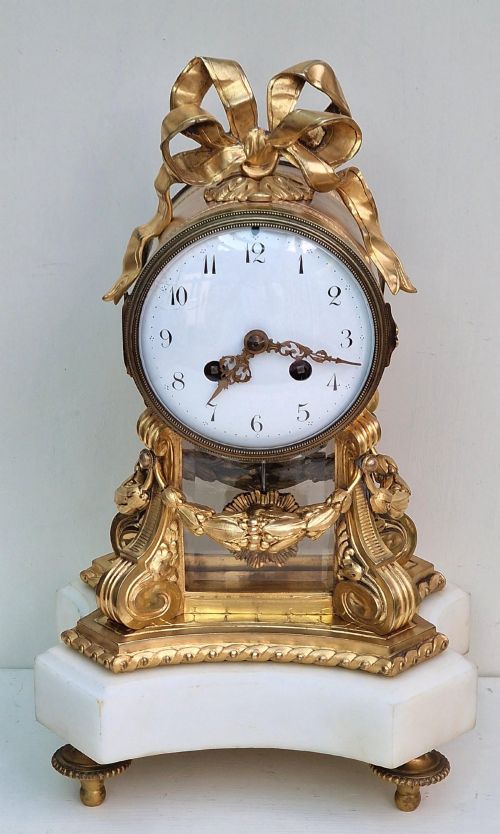
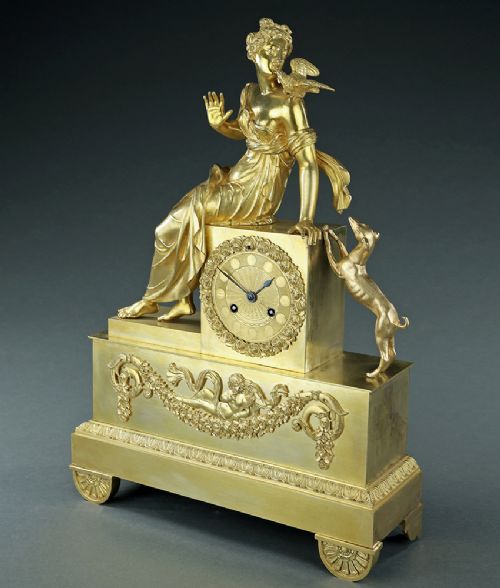
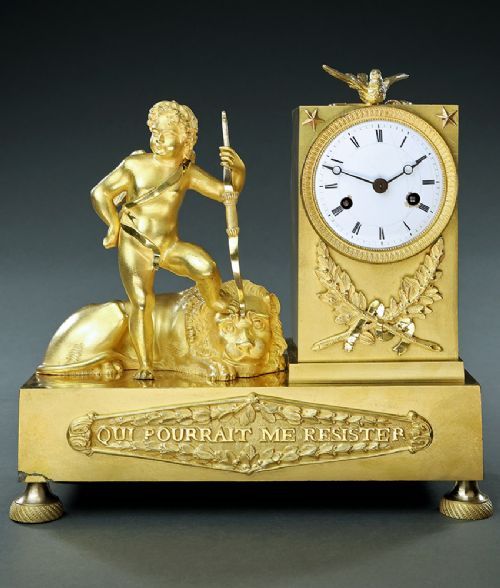
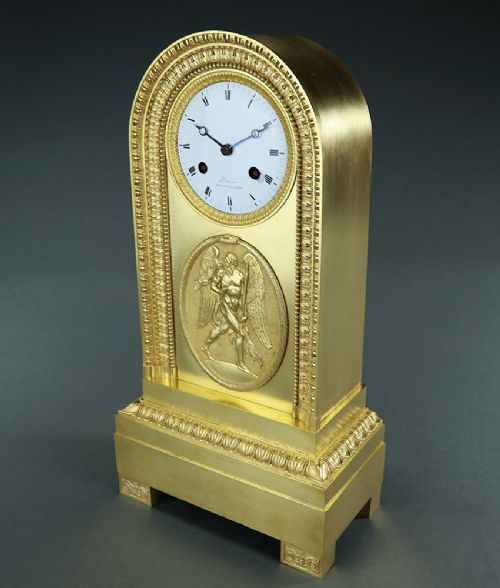
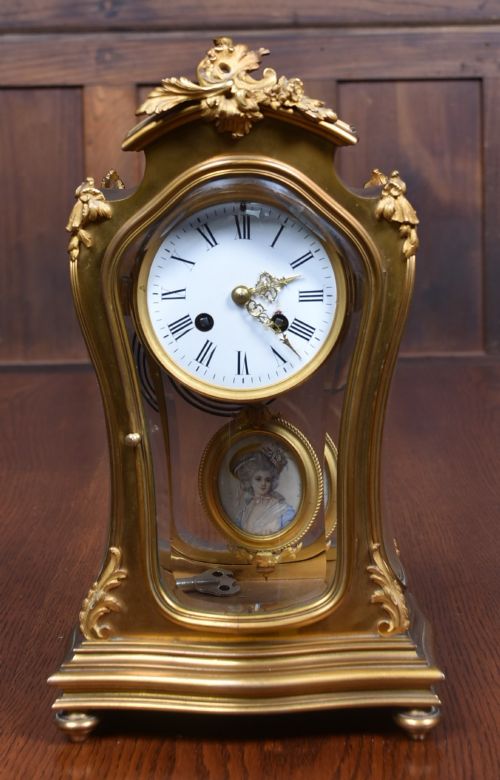
The most common examples on this page are French mantel clocks from the 1860s to 1880s, rendered in Louis XVI, Louis XV, or Rococo revival styles. These pieces often combine polished metal frames with decorative porcelain panels or glass side panels.
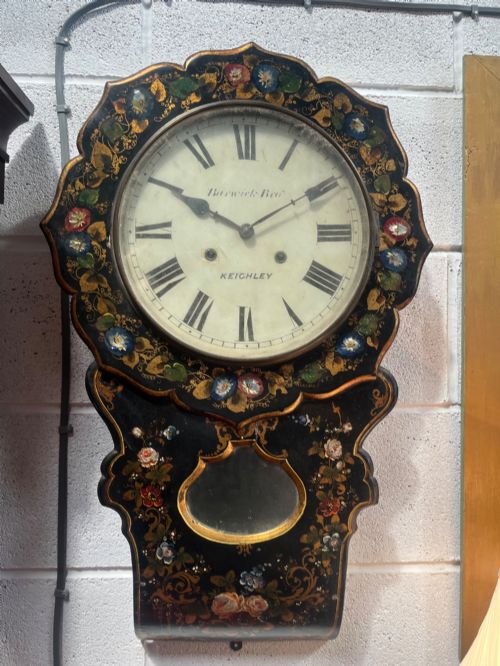
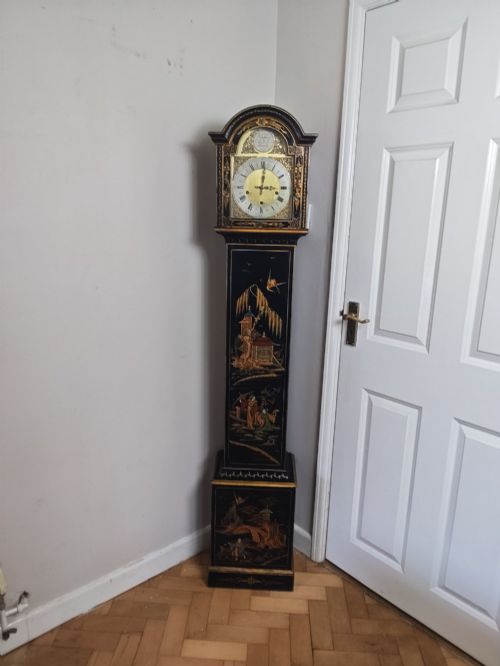
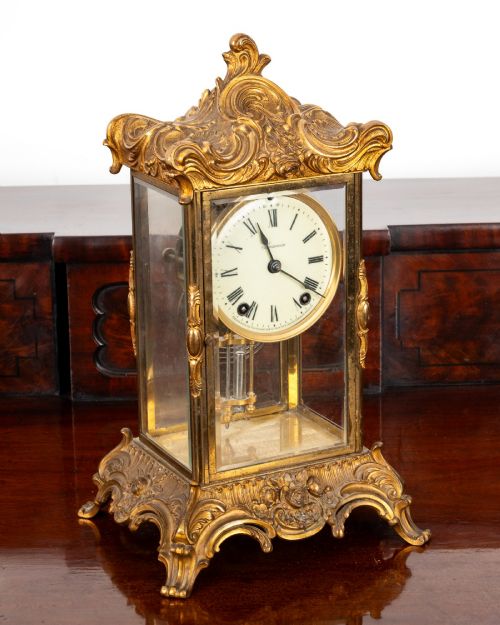
Beyond standard mantel pieces, the selection includes architectural portico clocks, four-glass crystal regulators, and occasional wall-hanging or musical longcase variants. Each type utilises a swinging pendulum to regulate time within a decorative metallic housing.
How they were made
Maker workshops constructed the primary cases from cast bronze, brass, or gilt metal, applying mercury gilding or electroplating to achieve the characteristic golden surface. Ormolu and gilt bronze components were frequently chased by hand to sharpen architectural details and floral motifs.
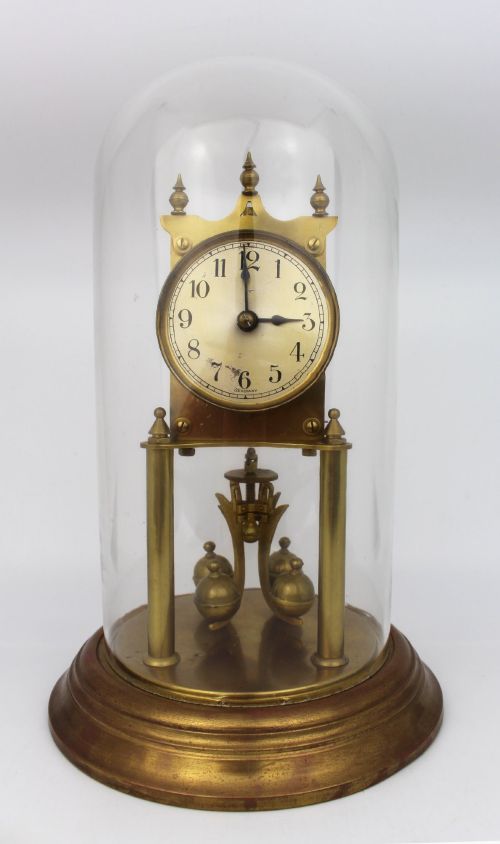
Clockmakers integrated enamel dials, painted porcelain plaques, and hand-painted decorations into the metallic chassis alongside bevelled glass panels. Movements relied on brass gear trains regulated by a suspended pendulum, occasionally housed beneath glass domes or within crystal regulator cases.
Listings feature nineteenth-century gold pendulum clocks in gilt bronze, ormolu, brass, and white marble, spanning Louis XVI revival, French Empire, and Rococo styles.
What varies in quality
The standard of chasing in the ormolu and gilt bronze mounts dictates much of the visual depth, separating crisp, hand-finished ornamentation from softer cast surfaces. Heavier gauge brass and bronze provide greater structural rigidity to the overall case architecture.
The presence of signed movements from notable clockmakers, alongside intact hand-painted Sèvres porcelain or signed miniature artwork, elevates the piece. The preservation of original mercury gilding and fully restored, working pendulum mechanisms also defines the upper tier.
Japy Freres·Achille Brocot·Henry Marc·Samuel Marti·Ansonia New York·Le Roy·Delettrez·Breguet·Wetterstrands
The Gold Pendulum Clock Glossary
- Ormolu
- Gilded bronze produced by applying a mercury and gold amalgam to a bronze object and heating it until the mercury vaporised. This technique created a durable golden finish seen on nineteenth-century French clock cases.
- Pendulum
- A suspended weight that swings back and forth to regulate the speed of a clock movement. Its steady oscillation governs the escapement mechanism inside the clock.
- Crystal Regulator
- A mantel clock featuring bevelled glass panels on all four sides enclosed in a brass or gilt frame. This design allows light to pass through the movement and exposes the swinging pendulum.
- Portico Clock
- A tall mantel clock styled as an architectural temple with columns supporting a central pediment. The pendulum often swings visibly within the open space between the pillars.
- Cartel Clock
- A wall-mounted clock with an ornamental frame made of giltwood or metal. These pieces hung directly on walls rather than resting on mantelpieces.
Gold Pendulum Clock: Frequently Asked Questions
How do I wind a gold pendulum clock?
Most models require a dedicated winding key inserted into small arbors on the enamel dial to tension the internal springs. Turn the key gently until resistance increases, taking care not to overwind the movement.
Ensure the pendulum hangs freely and rests plumb before setting the hands to the correct time. Moving the hands too quickly or backward past certain strike points can disrupt the internal escapement.
What is a crystal regulator clock?
A crystal regulator is a mantel clock constructed with heavy bevelled glass panes fitted into a brass or gilt bronze frame. This transparent housing exposes the inner mechanics and the suspended pendulum from multiple angles.
These pieces typically date from the late nineteenth century and often feature an enamel dial flanked by decorative columns or mercury-filled pendulums designed to compensate for temperature changes.
How do I identify French revival styles?
Louis XVI style clocks display neoclassical symmetry, straight architectural lines, urn motifs, and ribbon garlands cast in gilt bronze. Louis XV and Rococo revival pieces favour asymmetrical scrolling foliage, C-scrolls, and naturalistic shell patterns.
Examining the chasing on the ormolu and the painting style on any inset porcelain panels helps confirm the specific nineteenth-century revival period.
Why does the clock run fast or slow?
The oscillation speed of the pendulum determines how fast or slow the clock measures time. Adjusting the small regulating nut located beneath the pendulum bob raises or lowers the weight to correct the timekeeping.
Turning the nut upward shortens the effective pendulum length and makes the clock run faster, while lowering it slows the beat down.