

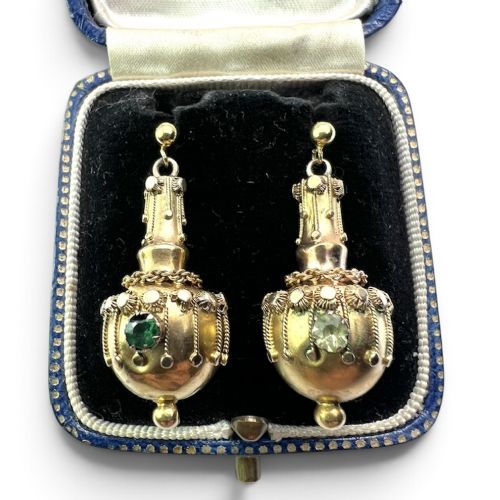
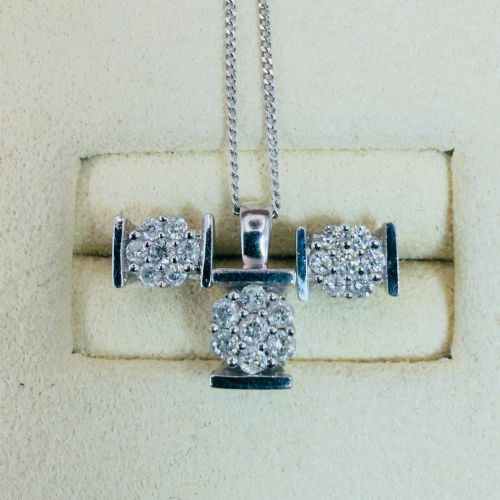
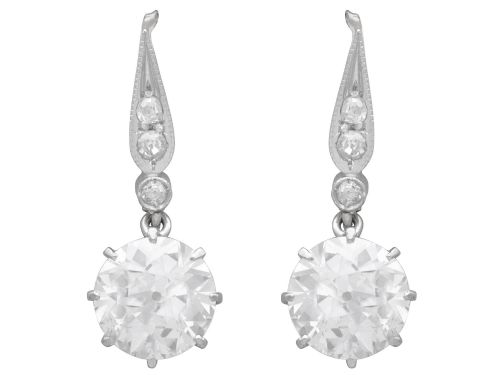
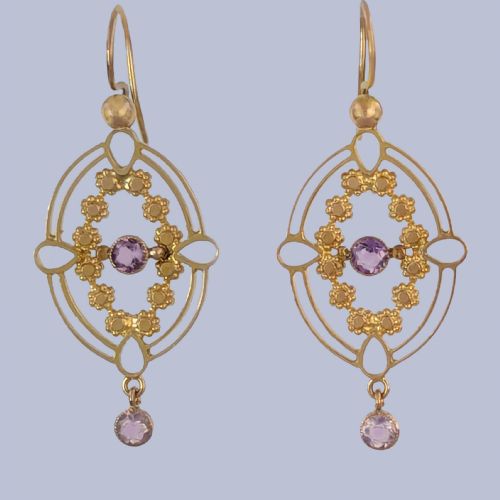
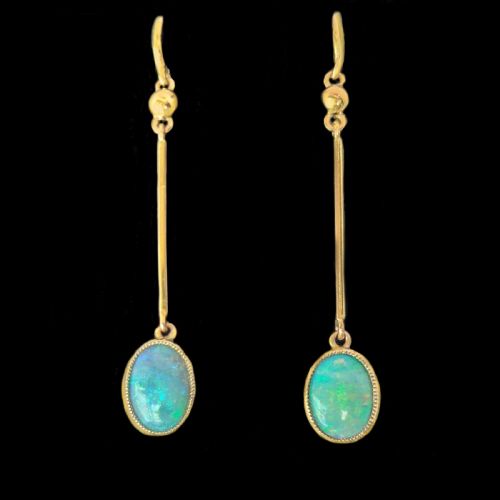
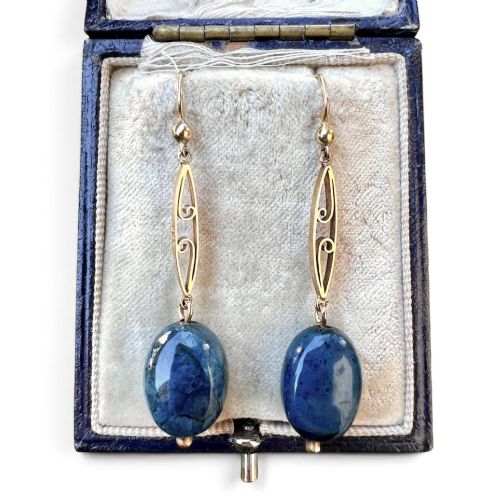
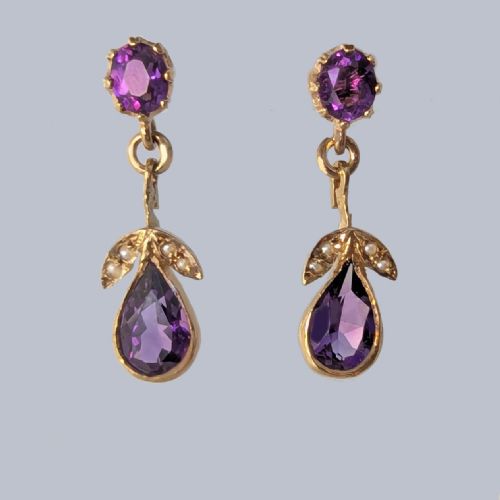
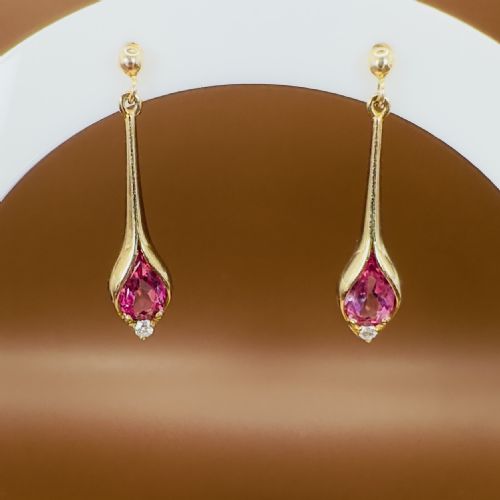
Gold Pendant Earrings
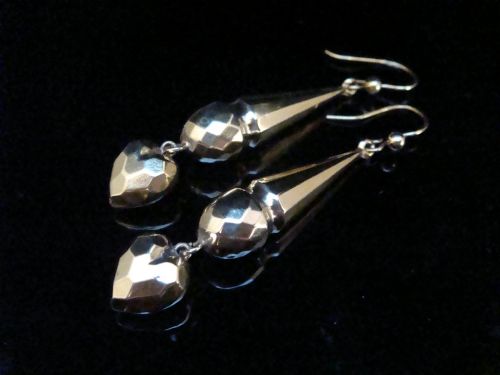
Gold pendant earrings bring movement and light to the lobe, combining drops, dangles and clusters from Georgian to mid-century eras.

Gold Pendant Earrings
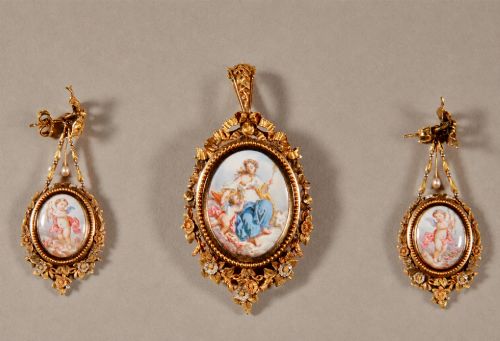
Gold pendant earrings span multiple decades of craftsmanship, incorporating drop, dangle and tassel formats designed to move gracefully with the wearer. The selection on this page draws heavily from Victorian, Edwardian and mid-century workshops, ranging from restrained daily wear to elaborate evening pieces.
Buyers will encounter various configurations including simple chain drops, articulated cluster pendants and convertible day-to-night designs. Materials fluctuate from solid yellow and white gold to combinations set with diamonds, pearls and vibrant coloured gemstones.

How they were made
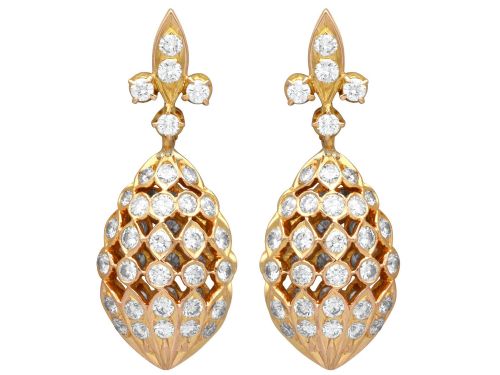
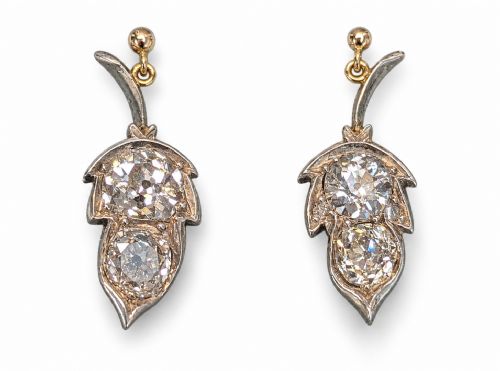
Maker's hands shaped these gold pendant earrings using traditional casting, wire-working and stone-setting techniques appropriate to their period. Goldsmiths combined 9ct and 18ct yellow and white gold with silver mounts, particularly in earlier diamond-set examples to enhance the brilliance of old-cut stones.
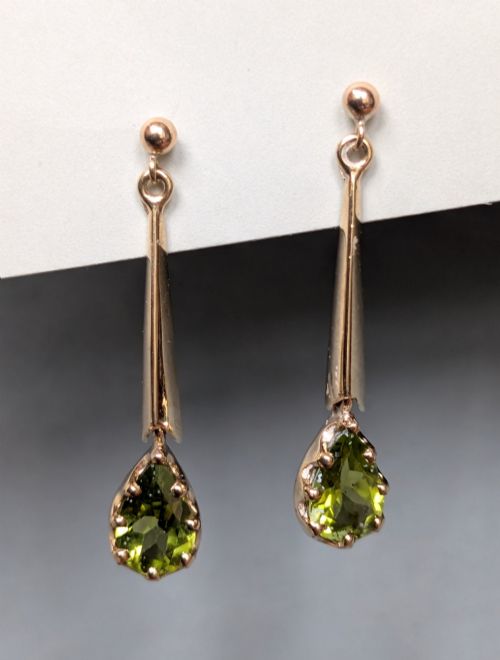
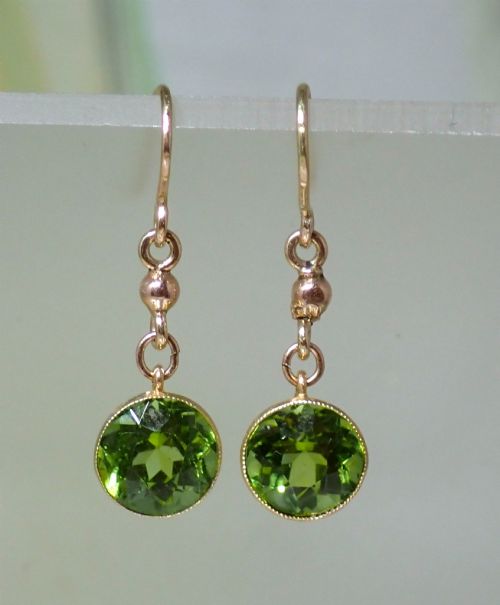
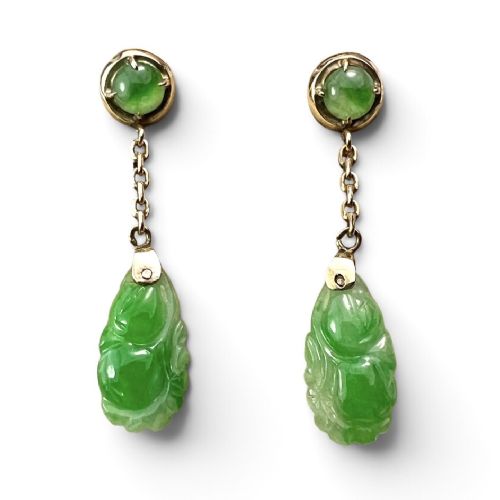
Gemstones including amethyst, opal, aquamarine, garnet and peridot were faceted, carved or cabochon-cut before being secured in collet, bezel or claw settings. Articulation was achieved through small rings and hinges, allowing dangles and tassels to sway freely.
Gold Pendant Earrings Retail Price Guide 2026
Typical asking prices for gold pendant earrings among the pieces listed under this phrase on Sellingantiques today, from the lower quarter to the upper quarter. They describe what is for sale here now, not the wider market.
Listings feature gold pendant earrings spanning the Georgian, Victorian, Edwardian, Art Deco and mid-century eras.
What varies in quality
The standard of a pair of gold pendant earrings rests on the precision of the metalwork, the symmetry of the drops and the quality of the selected gems. Finer examples display meticulous claw or bezel work that secures stones without excess metal, alongside well-balanced articulation that prevents stiffness.
Material choice and gem matching elevate the standing of a piece, as seen in uniformly matched natural pearls, richly saturated aquamarines or clean old-cut diamonds. Period-specific hallmarks and intact original mechanisms further distinguish superior workshop production.
The Gold Pendant Earrings Glossary
- Drop earrings
- Earrings featuring a stationary ornament suspended directly below the earlobe. They maintain a fixed silhouette compared to swinging dangles.
- Day-to-night earrings
- Convertible jewellery designed with removable lower sections. This allows the wearer to transition from understated daytime studs to elaborate evening drops.
- Old-cut diamond
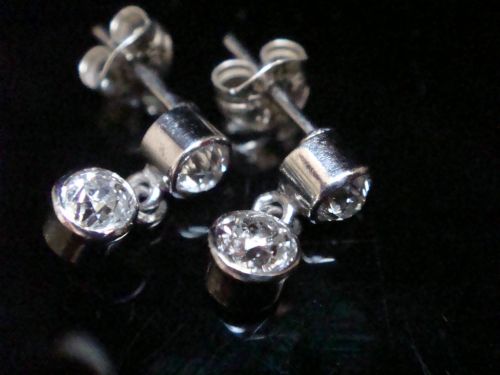
- A historical diamond facet style characterised by a smaller table, higher crown and open culet. These stones display a softer candlelight sparkle rather than modern brilliant flashes.
- Carved cameo
- A gemstone, shell or agate sculpted in relief to depict a classical profile or motif. The technique relies on contrasting layers of material.
- Etruscan revival
- A nineteenth-century design movement inspired by ancient archaeological discoveries. It utilises granulation, filigree and applied gold wirework.
Gold Pendant Earrings: Frequently Asked Questions
How do I date gold pendant earrings?
Dating relies on examining the metal purity marks, stone-cutting styles and fastening mechanisms used in construction. Victorian and Georgian pieces often feature closed-back settings or hand-carved details, whereas mid-century examples utilise different clasp designs and brighter yellow gold tones.
Comparing the overall silhouette against known stylistic periods like Art Deco or Edwardian helps narrow down the decade of creation. Hallmarks stamped inside the metal provide official assay office stamps and date letters where present.
What is a day-to-night earring?
These versatile pieces feature detachable lower drops that hook onto a simpler top section. The design allowed historical wearers to wear a subtle stud or small drop during daylight hours and attach the elaborate lower portion for evening events.
Owners can easily unscrew or unlatch the dangling element to transform the jewellery for different occasions. This mechanism demonstrates clever nineteenth-century practicality.
Are old-cut diamonds different from modern stones?
Old-cut diamonds were shaped by hand before modern machinery standardised cutting angles in the twentieth century. They typically feature smaller tables, chunkier facets and open culets that catch ambient room light distinctively.
This historical cutting method gives the stones a softer, warmer glow under indoor lighting. They are commonly found in Georgian, Victorian and Edwardian drop designs.
How should I care for antique gold earrings?
Antique earrings require gentle handling due to their delicate construction and age-related wear. Clean them using a soft cloth and mild soapy water, avoiding harsh ultrasonic cleaners that can dislodge seed pearls or fragile glued stones.
Store each earring separately in a lined box to prevent scratching softer gems like opals, amber or moonstones. Check the hinge and clasp mechanisms periodically to ensure secure fastening during wear.