
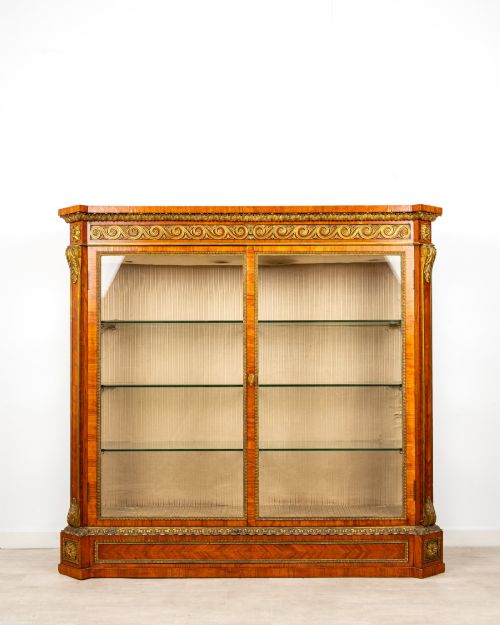


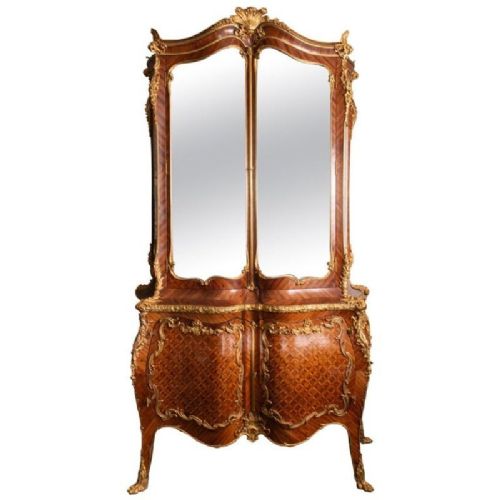

Gold Ormolu Display Cabinet
A gold ormolu display cabinet brings nineteenth-century French and Victorian grandeur into a room, framing collections behind glass with heavy gilt mountings.
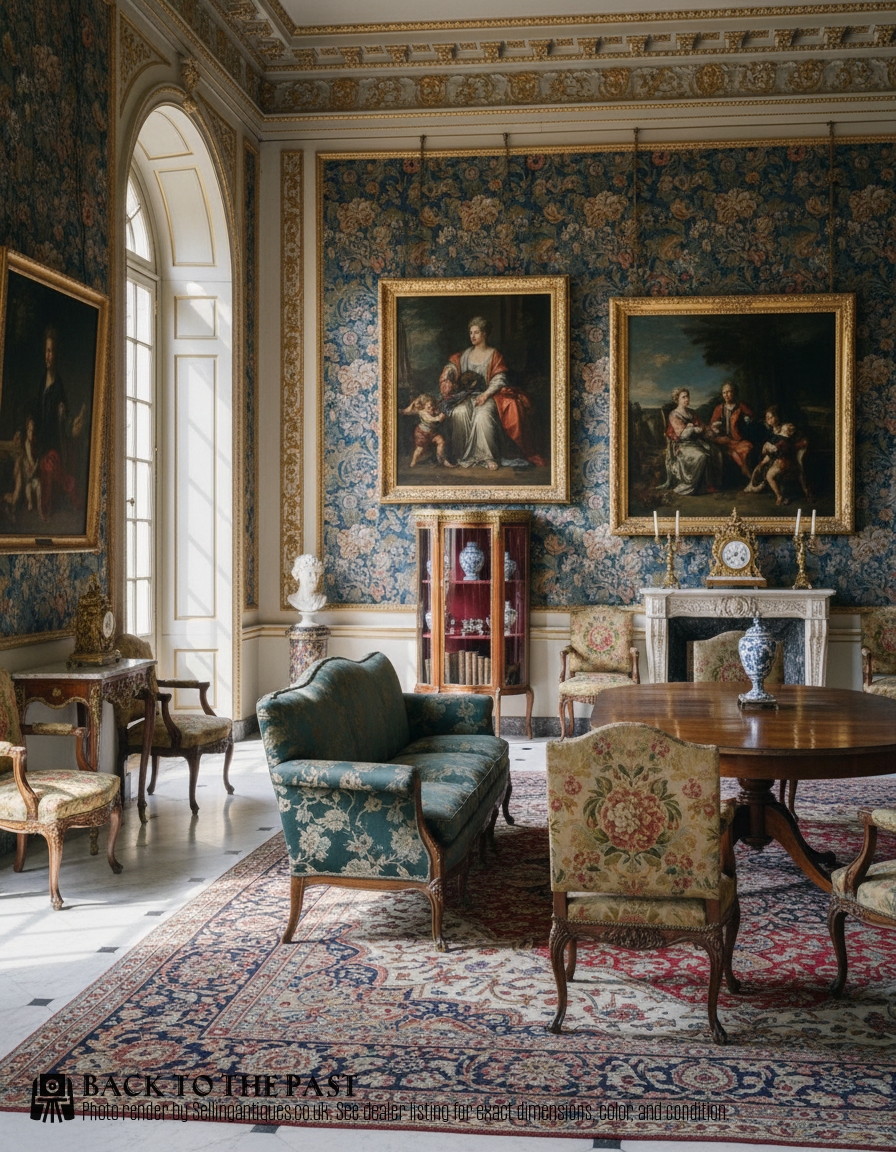
Gold Ormolu Display Cabinet
Buyers commonly encounter ebonised wood or walnut carcases enriched with tortoiseshell brass boullework, porcelain plaques, and glazed doors. These pieces originate predominantly from nineteenth-century workshops, spanning from the eighteen-fifties through to the Edwardian period.
Materials and construction
Cabinet makers utilised dense timbers including kingwood, walnut, and ebonised wood as foundations, frequently applying intricate marquetry and tortoiseshell brass boullework across the surfaces. Glass panels are integrated into doors and side panels to form viewing areas.
Cast gilt-bronze ormoulus mountings edge the panels, corners, and plinths, while painted porcelain plaques and vernis martin panels furnish decorative focal points within the timber frames.
Some cabinets hide their treasures behind panels so shiny you check your hair before opening the door.
Judging execution and finish
Quality rests in the crispness of the cast ormolu mounts and the precision of the brass and tortoiseshell inlay work embedded in the wood. Heavier, exhibition-standard pieces display finer hand-chiselling on the bronze mounts and more complex serpentine shaping.
The choice of timber backing, the depth of the walnut or ebonised finish, and the integration of hand-painted porcelain or vernis martin panels distinguish standard production items from master-workshop examples.
H. J. Hatfield & Sons·Francoise Linke
The Gold Ormolu Display Cabinet Glossary
- Ormolu
- Gilt-bronze mountings applied to furniture for decorative trim. This technique involves gilding a metallic object with gold amalgam.
- Boullework
- Marquetry consisting of tortoiseshell and brass inlay developed in France. The technique creates intricate contrasting patterns across cabinet doors.
- Vitrine
- A glass-fronted display cabinet designed for showing porcelain and curiosities. These tall freestanding pieces maximise visibility from multiple angles.
- Pier Cabinet
- A low cabinet built specifically to fit narrow wall spaces between windows. They typically feature single glazed doors and flat tops.
- Vernis Martin
- A simulated Japanese lacquer technique perfected by the Martin brothers in eighteenth-century France. Later revival cabinets imitate these painted scenes on glass or wood.
Gold Ormolu Display Cabinet: Frequently Asked Questions
Where should I place a display cabinet?
These cabinets suit drawing rooms, studies, or hallways where natural light illuminates the internal glass shelves and highlights the gilt bronze mounts.
Ensure the floor is level to prevent stress on the glazed doors and delicate wooden frames.
How do I care for ormolu mounts?
Dust the gilt bronze gently with a soft dry cloth without applying chemical cleaning products that might strip the gold surface.
Keeping the metal dry preserves the original lacquering applied during the nineteenth century.
What is the difference between a vitrine and a credenza?
A vitrine is typically a taller upright display case with glass panes on multiple sides designed for porcelain and objects.
A credenza is a lower sideboard form that often combines central cupboards with glazed end cabinets and heavy ormolu embellishments.
How can I identify a Napoleon III cabinet?
Napoleon III pieces frequently combine ebonised wood with elaborate tortoiseshell brass boullework and French rococo revival ormolu mounts.
They reflect the opulent style popular during the French Second Empire.