

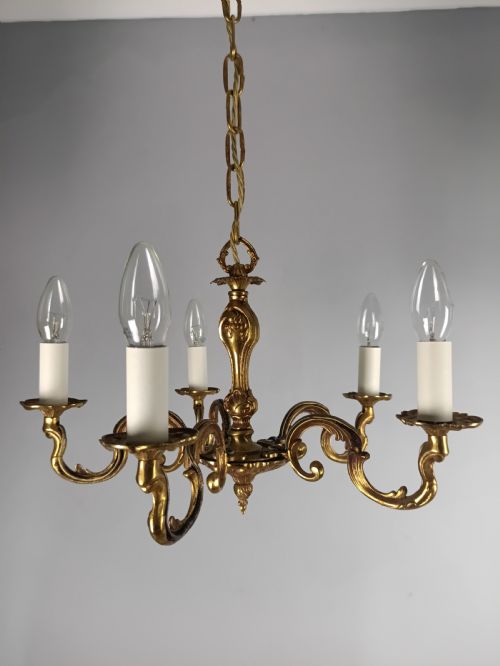
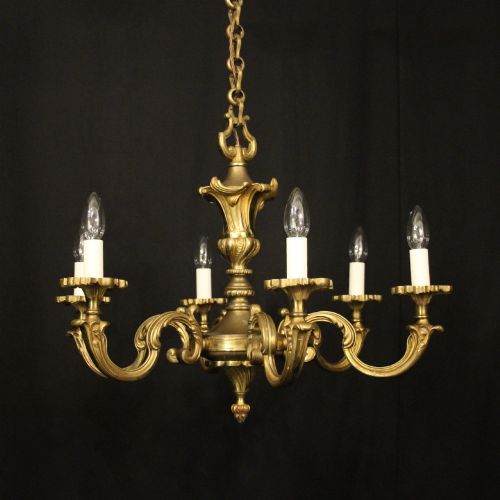
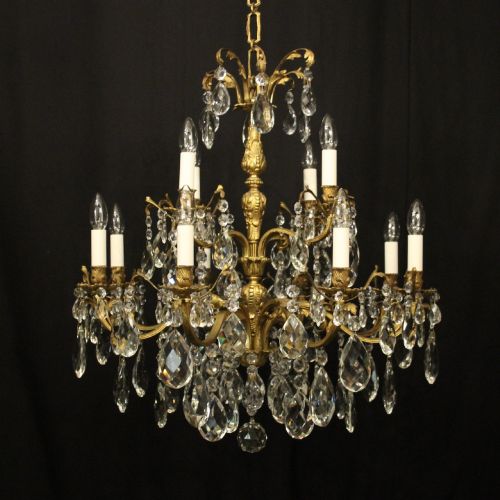
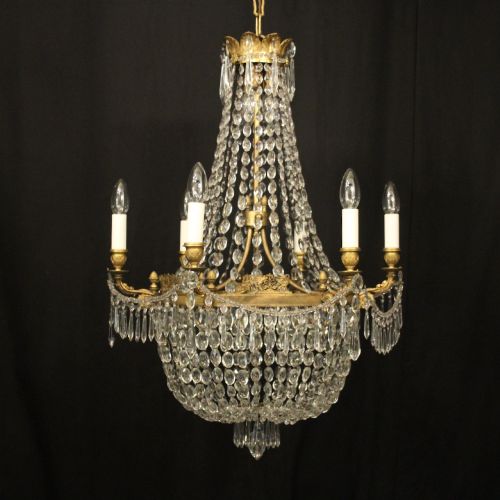

Gold Ormolu Ceiling Light
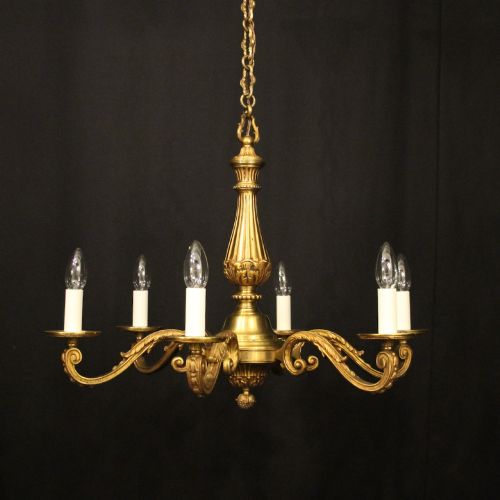
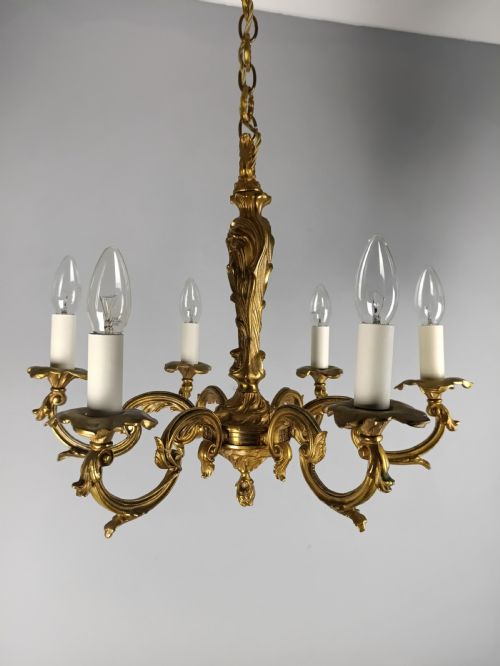
A gold ormolu ceiling light brings historical French grandeur overhead, casting warm illumination through gilt metal and cut glass.
Gold Ormolu Ceiling Light
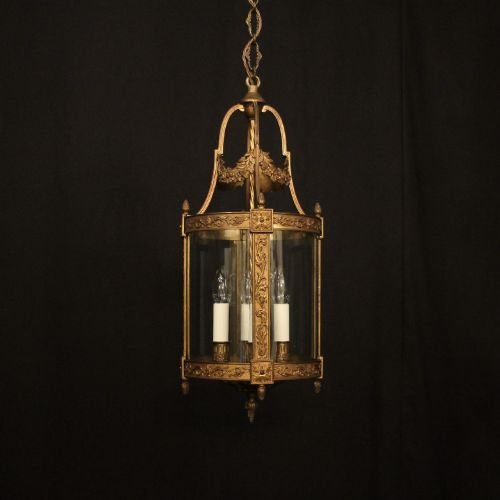
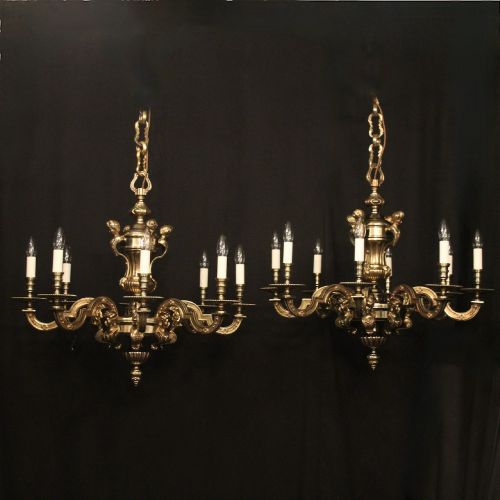
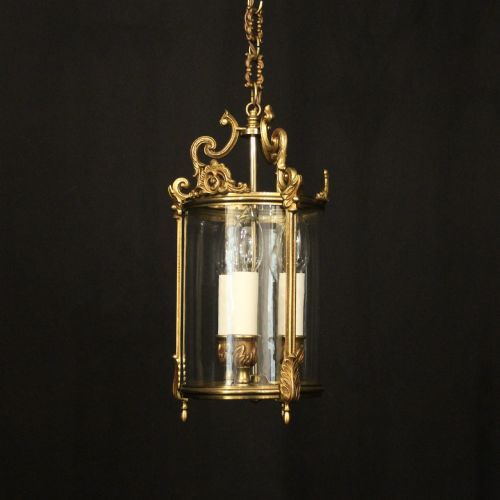
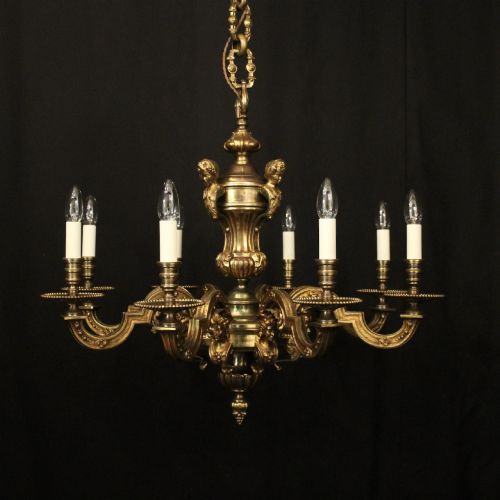
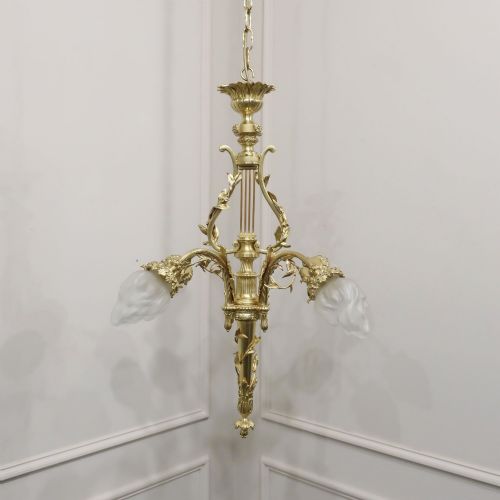
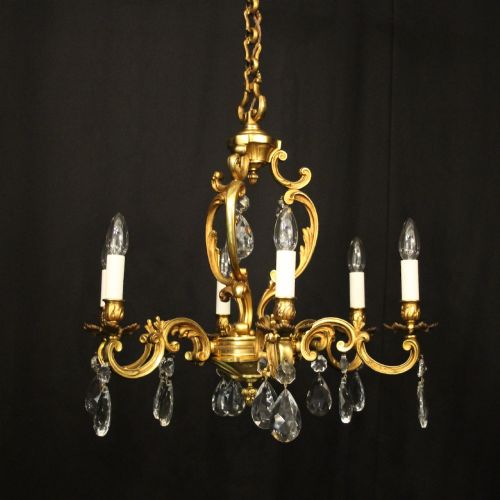
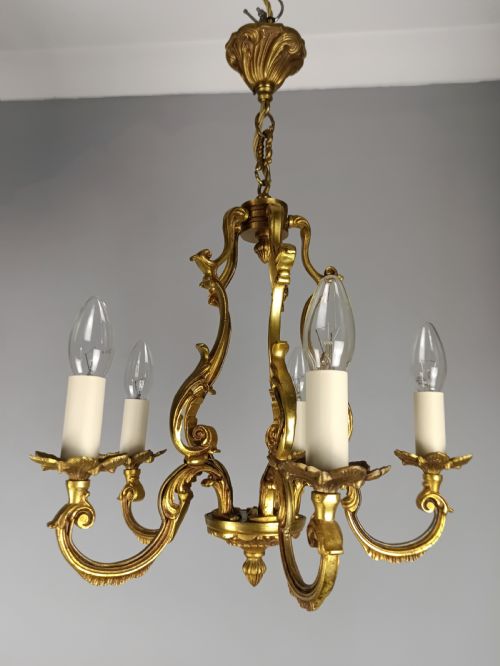
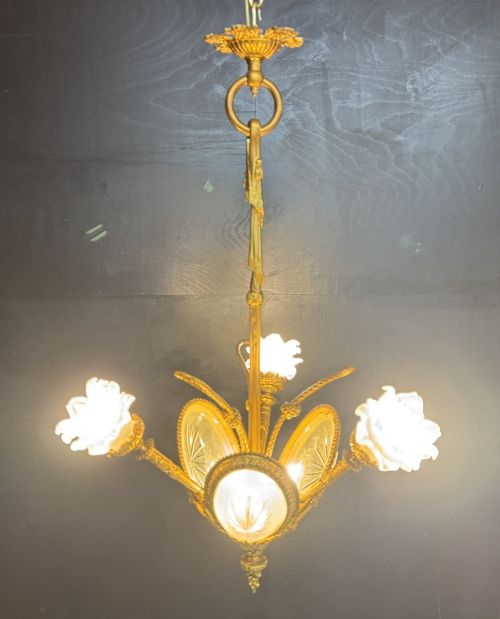
A gold ormolu ceiling light encompasses ornate chandeliers and hall lanterns originating predominantly from France across the nineteenth and early twentieth centuries. These fixtures span compact three-light configurations to large sixteen-light double-tiered assemblies designed for substantial rooms.
The selections here heavily feature French gilding techniques applied to bronze and brass, frequently incorporating crystal drops or glass panels. Buyers encounter distinct periods ranging from the late nineteenth century through to the interwar years of 1930.
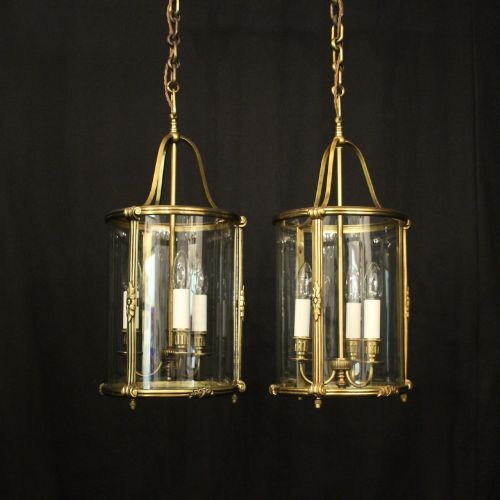
Hall lanterns and pendant lights form a significant portion of these listings, often exhibiting hexagonal or convex glass forms. Larger multi-light chandeliers dominate the remaining options, reflecting historical French chateau and empire aesthetics.
Materials and Construction
Metalwork relies primarily on cast bronze and brass subjected to mercury gilding or modern electroplating methods to achieve the characteristic gold ormolu surface. Artisans chased these metal components by hand to define intricate floral, scrolling, or neoclassical motifs.
Transparent elements consist of lead glass and cut crystal configured as drops, beads, or bevelled panes held within metal frames. These glass components refract the illumination from multiple internal lamp holders to maximise interior brightness.
Gold Ormolu Ceiling Light Retail Price Guide 2026
Typical asking prices for gold ormolu ceiling light among the pieces listed under this phrase on Sellingantiques today, from the lower quarter to the upper quarter. They describe what is for sale here now, not the wider market.
Listings span from 1880 to 1930, uniting 19th-century works with interwar French lighting designs.
Assessing the Workmanship
Quality rests heavily on the depth and crispness of the metal chasing, where superior examples exhibit sharp relief and refined surface finishing rather than soft or flat casting. The precision with which individual bronze sections fit together dictates the overall structural integrity of the fixture.
The clarity and cut of the crystal or glass components influence the optical performance of the piece. Hand-cut drops with defined facets project light more effectively than simpler moulded glass alternatives.
The Gold Ormolu Ceiling Light Glossary
- Ormolu
- A method of applying finely ground high-carat gold to a bronze object using a mercury amalgam, later adapted to describe gilt brass fixtures. It provides a durable golden surface that resists tarnishing.
- Tent and waterfall
- A chandelier configuration where strings of glass beads form an upper triangular tent shape above a cascading cluster of drops. This arrangement disperses light across a wider angle.
- Hall lantern
- An enclosed ceiling-hung light fixture featuring glazed panels designed to protect the internal candle or lamp holders from draughts. These fixtures frequently serve entrance spaces and corridors.
- Chasing
- The manual process of refining cast metal surfaces with hammers and punches to add texture, detail, and depth to decorative motifs. It distinguishes individually worked bronze from mass-produced castings.
Gold Ormolu Ceiling Light: Frequently Asked Questions
How do I clean a crystal chandelier?
Maintenance involves wiping individual glass drops and metal arms with a damp cloth using a mild soapy solution while the fitting remains disconnected from the power supply. Technicians often clean components in situ to avoid straining the historic wiring and delicate frames.
Harsh chemical cleaners risk damaging the delicate gold ormolu surface and stripping the historical patina from the bronze. Regular dusting with a soft ostrich feather brush prevents grime accumulation on intricate metalwork.
Can antique ceiling lights use modern bulbs?
Most fixtures accommodate modern SES or Edison screw candle bulbs, provided the internal lampholders have been updated to meet contemporary electrical standards. Electricians can easily adapt older French wiring during routine safety checks.
Low-wattage LED candle bulbs replicate the warm amber glow of historical lighting while generating minimal heat. This protects the original gilt bronze and aged wiring from thermal degradation over prolonged use.
What is the difference between ormolu and gilt brass?
Ormolu historically denotes mercury-gilded bronze, yielding a rich and deep golden hue characteristic of eighteenth and nineteenth-century French luxury goods. The bronze substrate provides substantial weight and allows for exceptionally sharp cast detailing.
1
Gilt brass represents a slightly more economical alloy composition used for later twentieth-century lighting production. While visually similar, brass is generally lighter and reacts differently to historical manufacturing techniques.
Where should I hang a hall lantern?
Hall lanterns suit entrance lobbies, stairwells, and high-ceilinged corridors where vertical clearance allows the fixture to hang safely. Their enclosed glass panels protect the light source from passing movement in narrow spaces.
Sizing depends on the floor area and ceiling height of the room, ensuring the lantern balances visually with surrounding architectural proportions. Suspension height should ideally clear standard head height while remaining visible from secondary viewpoints.