

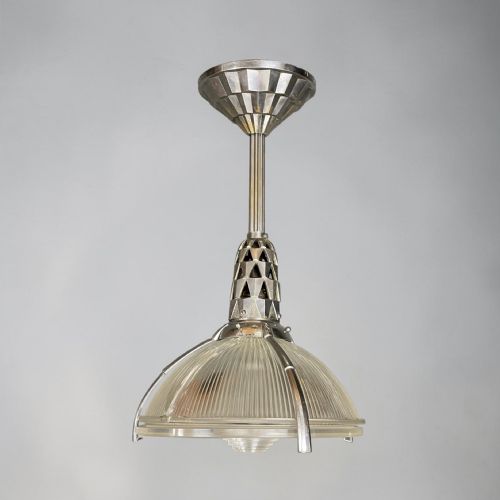
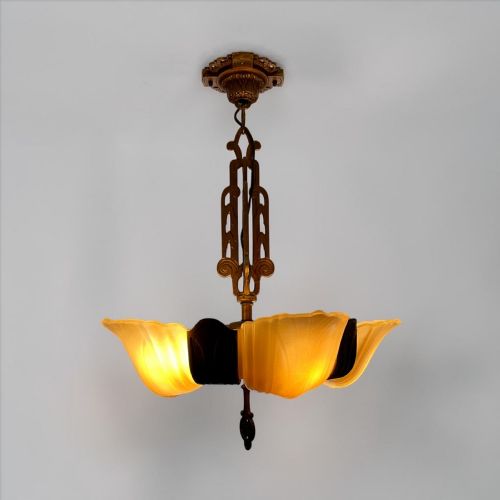
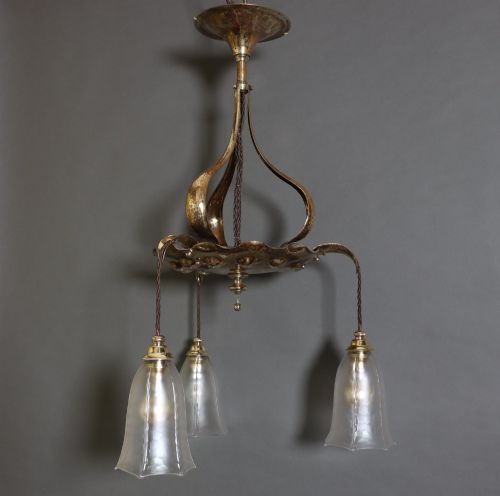
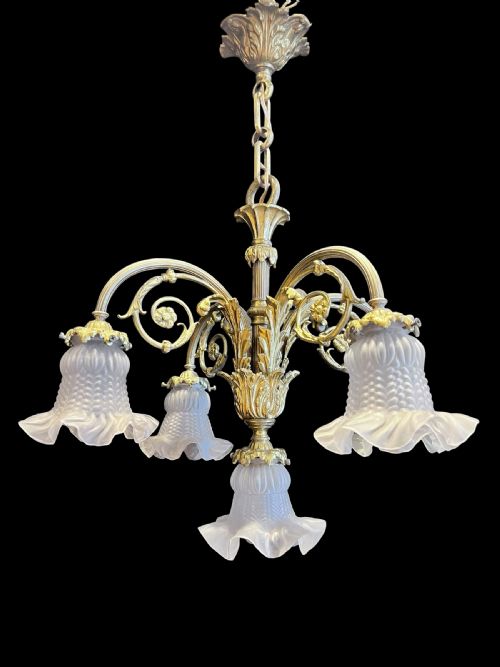
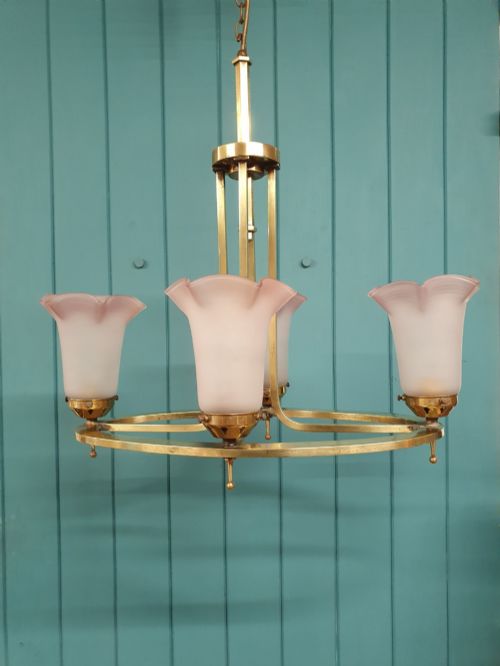


Frosted Glass Shade Chandelier
A frosted glass shade chandelier brings a soft, diffused glow to a room, combining architectural metalwork with tactile, light-softening bowls and shades.
Frosted Glass Shade Chandelier
When you search for a frosted glass shade chandelier, you are looking at overhead lighting fixtures that combine metal frames with muted glass bowls, shades, or panels. These pieces span from the late nineteenth century through to the 1940s, covering periods such as the Edwardian era, Victorian times, and the 1930s.
The versions you are most likely to meet on this page include Art Deco slip shade designs, wrought iron and frosted glass pendants, and brass fixtures with moulded glass bowls. Forms range from single-light hall lanterns and pendant lights to multi-armed chandeliers and ceiling lights.
Origins represented in these listings stretch across France, England, Italy, and America, showing how different workshops interpreted the demand for diffused interior illumination. Whether formed as clam shell shades or bowl chandeliers, the core purpose remains the softening of electric or gas light through textured glass.
How they were made
Makers constructed the structural frames of these chandeliers using cast or spun brass, wrought iron, bronze, and copper, often shaping the metal to match prevailing aesthetic movements like Art Deco or Arts and Crafts. Metal components were cast, beaten, or gilded to hold the weight of heavy glass bowls and shades securely.
The glass elements themselves were produced through moulding, frosting, and sometimes cutting or gilding, creating surfaces that catch and diffuse light evenly. Techniques such as slip shading allowed makers to slot individual frosted glass panels directly into metal frames.
Listings feature brass, wrought iron, copper, and bronze combined with frosted, cut, and crystal glass across the Edwardian and Art Deco periods.
What varies in quality
The distinction between standard examples and superior pieces rests on the weight and crispness of the metalwork alongside the depth of moulding in the glass. Heavier bronze, cast brass, or wrought iron frames provide structural integrity and finer detail than lighter, stamped alternatives.
Quality also shows in the artistic ambition of the glass shades, where thick, tactile frosted surfaces and well-defined relief patterns distinguish better workshops from mass production. The integration between the metal mountings and the glass components reveals the care taken during initial assembly.
Émile-Jacques Ruhlmann·F&C Osler·Verrerie Des Vosges·Jean Gauthier
The Frosted Glass Shade Chandelier Glossary
- Slip Shade
- A moulded glass shade designed to slide directly into a metal chandelier frame. These pieces are particularly characteristic of Art Deco lighting design.
- Clam Shell
- A specific curved glass shade form resembling a shell segment. They are frequently found grouped in suites around a central mount.
- Tent and Waterfall
- A lighting configuration where strings of crystal beads form an upper tent shape above a wider cascade of drops. This style often accompanies brass frames.
- Downlight
- A fixture directed primarily downwards to illuminate a surface below rather than casting light evenly across the ceiling. These units often utilise single or paired shades.
- Gilded
- Coated with a thin layer of gold leaf or gilt paint to enrich the surface appearance of metal or glass. This finish appears on several Arts and Crafts and Victorian pieces.
Frosted Glass Shade Chandelier: Frequently Asked Questions
What periods do these chandeliers cover?
The pieces span from the late nineteenth century through the Edwardian period and into the 1930s and 1940s. You will encounter Victorian and Arts and Crafts examples alongside distinct Art Deco designs.
Each era brought its own metalworking techniques and glass forms, ranging from beaten copper to moulded slip shades.
How do I identify an Art Deco piece?
Art Deco chandeliers usually feature geometric metal frames in brass, wrought iron, or copper paired with moulded frosted glass shades. Forms like clam shells and slip shades are typical of this era.
Maker signatures or distinct French glass styles from the 1920s and 1930s often confirm the period.
Where were these lights used originally?
These fixtures were hung in principal rooms, hallways, and dining spaces where ambient, diffused lighting was desired. Hall lanterns and single pendants served entranceways, while multi-arm chandeliers lit larger reception rooms.
Their designs were intended to complement the domestic architecture of their respective periods.
Are the glass shades original to the frames?
Most listings preserve the original pairing of glass and metal, though individual components reflect the manufacturing standards of their time. Examining the fit of the shade within the brass or iron mount helps determine authenticity.
Matching finishes on the metalwork and consistent wear across the glass provide further clues.