
Antique Waterfall Light
An antique waterfall light brings cascading crystal and brasswork into a room, offering the luminous elegance of French Empire and Edwardian interiors.
Antique Waterfall Light
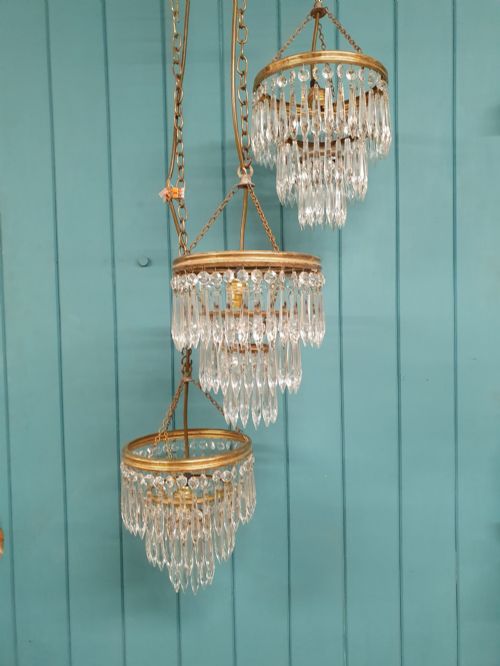
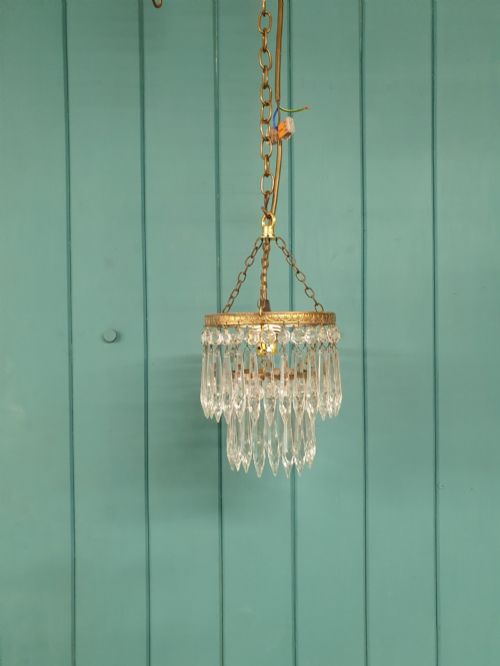
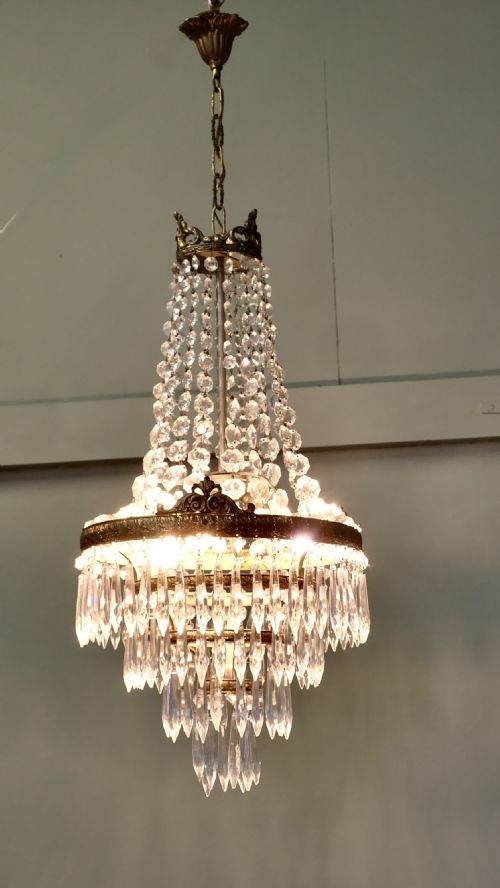
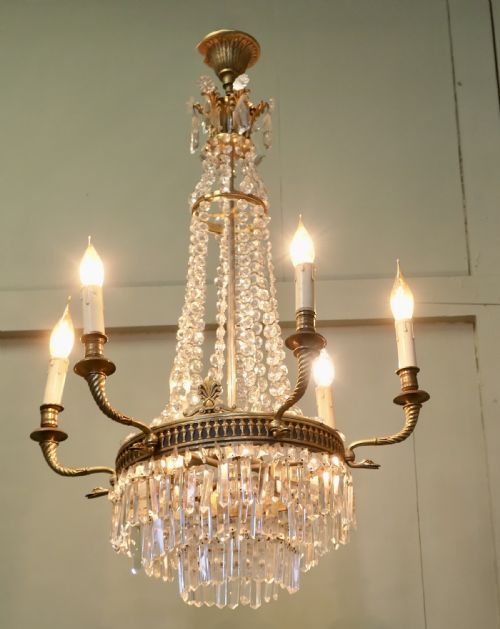
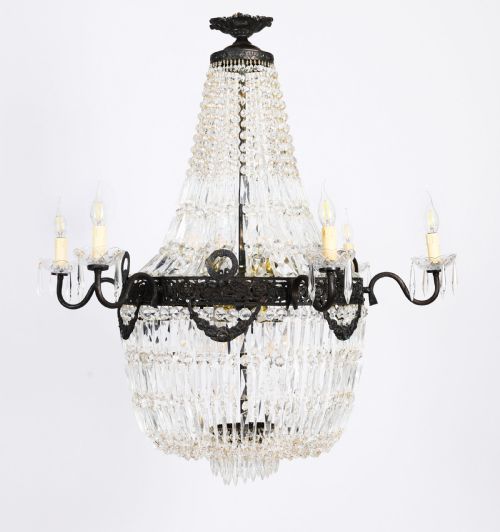
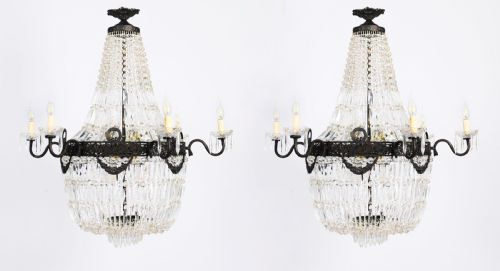
When searching for an antique waterfall light, buyers encounter luminous multi-tier chandeliers and wall sconces featuring cascading arrangements of glass drops. These pieces date from the nineteenth century through the early twentieth century, spanning Edwardian, Art Deco, and French Empire styles.
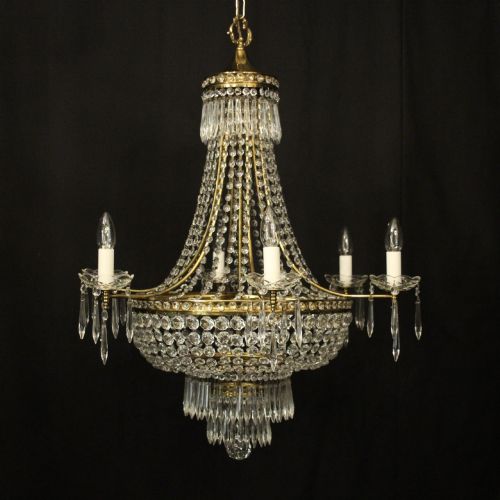
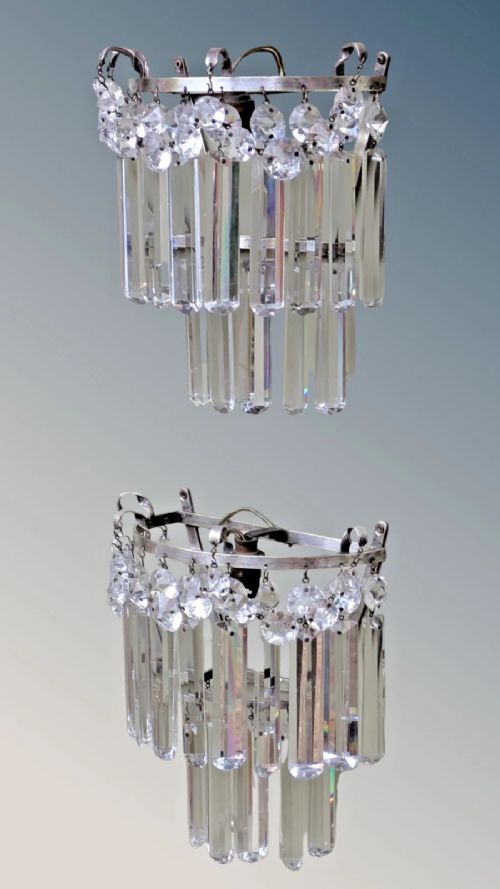
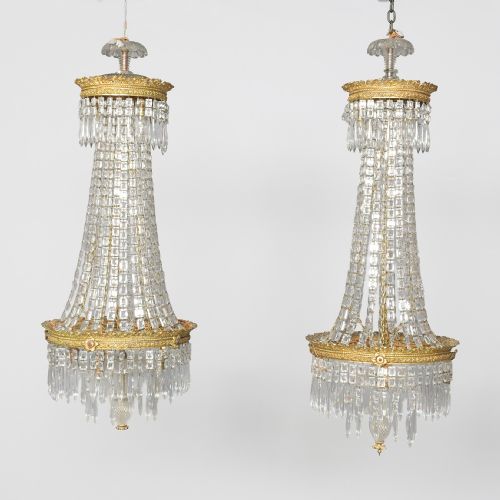
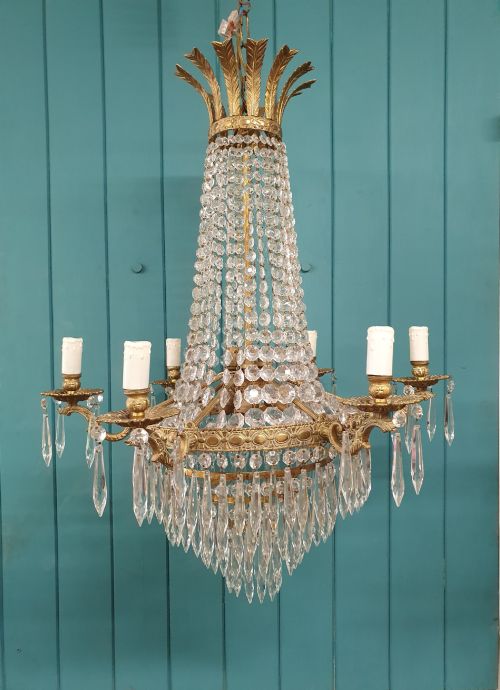
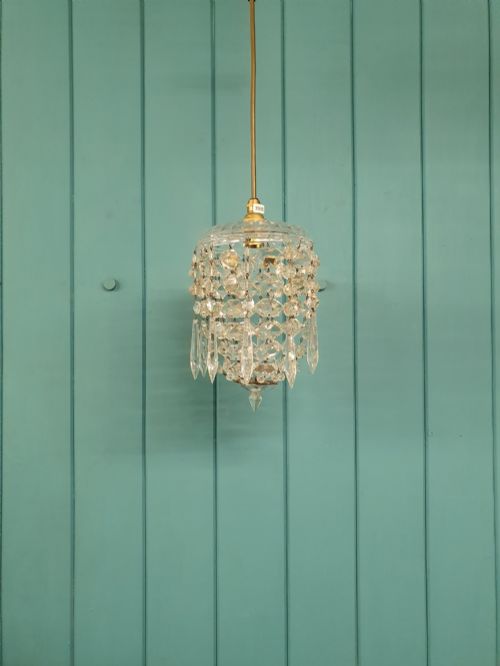
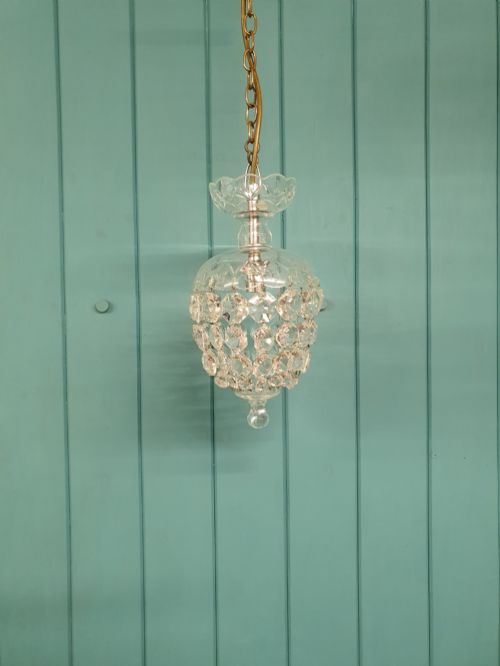
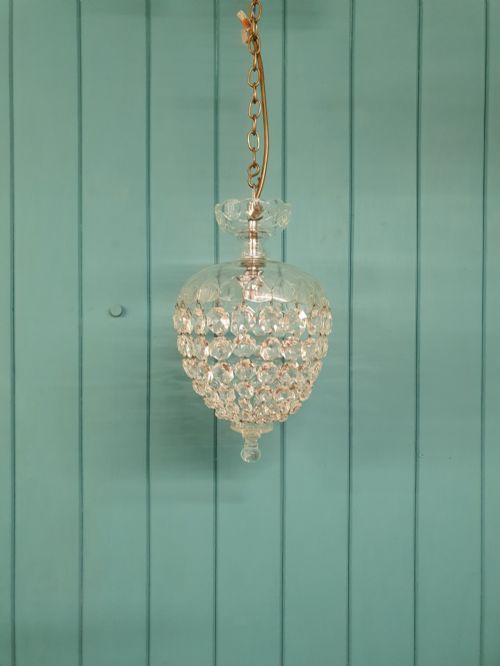
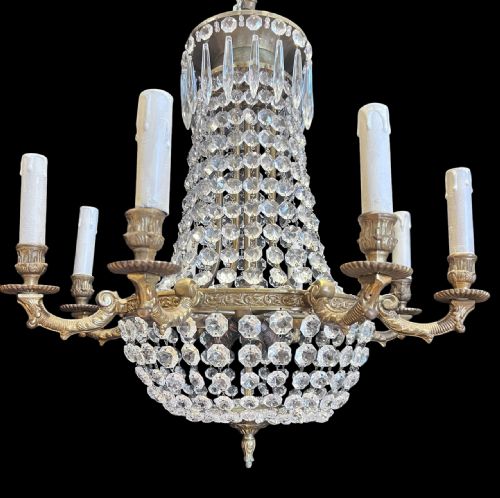
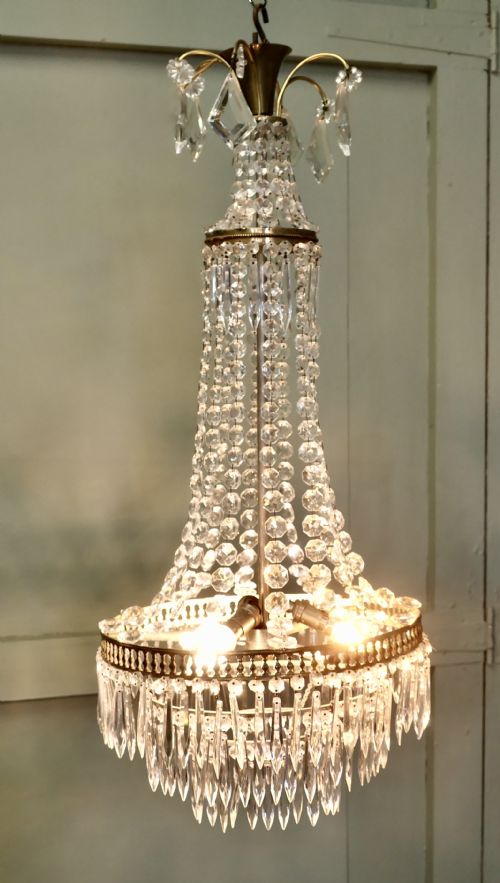
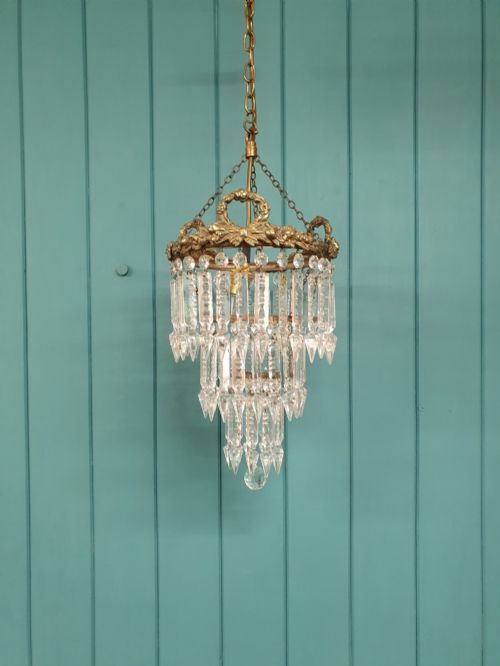
The versions most commonly met on this page take the form of tent and waterfall chandeliers, alongside bag chandeliers and glass-adorned wall lights. Brass and gilt metal frameworks support intricate tiers of cut crystal and glass beads that taper downwards.
Origins stretch across French workshops, Swedish makers, and English houses, maintaining distinct stylistic traits from the 1890s up to 1930. The variety encompasses single-light plafonieres as well as massive fourteen-light ballroom fixtures.
How they were made
Construction relies upon a robust frame of brass, gilt brass, bronze, or metal to support suspended glass components. These structural rings and bands hold numerous individual drops linked by tiny wire loops.
The optical effects depend heavily on cut glass, crystal, and cut crystal elements shaped into prisms, lustres, spikes, and beads. Light refracts through these faceted surfaces to create the signature cascading shimmer characteristic of the period.
Object types range from single-light plafonieres and wall sconces to fourteen-light ballroom fixtures.
What varies in quality
Quality reveals itself in the precision of the glass cutting and the clarity of the crystal components. Superior examples display deep, sharp facets that scatter light cleanly, whereas lesser pieces use plain, pressed glass without hand-finished edges.
The intricacy of the metalwork also sets tiers apart, distinguishing heavy cast brass mounts and leaf decorations from simpler stamped frames. Heavier gilt frames and dense arrangements of drops indicate higher craftsmanship.
The Antique Waterfall Light Glossary
- Tent and waterfall chandelier
- A fixture featuring an upper conical section of glass strings dropping down to a wider cascading tier below. This arrangement creates a sweeping silhouette typical of French Empire design.
- Bag chandelier
- A lighting form where glass drops gather into a flat-backed or basket-like bag shape close to the wall or ceiling. These compact fittings were widely utilised in hallways and smaller rooms during the Edwardian era.
- Prism
- A cut glass pendant designed to refract light into spectral colours. These elements hang from the frame in various geometric forms.
- Plafoniere
- A ceiling light fitted flush or semi-flush against the plaster rather than suspended on a chain. They often feature a single central light source framed by glass crystals.
- Lustre
- A hanging glass drop attached to the arms or crown of a light fitting. They catch and reflect ambient illumination.
Antique Waterfall Light: Frequently Asked Questions
How do I clean an antique waterfall light?
Maintenance requires gentle cleaning with a mild soapy solution applied by hand to each individual crystal drop. Care must be taken not to strain the delicate wire connections holding the tiers together.
Leaving the components in situ prevents damage to the brass framework. Soft cloths dry the glass to restore its original sparkle without harsh abrasives.
What rooms suit a bag chandelier?
Bag chandeliers fit well in spaces with lower ceilings where a hanging drop fixture might obstruct movement. Hallways, landings, and boudoirs benefit from their flush profile against the ceiling.
The flat backing directs illumination outward while maintaining the decorative crystal presence of larger chandeliers.
How can I date an Edwardian waterfall light?
Dating relies upon examining the brass mountings, wiring channels, and the specific cut of the glass drops. Edwardian pieces frequently employ lighter brass frames and distinctive spike or dome top configurations.
Comparing the suspension style against documented pieces from the early twentieth century confirms the era of production.
Are French Empire chandeliers heavy?
Large French Empire fixtures carry substantial weight due to the dense combination of cast brass frames and extensive cut crystal drops. Ceiling fixings must anchor securely into joists to support this load safely.
Professional installation is recommended for multi-light ballroom chandeliers dating from the nineteenth and early twentieth centuries.