



Brass Chandelier Frosted Glass
A brass chandelier frosted glass fitting brings together warm metalwork and diffused light, offering an authentic period centrepiece for a traditional or modern interior.
Brass Chandelier Frosted Glass
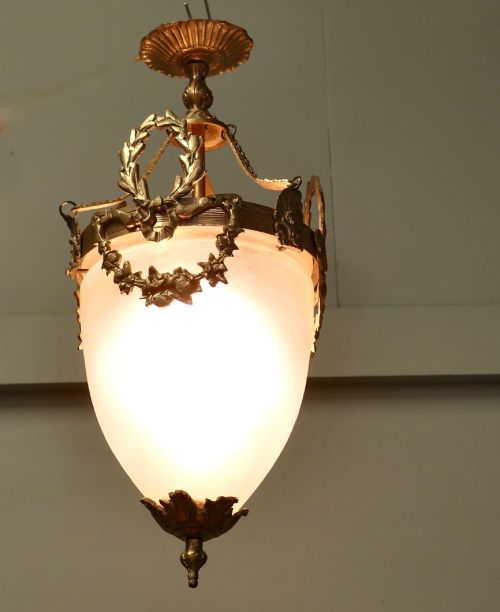
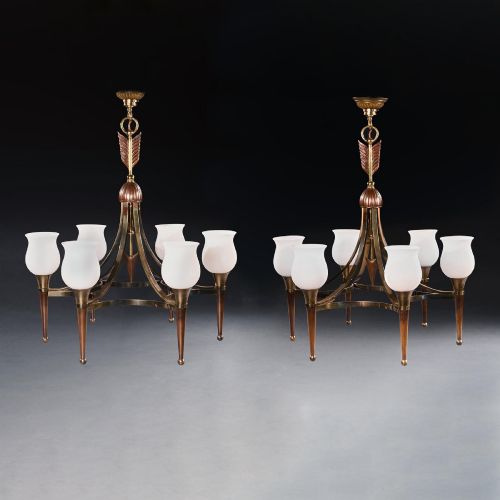
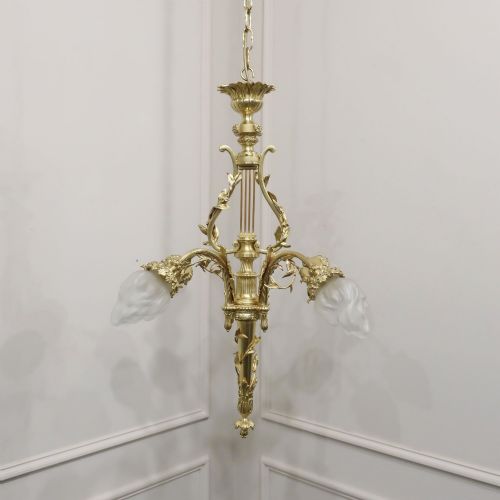
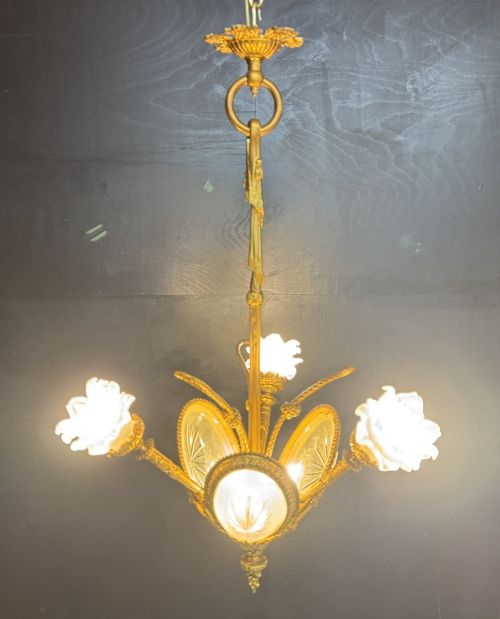
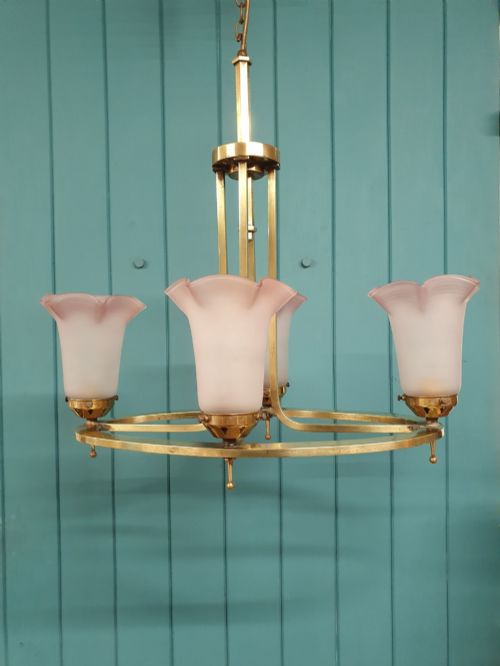
A brass chandelier frosted glass piece combines metal framework with light-diffusing shades, spanning eras from the late nineteenth century through the mid-twentieth century. Buyers searching for a brass chandelier frosted glass fitting will encounter various forms, including pendant lights, hall lanterns, and multi-arm chandeliers.
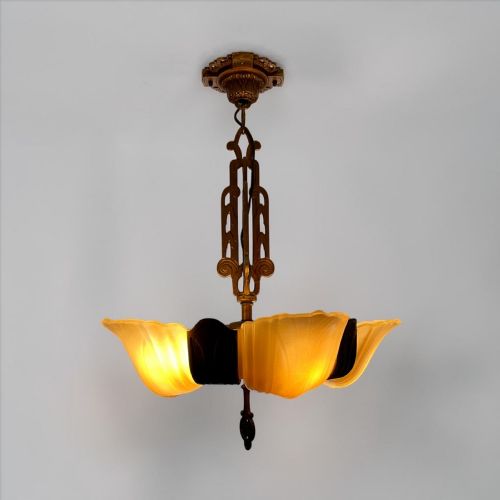
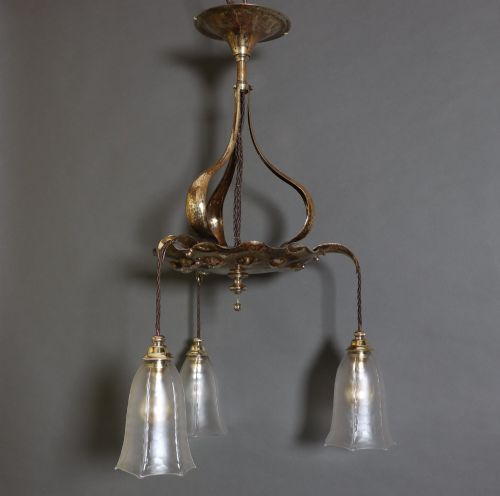
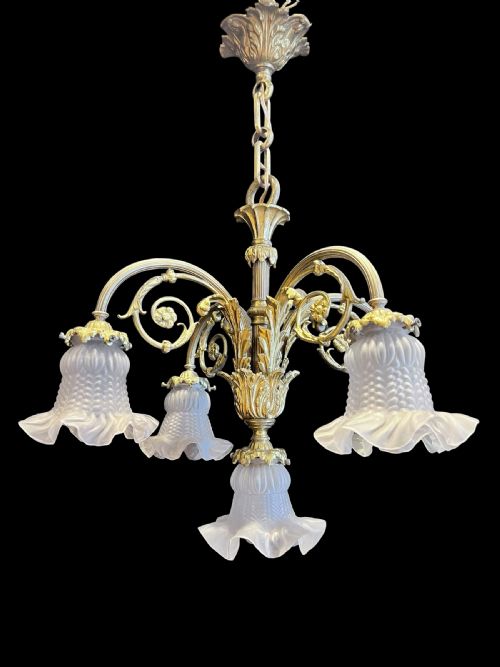
The selection here encompasses several distinct aesthetic movements, notably Art Deco, Arts and Crafts, and French styles such as Empire and Louis XVI. Many examples integrate cast brass, gilt bronze, or copper frames holding textured or etched glass elements.
The nineteenth-century and early twentieth-century periods dominate the selection, showing how makers adapted illumination methods for domestic spaces. These overhead lights serve as both functional illumination and substantial decorative focal points within a room.
Distinctions in build and design quality
Quality rests in the crispness of the metal casting and the depth of the chased or patinated finish on the brass and bronze frames. Finer examples display meticulous detailing in decorative mounts, canopy fittings, and arm connections.
The execution of the glass work similarly dictates value, visible in the thickness of moulded slip shades, the precision of cut crystal, or the subtlety of frosted and etched motifs. Integrated design harmony between the metal armature and the glass shade separates standard production from exceptional studio work.
Brass Chandelier Frosted Glass Retail Price Guide 2026
Typical asking prices for brass chandelier frosted glass among the pieces listed under this phrase on Sellingantiques today, from the lower quarter to the upper quarter. They describe what is for sale here now, not the wider market.
The listings here feature pieces spanning the 1880s through the 1950s, constructed primarily from brass, bronze, frosted glass, and crystal.
Maison Jansen·Andre Arbus
The Brass Chandelier Frosted Glass Glossary
- Slip shade
- A type of moulded glass shade that slots directly into a metal frame or multi-arm basket, common in Art Deco lighting designs.
- Gilt bronze
- Bronze metal that has been coated with a thin layer of gold using mercury amalgamation or electroplating, providing a rich metallic sheen.
- Tent and waterfall
- A specific configuration of crystal strands arranged in an upper triangular tent shape cascading down to a lower ring of lights.
- Hall lantern
- An enclosed ceiling fixture, often glazed with glass panels, designed primarily for entryways, corridors, and stairwells.
- Ormolu
- An English term for gilt bronze, frequently used on decorative mounts and frames of nineteenth-century French light fittings.
Brass Chandelier Frosted Glass: Frequently Asked Questions
How do I clean a frosted glass shade?
Remove the glass component from the brass armature if possible, then wash it gently using warm water and a mild dish soap with a soft cloth.
Dry the glass thoroughly before reattaching it to the frame, and avoid harsh chemical cleaners that might damage frosted or etched surface treatments.
Can these antique lights use modern bulbs?
Most antique ceiling fittings accept standard modern screw or bayonet bulbs, provided the dimensions fit within the original glass shade or bowl.
It is advisable to consult a qualified electrician to check the internal wiring and ensure compatibility with contemporary electrical safety standards.
What rooms suit a hall lantern?
Hall lanterns work effectively in narrow circulation spaces, entrance hallways, landings, and high-ceilinged vestibules where vertical pendant clearance is adequate.
Their enclosed design protects the light source from drafts and casts directed illumination downward through the glass panels.
How are different periods identified?
Stylistic cues such as geometric slip shades indicate Art Deco origins, whereas exposed strapwork and organic motifs point towards Arts and Crafts production.
Heavier cast brass elements, classical mounts, and tent-and-waterfall crystal arrangements typically align with nineteenth-century French or Edwardian designs.