


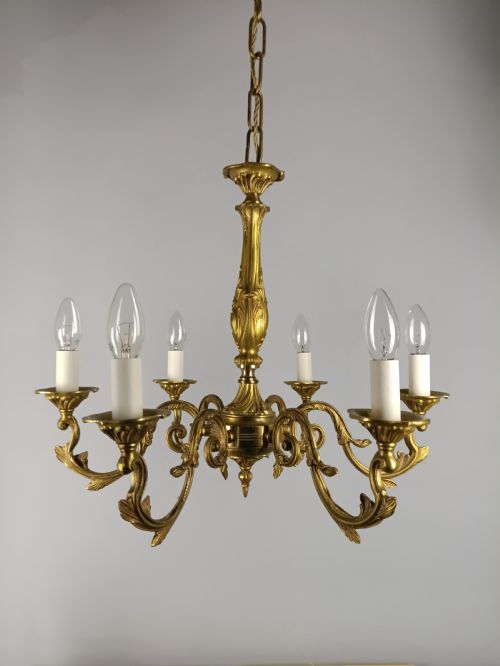
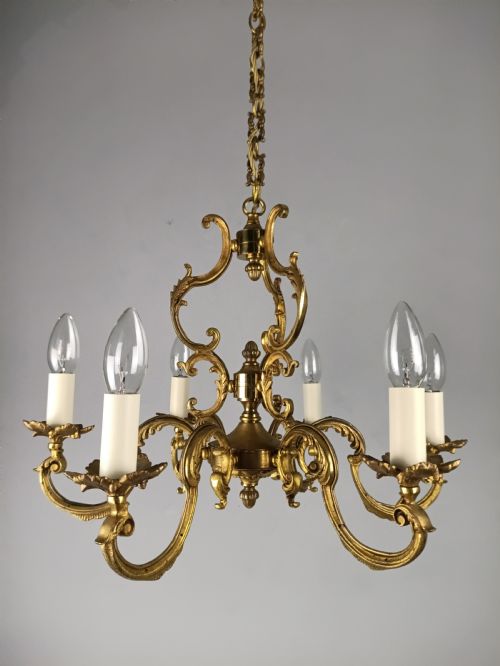


Ornate Gilded Light Fitting
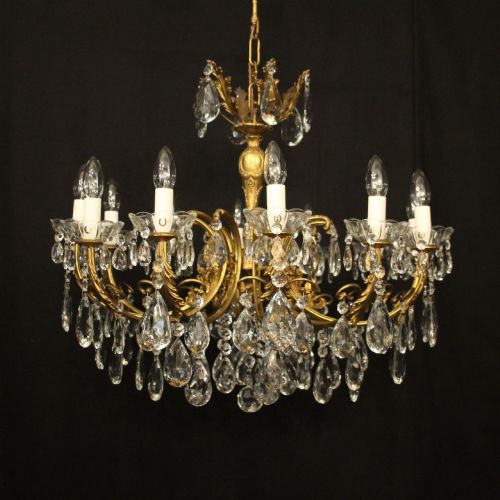
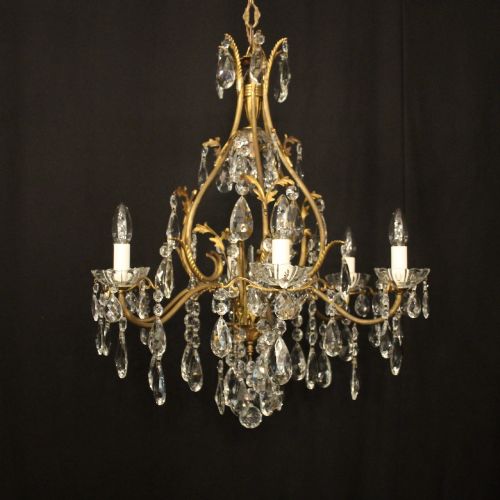
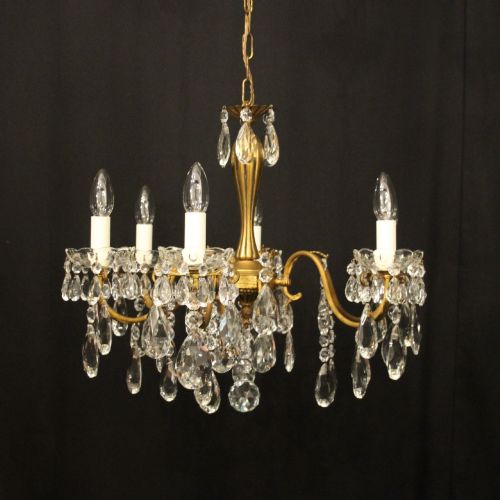
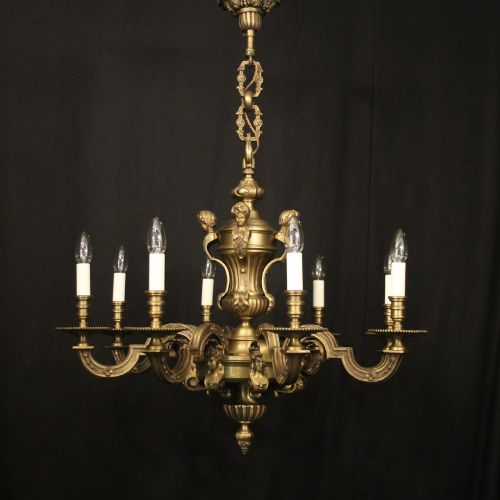
An ornate gilded light fitting brings warmth and rich reflection to a room, channelling classical grandeur through brass, bronze and crystal.
Ornate Gilded Light Fitting
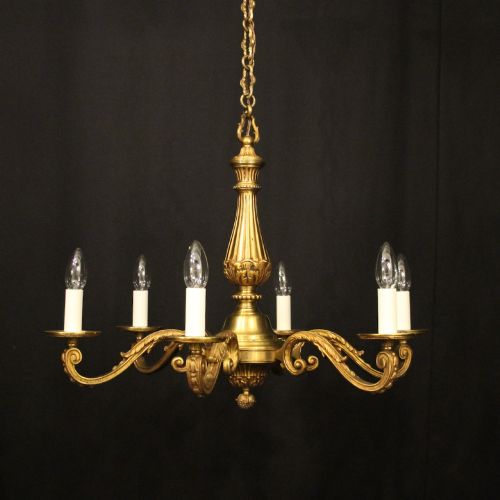
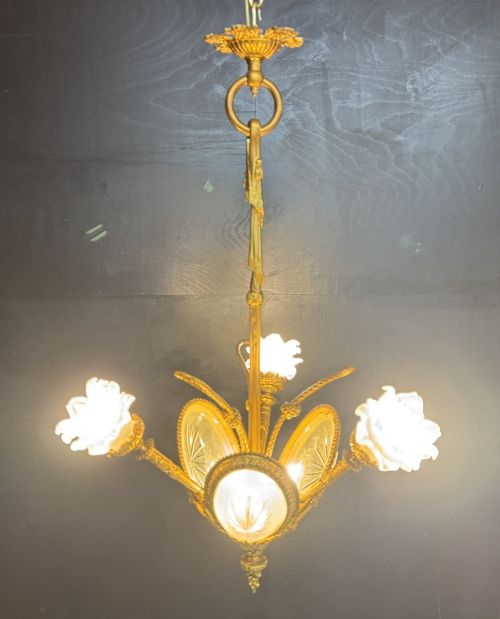
An ornate gilded light fitting primarily takes the form of chandeliers and wall lights originating from French and Italian workshops. These pieces span the nineteenth century into the early decades of the twentieth century, embracing styles from Rococo curves to Neoclassical symmetry.
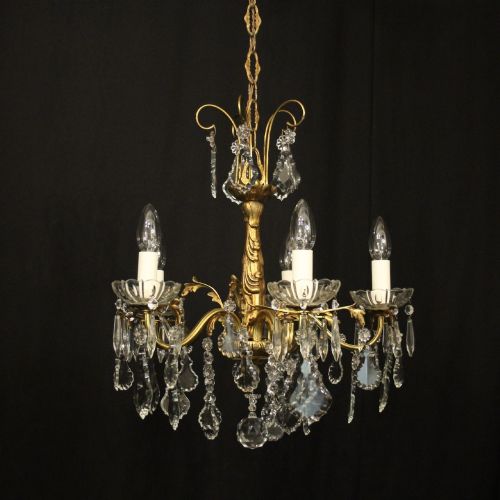
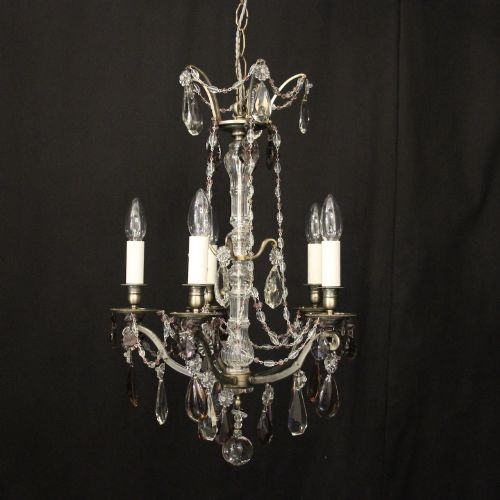
The selection centres heavily on multi-arm chandeliers in gilt bronze, brass and ormolu, often dripping with crystal droplets. Alongside these hang pairs of wall lights and occasional hanging lanterns in giltwood and toleware.
Buyers will encounter substantial multi-light chandeliers alongside smaller wall sconces, predominantly reflecting French Chateau and Florentine Baroque aesthetics. Each fixture demonstrates how period lighting served as a decorative centrepiece long before it was switched on.
How they were made
Construction relies on cast and chased metals such as bronze, brass and ormolu, which provide the structural weight and intricate surface detail for arms and backplates. Artisans applied gold leaf or fire gilding to these metal surfaces to achieve a lasting metallic brilliance.
Glass and crystal elements are integrated through hand-cut drops and panes that catch and refract illumination across the room. Carved giltwood and painted toleware also appear in lantern construction, combining carved timber elements with painted metal components.
Ornate Gilded Light Fitting Retail Price Guide 2026
Typical asking prices for ornate gilded light fitting among the pieces listed under this phrase on Sellingantiques today, from the lower quarter to the upper quarter. They describe what is for sale here now, not the wider market.
Materials across these listings span ormolu, gilt bronze, brass, crystal, toleware and carved giltwood.
What varies in quality
Quality rests in the crispness of the metal chasing and the depth of the gilding applied to the bronze, brass or ormolu frame. Finer examples show sharp relief in floral and scroll motifs, whereas lesser pieces display softer, shallower casting details.
The composition of the crystal and the integrity of the structural joints dictate the overall refinement of the fixture. Heavier bronze castings and neatly assembled crystal arrays elevate a piece far above simpler stamped metal constructions.
The Ornate Gilded Light Fitting Glossary
- Ormolu
- A technique of applying finely ground high-carat gold to a bronze object using mercury. This creates a deep, durable metallic finish characteristic of high-end French decorative metalwork.
- Giltwood
- Timber that has been coated with a thin layer of gold leaf. It appears frequently on Italian lanterns and decorative wall elements from the nineteenth century.
- Toleware
- Painted sheet metal shaped into decorative vessels or lantern components. It brings painted colour contrasts alongside gilded surfaces.
- Chandelier
- A branched ornamental light fixture suspended from the ceiling. These objects carry multiple candle-arms or bulb holders arranged in symmetrical tiers.
- Rococo
- An ornate design style marked by asymmetry, scrollwork and naturalistic plant motifs. This aesthetic heavily influences the curves of nineteenth-century French and Italian lighting.
Ornate Gilded Light Fitting: Frequently Asked Questions
How do I clean an antique gilded light fitting?
Dust the metal and crystal gently using a soft, dry brush or a feather duster to protect the delicate gilding and hanging drops.
Avoid chemical polishes and abrasive cloths entirely, as they strip away the gold leaf or ormolu surface over time.
Can these chandeliers be rewired for modern homes?
Most antique light fittings require rewiring by a qualified electrician to meet current safety standards and voltage requirements.
Rewiring preserves the historic frame while ensuring the internal wiring safely accommodates contemporary bulbs.
How do I tell French styles apart from Italian ones?
French pieces often lean towards Neoclassical symmetry or refined Rococo ormolu mounts with an emphasis on cast bronze.
Italian fixtures frequently incorporate carved giltwood and toleware, displaying a bolder Florentine Baroque character.
Where should I hang a large multi-light chandelier?
These fixtures suit high ceilings in principal rooms such as reception spaces, dining rooms or grand hallways where proportion allows.
Ensure the ceiling height accommodates the drop of the chandelier so the piece commands the space safely.