
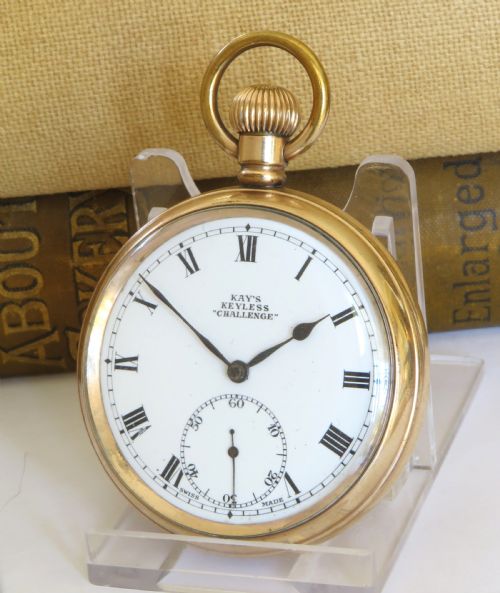
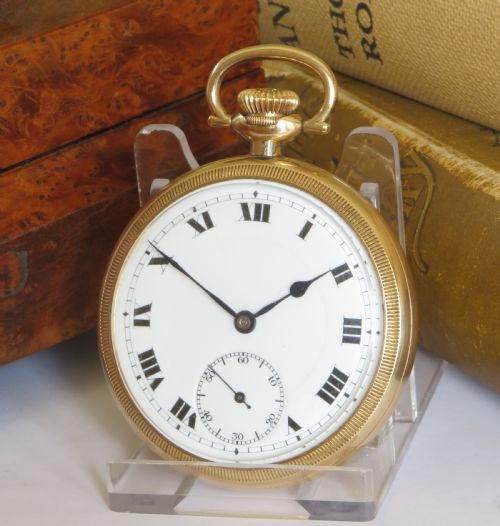
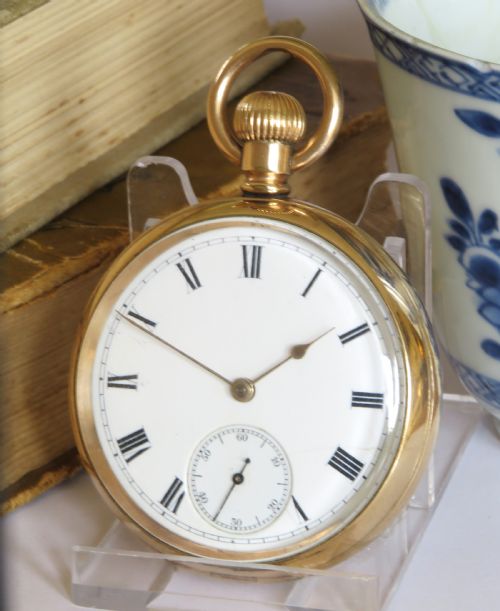
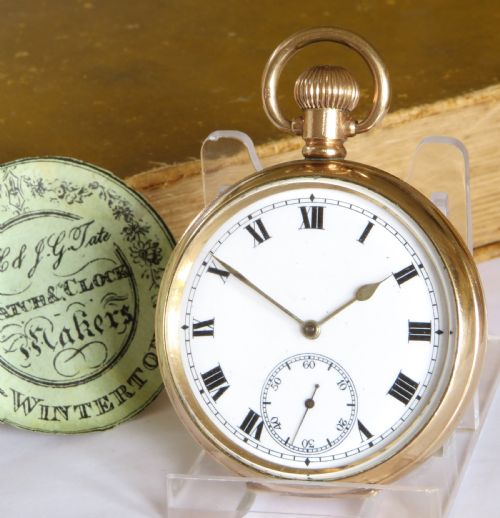
Gold Open Face Timepiece
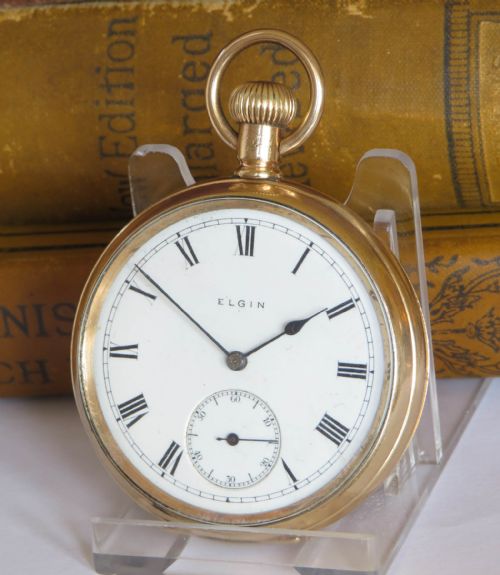
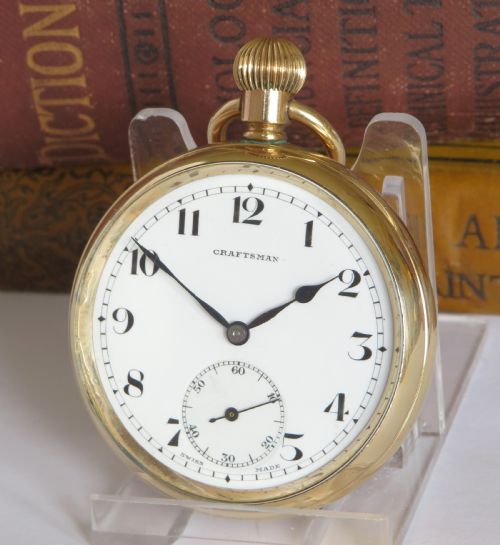
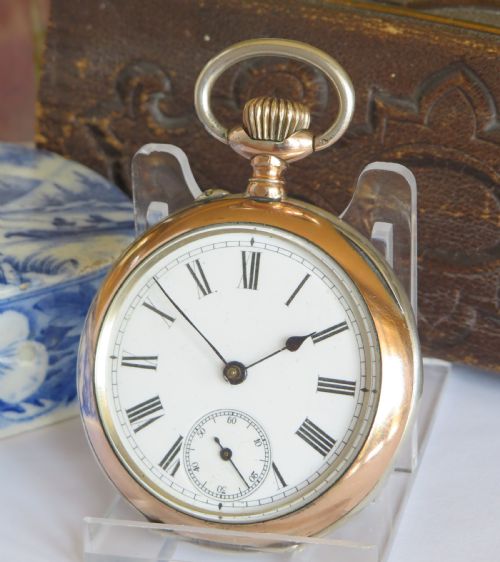
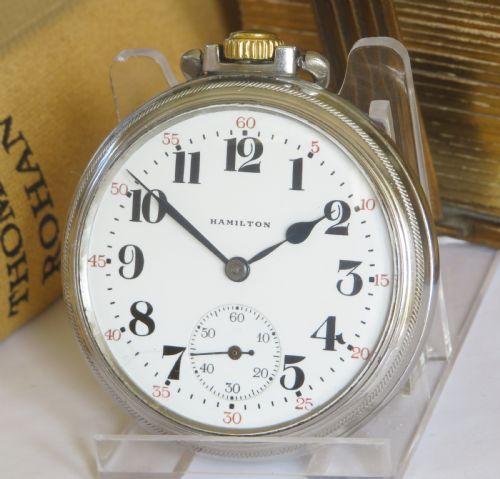
A gold open face timepiece is a pocket watch designed without a hinged metal cover over the dial, offering immediate access to the time.
Gold Open Face Timepiece
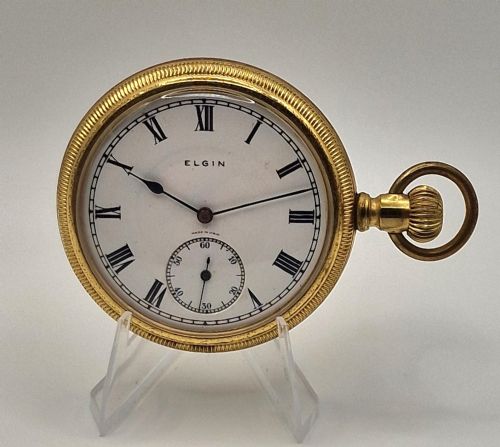
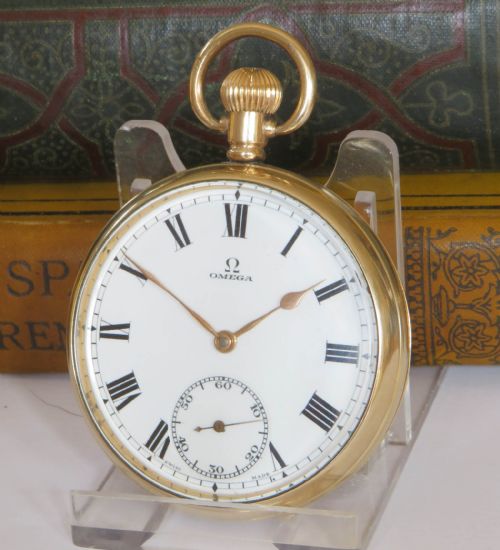
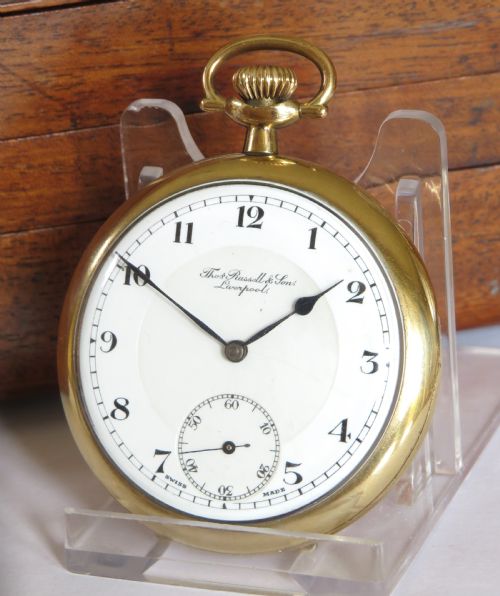
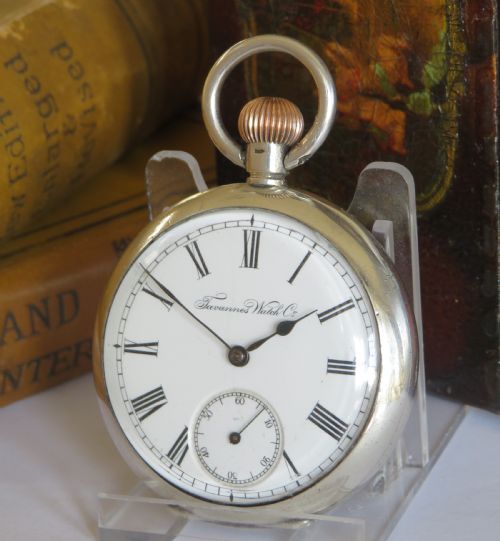
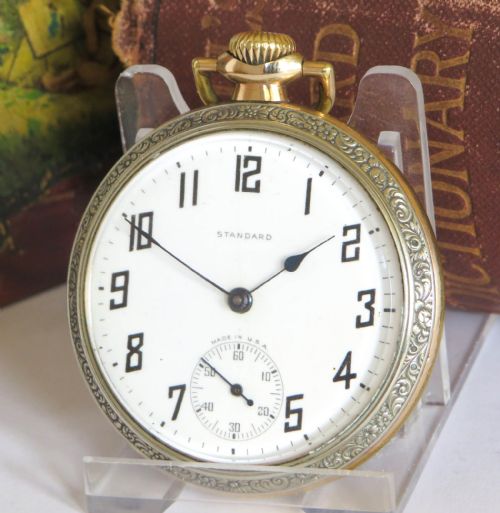
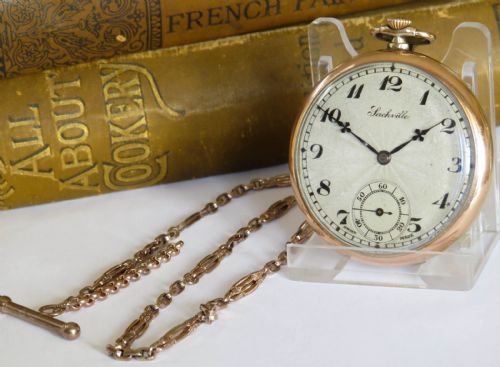
A gold open face timepiece is a pocket watch designed without a protective front cover, allowing the dial to be read at a glance. These instruments span from the nineteenth century through the mid-twentieth century, capturing periods such as the Edwardian era, the nineteen-twenties, and nineteen-thirties.
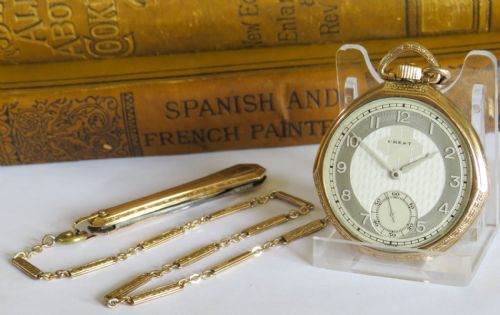
The items appearing here take the form of traditional pocket watches and smaller fob watches. They reflect diverse stylistic movements including Victorian, Edwardian, Art Deco, and mid-century modern design.
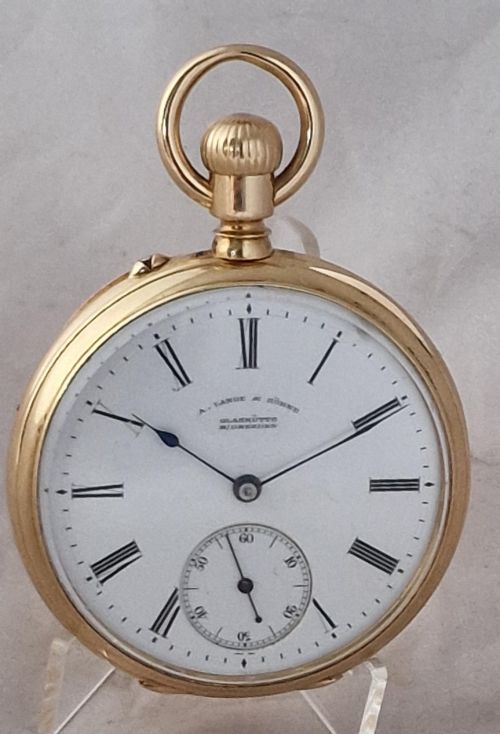
Collectors encounter pieces originating from notable watchmaking houses and general mercantile suppliers alike. The configuration remains consistent: a circular case housing a white, silver, or floral dial beneath glass.
Materials and construction
Cases are formed from varied metals, ranging from solid eighteen-carat, fourteen-carat, and nine-carat gold to gold plate. Structural integrity relies on internal brass and steel movement components.
Faces combine glass crystals protecting enamel or engraved metal dials. Exterior surfaces frequently display detailed floral engravings or engine-turned patterns applied to the back of the case.
Some watches recorded here were built to chime the time aloud at the press of a button, for times when looking down was simply too much effort.
Distinctions in craftsmanship
The refinement of a timepiece is evident in the casing materials and the intricacy of external decoration. Solid gold cases and deeply engraved floral dials represent a higher standard than basic gold plate.
Internal complexity also sets examples apart. Standard stem winding movements contrast with quarter repeater complications and jewelled mechanisms that demonstrate advanced horological skill.
Omega·Thomas Russell and Son·Tavannes·New York Standard·Lange and Sohne·Elgin·Waltham·Zenith·Cyma·Stauffer and Co
The Gold Open Face Timepiece Glossary
- Open faced
- A watch design lacking a hinged metal cover over the dial, exposing the glass crystal directly. This format allows the wearer to check the hour without opening a case.
- Stem winding
- A mechanism allowing the mainspring to be wound via the crown at the top of the case. This replaced older key wind methods in standard production.
- Engine turned
- A decorative technique involving precise geometric patterns carved into metal surfaces by a specialised lathe. It adds texture and reduces the visibility of minor surface scratches.
- Quarter repeater
- A complication that chimes the hours and quarters when a slide or pendant is activated. It represents a high level of mechanical ingenuity.
- Albert
- A type of watch chain attached to a waistcoat or belt. It secures the timepiece during daily wear.
Gold Open Face Timepiece: Frequently Asked Questions
How do I wear a pocket watch?
A pocket watch is typically secured to a waistcoat or jacket pocket using an attached chain, often called an albert. The watch rests in the pocket while the chain fastens through a buttonhole.
Modern wearers adapt this by securing the chain to belt loops or jacket lapels when wearing contemporary clothing.
How do I tell if a watch is solid gold or plated?
Examination of the interior case backs usually reveals hallmarks indicating the purity and type of metal used. Solid gold pieces bear specific stamps for carat weight.
Gold plated items often show signs of wear where the underlying brass or base metal begins to show through.
What does key wind mean?
Key wind watches require a small separate key inserted into the back or dial to wind the mainspring and set the hands. This predates the widespread use of stem winding crowns.
Earlier nineteenth-century pieces frequently utilise this traditional method.